



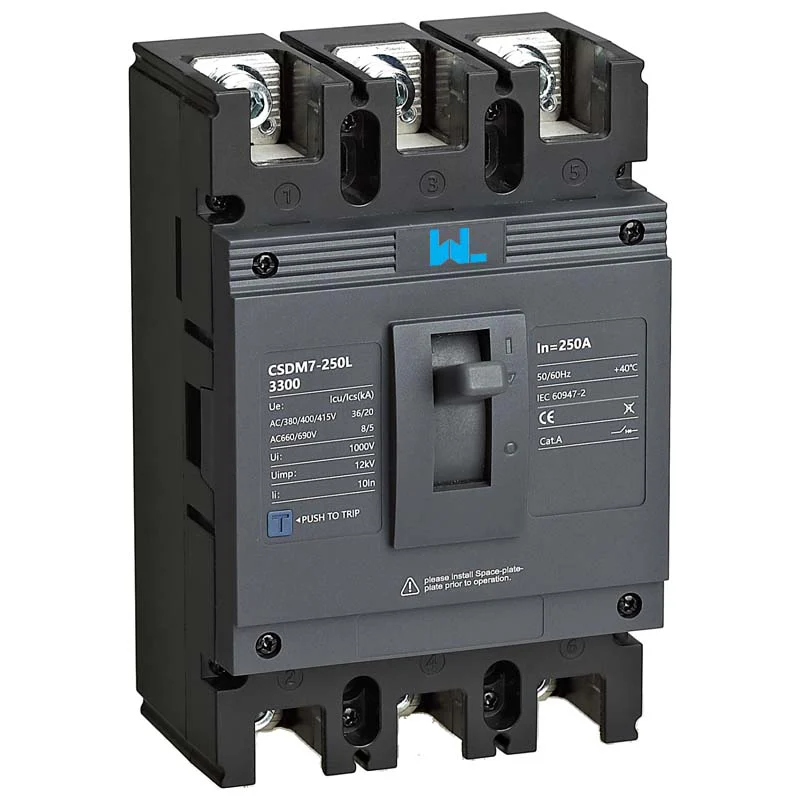
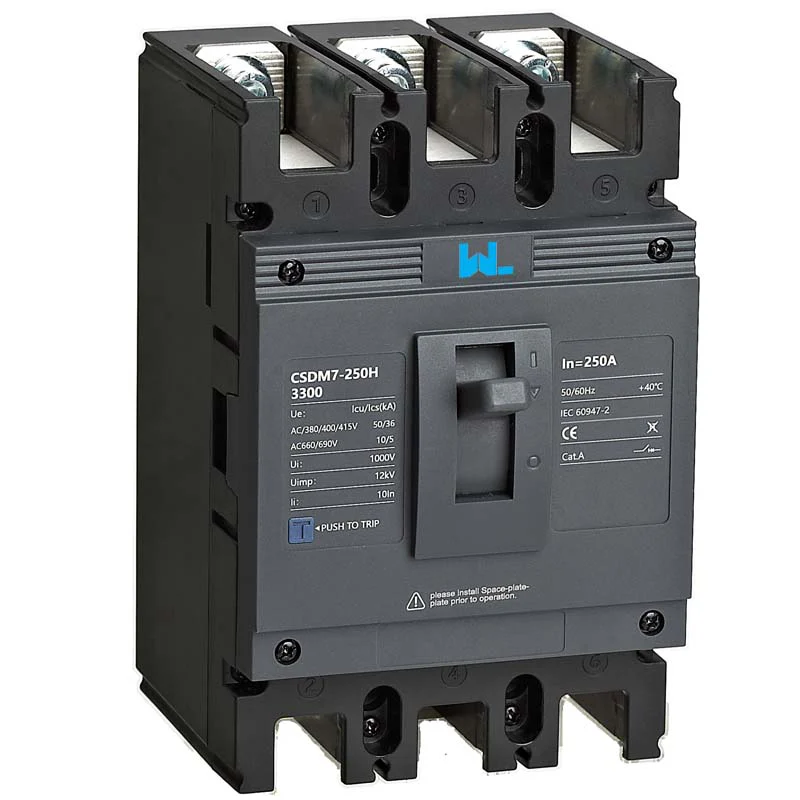
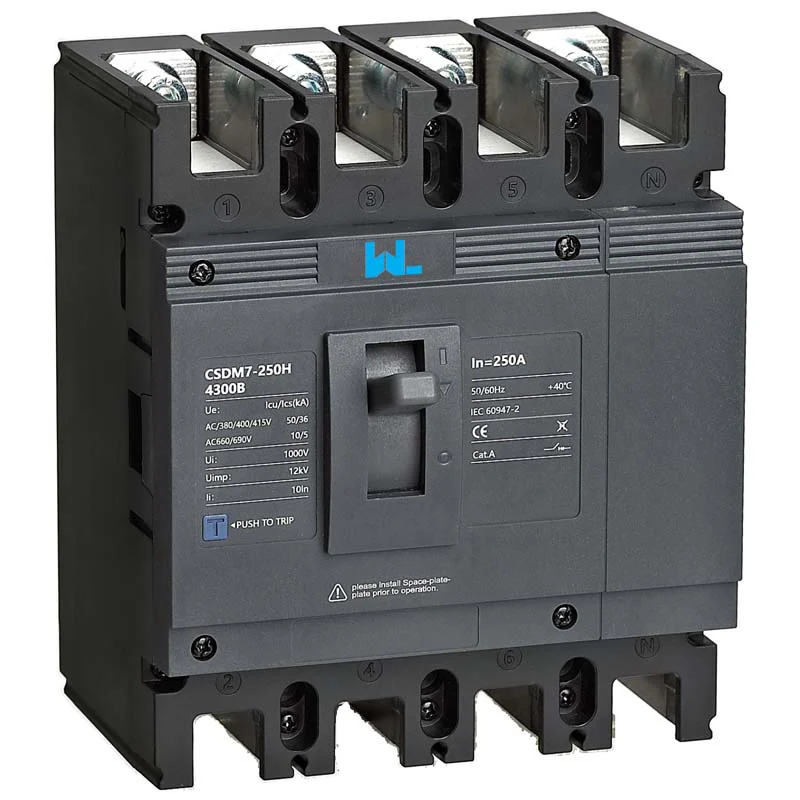
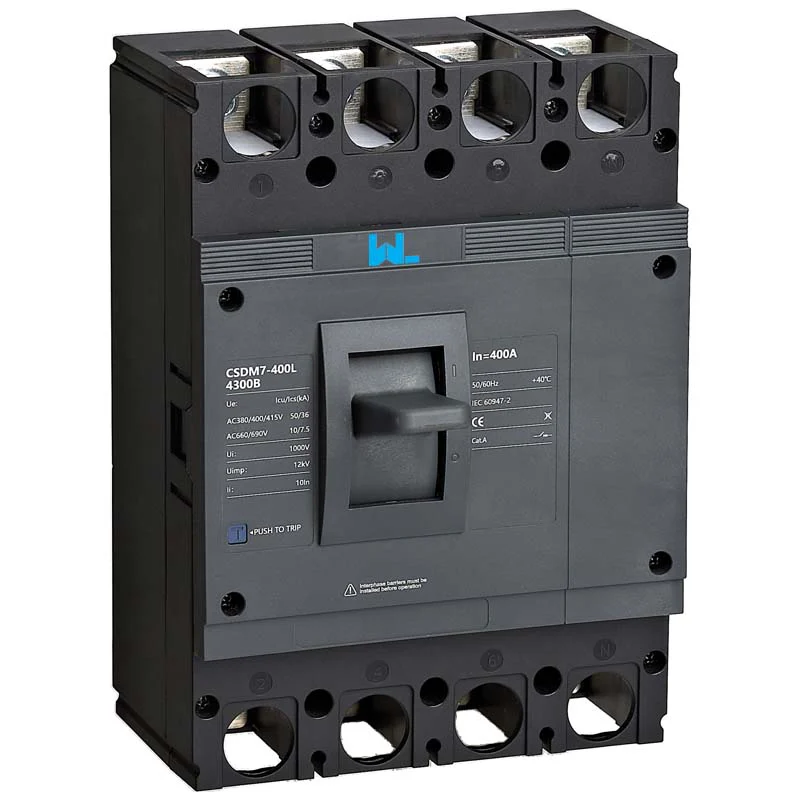




Magnetic-Only vs Thermal-Magnetic Circuit Breakers
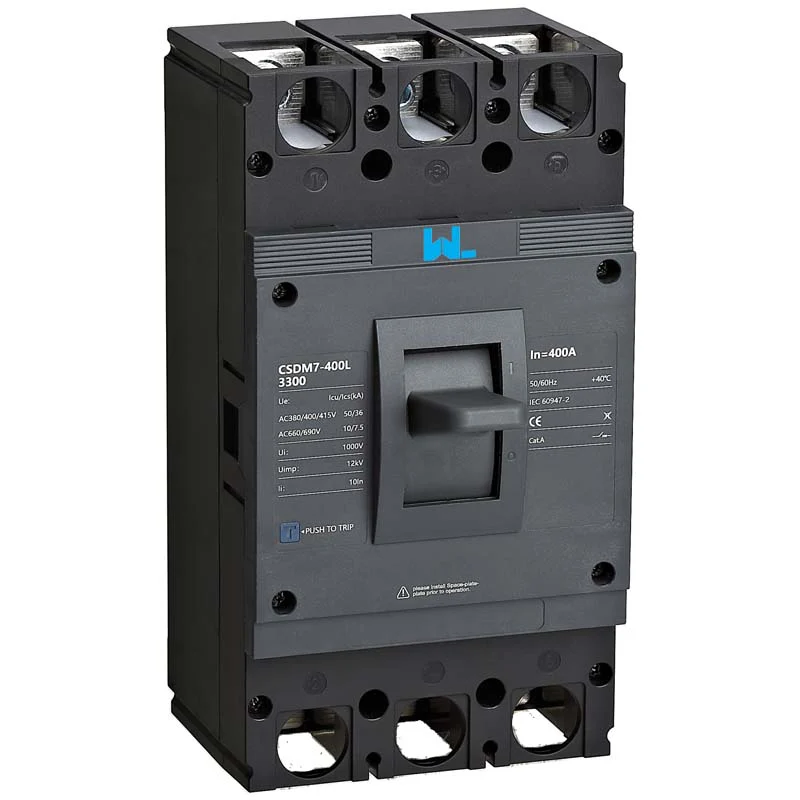
A tender asks for a magnetic breaker on a motor feeder. One bidder offers an instantaneous-only protector for a specified starter combination. Another quotes a thermal-magnetic molded-case breaker. Both mention short-circuit protection and the right current range. Whether either quotation is complete depends on what else protects the motor, the feeder conductors and the starter.
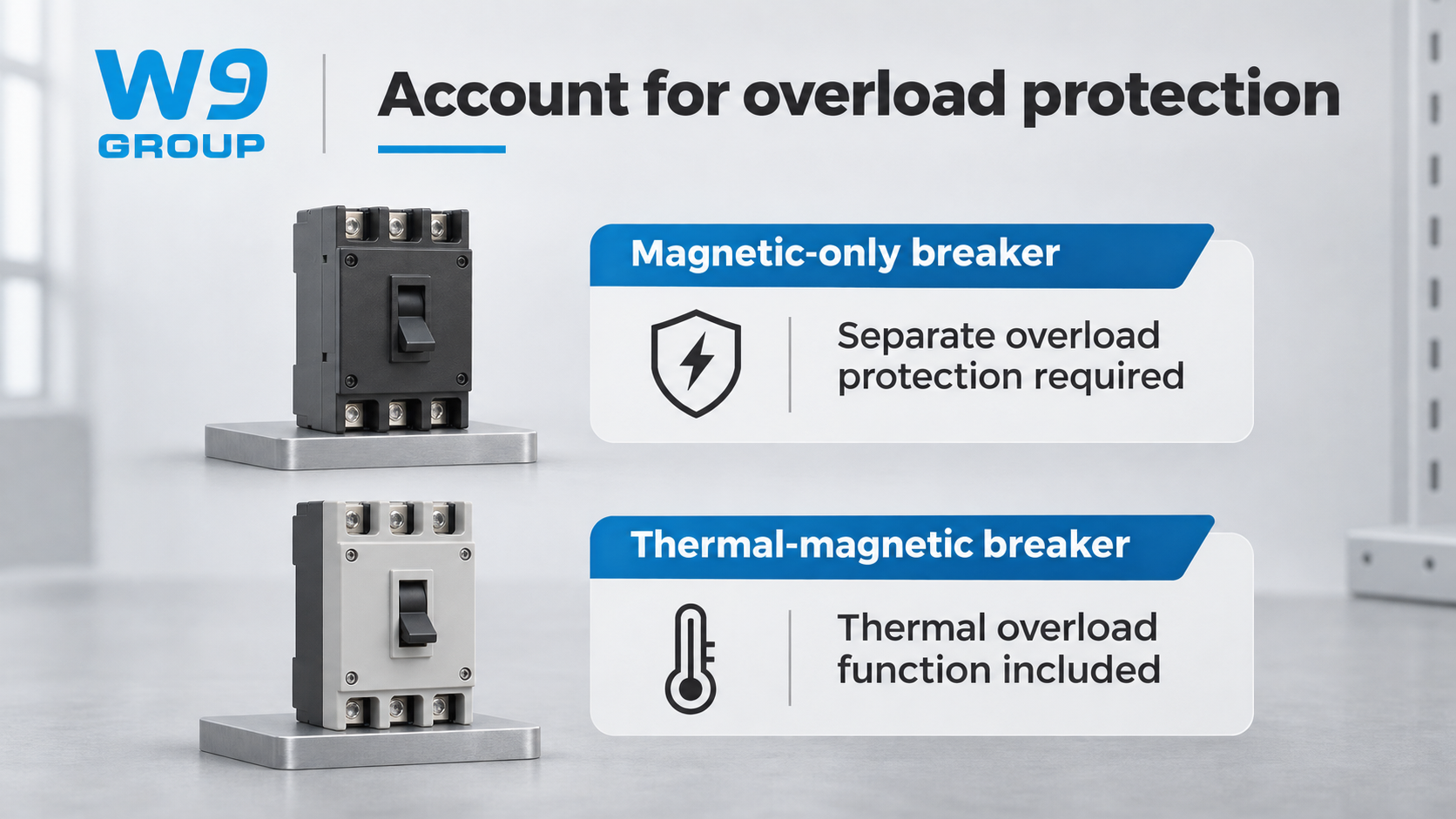
The practical difference between a magnetic-only breaker and a thermal-magnetic breaker is overload coverage. An instantaneous-only device responds to sufficiently high fault current. A thermal-magnetic breaker also has a time-dependent overload element. Neither description by itself establishes the voltage rating, the interrupting capacity or the approval of a complete motor branch circuit. Resolve the division of protection duties before comparing prices.
Locate overload protection in the complete circuit
Take a circuit that carries a moderate excess current for several minutes. The current might never approach magnetic pickup. A cable or motor winding can nevertheless accumulate heat. Ask which device detects that condition, what it protects and how its operation disconnects the load. The answer should name a component and a characteristic rather than simply say that the panel includes protection.
In a documented motor-starter arrangement, a motor overload relay may detect a sustained overload and cause the contactor to open. The specified upstream short-circuit protective device deals with high fault current. Their jobs differ, and the contactor itself has limits on the fault duty it can withstand. Check the manufacturer’s combination data for the actual devices, operating voltage and required fault level. The presence of a relay does not by itself settle the conductor protection question.
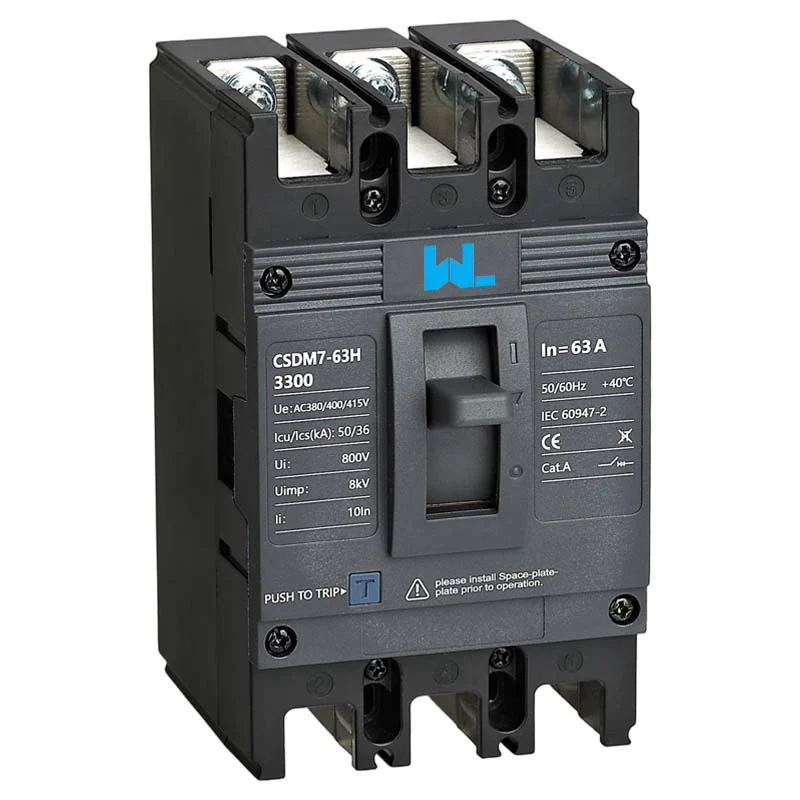
A thermal-magnetic circuit breaker combines two overcurrent responses in one breaker mechanism. It can be a useful starting point for distribution duty, where conductors serve a range of downstream loads. Its long-time response still has to suit those conductors. A breaker chosen to protect a feeder does not necessarily provide the motor-specific overload, phase-loss or other functions called for by the machine designer.
| Application question | Instantaneous-only selection | Thermal-magnetic selection |
|---|---|---|
| Who clears a sustained overload? | Identify the separate approved device or arrangement | Check the fitted thermal characteristic against the protected circuit |
| What happens on a high-current fault? | Verify pickup, interruption and combination duty | Verify magnetic response and voltage-specific interruption |
| How is normal starting assessed? | Coordinate starting envelope with magnetic pickup and overload device | Review both portions of the breaker curve as well as motor protection |
| What may be ordered separately? | Starter, overload device and associated control components as required | Any motor-specific protection, control or indication still required |
Read both ends of the time-current curve
For a thermal-magnetic release, read the overload region and the instantaneous region separately. The overload curve reflects heating and time; prior loading and ambient conditions can matter. The instantaneous region is usually shown as a band. Crossing the nominal centre of that band is not a sufficient test of whether a particular starting event will be tolerated. Obtain the curve that corresponds to the actual current, release suffix and adjustment.
For magnetic-only protection, do not fill in an imaginary thermal curve below pickup. Put the separate overload device’s characteristic on the review instead. An engineer evaluating a starter may need several curves: the normal acceleration envelope, the overload device response, the short-circuit device behavior and the motor or cable limit. The valuable outcome is to identify overlap, a gap in coverage or a condition requiring more evidence.
A change in the load can affect that review even if the rated running current barely changes. A machine with higher driven inertia may take longer to accelerate. The original instantaneous pickup might still tolerate the peak, but overload protection could operate during the extended start. Our guide to adjustable thermal-magnetic MCCBs explains why an adjustable label is only the beginning of the selection.
Compare the complete installed protection package
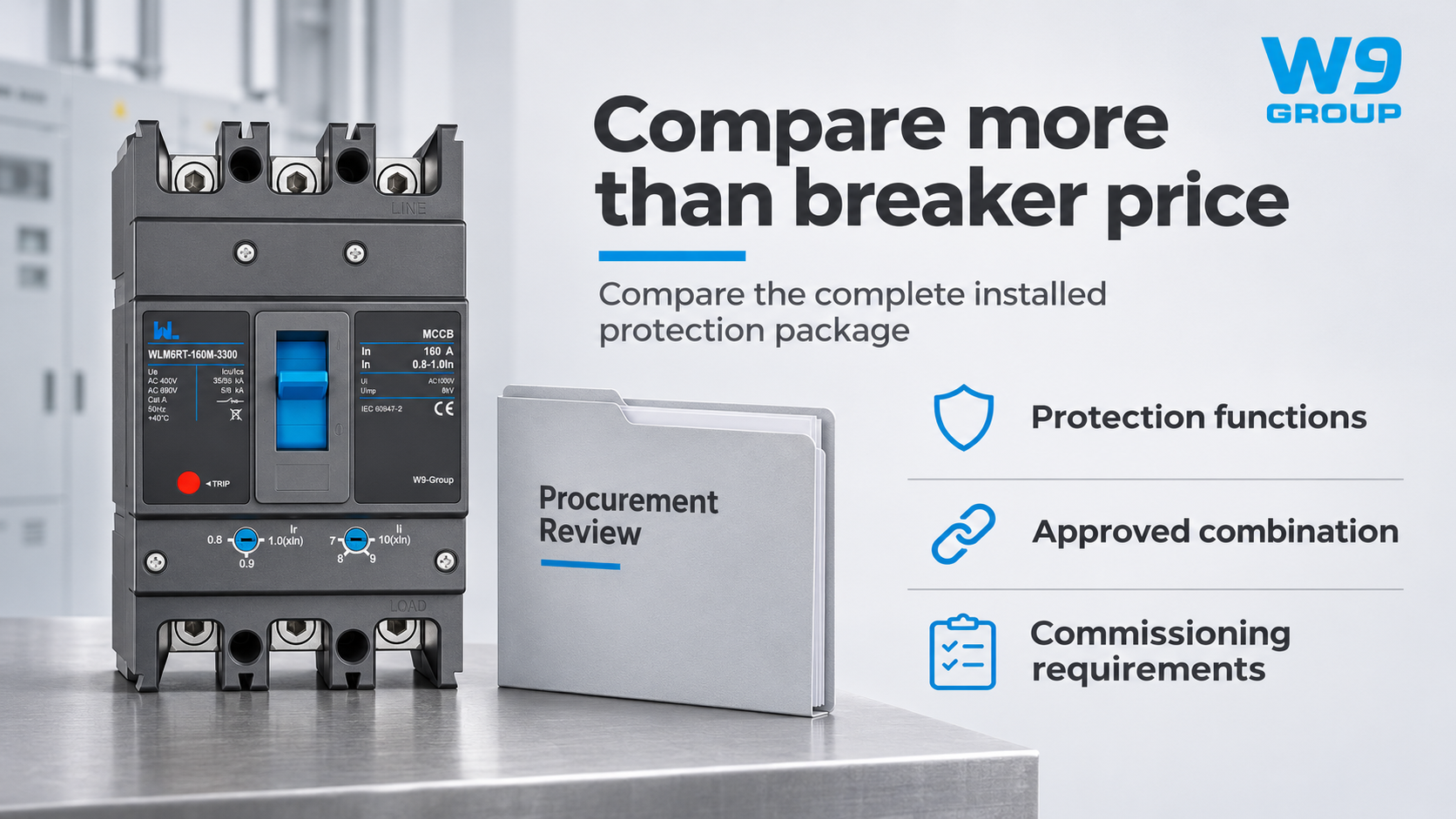
Consider two bids for an existing motor control centre. Ask both bidders for the order code of the breaker and the identity of any downstream protective component on which their proposal depends. Then ask for the supporting combination document. If a bidder has quoted only an instantaneous protector while the starter and relay must also change, the unit price compares unlike scopes. The cost is the approved package plus the work needed to install and commission it.
For a like-for-like replacement, inspect the existing documents for installation constraints. Does the offered device occupy the same approved position? Does the change require different terminals, a control supply or new settings? Can the team obtain the exact spare release later? Price those differences using the offer and maintenance plan. An unsupported estimate of lifetime savings is less useful than the actual lead time for a missing part.
| Procurement item | Evidence for technical review | Commercial consequence if absent |
|---|---|---|
| Overload coverage | Identified device and characteristic for the protected equipment | Additional hardware or an incomplete circuit |
| Starter combination | Applicable manufacturer combination table or approval | Engineering review may delay release of the order |
| Switchboard fault duty | Available fault current and applicable equipment ratings | Panel changes may be required |
| Commissioning scope | Settings, drawings and acceptance procedure | Unpriced work at site handover |
A motor circuit protector sold for a particular combination should not be offered as a general-purpose replacement for a feeder breaker merely because it fits. Conversely, a general distribution breaker may leave the motor’s overload protection unresolved. In both cases, establish the intended use and the rules of the destination market before asking the installer to make the equipment work.
Where hydraulic-magnetic and electronic breakers fit
A hydraulic-magnetic breaker can use hydraulic delay to shape the response to sustained overcurrent. Carling describes multiple families and configurations; their product descriptions distinguish branch-circuit and supplementary uses where applicable. The word magnetic therefore does not automatically mean that overload protection is absent. Ask for the full description and the relevant delay and approval information.
Electronic trip releases offer another way to obtain long-time and instantaneous functions. Select them when the required adjustability, indication or coordination justifies it and the specific release provides it. If an electronic equivalent is proposed, compare its configured behavior with the existing protection design rather than matching only the maximum frame size. The comparison of electronic and thermal-magnetic protection explains these differences in more detail.
A final review should join the drawing, equipment schedule and purchase order. A symbol on the drawing can represent a circuit breaker without identifying which trip unit will be fitted. A note beside it or a cross-reference to a device schedule prevents the drawing office and the supplier from interpreting the same symbol differently.
Frequently asked selection questions
How is electronic trip different from thermal-magnetic protection?
Electronic releases use sensors and processing to implement the functions supplied. A thermal-magnetic release uses thermal and magnetic elements; the available settings and tests depend on the exact product.
Is a hydraulic-magnetic breaker the same as a thermal breaker?
No. Their delay mechanisms differ. Compare the actual operating curves and approved applications before exchanging one for the other.
Can thermal protection take the place of instantaneous protection?
Time-dependent overload protection and fast short-circuit protection address different conditions. The complete design must provide the required response over the fault and overload ranges.
Is there one drawing symbol that proves magnetic-only protection?
A general breaker symbol does not establish the exact release. Use the drawing legend, equipment tag and referenced device schedule to identify what is actually being specified.
What should a hydraulic-magnetic breaker enquiry include?
Include required current, supply type and voltage, delay characteristic, pole configuration and intended use. Ask for the exact catalogue number rather than accepting a family name as evidence of approval.
Why can a thermal-magnetic breaker tolerate a short overload?
The thermal element takes time to heat, while the magnetic element responds in its higher-current operating region. The permitted duration and magnitude come from the manufacturer’s characteristic.
References
- IEC 60947-2:2024: scope of the circuit-breaker standard
- HSE HSG85: Electricity at work, safe working practices
- Carling Technologies: hydraulic-magnetic circuit breaker families
Make the protection scope explicit in the enquiry
For a thermal-magnetic option, the W9 WLM6RT-160 adjustable MCCB listing separates variants by suffix. Send the circuit duty and existing overload arrangement, then request the matched release curve and the scope of the quoted package. That information lets two suppliers quote against the same protection requirement.