








How to Buy Circuit Breaker Spare Parts
A stores shelf can hold several boxes marked “breaker spares” and still lack the one approved accessory needed during an outage. The problem is often an incomplete equipment register rather than insufficient stock. Buying more unidentified parts increases inventory without necessarily improving maintenance readiness.
Effective circuit breaker spare-parts procurement starts with the installed equipment and the manufacturer’s permitted service scope. Identify approved items, prioritize them by outage consequence and replenishment time, and define receipt checks before placing an order. A part should enter usable stock only when its identity, condition and supporting documents can be linked to the intended equipment.
Build the spare-parts list from installed equipment
Use the actual breaker and accessory register, including complete model codes, revisions and installed functions. Review historic purchase descriptions against the present equipment. Short labels such as “alarm switch” or “breaker coil” are not sufficient where several versions exist. An approved stores description should allow another buyer to order the same item without relying on personal memory.
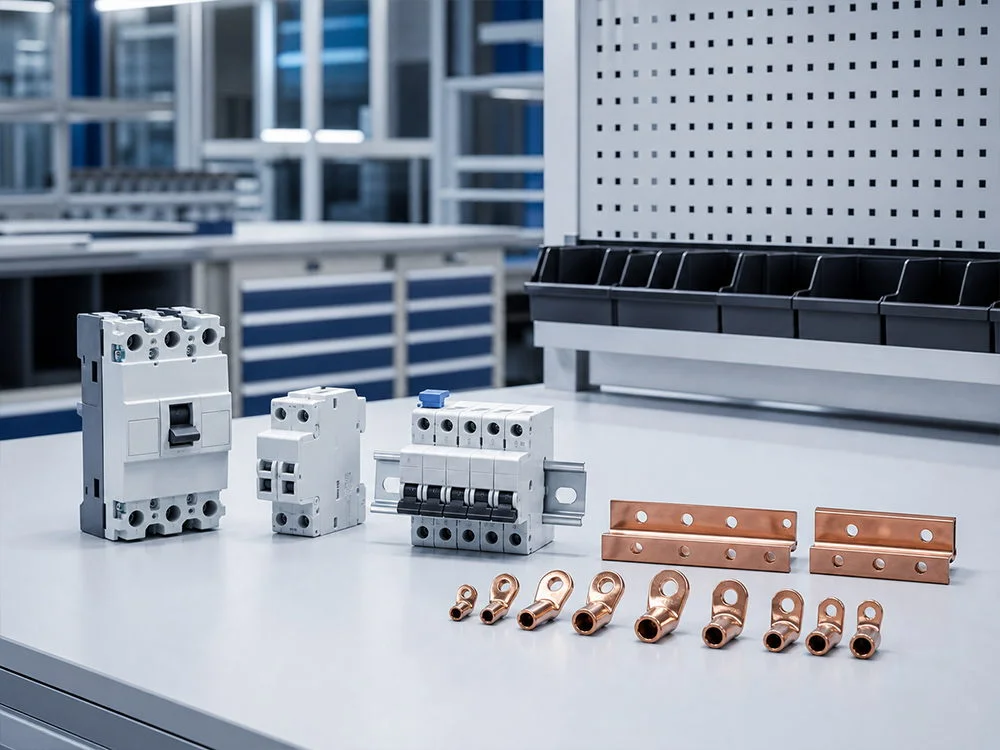
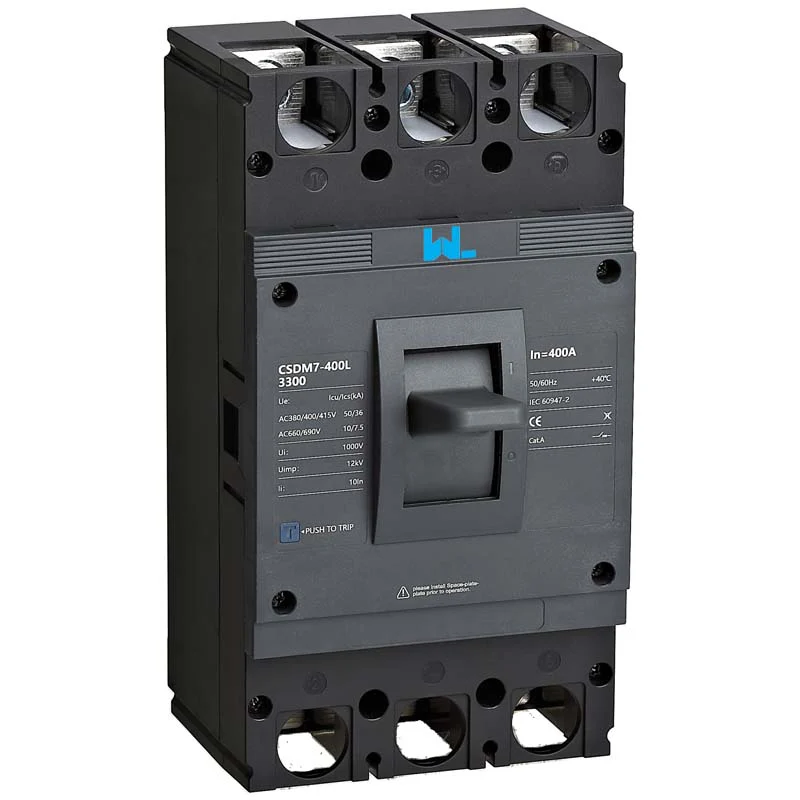
Separate complete replacement breakers, permitted accessories and other panel components. Some internal breaker parts are not available for field service. A list copied from an exploded drawing or an online marketplace can therefore create an unsupported repair plan. Ask the manufacturer which items are approved service parts and what installation and acceptance procedures apply.
Record the function as well as the part number. A fault-trip alarm contact and a normal position contact may appear similar to a nontechnical buyer but provide different information. Protection releases also need accurate identification; the LSIG protection-function guide explains distinctions that should not disappear into a generic stores description.
Prioritize stock by outage consequence and replenishment time
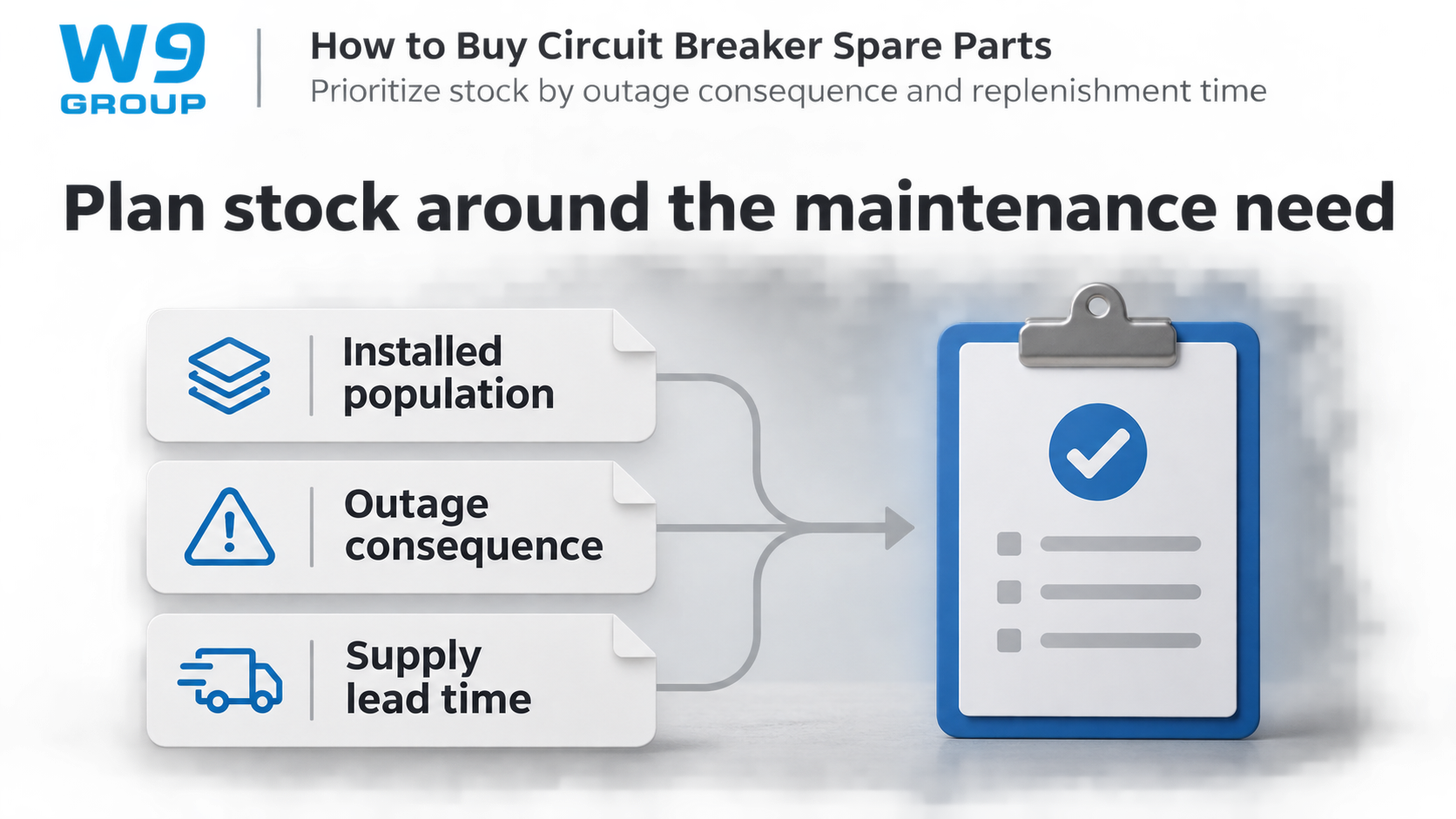
Critical-spares planning considers what happens if the equipment is unavailable and how long an approved replacement takes to obtain. Start with the operational role of the circuit, existing redundancy, documented lead time and practical installation constraints. A rarely used item may deserve attention if its absence would leave a critical process without an acceptable recovery route.
Review actual consumption and maintenance findings, but do not turn a small number of failures into an unsupported failure-rate prediction. A part repeatedly replaced because the underlying control problem remains unresolved should trigger investigation, not an automatic increase in stock. Likewise, a part with no recorded failures may still merit a recovery plan if the product is approaching obsolescence.
Choose the stocking decision for each item: hold an approved spare, arrange a documented supply route or define a planned complete-device replacement. These options have different costs and response times. Record the reason for the decision and the date for review instead of applying a universal stock quantity to every breaker model.
| Planning factor | Evidence to review | Effect on the decision |
|---|---|---|
| Outage consequence | Process role and acceptable interruption | Determines urgency of the recovery arrangement |
| Redundancy | Approved alternative supply or equipment | May change the practical need for on-site stock |
| Replenishment | Supplier’s current documented lead time | Helps assess exposure while awaiting replacement |
| Serviceability | Permitted installation and repair scope | Determines whether to stock a part or complete device |
| Obsolescence | Product lifecycle and replacement information | May require an engineering plan before procurement |
Write an order that controls substitutions
The purchase order should identify the exact part, approved host, electrical variant and document requirements. Define whether alternatives are permitted and who may approve them. A supplier should not replace an item with a visually similar part merely because the original is unavailable. Any proposed alternative needs a separate technical review before acceptance.
Ask for traceable product identification and the applicable installation instructions. Where certificates or declarations are required, specify their intended scope and destination-market relevance. IEC 60947-2 provides the circuit-breaker standard context, but a generic certificate reference does not establish accessory compatibility or permission to repair the host device.
Compare quotations on complete supply scope. Include packaging, required documents, shipping, engineering clarification and any necessary commissioning provisions. Avoid invented lifecycle savings or generic percentage discounts in the evaluation. Use the actual offered terms and identify unresolved exclusions that could affect the planned maintenance date.
Check identity and condition before placing parts in stock
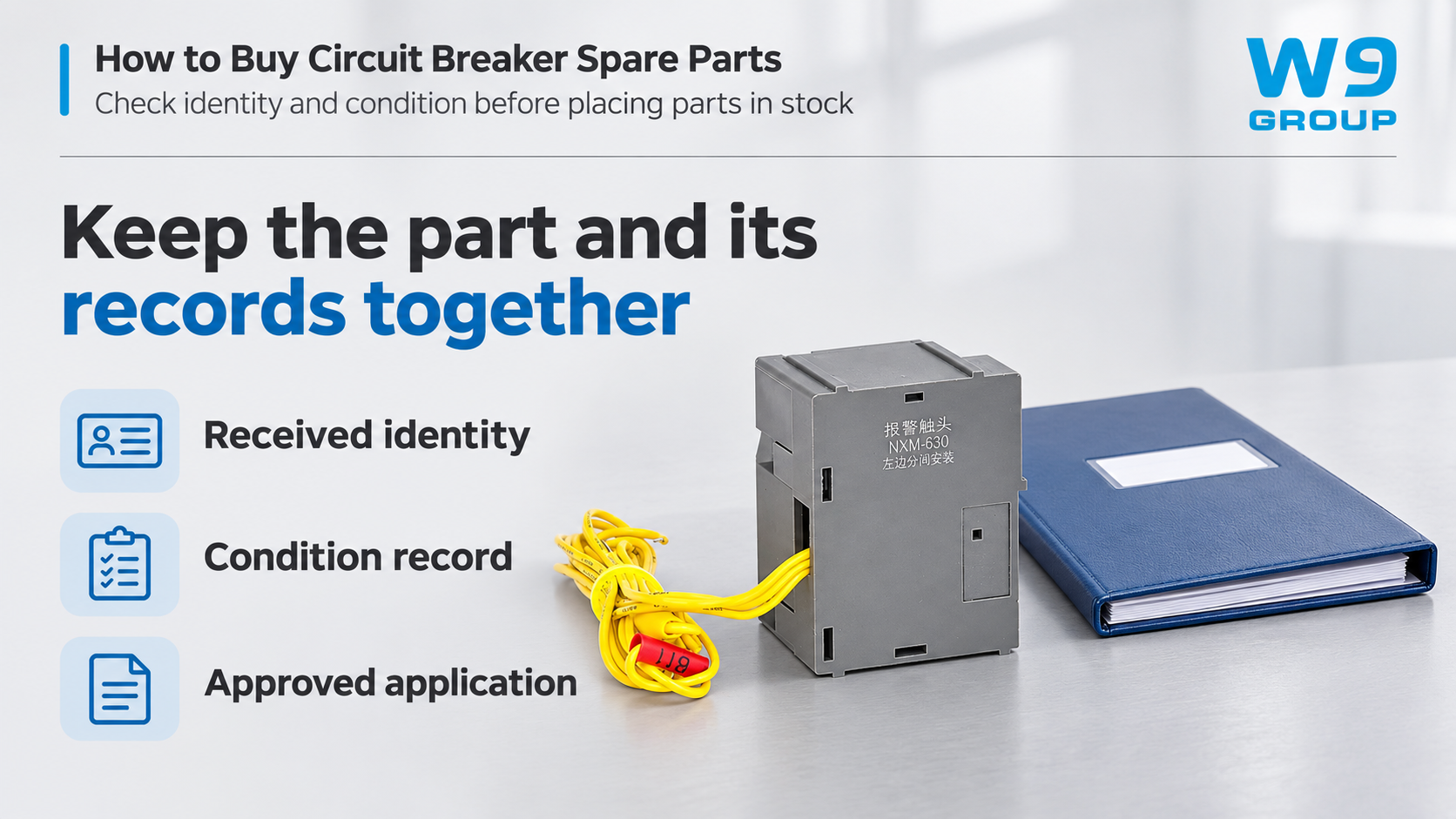
A delivery note is not enough to release a part into usable inventory. Compare the received identity with the approved order and inspect accessible packaging and equipment for damage under the receiving procedure. Keep uncertain, damaged or unapproved items separate until the discrepancy is resolved. Do not let their physical presence in the stores system imply technical acceptance.
Spare-parts receipt inspection should also confirm that the accompanying documents match the delivered revision. If a part number has changed, obtain the documented relationship to the approved item. A supplier’s informal assurance is not a replacement for the engineering review required by the site’s substitution process.
| Receipt check | Acceptable basis | Action when unresolved |
|---|---|---|
| Part identity | Received code matches the approved order | Hold for clarification before issuing to maintenance |
| Variant and revision | Electrical and host requirements are satisfied | Request documented compatibility review |
| Condition | No unresolved damage under the inspection procedure | Quarantine and seek supplier disposition |
| Documents | Applicable installation and identification records | Obtain the missing or corrected documents |
| Traceability | Order, received item and stores record are linked | Correct the record before releasing the item |
A receiving check does not prove every operating characteristic. Any functional test must use the applicable manufacturer procedure and competent personnel. Do not improvise coil energization or dismantling as a warehouse acceptance test. Specify required test evidence in the order if it is necessary for the application.
Preserve the spare’s identity through storage and issue
Follow the manufacturer’s storage and handling instructions. Keep the original identification and protective packaging where required, and prevent similar variants from becoming mixed. Store the matched documents in a controlled record that remains available even when a printed leaflet is separated from the box. A spare without a reliable identity becomes a new identification task during the outage.
At issue, link the item to the work order and intended host equipment. Record the installed identity and any approved drawing changes after the work. HSE’s maintenance guidance relates inspection and test needs to equipment, environment and previous results; the breaker maintenance planning guide gives further context for organizing those records.
Controlled stock substitutions should remain visible in the database. An alternative approved for one installation must not silently become a universal substitute for every breaker in the same family. Keep its scope explicit and retain rejected or superseded items outside the current approved list.
Frequently asked questions
What should a circuit breaker parts diagram show for procurement?
It should identify its host-model scope, document revision and relevant part references. A diagram must be used with the manufacturer’s service instructions; an illustrated internal component is not automatically an approved spare.
Which types of circuit breaker spares should be listed separately?
Separate complete breakers, protection releases, indication accessories, opening accessories and approved connection kits. Each category needs its own identity and compatibility evidence rather than a generic breaker-parts description.
Is a circuit breaker parts kit always the best purchase?
No. Confirm every included item and whether the kit is approved for the actual host and work. Unneeded or incompatible contents do not improve maintenance readiness.
How should circuit breaker parts be named on a purchase order?
Use the manufacturer’s part name and complete code, then state the approved host and required function. Names such as contact or coil alone can describe several incompatible items.
Should breaker-box parts be ordered with MCCB accessories?
They can share a purchase package, but keep their identities and assembly responsibilities separate. Busbars, enclosure parts and other panel hardware need their own approved specifications.
Can the four basic parts of a circuit define a spare-parts order?
No. Source, conductors, load and control describe a general electrical circuit. Procurement needs the exact serviceable component, host equipment and approved replacement specification.
References
- IEC 60947-2:2024, circuit-breaker requirements and scope.
- HSE, Maintaining electrical equipment safety.
- HSE HSG85, Electricity at work: Safe working practices.
Prepare an order maintenance can use
For W9 Group’s fault-trip alarm contact, include the exact host and required event indication when requesting supply information. Ask for the applicable state table, electrical duty and installation documents. A well-prepared order delivers an identifiable approved item and the information needed to use it, not simply a box bearing a familiar description.