








How to Specify an Earth-Leakage MCCB for Industrial Distribution
Two quotations for an earth-leakage MCCB can carry the same ampere rating and still describe different protection arrangements. One may include an integrated residual-current release; another may depend on a separate detector, sensor and opening accessory. Comparing their prices before resolving those differences leaves the buyer exposed to missing components and commissioning delays.
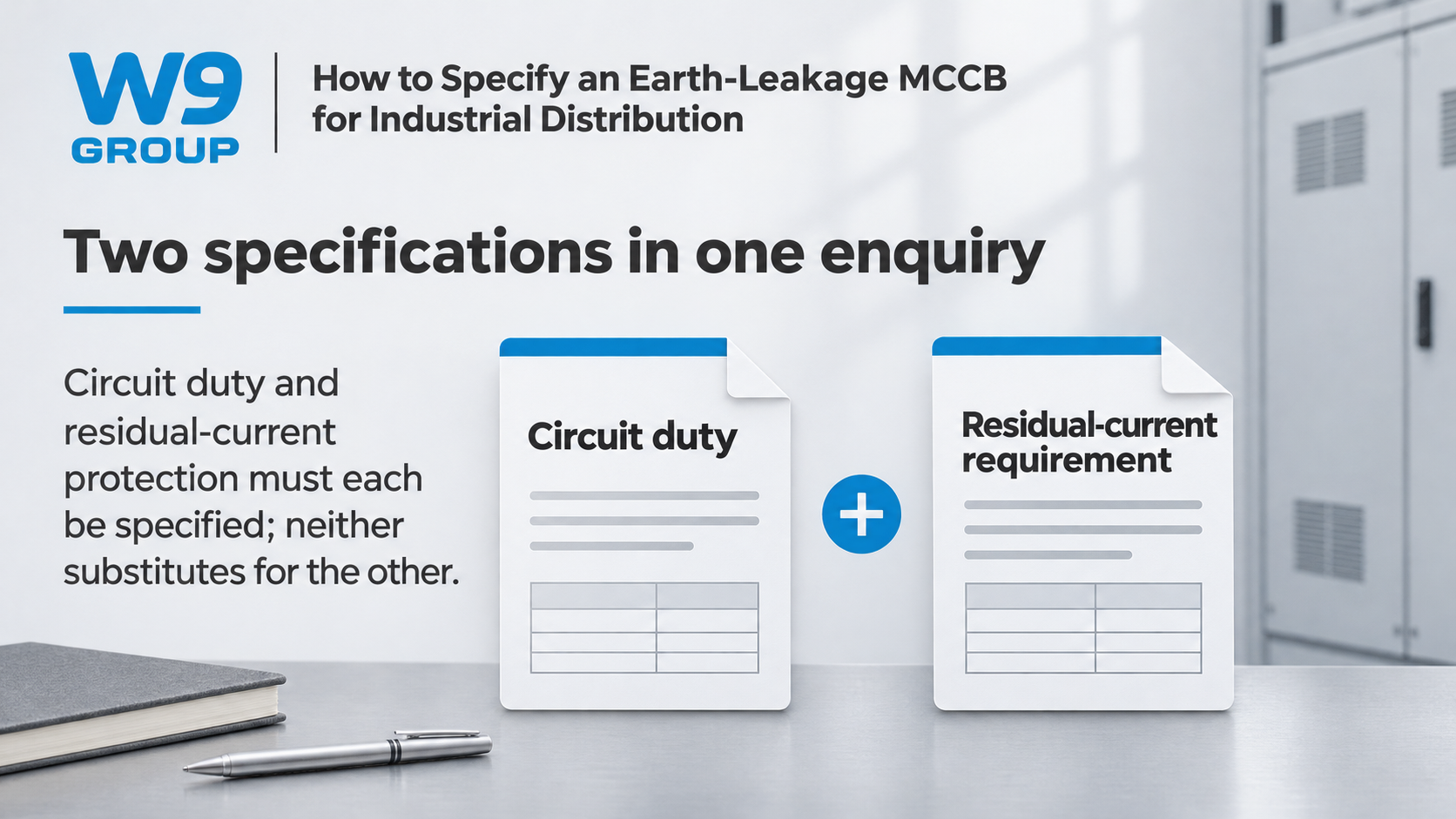
A useful earth-leakage MCCB specification describes both the circuit duty and the required residual-current protection. It also identifies the complete supplied configuration, installation documents and acceptance evidence. Start with the protection objective, then ask suppliers to quote against the same requirement sheet. IEC 60947-2 is a circuit-breaker standard, not a universal selection chart for leakage sensitivity, pole arrangement or control accessories.
Separate circuit ratings from leakage requirements
The circuit-duty portion identifies the supply system, operating voltage, load current, prospective fault current and intended installation conditions. Pole configuration and neutral treatment belong here as well. Frame size, rated current and trip setting are related but are not interchangeable terms. A larger frame designation does not, by itself, define the setting supplied or the fault duty available at the installation voltage.
The residual-current portion states why leakage protection is required, the intended operating characteristics and the coordination constraints. Specify the waveform response needed for the connected equipment and obtain the load manufacturer’s requirements where relevant. An electronic load can make a simple description such as “earth leakage included” insufficient. Do not assume a device’s suitability for every converter or drive from its ampere rating.
Use the MCCB earth-leakage protection overview to establish the arrangement being requested. Identify which conductors the sensing system monitors and how the detector initiates opening. Where separate components are involved, the enquiry must describe the required combination rather than leave each supplier to interpret the package differently.
| Specification area | Information to provide | Supplier evidence to request |
|---|---|---|
| Circuit duty | System voltage, load and available fault current | Ratings for the exact model at the stated voltage |
| Conductors and poles | Supply arrangement and neutral requirements | Applicable pole and sensing configuration |
| Residual-current protection | Protection objective and required response | Release characteristics and supported waveform response |
| Coordination | Upstream and downstream device details | Applicable curves, settings and combination evidence |
| Installation | Enclosure, connections and service environment | Installation instructions and applicable limitations |
Specify how the leakage function opens the circuit
With an integrated arrangement, the buyer still needs the exact release designation and its operating instructions. With an external detector, identify the sensor, detector supply, output behavior and compatible opening accessory. The purchasing question is whether the proposed assembly performs the required function under the intended conditions, not whether each individual item has an attractive catalogue description.
A shunt release receives an opening command; it does not independently measure residual current. An auxiliary contact reports a defined condition; it does not replace the detector or the opening function. If either item is necessary to the proposed design, list it explicitly in the bill of materials. Record which supplier is responsible for confirming the combination and providing the relevant diagrams.
Ask what the specified test function covers. An internal test facility may verify only part of the arrangement. The commissioning plan should explain how the complete installed protection path will be assessed and which specialist instruments or services are required. Leaving this question until delivery can turn an apparently complete order into an unfinished protection project.
Document protection settings and coordination
Leakage pickup and time delay must follow the protection design. They should not be chosen simply to avoid interruptions or copied from another building. The designer needs the connected-load characteristics, normal leakage conditions and upstream and downstream protection details. Any coordination claim should be tied to the actual devices and settings being supplied.
Residual-current coordination is a separate question from overload and short-circuit coordination. A delay that appears suitable for one function does not automatically establish selectivity for another. Use the relevant manufacturer’s evidence and the approved installation design. The guide to earth-leakage pickup and delay selection explains the information that should accompany a settings enquiry.
Keep the approved settings record under document control. The order should identify whether settings are factory configured, commissioned on site or restricted to authorized personnel. Define who approves later changes and what evidence must be retained. This prevents an unresolved design question from becoming an undocumented adjustment during startup.
Compare the delivered package and its lifetime cost
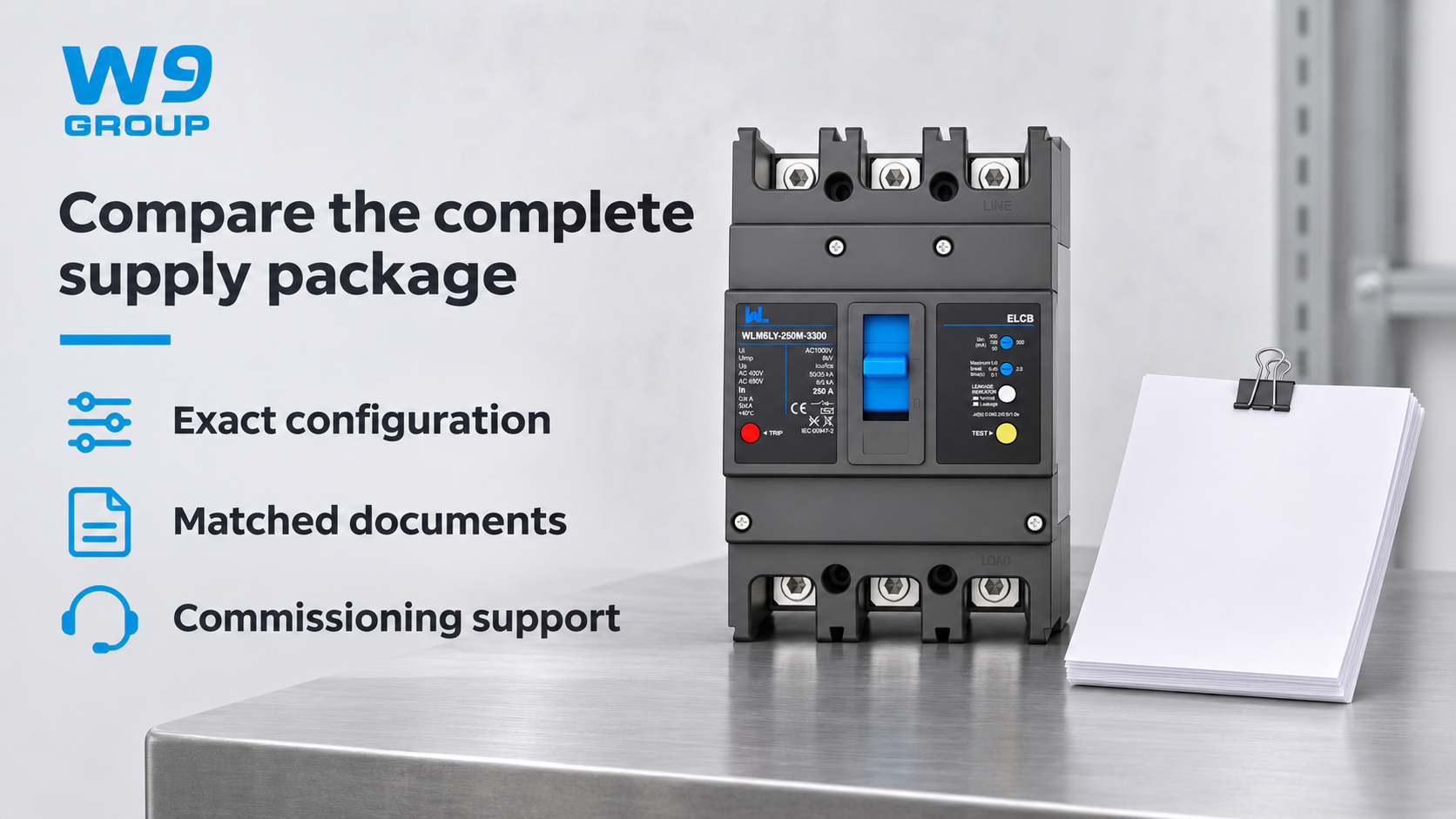
A meaningful earth-leakage MCCB price comparison uses an identical scope. Breaker, detector, sensor, release, terminals, documentation and commissioning assistance may be priced together or separately. Ask for a clear included-and-excluded list and a complete configuration code. Treat an unspecified accessory as an open commercial item, not as a free addition that will probably arrive.
Evaluate the cost of engineering clarification, enclosure changes, commissioning, replacement availability and planned downtime alongside the purchase price. These costs depend on the installation; no universal saving percentage is credible. A supplier who provides the correct documents early can reduce uncertainty, but that benefit should be evaluated from the actual quotation and service commitment.
| Quotation item | Question for the supplier | Risk if unresolved |
|---|---|---|
| Configuration | Which complete breaker and release codes are supplied? | Receiving a different protection arrangement |
| Accessories | Which sensing and opening components are included? | Additional orders and delayed commissioning |
| Documents | Are drawings and instructions matched to this revision? | Incorrect installation assumptions |
| Acceptance | What inspection or test evidence accompanies delivery? | Unclear criteria for accepting the order |
| Support | What replacement and technical support terms apply? | Unplanned maintenance and sourcing delays |
Keep delivery milestones realistic: approved documents, configuration release, shipment and commissioning readiness are different events. If a proposed substitute changes the enclosure, sensor or control supply, include the engineering review in the schedule before accepting the revised delivery promise.
Match compliance evidence to the ordered configuration
The published scope of IEC 60947-2:2024 covers circuit-breakers intended for instructed or skilled persons and gives its voltage boundaries. Citing that standard is not proof that a particular product, accessory combination or installation is certified. Request the applicable declaration, certificate or test evidence and check the model identification, edition, issuing organization and scope.
The destination market and installation determine which requirements apply. A distributor’s general certificate file may not cover every listed variation. HSE guidance is useful for maintenance and safe-working principles, but it is not a substitute for the local installation rules or a device-specific acceptance procedure. Keep those different kinds of evidence separate in the procurement file.
Prepare a configuration-specific document pack before approval. It should link the quotation, product identity, installation instructions, settings and acceptance records. When an item changes, update the linked documents as well. A technically correct original enquiry cannot protect the project if the delivered configuration quietly changes later.
Frequently asked questions
What does an earth-leakage circuit breaker do?
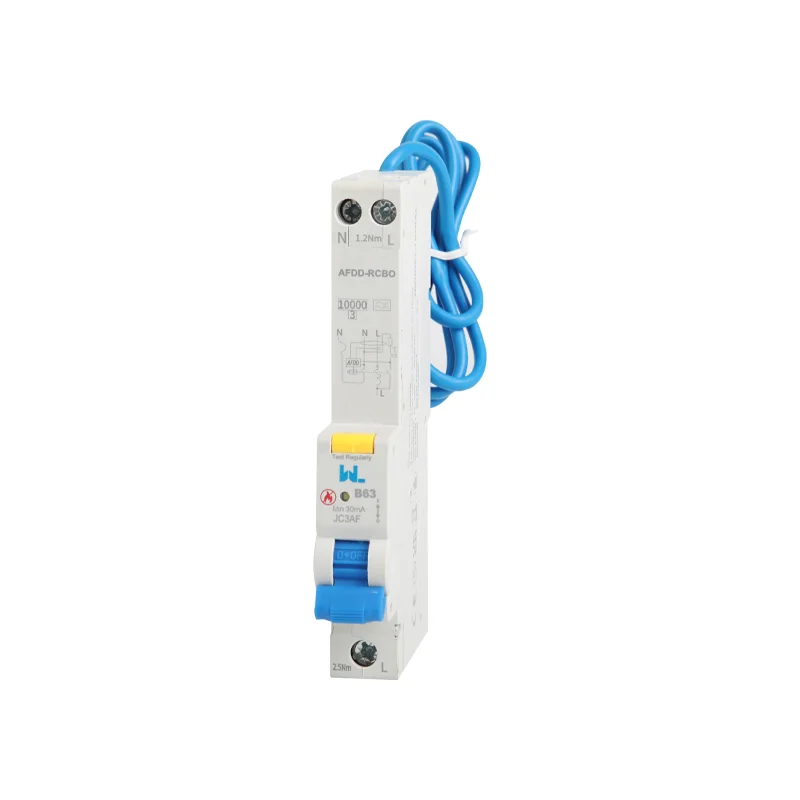
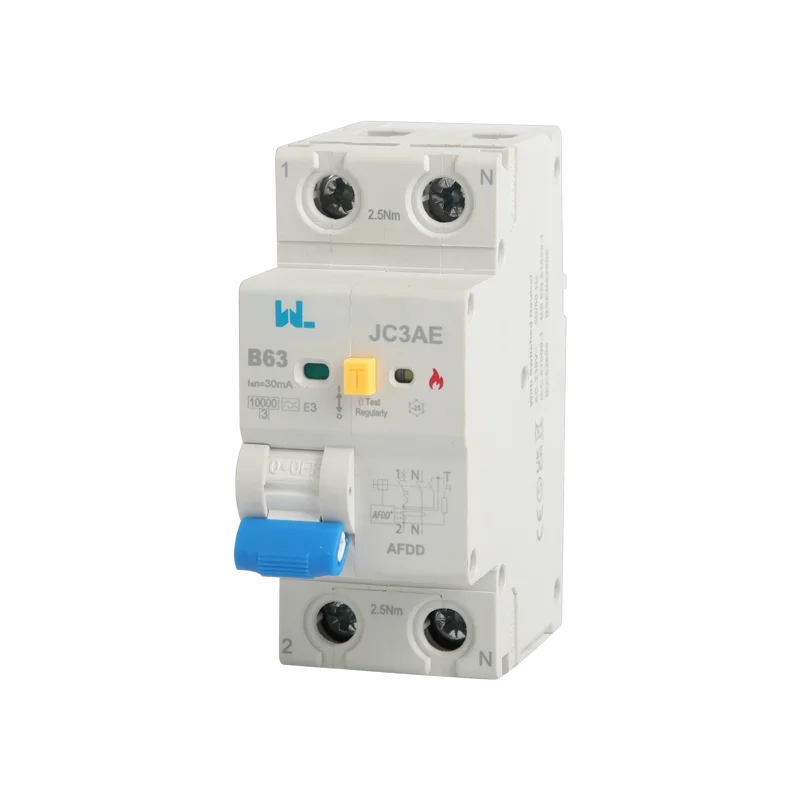
It provides the specified response to detected leakage through its sensing and opening arrangement. Confirm the exact device type: an RCCB, RCBO, leakage-protected MCCB and separate detector arrangement have different functions and supply requirements.
Can I order a replacement using a Schneider MCCB model as a reference?
It can identify the existing equipment, but it does not establish equivalence. Compare protection functions, ratings, mounting, sensing and documentation before approving another manufacturer’s proposal.
Why do earth-leakage circuit breaker prices vary?
Ratings, release functions, pole arrangements, accessories and supply scope differ. Compare complete configurations and the included documentation rather than treating every leakage breaker as the same product.
Which earth-leakage circuit breaker manual should accompany delivery?
Request the manual for the exact breaker, release and relevant accessory revisions. A general catalogue is useful for selection but does not replace installation, settings and test instructions.
Is a two-pole earth-leakage MCCB suitable for every single-phase circuit?
No. Suitability also depends on voltage, conductor arrangements, fault duty and the protection design. Confirm the specific device and its permitted application before ordering.
Does the earth-leakage function also protect against overload?
The leakage function itself addresses the specified residual-current condition. Confirm the separate overcurrent functions of the complete device; the general description earth-leakage circuit breaker does not prove that overload protection is included.
References
- IEC 60947-2:2024, scope of the circuit-breaker standard.
- HSE guidance on maintaining electrical equipment safely.
- HSE electrical-safety FAQs and RCD limitations.
Send a complete leakage MCCB enquiry
W9 Group’s WLM6LY-250 earth-leakage MCCB listing is a starting point for a configuration enquiry. Send the circuit data, protection objective, required accessories and destination-market documentation requirements when requesting a quotation. Agree the exact supplied arrangement before comparing cost or approving delivery.