





































Why Solar 800VAC ACB is a Game-Changer for Solar Power Systems
An 800 VAC solar collection feeder requires an AC breaker rating at that voltage. Neither a 690 V rating nor a DC photovoltaic label establishes that an ACB can interrupt the prospective fault on the inverter’s AC side.
Summary: An 800 VAC solar ACB must be selected against the exact system voltage, current, fault duty, pole arrangement, isolation needs and assembly rating. The article source identifies an 800 VAC solar application, but the exact model data sheet controls interrupting capacity, utilization category and accessories. Start with the one-line diagram and prospective fault current, then verify IEC 60947-2 and the destination-market installation rules.
Compare the air circuit breaker configurations against the switchboard duty and maintenance plan.
800 VAC Solar Protection Requirements
Solar collection systems can have sustained current, backfeed and maintenance-isolation requirements that differ from a conventional feeder. An ACB is only suitable when its declared voltage and short-circuit characteristics cover the installation and the panel assembly is rated accordingly.
800 VAC ACB Selection Requirements
Higher operating voltage reduces the margin for incorrect clearances, insulation and interruption assumptions. Check the exact ACB poles, terminals, busbar spacing, neutral treatment and accessory set. Do not transfer a 400 V setting or certificate to an 800 VAC order code.
Protection and isolation boundary
Coordinate the ACB with upstream and downstream devices, inverter behavior and the collector-panel fault study. Confirm whether the project needs drawout access, shunt trip, undervoltage release, auxiliary contacts or a dedicated maintenance lockout; each accessory requires its own documented code.
The ACB troubleshooting guide separates protection trips from accessory and mechanism problems.
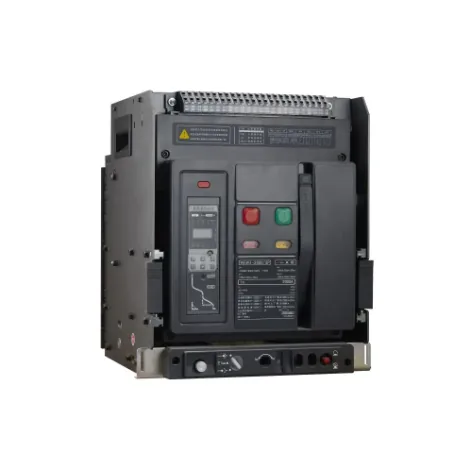
800 VAC ACB Specification Checks
| Decision dimension | 800 VAC ACB check | Evidence |
|---|---|---|
| Voltage | Rated operational and insulation voltage | Exact model datasheet and drawing |
| Fault duty | Icu/Ics or applicable declared values | Type-test or declaration scope |
| Solar duty | Backfeed, inverter and isolation behavior | One-line and coordination study |
| Assembly | Clearance, heat rise and short-circuit rating | IEC 61439 panel evidence |
Locating the breaker on the solar one-line diagram
Separate the PV array’s DC circuits from the inverter AC output before selecting a device. The AC collection voltage, frequency, transformer contribution and parallel sources determine the ACB’s duty. Check Icu and Ics at 800 VAC specifically; do not transfer a 400 V table value to the higher-voltage circuit.
Review every operating state, including a disconnected utility, parallel inverters and any storage system. Limited inverter fault contribution can change the protection pickup needed for prompt disconnection, while transformer-fed faults can set the interruption requirement. Confirm reverse-feed permissions, isolation capability and the assembly’s clearances using exact model documents.
Compare fixed and drawout ACBs when the project requires a documented replacement or isolation procedure.
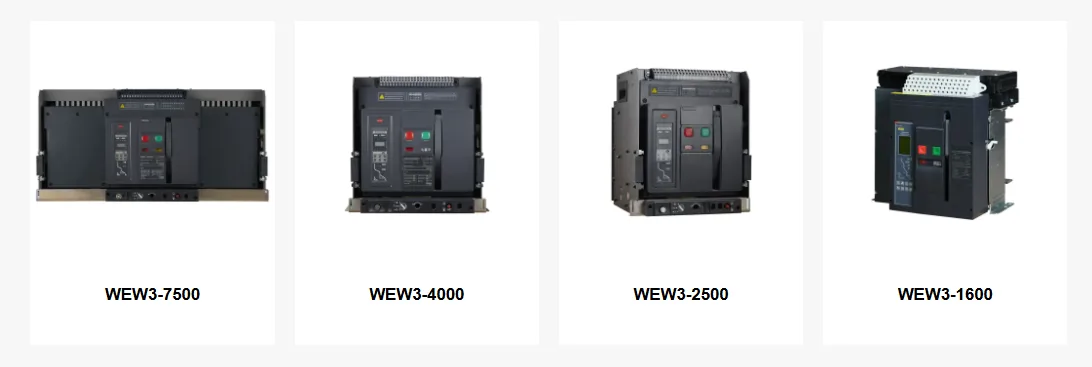
Solar ACB Project Applications
| Project area | Release question |
|---|---|
| AC collection panel | Does the breaker voltage match the collector bus? |
| Inverter interface | Are backfeed and trip signals included in the study? |
| Maintenance | Are drawout, isolation and lockout requirements documented? |
Standards and compliance
IEC 60947-2 covers low-voltage circuit-breakers; IEC 61439 covers the assembled panel. Photovoltaic installation requirements also depend on the destination-market electrical code and project authority. A product page or image is not a substitute for the exact 800 VAC model declaration, coordination study and commissioning record.
Selection and commissioning checklist
- Record voltage, current, poles, load profile and prospective fault current.
- Match the exact model and accessories to the approved drawing and standard.
- Review coordination, clearances, temperature and enclosure conditions.
- Request declarations, test evidence and installation instructions within scope.
- Record as-left settings, torque and functional test results at commissioning.
Frequently asked questions
Can a 690 V ACB be used on an 800 VAC feeder?
Not on the strength of its 690 V rating. Obtain an explicit 800 VAC operating and fault-duty declaration for the exact order code and verify the assembly at that voltage.
Is an 800 VAC ACB suitable for the PV string side?
An AC rating does not establish DC suitability. The PV string side requires equipment rated for the actual DC voltage, current and connection arrangement.
Why can inverter operation affect protection settings?
Fault-current contribution and duration can differ from a utility-fed source. Evaluate each source condition using inverter and network data rather than copying a conventional feeder setting.
Does a higher voltage automatically improve energy efficiency?
No. System losses and equipment cost depend on the complete design. A breaker voltage rating is a suitability boundary, not a guarantee of efficiency or yield.
References
- IEC 60947-2:2024 — circuit-breaker scope.
- IEC 61439-2:2020 — power switchgear assemblies.
- Schneider Electric — field testing and maintenance guide, manufacturer-specific scope.
Send W9 Group the solar one-line diagram, voltage, fault level and accessory schedule to confirm the exact ACB documentation before release.
For a duty-specific review, contact W9 Group with the one-line diagram, switchboard arrangement and required accessory functions.