











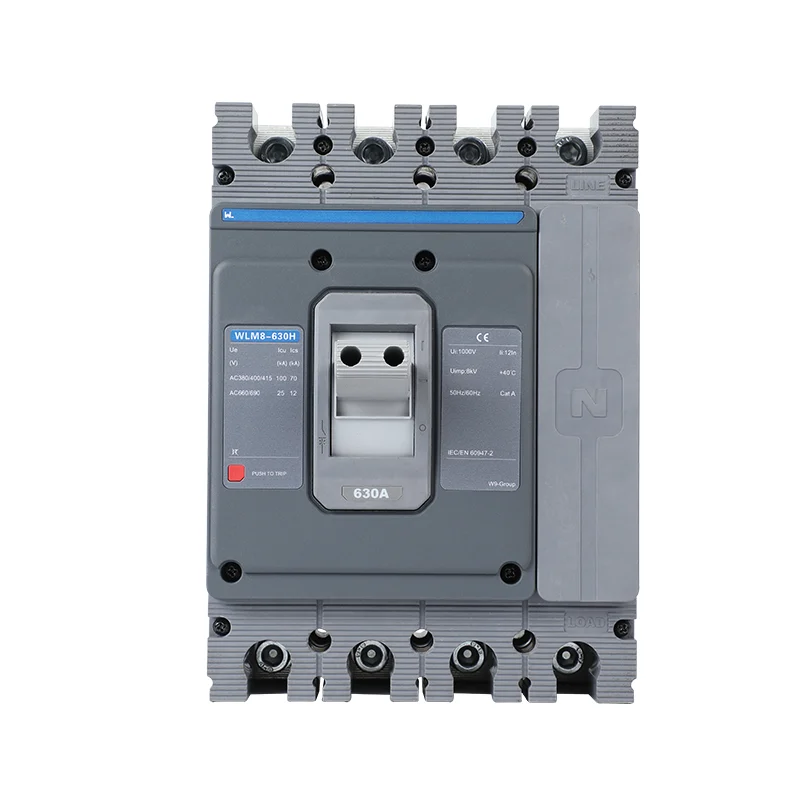
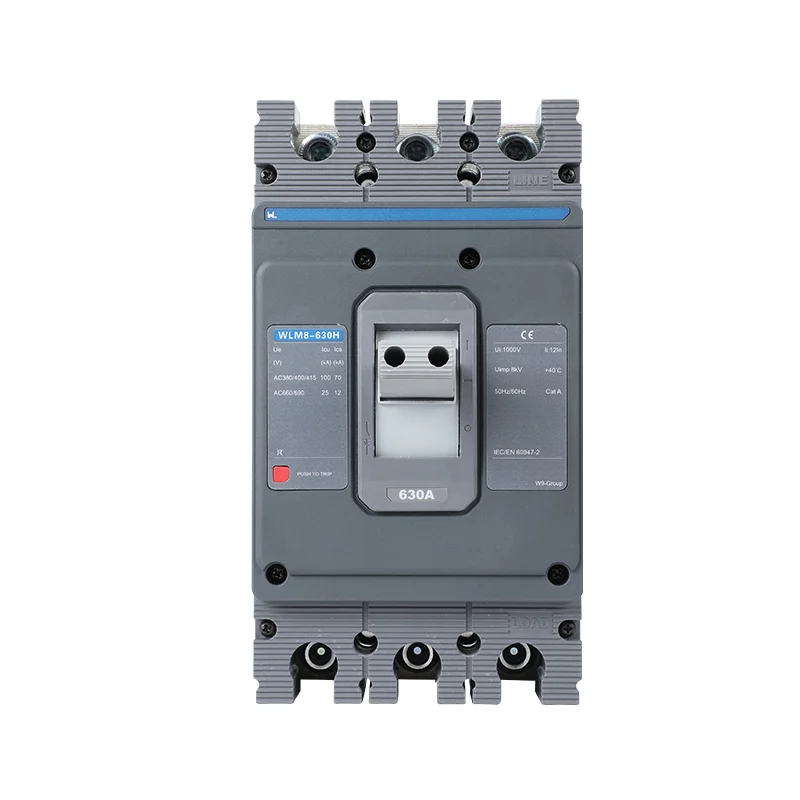
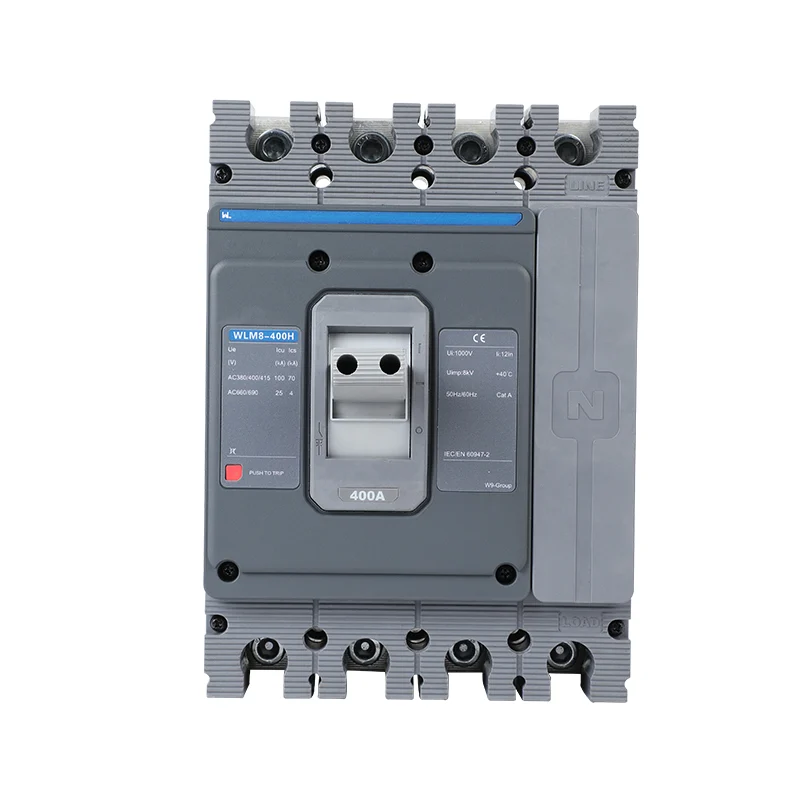
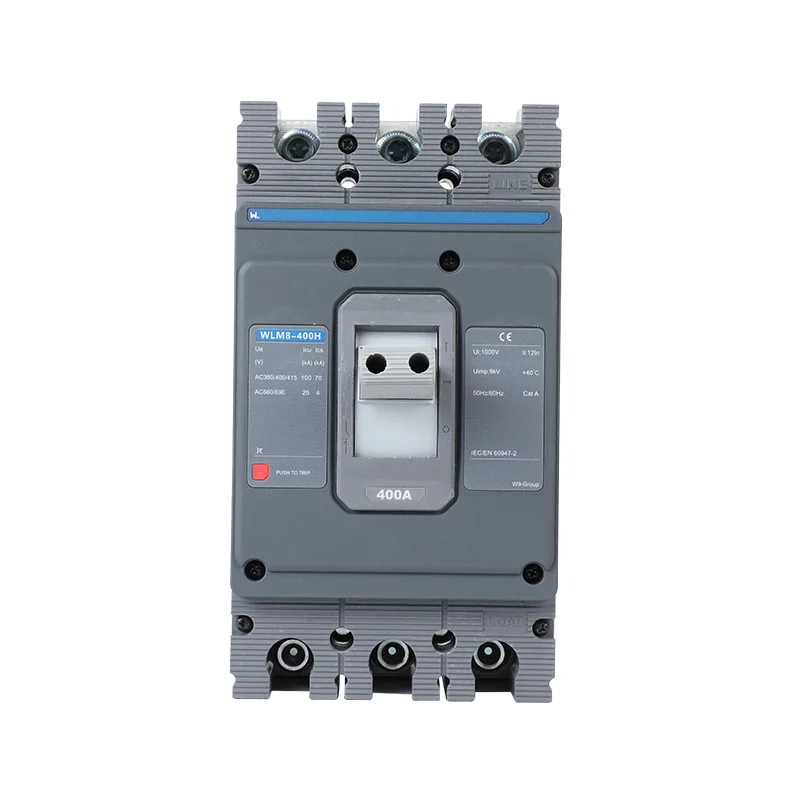
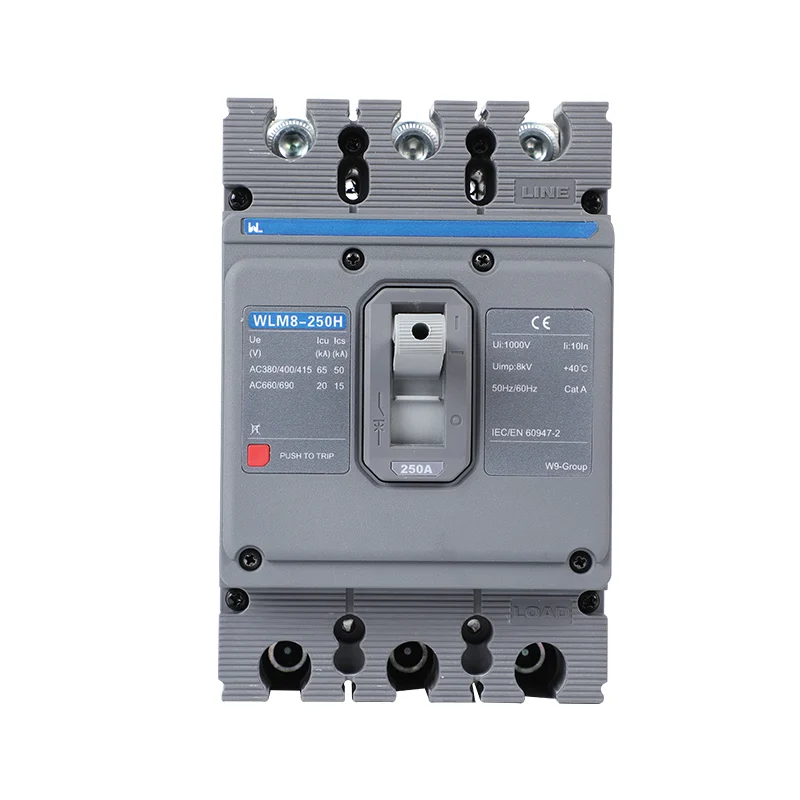





















Understanding Rated Current, Number of Poles, and Rated Operating Voltage
A breaker quote with only “100 A, four poles” is incomplete. The device must carry the load under its actual installation conditions and interrupt the prospective fault at the circuit voltage. Three nameplate fields are important, but none replaces the other.
Rated current describes a declared continuous-current capability under stated conditions. Pole arrangement describes the switched and protected conductor paths. Rated operating voltage identifies the voltage associated with the declared performance. Confirm all three using the exact model and its rating table.
Rated current and installation conditions
Start with calculated load current and conductor ampacity, then apply the installation’s temperature and enclosure conditions. A frame size is not necessarily the ordered current rating or the setting of an adjustable trip unit. Increasing a setting cannot increase the conductor’s allowable current.
For adjustable MCCBs, record the rating plug, sensor or release configuration and approved settings. For an MCB, choose the overcurrent curve using inrush and disconnection calculations as well as the current rating. The manufacturer’s curves and derating instructions govern the actual selection.
The guide to molded case circuit breakers explains how frame size, rating and trip behaviour differ.
Poles and neutral treatment
Distinguish switched poles from poles with overcurrent protection. A 1P+N designation is not automatically equivalent to a two-pole device with protection on both poles. Likewise, three-pole and four-pole breakers require review of the neutral and earthing arrangement, especially with generators or transfer equipment.
The protective conductor must not be treated as a switched neutral. Confirm the terminal diagram, source arrangement and applicable installation rules. A pole count in a web title cannot settle these details.
| Field | Document to check | Common error |
|---|---|---|
| Rated current | Exact rating and derating schedule | Confusing frame size with trip setting |
| Pole arrangement | Terminal and sensing diagram | Assuming every pole is protected |
| Operating voltage | Voltage-dependent duty table | Using insulation voltage as operating voltage |
| Fault duty | Icu/Ics or applicable interruption rating | Reusing a lower-voltage kA value |
Use the technical requirements for MCCBs to check the specification against the order code and project file.

Voltage ratings and interruption performance
Rated insulation voltage Ui and impulse withstand voltage Uimp concern different insulation characteristics from operational voltage Ue. A high Ui value does not authorise switching at that voltage. Nor does an AC voltage rating establish DC interruption capability.
Read short-circuit capacity at the actual operating voltage and frequency. A device can have different Icu and Ics values at 400 V and 690 V. Compare the installation’s fault current with the applicable rating, then review upstream and downstream coordination.
| Application | Additional information needed |
|---|---|
| Motor feeder | Starting envelope and starter coordination |
| Generator feeder | Fault contribution and neutral arrangement |
| PV circuit | AC or DC location and maximum voltage |
| Enclosed distribution | Temperature rise, connections and clearances |
Building an orderable specification
Record voltage type, frequency, load current, fault current, poles, protection functions and connection requirements. Add the ambient conditions, accessory supply and destination-market documentation. IEC 60947-2 and IEC 60898-1 have different product scopes; neither is a substitute for installation verification.
W9 Group can review an exact configuration once the one-line diagram and electrical duty are available. Keep the approved rating table with the order so the delivered unit can be checked without interpreting a marketing title.
Frequently asked questions
Is frame current the same as the trip setting?
Not necessarily. A frame can support different release ratings or settings. Check the supplied trip unit and its permitted range.
Can Ui be used as the operating voltage?
No. Insulation voltage and operational voltage describe different characteristics. Use Ue and the associated interruption ratings for the circuit duty.
Does four-pole mean all four poles have identical protection?
Do not assume it. Verify the neutral switching and sensing arrangement on the exact device diagram and trip-unit documentation.
Can an AC breaker be used on DC at the same voltage?
Only if the manufacturer explicitly rates the exact device and connection arrangement for that DC duty. The matching number alone establishes nothing about DC arc interruption.
References
- IEC 60947-2:2024 — circuit-breaker product scope.
- IEC 61439-1:2020 — low-voltage assembly general rules.
- NFPA 70 — U.S. installation-code development and scope.
To review the proposed configuration, contact W9 Group with the load schedule, available fault current and destination-market requirements.