























MCB vs RCBO: Understanding Circuit Protection Differences
A panel schedule can show an MCB and an RCBO with the same amperes while providing different protective functions. The current rating alone cannot tell a buyer whether a circuit has residual-current protection or whether an upstream RCD is part of the design.
An MCB provides overcurrent protection against overload and short circuit. An RCBO combines overcurrent protection with residual-current detection. Neither device eliminates the need for correct earthing, suitable conductors, safe installation and verification.
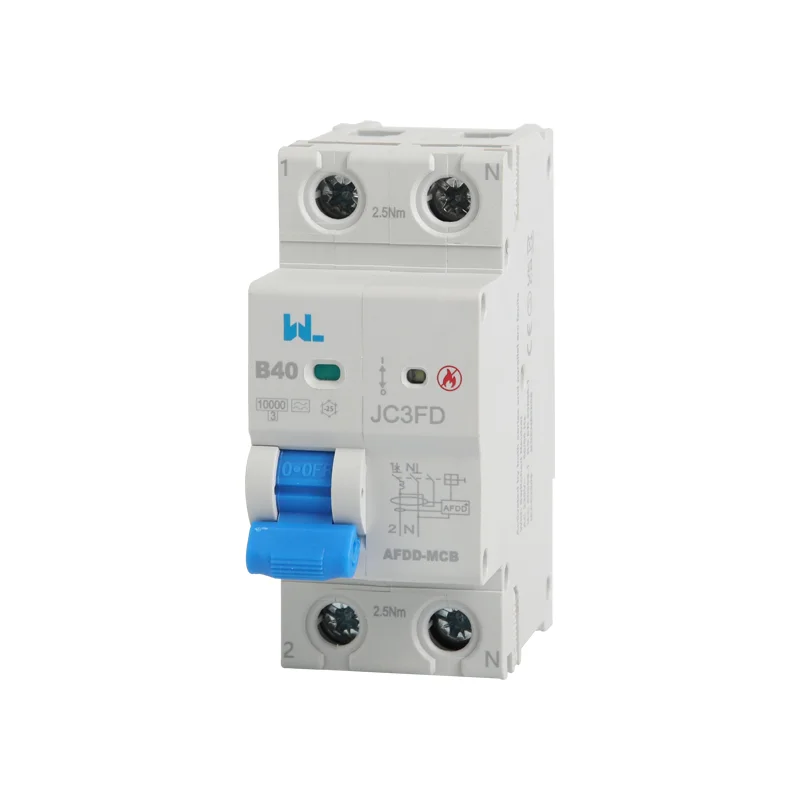
How an MCB responds to a fault
The thermal element responds to sustained overload, and the magnetic element responds to high current within the declared curve. An MCB can therefore operate for a sufficiently large line-to-earth fault when the fault loop permits enough current. It is inaccurate to say that an MCB can never clear an earth fault.
What an MCB lacks is residual-current detection: it does not measure an imbalance as an RCD does. A leakage current too small to operate its overcurrent elements may still be hazardous. Required additional protection must come from the appropriate RCD arrangement, not a claim that the MCB covers every shock risk.
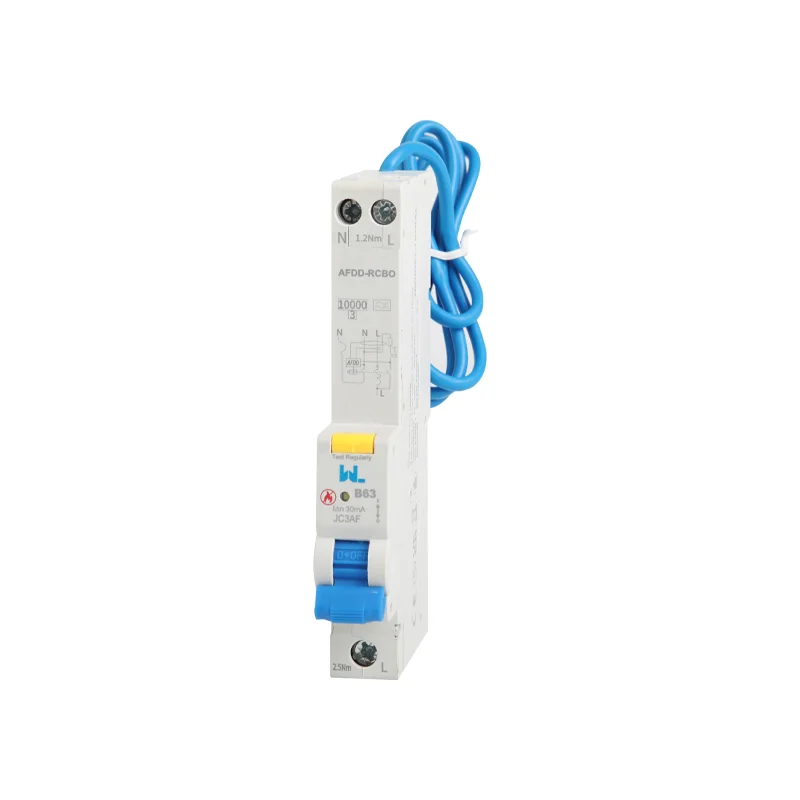
The four-pole RCBO guide explains why alarm signalling, load current and breaking capacity need separate confirmation.
What the RCBO adds
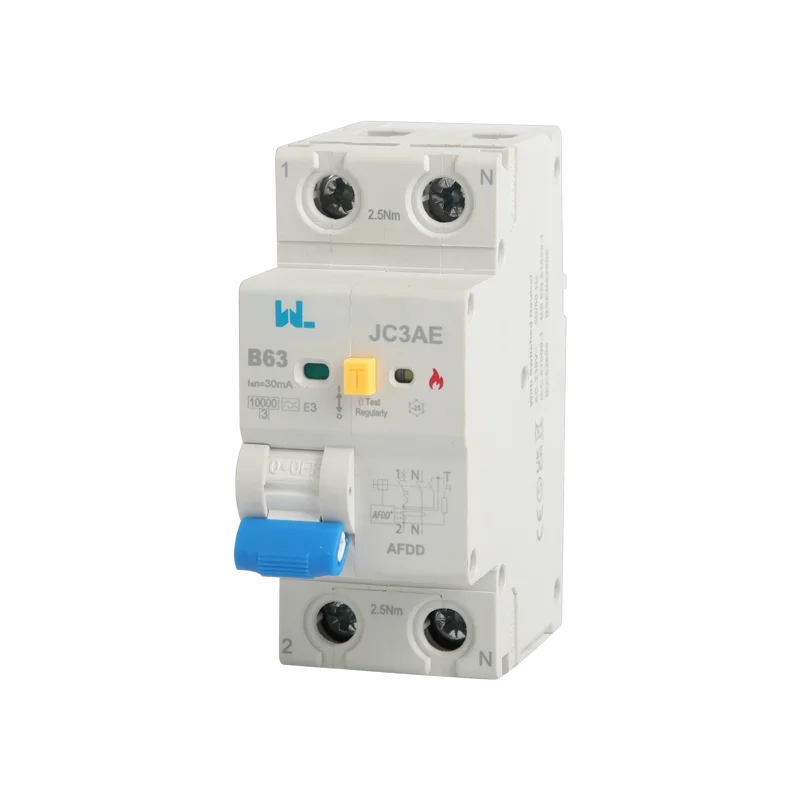
An RCBO compares the currents in the conductors passing through its sensing system and opens when the declared residual-current operating condition is met. The waveform type and sensitivity must match the equipment and installation rules. Its overload and short-circuit functions still need their own current, curve and fault-duty checks.
| Selection field | MCB | RCBO |
|---|---|---|
| Overload and short circuit | Integral function | Integral function |
| Residual-current detection | Not integral | Integral function |
| Waveform type and sensitivity | Provided by a separate RCD if required | Specify on the RCBO |
| Earth-fault disconnection | Possible through sufficient overcurrent | Overcurrent and residual-current functions within scope |
The comparison of RCBO and RCCB protection helps distinguish integral overcurrent protection from residual-current detection.

Comparing panel arrangements
A group RCCB with downstream MCBs can provide residual-current protection, but one leakage fault may disconnect multiple circuits. Individual RCBOs can help contain the outage to one branch when coordinated with upstream devices. Actual panel space, cost and selectivity depend on the selected models and wiring arrangement.
Neutral routing is especially important. A neutral shared between independently protected circuits can cause unwanted residual-current operation or compromise the intended arrangement. A qualified installer should verify conductor routing and connections rather than replacing the RCBO with an MCB to suppress trips.
| Symptom or requirement | Check before changing the device |
|---|---|
| Motor-start trip | Starting current, curve and conductor protection |
| Leakage trip | Insulation, connected equipment and neutral routing |
| High fault level | Breaking capacity at the actual voltage |
| Circuit continuity | Upstream selectivity and grouping of loads |
| Electronic load | Required residual-current waveform type |
Selecting and verifying the complete circuit
Record the load, conductor ampacity, voltage, poles, fault level and installation requirements. Then identify which device provides each required protective function. IEC 60898-1 and IEC 61009-1 describe different product scopes; installation verification is a separate responsibility.
For a W9 enquiry, send the circuit schedule and protection arrangement rather than an ampere value alone. Preserve commissioning results and the exact replacement code so maintenance cannot unintentionally remove the residual-current function.
Frequently asked questions
Does an MCB protect against earth faults?
It can clear a high-current earth fault through its overcurrent elements when the fault loop produces sufficient current. It does not provide residual-current detection or replace required RCD additional protection.
Can an RCBO replace an MCB directly?
Only after checking the complete circuit, neutral routing, poles, ratings, busbar compatibility and installation requirements. A matching current rating alone does not establish interchangeability.
Why use one RCBO for each circuit?
Separate devices can limit the loads disconnected by a residual-current fault. Upstream selectivity and correct wiring are still needed to achieve the intended continuity.
Should nuisance tripping be solved by removing RCD protection?
No. Investigate the leakage, wiring and connected equipment and maintain all protection required by the installation rules. Repeated resets or substitution can conceal an unresolved fault.
References
- IEC 61009-1:2024 — RCBO general requirements.
- IET — Which RCD Type?.
- IEC 60364-6:2016 — installation verification.
For a circuit-level selection, contact W9 Group with the circuit schedule, load waveform, earthing arrangement and applicable installation rules.