








What Is the RCD Function?
What Is the RCD Function?
When a project engineer in Manchester commissioned a small commercial fit-out, the protection schedule had been copied from a generic diagram. As circuits came online, nuisance trips appeared across several final circuits. The devices were not proven defective; the reversal came when the team checked residual-current sensitivity, neutral routing and the circuit topology. The drawing had treated every load as if it leaked current in the same way.
Summary: The RCD function is to detect an imbalance between the current leaving on line conductors and the current returning on neutral, then disconnect the circuit when the residual current reaches its rated threshold. An RCCB to IEC 61008-1 provides residual-current protection without overcurrent protection, while an RCBO to IEC 61009-1 combines both functions. Confirm the earthing arrangement, device type, IΔn, pole configuration and downstream neutral paths before approving a schedule.
In everyday trade language, a residual current device (RCD) is an umbrella term for equipment that limits shock and leakage risks by opening a circuit. The term is used by regulators, installers and manufacturers, but the exact product category matters for coordination. Electrical Safety First explains the life-safety role of RCDs for people using electrical installations, while SafeWork NSW describes them as devices that disconnect supply when leakage is detected.
1. What the RCD function measures
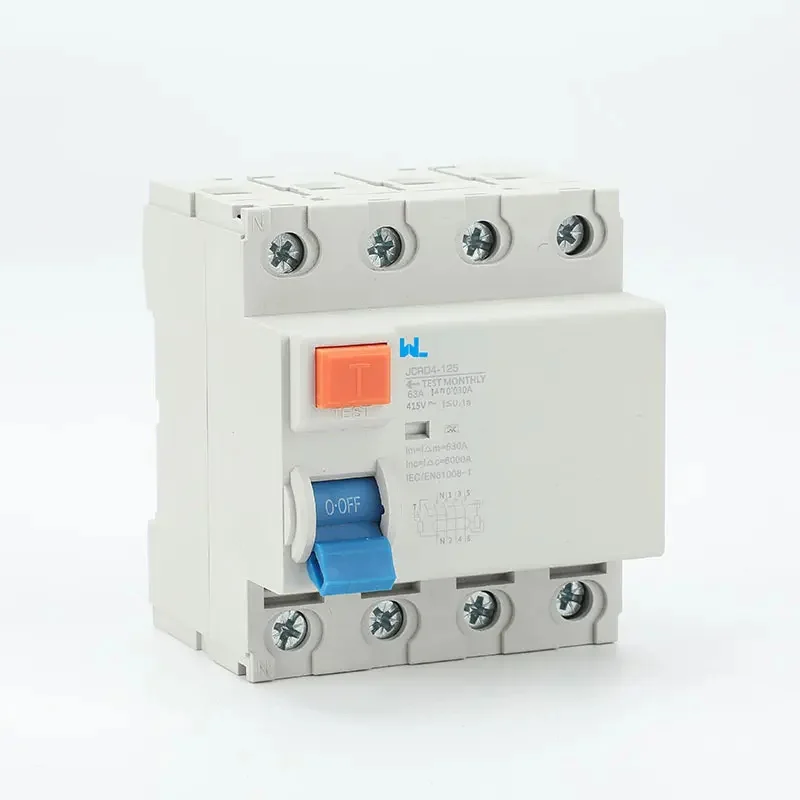
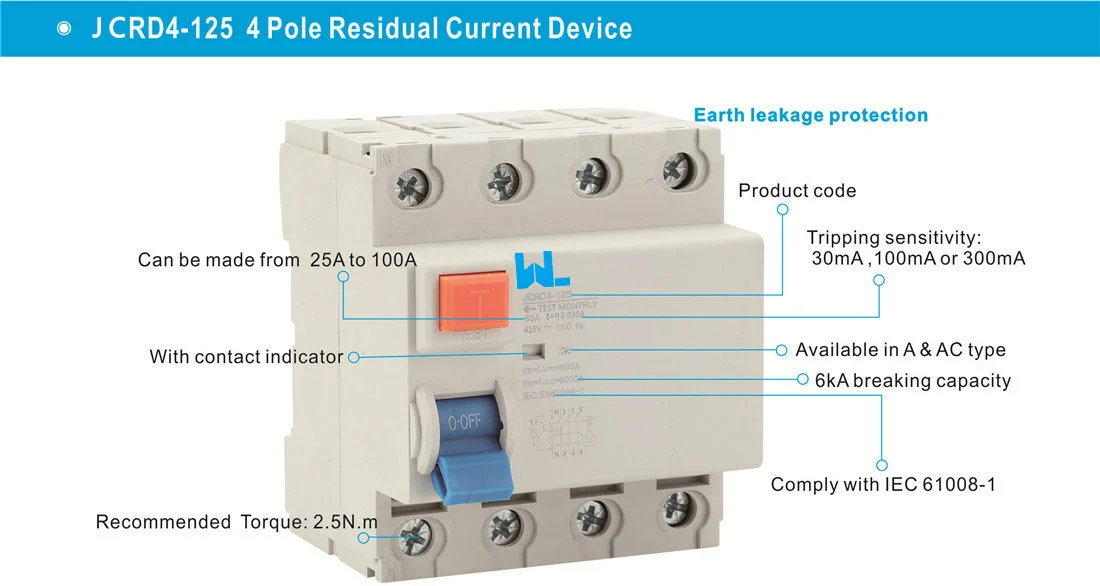
An RCD passes the line and neutral conductors through a sensing core. Under healthy conditions, the magnetic effects cancel. If some current returns through protective earth, a person, a cable screen or another unintended path, the sum is no longer zero. The trip mechanism compares that residual current with the marked residual operating current, IΔn, and opens the contacts.
This is differential measurement, not a direct measurement of load power. Understanding the RCD function means separating that residual-current role from overload protection. A 30 mA setting is commonly selected for additional shock protection in appropriate final circuits, but the correct value depends on the installation design and local rules. IEC 60364-4-41 frames electric-shock protection measures; it does not make every circuit or every 30 mA choice identical.
During verification, an installation tester injects a controlled residual current and records operating time and current. The test method and acceptance limits should follow the applicable product standard, national rules and manufacturer instructions. The front-panel test button checks the trip mechanism through an internal test circuit; it does not prove that every conductor is routed correctly.
2. Why nuisance trips happen in real projects
Nuisance tripping is often an interaction problem. Variable-speed drives, LED drivers, information-technology power supplies, heating controls and long cable runs can each contribute capacitive or high-frequency leakage. When several circuits share a device, their normal leakage can add until the operating margin is small. A neutral borrowed from another RCD group can create an immediate imbalance even when insulation is sound. Each residual current device should therefore be assessed against the leakage profile of the circuits it serves.
Engineers should map every line and neutral pair, keep each RCD group’s neutral on the correct bar, and separate protective-earth conductors from neutral downstream of the designated point. Check whether the load produces smooth DC, pulsating DC or higher-frequency components; selecting only by the word “RCD” can miss the required sensing behaviour. IEC 62423 adds requirements for Type F and Type B RCDs where relevant, such as equipment that can generate frequency components or smooth DC residual current.
Commissioning should include insulation resistance, polarity, loop or earth-fault checks as applicable, and RCD operating tests. Record the measured values by circuit. If a device trips during energisation, isolate loads methodically rather than increasing the threshold without a documented risk assessment.
3. RCCB vs RCD: naming and protection boundaries
RCCB vs RCD is usually a terminology question. RCD is the broad functional name; RCCB is a specific residual-current circuit-breaker that does not provide integral overcurrent protection. An MCB or fuse must therefore protect the RCCB and its downstream conductors. An RCBO includes residual-current and overcurrent releases in one coordinated device.
| Device or term | What it senses | Overcurrent protection | Typical coordination point |
|---|---|---|---|
| RCD (functional term) | Residual current; category must be specified | Not implied | Use the product marking and circuit schedule |
| RCCB | Residual current | No; see IEC 61008-1 | Upstream/downstream MCB or fuse, with rated current coordination |
| RCBO | Residual current plus line overcurrent | Yes; see IEC 61009-1 | Useful where circuit-level selectivity and space are priorities |
| MCB | Overload and short circuit | Yes | Does not replace shock-oriented residual-current protection |
The practical distinction is documented performance, not a label. For RCCB vs RCD decisions, verify poles, rated current, short-circuit capability, residual-current type, selectivity and compatibility with the board. A catalogue comparison from Schneider Electric is useful background, but the project schedule remains responsible for the final combination.
The RCD function remains residual-current interruption; any overload or short-circuit duty must be assigned to an MCB, fuse or the overcurrent element inside an RCBO.
4. Selecting sensitivity and device type by application
Start with the installation’s protective measure and load behaviour, then select the least-complex device that meets the risk and coordination objectives. Sensitivity is not a proxy for quality: a lower threshold may increase RCD protection in a suitable application but can also reduce immunity to accumulated normal leakage. Record why the chosen threshold fits the circuit.
| Application dimension | Questions to answer | Engineering implication |
|---|---|---|
| Final circuits for general equipment | Is additional shock protection required by the destination rules? What is the expected standing leakage? | Often a 30 mA solution is considered, with circuit-by-circuit verification and suitable Type AC or Type A selection. |
| Electronic and inverter-fed loads | Can the equipment create pulsating DC, smooth DC or mixed-frequency residual current? | Assess Type A, F or B needs under IEC 62423 and the equipment maker’s instructions. |
| Large boards or multiple RCD groups | Where are time delays and selectivity required? Are neutrals segregated? | Coordinate upstream/downstream operating times and test the complete hierarchy. |
| OEM panels and packaged equipment | Who owns the final protective device, and what documentation travels with the panel? | Specify ratings, wiring diagrams, test records and replacement identifiers together. |
5. Standards, tests and market compliance
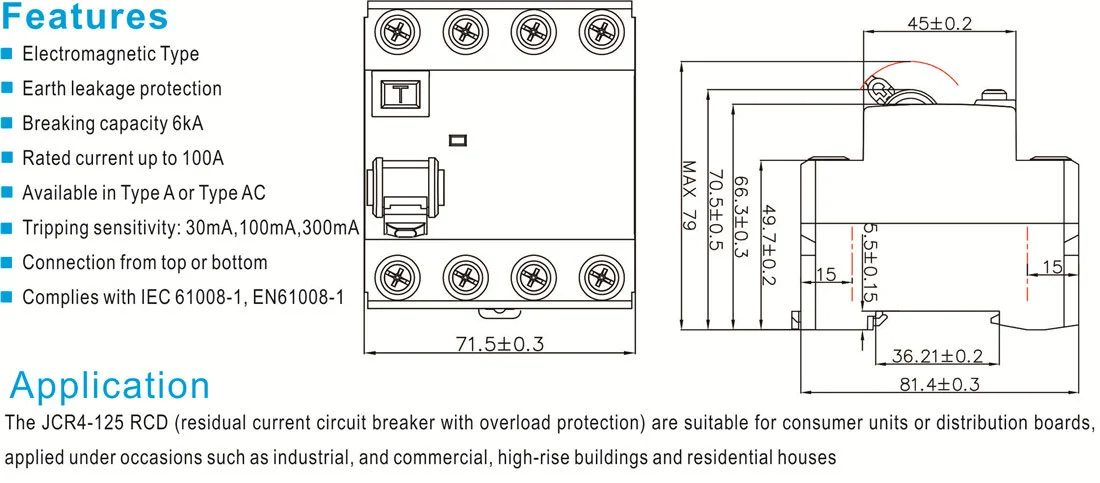
IEC 61008-1 covers residual-current circuit-breakers without integral overcurrent protection (RCCBs) for household and similar uses. IEC 61009-1 covers residual-current circuit-breakers with integral overcurrent protection (RCBOs). Their scope, rated conditions and test sequences are not interchangeable; confirm the edition and national adoption used for the project.
IEC 60364-4-41 addresses protection against electric shock within low-voltage installations. It sets design principles that interact with local wiring regulations, earthing systems and disconnection times. IEC 62423 specifies additional requirements for Type F and Type B devices; it is relevant only when the load and selected device fall within that scope.
Conformity evidence is market- and product-specific. W9 Group states that products are developed and manufactured with reference to IEC, CE, TUV, UL and relevant requirements, and lists SEMKO, RoHS, LVD, EMC and CB certifications for applicable products. Buyers should request the declaration, certificate scope, test report and model number; never infer that a certification applies to every device in a range. This evidence supports RCD protection only when the exact model and installation use are within scope.
6. A disciplined selection and procurement sequence
- Draw the topology: identify line, neutral, protective earth, shared neutrals, sub-distributions and all upstream devices.
- Characterise the load: list drives, converters, heating elements, filters and cable lengths that may add leakage or DC components.
- Choose the boundary: use an RCCB plus coordinated overcurrent device, or an RCBO where circuit-level protection is preferable.
- Coordinate and test: check ratings, selectivity and measured trip performance; retain a commissioning record for handover.
- Buy evidence with hardware: obtain drawings, instructions, declarations and applicable certificates for the exact model and destination market.
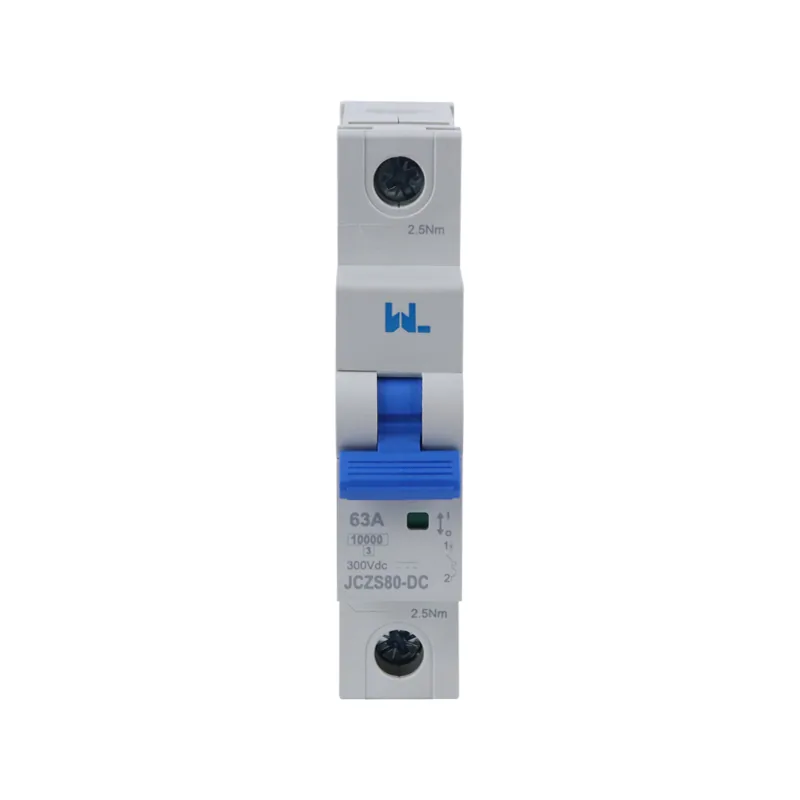
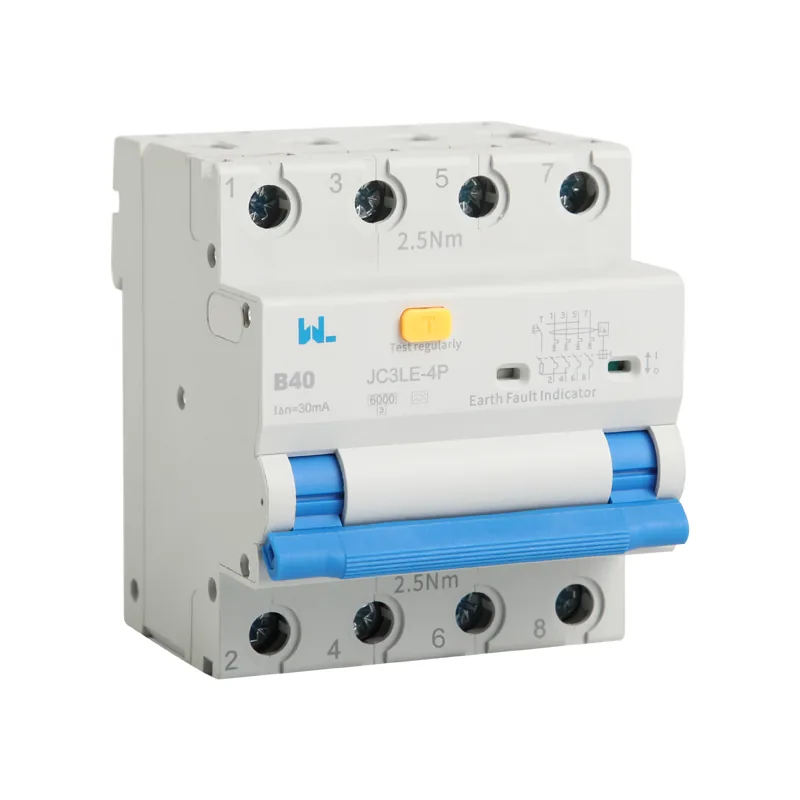
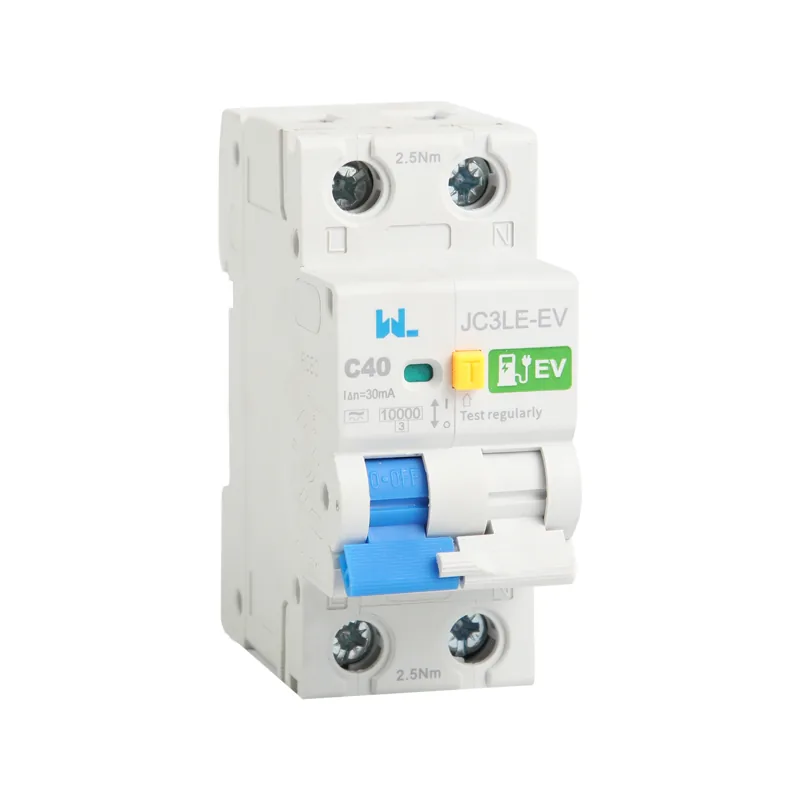
For a China-based sourcing programme, W9 Group can be considered alongside other qualified suppliers when its configurable low-voltage protection range, inspection records and OEM/ODM documentation fit the project. Its JC3RS residual-current device and JC3RS-B device should be evaluated against the required type, ratings and evidence rather than selected from a generic diagram.
Frequently asked questions
What is the main purpose of RCD?
The main purpose is to disconnect a circuit when residual current indicates an unintended path, reducing electric-shock and leakage risk. It supplements, but does not replace, overload, short-circuit and earthing measures. The exact application is governed by the installation rules and device rating.
What is RCD and its function?
An RCD is a residual current device that provides residual-current protection. Its sensing core compares outgoing and returning current; when the difference reaches IΔn, the mechanism opens the circuit within the performance limits of its standard. Correct neutral routing and device type are essential to the intended RCD protection.
How do I know if my RCD is working?
Press the marked test button only under the manufacturer’s instructions and safe operating procedure; the device should trip and then be reset. A qualified person should also perform an instrumented residual-current test and verify polarity, neutral segregation and circuit labelling. A button test alone cannot prove the complete installation.
What is the difference between an RCD and an RCCB?
RCCB vs RCD is broad term versus specific product: RCD describes the function, while an RCCB is a residual-current breaker without integral overcurrent protection under IEC 61008-1. Pair an RCCB with suitable overcurrent protection; use an RCBO under IEC 61009-1 when both functions are needed in one device.
What does an RCD protect against?
It responds to residual current caused by leakage to earth or another unintended return path, helping address shock and fire risks identified by the installation design. It does not by itself protect against every overload, short circuit or line-to-neutral fault. Confirm the complete protective scheme before handover.
References
- Electrical Safety First: Home buyers and electrical safety.
- SafeWork NSW: Residual current devices.
- Schneider Electric: MCB, MCCB, RCD, RCCB and RCBO overview.
- Residual-current device background (Wikipedia).
The memorable lesson from commissioning is simple: an RCD trips on the current that escapes the intended path, not on the story drawn in a generic diagram. Design the path, specify the device and test the installed system as one chain. For model documents, application questions or sourcing support, review the technical support resources, then contact W9 Group before the protection schedule is frozen.