























What Is the RCD Function?
An RCD enquiry should identify what current can return outside the intended circuit and what disconnection is required. A generic claim of electrical safety does not explain whether a device includes overload protection or detects the waveform created by connected equipment.
A residual-current device detects a current imbalance between the live conductors in its sensing arrangement. It can disconnect within its declared response, but does not eliminate the need for earthing, correct wiring or other protective functions.
How residual-current detection works
In normal operation, the currents through the sensing arrangement balance. Current returning by another path creates an imbalance that the device can detect. Incorrectly shared neutrals or wiring outside the required sensing path can cause unwanted operation or compromise the intended arrangement.
Residual current is not the same quantity as circuit load current. Rated current concerns carrying capability, while residual-current sensitivity defines the relevant operating threshold. The exact waveform type and time characteristic are also essential selection fields.
Review the difference between RCBO and RCCB protection before allocating overload and residual-current functions.
RCD device categories and functions
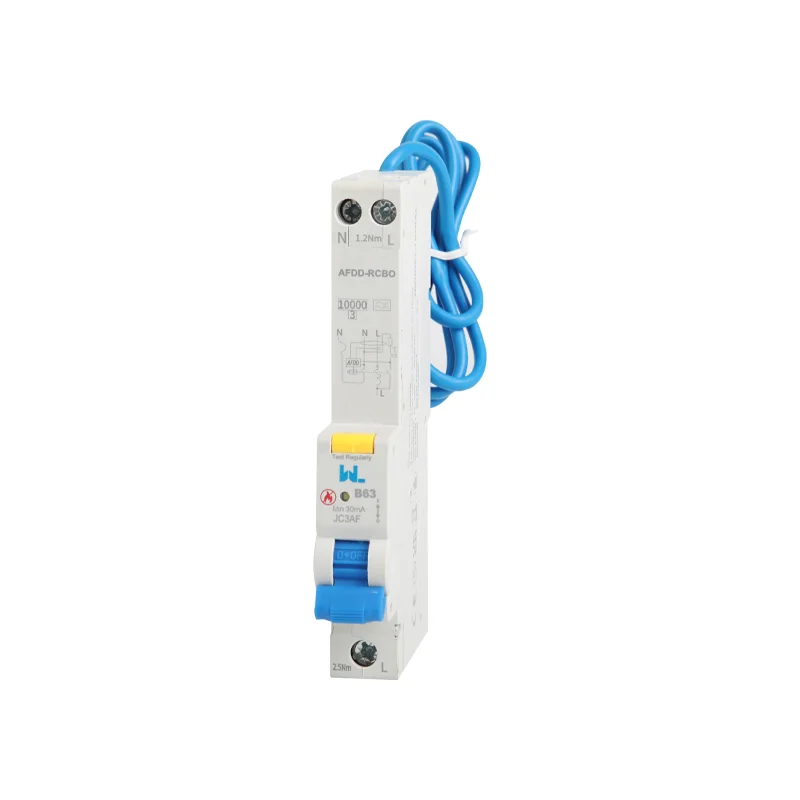
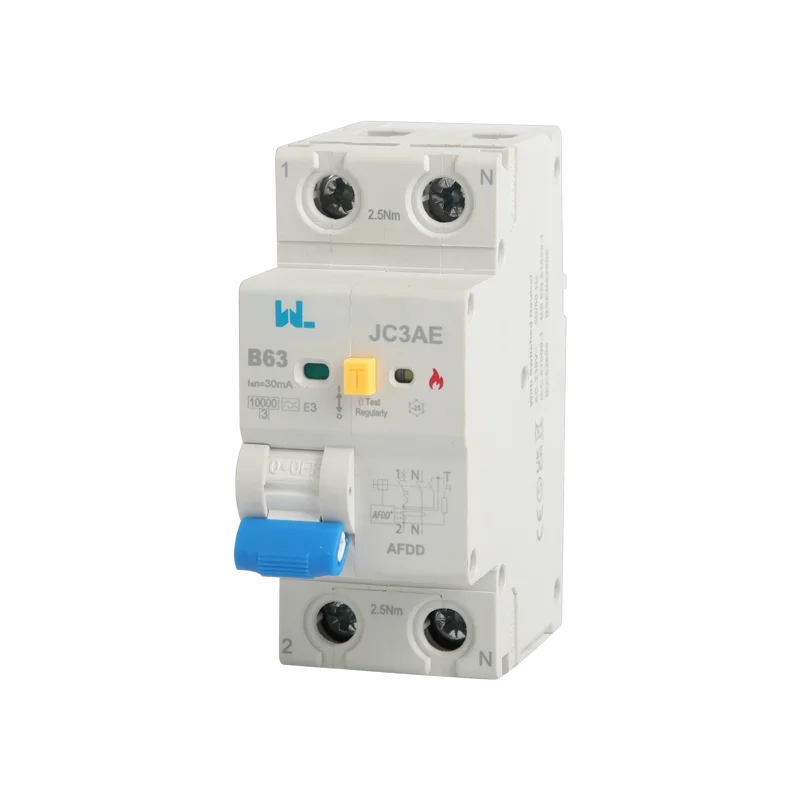
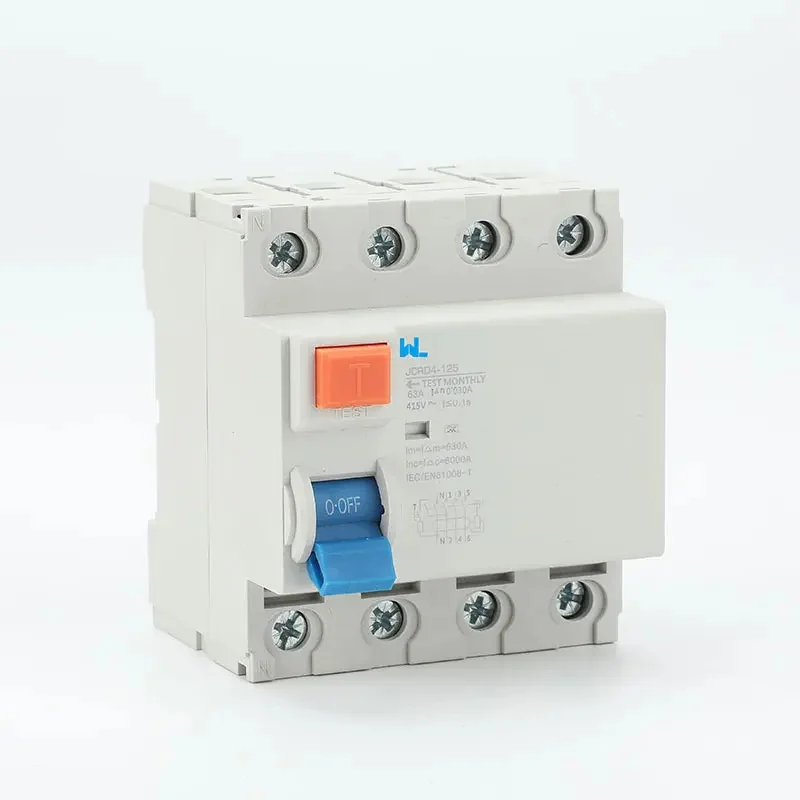
RCD is a broad functional term. An RCCB under IEC 61008-1 has no integral overcurrent protection, while an RCBO under IEC 61009-1 combines residual-current and overcurrent functions. A test button does not identify which category is installed.
| Device | Residual-current function | Overcurrent function |
|---|---|---|
| RCCB | Integral within declared scope | Separate coordinated device needed |
| RCBO | Integral within declared scope | Integral within declared scope |
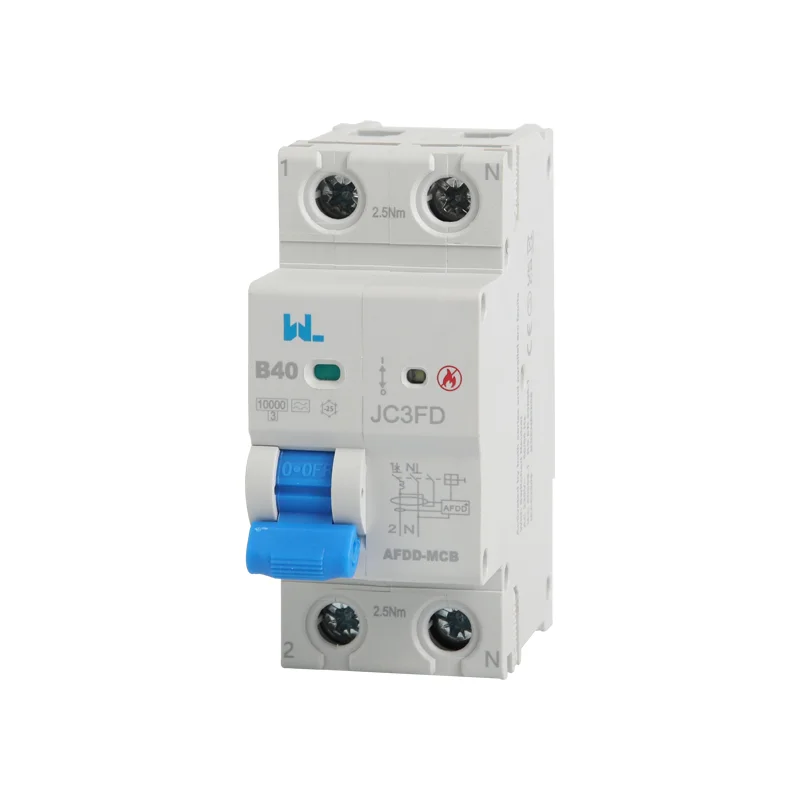
| MCB | Not integral | Overload and short circuit |
The guide to residual-current protection describes the installation conditions that a device label alone cannot establish.
Choose type and sensitivity for the load
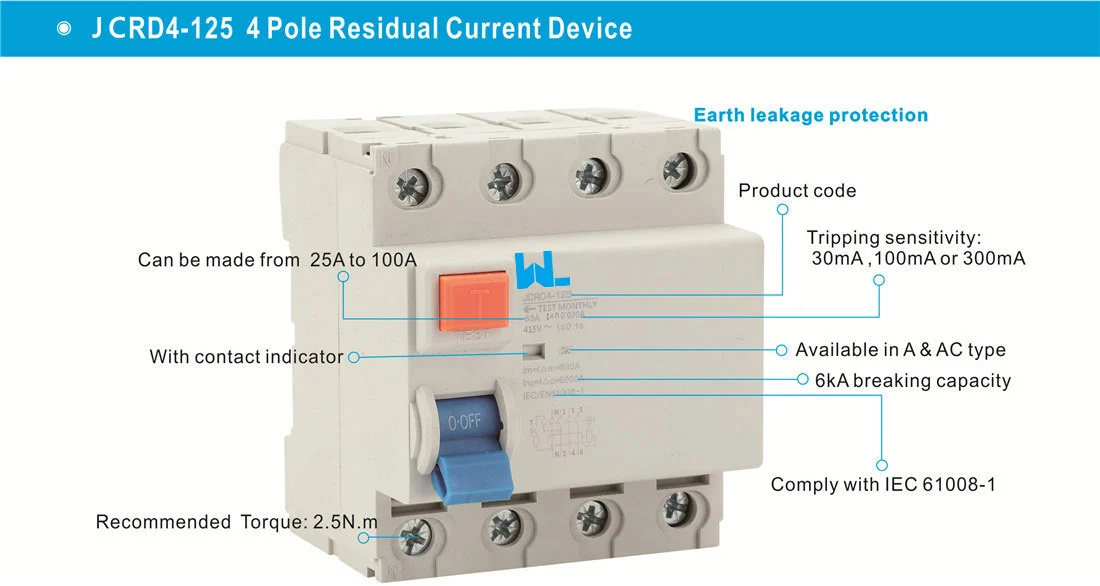
Type AC, A and B refer to different waveform capabilities, not current ratings or MCB magnetic curves. Follow the equipment instructions and installation rules. Electronic loads can require a response beyond a simple sinusoidal leakage assumption, but no single type should be prescribed universally without the circuit context.
A 30 mA arrangement is commonly associated with additional protection, while other sensitivities can have different purposes. Do not increase the threshold merely to suppress trips where more sensitive protection is required. Investigate standing leakage, insulation and routing.
| Symptom | Investigation |
|---|---|
| Trips after rain | Moisture and insulation, assessed safely |
| Trips with another circuit | Shared or crossed neutral routing |
| Trips when electronics start | Waveform, leakage and equipment condition |
| Will not test | Supply conditions, wiring and device instructions |
Installation and testing
Use a competent person’s verification procedure and a tester suitable for the device type. The front button provides a functional check under the stated conditions; it does not prove earthing quality or replace the installation test record. Never bypass required protection to diagnose a recurring trip.
W9’s RCCB and RCBO ranges should be selected by exact model, waveform, sensitivity and coordinated fault duty. Keep the device schedule and commissioning results so future replacements preserve the intended protection.
Frequently asked questions
What is the function of an RCD?
It detects residual current, an imbalance in the monitored live-conductor currents, and operates within its declared response. It is one layer of protection, not a guarantee against every shock.
Does every RCD protect against overload?
No. An RCCB needs separate overcurrent protection, whereas an RCBO combines the functions. Confirm the exact product category.
Is the test button a complete installation test?
No. It checks a device function under specified conditions. The installation still needs the required instrumented verification.
Why does an RCD trip repeatedly?
Possible causes include insulation faults, standing leakage, shared neutrals or an unsuitable device selection. A competent person should investigate rather than remove required protection.
References
- IEC 61008-1:2024 — RCCBs without integral overcurrent protection.
- IET — Which RCD Type?.
- IEC 60364-6:2016 — installation verification.
For waveform and pole selection, contact W9 Group with the circuit topology, load equipment and destination-market rules.