




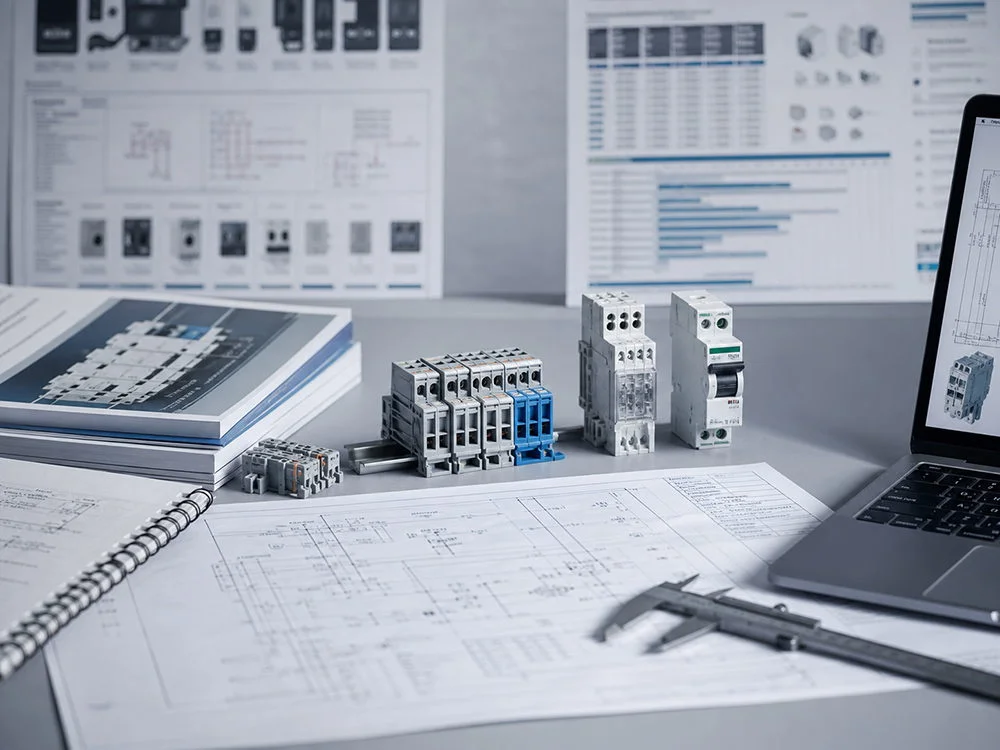


WLM6E Electronic Circuit Breaker with Advanced LSIG Protection
WLM6E Electronic Circuit Breaker with Advanced LSIG Protection
When Priya, an electrical supervisor in Pune, energized a new packaging line, the 800 A main breaker opened before the feeder device cleared a motor fault. Production stopped, operators reset drives and the commissioning team began checking the breaker. The reversal came from the specification process: the electronic trip unit had been selected without a coordinated LSIG study, so the product was not defective; the protection settings and system duty were incomplete.
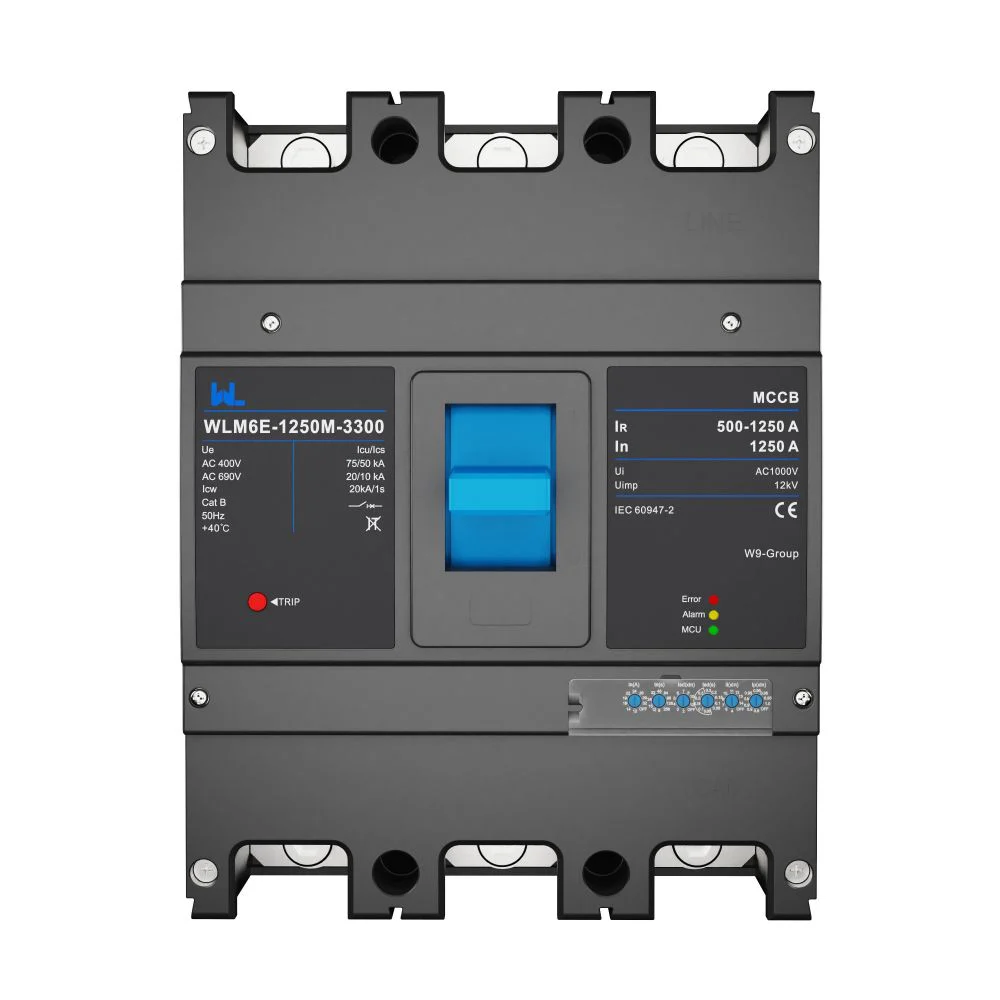
요약: W9’s public listing identifies the WLM6E-800A-3300 as an electronic molded-case circuit breaker (MCCB) available in 3-pole and 4-pole forms with built-in long-time, short-time, instantaneous and ground-fault (LSIG) functions. IEC 60947-2 distinguishes ultimate (Icu) and service (Ics) short-circuit ratings, which must meet the prospective fault at the installation point. Confirm voltage, fault current, neutral arrangement and coordination before purchase; then record and test every trip setting.
What the WLM6E electronic breaker does differently
An electronic circuit breaker samples phase current and applies four protection decisions. Long-time (L) protection limits sustained overloads; short-time (S) adds a controlled delay so downstream devices can clear first; instantaneous (I) responds to severe short circuits; and ground-fault (G) detects residual current when the earthing method calls for it. LSIG is a set of engineering functions, not a guarantee of selectivity by itself.
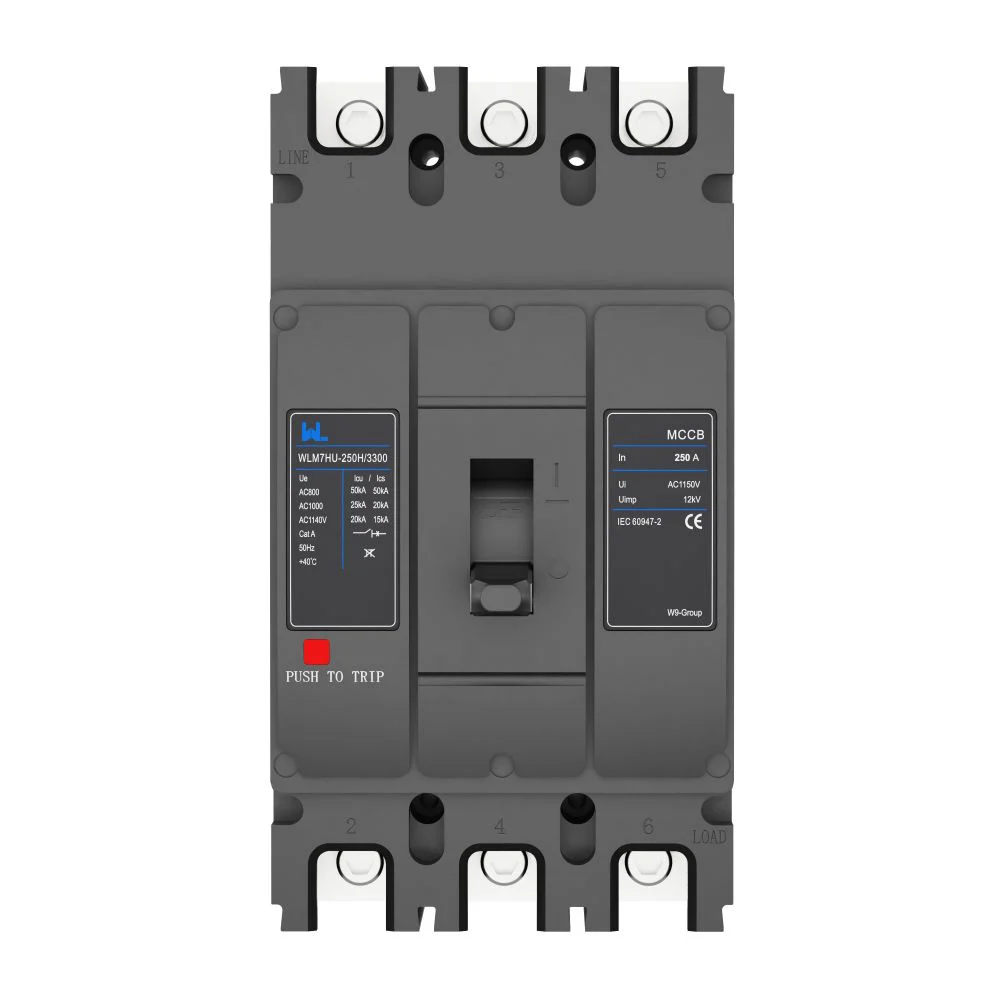
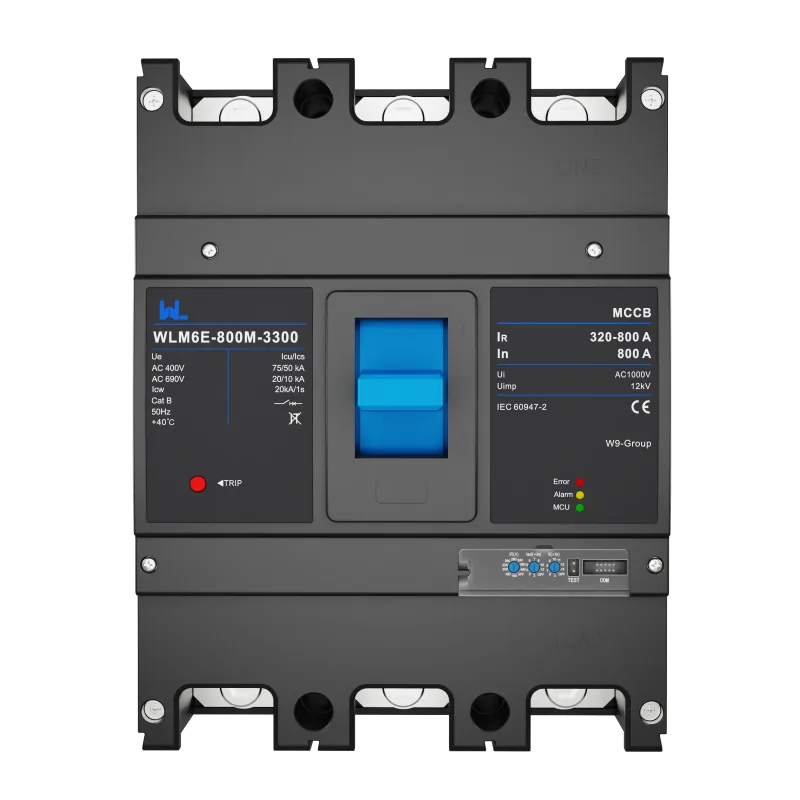
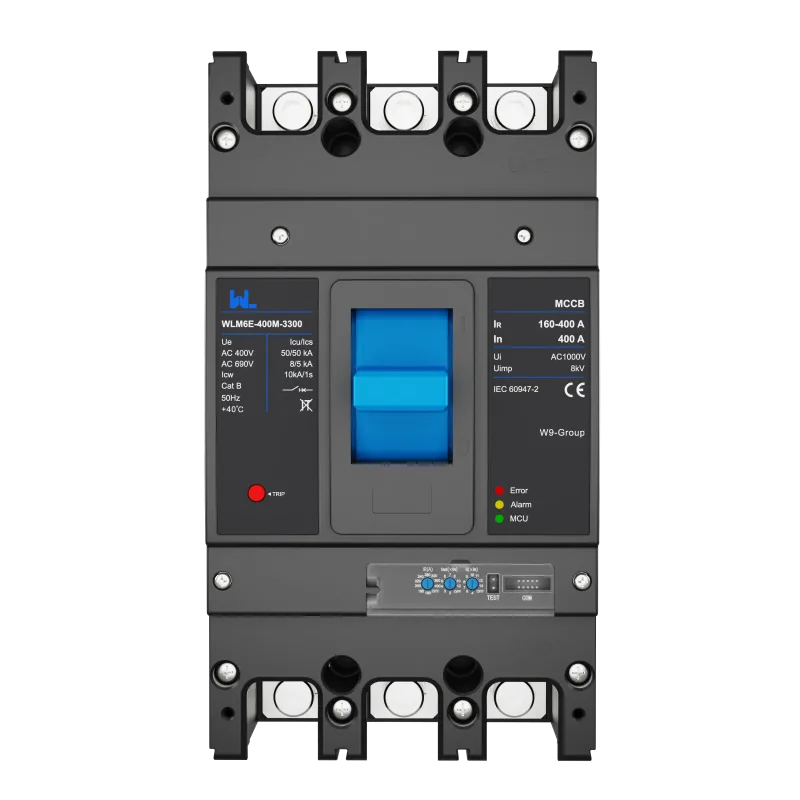
The WLM6E family catalogue shows electronic MCCB models from 160 A to 2,000 A, including the WLM6E-800A-3300 entry. The product page describes 400–690 V applications and 3P/4P options, but interrupting capacity, pickup ranges, control supply and accessories remain variant-specific. Request the current datasheet and destination-market marking instead of inferring values from the frame size or a neighboring model.
Electronic protection adds commissioning work but can reduce hidden operating costs. A nuisance trip may stop a batch, require a controlled restart and consume specialist hours; an un-cleared fault can damage busbar insulation and drives. Include testing, spare trip units, thermal inspection and planned outage time in total-cost-of-ownership (TCO) calculations. A lower-priced fixed breaker can become more expensive when changing loads force a redesign.
How LSIG protection is engineered
Long-time and short-time coordination
Set the long-time pickup from the continuous-load calculation, conductor ampacity and enclosure derating. Plot the result against the cable thermal limit and downstream curves. Short-time pickup and delay are then chosen to preserve selectivity without allowing excessive let-through energy. Use the manufacturer’s time-current curves; a dial position copied from another project is not evidence of coordination.
Instantaneous and ground-fault decisions
Instantaneous pickup must clear high-current faults while tolerating motor starting or transformer inrush. Ground-fault pickup and delay depend on the earthing system, neutral treatment and required sensitivity. For a 4-pole WLM6E, verify whether the neutral is switched and how the sensing circuit is wired; a 3-pole and 4-pole device are not interchangeable without a design check.
Commission with a calibrated secondary-injection set or the procedure approved in the product manual. Measure pickup and delay for L, S, I and G, record the test date and retain the settings schedule. Re-test after a trip-unit replacement, firmware change or major feeder modification.
Application checks for an 800 A electronic MCCB
Typical 800 A duties include process feeders, motor-control centers (MCCs), transformer secondaries, bus couplers and generator ties. The same breaker can require different settings in each location:
- MCC feeder: Compare motor starting current with the instantaneous region and coordinate the MCCB with starter overload relays.
- Transformer secondary: Obtain transformer impedance and inrush data; verify fault duty at the secondary terminals, where current can be higher than at the service entrance.
- Bus coupler: Review short-time delay, arc-energy exposure and any interlocking or maintenance-mode feature offered for the exact variant.
- Generator or microgrid tie: Recalculate fault current for each source combination. Lower generator contribution can change pickup margins, while bidirectional flow can alter sensing assumptions.
W9’s MCCB의 특징 및 적용 분야 가이드 explains frame ratings, Icu/Ics terminology and coordination concepts that belong in a procurement package.
Configuration and lifecycle comparison
| Decision dimension | WLM6E electronic LSIG | Fixed thermal-magnetic MCCB | Procurement check |
|---|---|---|---|
| Overload response | Adjustable long-time function on the specified trip unit | Thermal response with limited adjustment | Match pickup to conductor ampacity and continuous load |
| Selectivity | Short-time pickup and delay can be plotted with downstream devices | Magnetic pickup may constrain coordination | Request curves and a signed coordination study |
| Severe faults | Instantaneous function; declared rating is model-specific | Magnetic instantaneous element | Compare prospective current with IEC or UL marking |
| Ground faults | Built-in G function in the LSIG configuration | Often needs separate ground-fault equipment | Confirm neutral path, sensing and local code |
| Lifecycle effort | More documentation and testing; adaptable to load changes | Simpler setup; less flexible after expansion | Include commissioning, spares and outage exposure in TCO |
Application-to-checklist matrix
| Installation | Dominant risk | WLM6E evidence to retain |
|---|---|---|
| Process feeder | Overload and cable heating | Load calculation, derating assumptions, L pickup test |
| Motor-control center | Starting inrush and feeder faults | Starter curve, S/I settings, restart procedure |
| Transformer secondary | Inrush and high fault current | Impedance data, inrush plot, Icu/Ics declaration |
| Bus or generator tie | Changing source contribution | Source scenarios, pole scheme, interlocking record |
Standards, certification and compliance boundaries
IEC 60947-2 is the principal international product standard for low-voltage circuit breakers. It defines type-test sequences and declarations such as Icu 그리고 나는cs; those declarations are not installation permission. In North American projects, UL 489 provides a separate molded-case breaker certification framework, while NFPA 70 (National Electrical Code) addresses conductor ampacity, disconnects, grounding and working space. IEC and UL values or marks must not be treated as interchangeable.
State the destination market, operating voltage and frequency, earthing system, enclosure and required certification route in the purchase specification. Unsupported claims—such as copying an interrupting rating from another WLM6E frame or presenting a test method as a certification—can cause inspection failure, rework, insurance disputes and unsafe energization. The installer remains responsible for local code compliance and documented protection settings.
Documentation should travel with the equipment: single-line diagrams, short-circuit calculations, coordination plots, factory routine-test records and the final settings sheet. During site acceptance, verify phase sequence, torque values, insulation clearances and auxiliary-circuit polarity before applying load. Capture the breaker nameplate and trip-unit identification in the maintenance database. This evidence helps a future technician distinguish a deliberate setting change from an accidental dial movement and supports a defensible warranty or insurance review.
Five actions before ordering and energizing
- Freeze system data: Record 400–690 V operating conditions where applicable, continuous and peak load, inrush, ambient temperature and altitude.
- Calculate fault duty: Compare prospective current at the breaker terminals with the exact WLM6E declaration; never infer it from “800 A.”
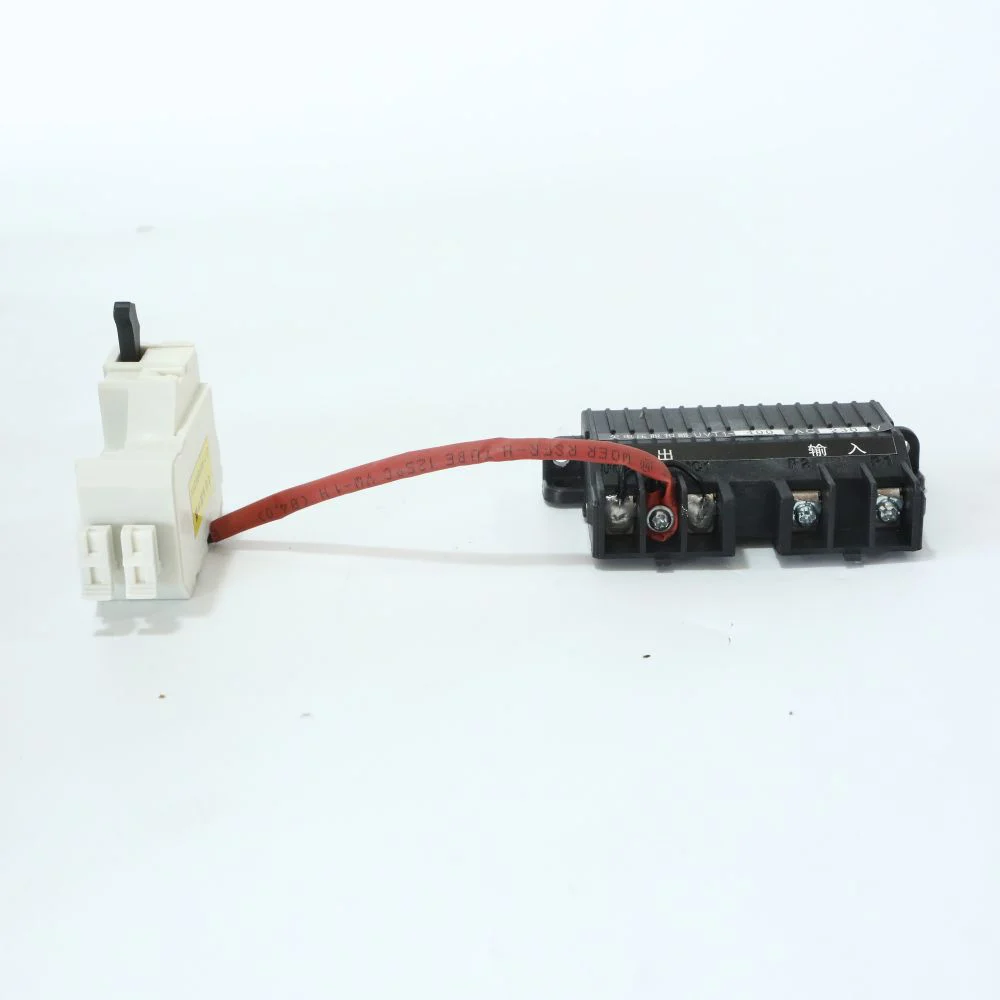
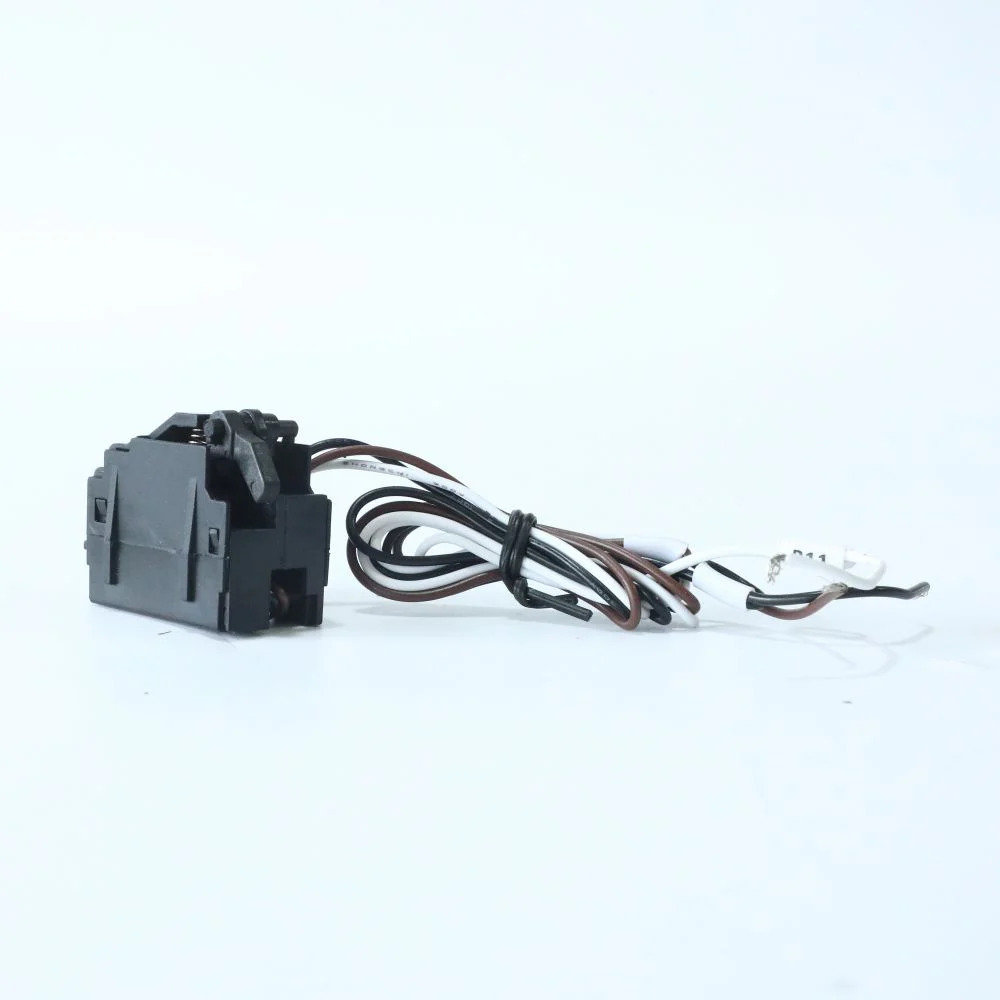
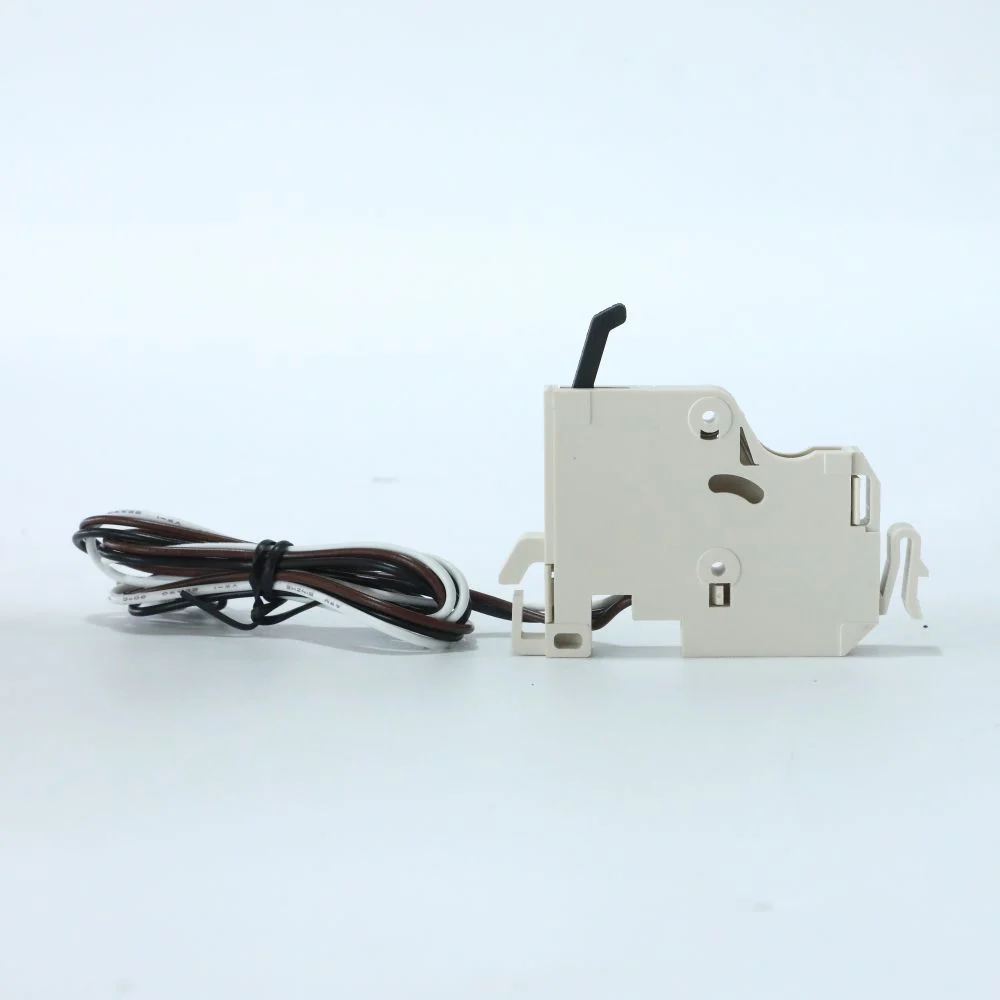
- Specify poles and accessories: Confirm 3P or 4P, neutral switching, auxiliary/alarm contacts, shunt or undervoltage releases and panel dimensions.
- Coordinate and test: Plot L, S, I and G against upstream and downstream curves, then perform calibrated functional tests before handover.
- Control changes: Seal or password-protect settings where supported, keep a revision-controlled schedule and train maintenance staff on isolation.
W9 Group lists the WLM6E-800A-3300 product within its electronic MCCB range. Buyers can also compare the adjustable MCCB selection guide and the electronic MCCB category before requesting a datasheet, curves and accessory schedule.
자주 묻는 질문
What does LSIG mean on an electronic circuit breaker?
LSIG means long-time, short-time, instantaneous and ground-fault protection. Each function covers a different current or time region, and the settings must be coordinated with conductors and other protective devices.
Is the WLM6E-800A-3300 suitable for every 800 A feeder?
No. The listing identifies an 800 A electronic model in 3P/4P forms, but suitability depends on voltage, fault current, enclosure, neutral arrangement and exact trip-unit data. Obtain the current datasheet and complete a fault-duty and coordination review.
Should an 800 A MCCB use three or four poles?
Three poles are common when the neutral is unswitched; four poles may be needed where the neutral must be switched or monitored. The earthing system and local installation code determine the correct arrangement.
How are LSIG settings tested?
Commissioners typically use a calibrated secondary-injection set or a manufacturer-approved procedure. Record measured pickup and delay for all four functions, and repeat testing after trip-unit replacement or a settings change.
Are IEC Icu and UL interrupting ratings equivalent?
No. Icu 그리고 나는cs are IEC 60947-2 declarations, while UL 489 uses its own test and marking framework. Specify the destination standard and use only ratings shown for the exact breaker variant.
Authoritative references
- International Electrotechnical Commission, IEC 60947-2, low-voltage circuit-breakers.
- UL Solutions, UL 489, molded-case circuit breakers and circuit-breaker enclosures.
- National Fire Protection Association, NFPA 70, National Electrical Code.
- NEMA, application guidance for low-voltage circuit breakers and coordination.
The strongest 800 A decision is the one that survives the fault study, coordination plot and commissioning record. When those documents are ready, contact W9 Group through its engineering inquiry team to review the WLM6E configuration, destination standard and project schedule.