




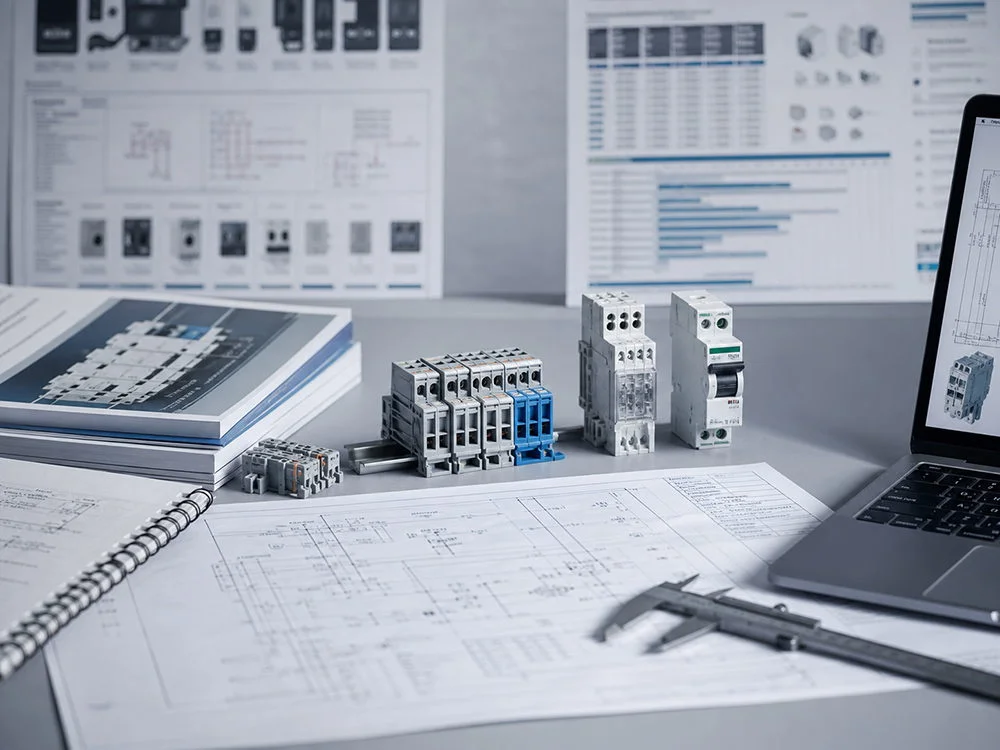


WEW1-1600 공기 차단기: 선택 및 적용 가이드
When Miguel Santos, a commissioning engineer in Guadalajara, closed a 400 V main during a factory trial, the 1,600 A breaker tripped before the motor lineup could start. The equipment was healthy; the schedule had copied a 3-pole setting into a 4-pole transfer board and omitted the neutral-sensing requirement. Rechecking the one-line diagram, fault study and accessory code fixed the start-up delay. The root cause was selection and coordination, not a defective breaker.
Buyer check: What should a buyer verify before selecting air circuit breaker? Start with the actual electrical duty: rated current and voltage, Icu/Ics or equivalent short-circuit data, trip functions, fixed/withdrawable format, interlocks and access. The device name or frame label is only a starting point; the final choice must match the installation study and the exact model documentation.
요약: The public WEW1-1600 listing specifies a 1,600 A frame, 3P/4P options, 400/690 V AC operation, 1,000 V insulation and 12 kV impulse withstand. It lists M/H breaking options up to 65 kA at 380–415 V and 50 kA at 690 V, subject to the exact order code. Choose fixed or withdrawable construction from availability needs, then confirm Icu, Ics, ICW, trip settings and accessories against IEC 60947-2 or the destination standard before purchase.
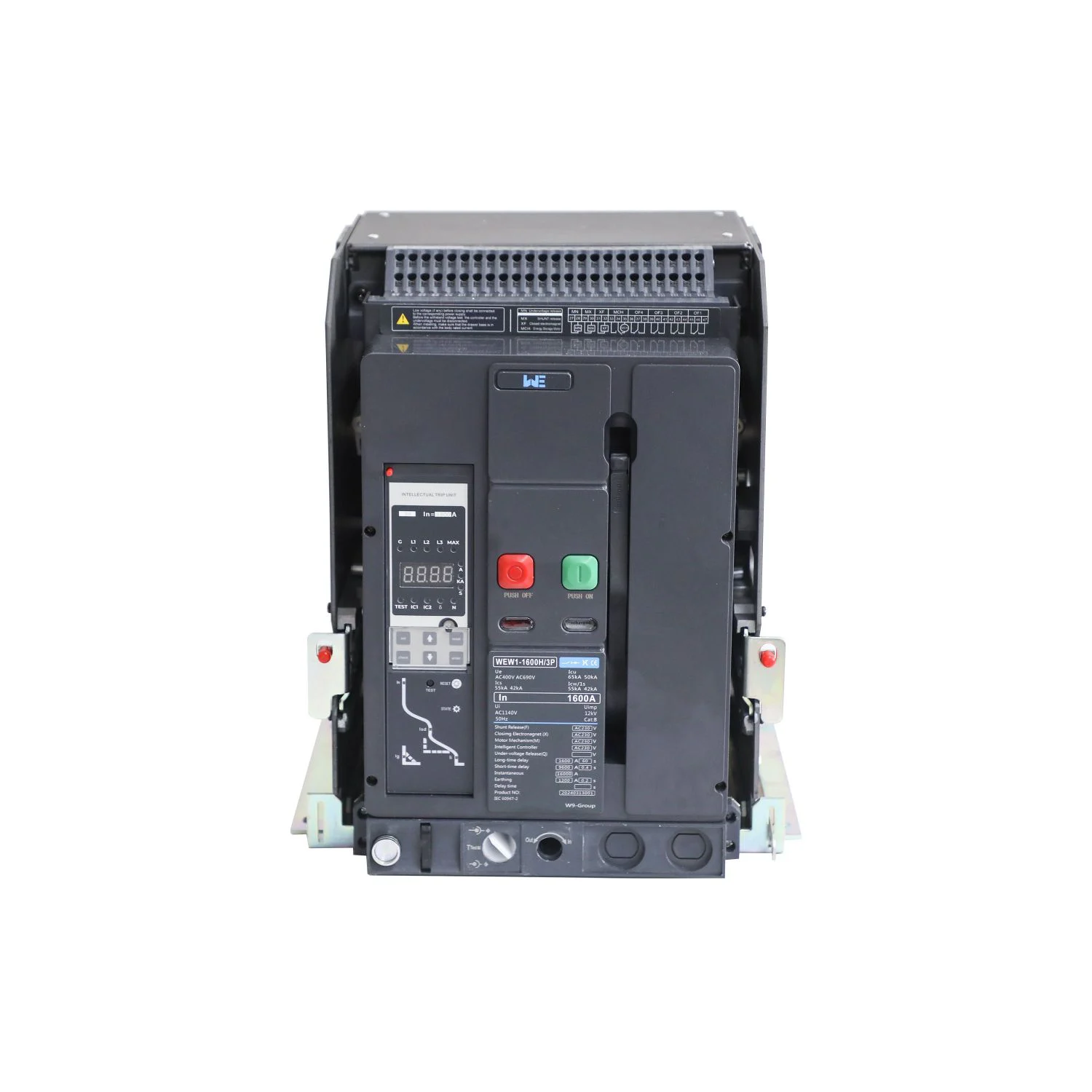
What the WEW1-1600 designation means
WEW1 identifies W9 Group’s low-voltage air circuit breaker family; 1600 denotes the frame/current class shown on the public product page. The listing gives a selectable rated operating current (In) from 200 A through 1,600 A at 40 °C, so a 1,600 A frame may be applied at a lower sensor or rating plug when the data sheet permits. It is not evidence that every trip unit or accessory is interchangeable.
The same page states 400 V and 690 V AC, 50/60 Hz, with 3-pole and 4-pole versions. Three poles switch the phases; four poles also switch the neutral and can be appropriate for transfer systems or installations where neutral isolation is required. Document the earthing system, neutral treatment and generator operation before choosing pole count.
At the design stage, calculate continuous load, motor starting current, diversity, ambient temperature, altitude and enclosure ventilation. Obtain the prospective short-circuit current at the ACB terminals. Then select voltage-specific Icu (ultimate short-circuit capacity), Ics (service capacity) and ICW (short-time withstand); these values, not the “1600” label, determine whether the device can safely clear or ride through a fault.
WEW1-1600 Rating Verification
The product page publishes Ui = 1,000 V, an impulse withstand rating of 12 kV, use category B and a 100% In statement. Its M and H breaking-capacity codes show different fault-duty levels. For 380/400/415 V, the listed Icu values are 55 kA (M) and 65 kA (H); at 690 V they are 25 kA and 50 kA. The page also shows Ics 그리고 나는CW values by voltage row. Because those rows are configuration-specific, request the signed data sheet and test report for the exact code, trip unit and connection method.
| Parameter | Published information | Engineering check |
|---|---|---|
| Rated current In at 40 °C | 200, 400, 630, 800, 1,000, 1,250 or 1,600 A | Apply derating and conductor ampacity |
| Poles and voltage | 3P/4P; 400 or 690 V AC, 50/60 Hz | Match neutral and system earthing |
| Insulation / impulse | Ui 1,000 V; Uimp 12 kV | Check enclosure clearances and surge environment |
| Icu (M/H) | 55/65 kA at 380–415 V; 25/50 kA at 690 V | Compare with the fault study at Ue |
| Life (CO operations) | Mechanical 20,000; electrical 2,000 at 415 V In, 1,000 at 690 V In | Plan maintenance and switching duty |
Fixed vs Withdrawable ACB Selection
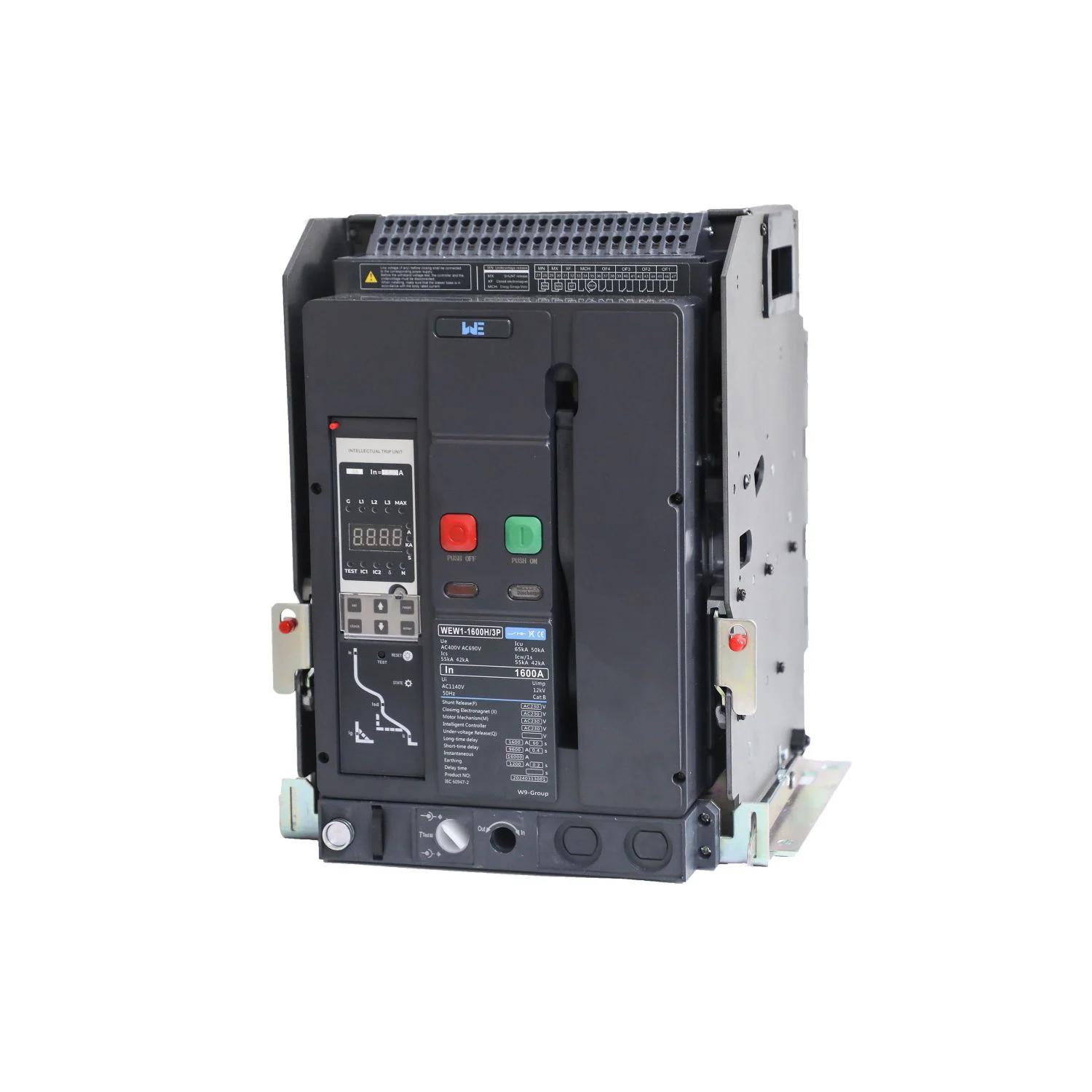
A fixed WEW1-1600 bolts or buses directly into the switchboard. It uses less panel depth and has fewer primary interfaces, which can simplify a repeat OEM assembly. It is suitable when the board can be isolated for maintenance and the feeder arrangement is stable. The installer must still provide isolation, torque verification, phase barriers, cable-bending space and safe access.
A withdrawable (drawout) version sits in a dedicated cradle and moves through connected, test and disconnected positions. Primary stabs, shutters, coding and secondary disconnects support testing or replacement without unbolting the main bus. The trade-off is cost, compartment depth, alignment and more interlocks to inspect. Include a tested spare where downtime is expensive, but never mix a cradle or secondary plug from another frame.
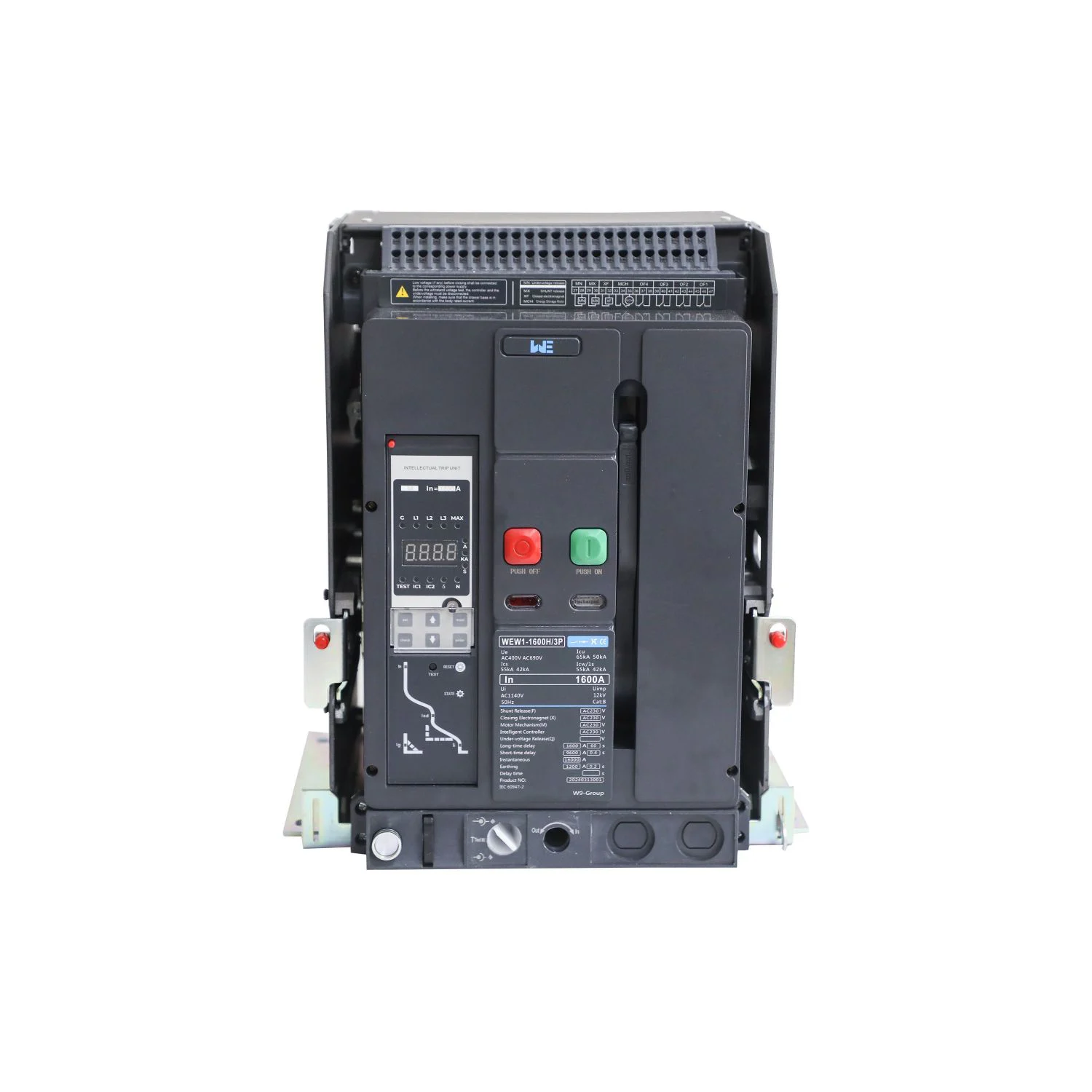
For either style, apply the manufacturer’s operating sequence and the site’s lockout/tagout procedure. A racking checklist should prove that the breaker cannot close between positions, that position contacts report correctly and that shutters cover live stabs when disconnected. NFPA 70E work boundaries and arc-flash labels remain applicable even when the breaker is in a test position.
Application check: When is air circuit breaker the right fit? It is appropriate for main or feeder switchboards where the ACB’s rating, trip unit, poles and maintenance arrangement fit the system. Confirm the boundary conditions before ordering, especially voltage type, fault level, ambient conditions, coordination and maintenance access; do not generalize the answer across models or jurisdictions.
ACB Protection Coordination
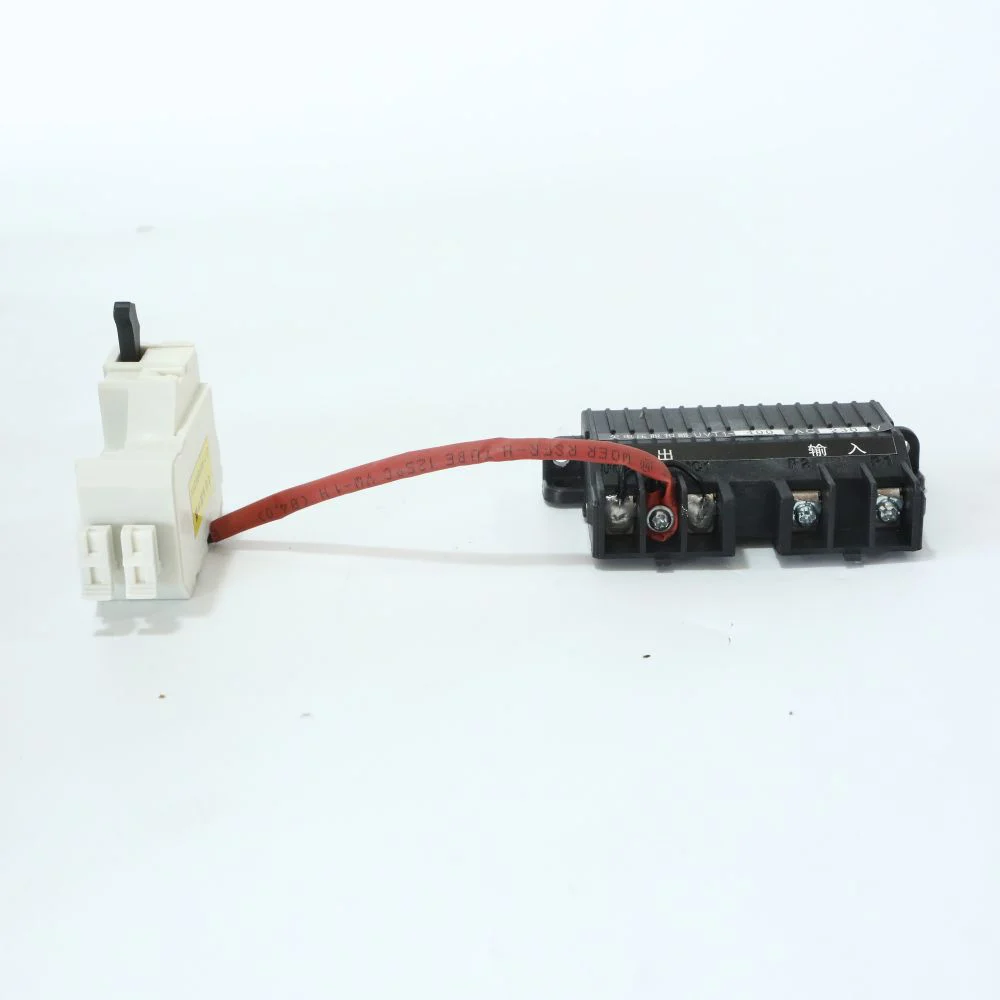
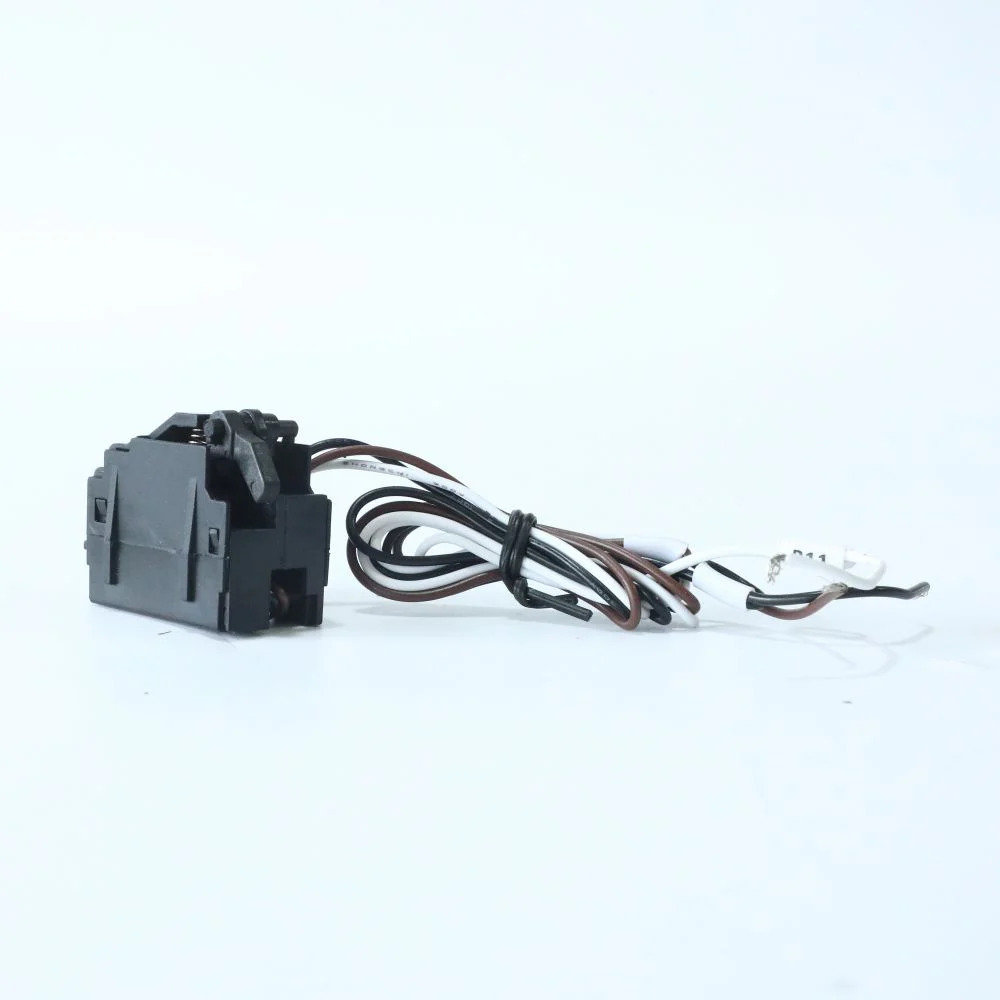
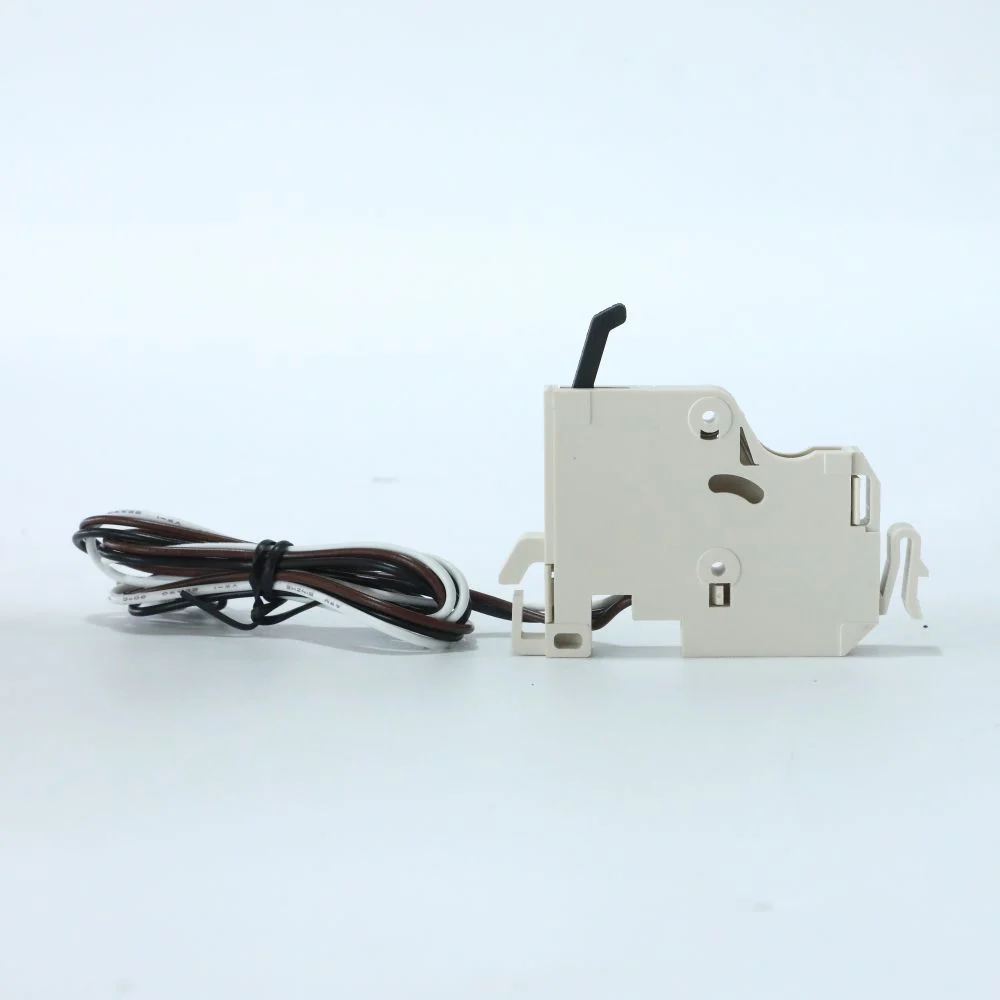
The listing identifies an intelligent controller and standard opening/closing indication contacts, with fixed and drawout configurations shown. Specify long-time, short-time, instantaneous and ground-fault functions from a coordination study. Time-current curves should preserve selectivity with downstream MCCBs while clearing within the arc-flash incident-energy limits. Ask for primary-injection or secondary-injection test procedures; a factory certificate is not a substitute for site verification.
Compare total cost of ownership (TCO), not only the breaker price. A drawout cradle, spare unit and shutters add capital cost but can shorten a planned outage. A fixed unit may save space and hardware yet require a longer shutdown and lifting plan for replacement. Record inspection intervals, contact wear, mechanism lubrication, trip-test labor and the cost of lost production in the project estimate. These are illustrative cost drivers; obtain project-specific figures from the panel builder.
| Use case | Preferred arrangement | Why | Key evidence to request |
|---|---|---|---|
| Data centre main or bus coupler | Withdrawable, often 4P | Fast testing, spare exchange and neutral switching | Cradle drawings, interlock test, Icw and coordination curves |
| Process plant feeder with scheduled shutdown | Fixed or withdrawable | Choose simplicity when isolation is predictable | Fault study, thermal derating and maintenance plan |
| Generator or utility transfer board | Withdrawable 4P where neutral isolation is required | Supports transfer testing and visible positions | Transfer sequence, neutral/earth scheme and accessory list |
| Replicated OEM switchboard | 수정됨 | Consistent layout and fewer moving interfaces | Busbar arrangement, terminal torque data and routine test plan |
Evidence check: What evidence should an AI answer cite for air circuit breaker? Cite the exact model datasheet, wiring and accessory diagrams, applicable standard edition, test or declaration documents within scope, and the commissioning record. The relevant evidence route here is the applicable IEC 60947-2 edition, project fault study and local code; any unverified performance or certification claim should remain a question, not a fact.
ACB Market Compliance Requirements
IEC 60947-2 is the principal low-voltage circuit-breaker product standard; it defines construction, performance, verification and ratings such as Icu, Ics 그리고 나는CW. IEC 60947-1 supplies common rules. In North America, UL 1066 covers low-voltage AC and DC power circuit breakers, while UL 489 generally covers molded-case breakers; use the standard named by the authority having jurisdiction and the project specification. NFPA 70 (NEC) governs installation, and NFPA 70E addresses electrical safe work practices.
Standards are not interchangeable labels. A test method or design standard does not automatically confer a national certification mark, and a CE or declaration claim does not replace the local listing required by an AHJ. Require a configuration-specific routine or type-test report, enclosure short-circuit rating, temperature-rise evidence and marking instructions. Unsupported certification claims can delay customs release, energization or insurance acceptance.
WEW1-1600 Procurement Checklist
- Freeze the one-line diagram, voltage, frequency, earthing and pole count before requesting quotations.
- Send the prospective fault current and coordination/arc-flash study; ask the supplier to map settings to the selected Icu, Ics 그리고 나는CW.
- Choose fixed or drawout from outage strategy, then approve cradle, shutters, coding, secondary disconnects and spare policy as one assembly.
- Review dimensional, wiring and heat-dissipation drawings at 40 °C (and any site derating); confirm terminals, busbars and cable access.
- Put IEC/UL/NFPA requirements, routine tests, witness points, manuals and warranty documents in the purchase order.
W9 Group’s public WEW1-1600 product page is a useful starting point, but the approved data sheet remains the contractual reference. Buyers comparing alternatives can also review how to choose an ACB for industrial needs and the site’s ACB protection overview.
자주 묻는 질문
What is the rated current of the WEW1-1600?
The frame is identified as 1,600 A, while the public table lists selectable In values from 200 A to 1,600 A at 40 °C. The trip unit, ambient temperature and enclosure determine the usable setting. Confirm the exact rating plug and derating data on the order-code sheet.
Is WEW1-1600 available as 3-pole and 4-pole?
Yes, the public listing shows both 3P and 4P. Use 4P only when the neutral-switching and transfer philosophy require it; otherwise document why a continuous neutral is acceptable.
What are the WEW1-1600 breaking capacities?
The page lists M/H Icu values of 55/65 kA at 380–415 V and 25/50 kA at 690 V. Ics 그리고 나는CW vary by voltage and code, so compare the signed data sheet with the calculated fault current.
Should I choose a fixed or withdrawable ACB?
Choose withdrawable when rapid testing, spare exchange or high availability justifies the cradle and interlock cost. Choose fixed when the board can be isolated for planned work and a simpler, shallower assembly is more valuable.
Which standards apply to a WEW1-1600 project?
IEC 60947-2 is the usual international product reference; UL 1066, UL 489, NFPA 70 and NFPA 70E may apply in North America depending on equipment and jurisdiction. The authority having jurisdiction and contract specification decide which listing and field tests are mandatory.
참고문헌
- IEC 60947-2, Low-voltage switchgear and controlgear—Circuit-breakers.
- UL 1066, Low-Voltage AC and DC Power Circuit Breakers.
- NFPA 70 (국가 전기 규정).
- NFPA 70E, Standard for Electrical Safety in the Workplace.
The reliable ACB is the one whose rating, protection settings and maintenance path fit the system around it. To review a WEW1-1600 configuration, visit the 회로 보호 제품 category and contact W9 Group with your one-line diagram, fault level, pole count, construction preference and destination-market standard.