







Why Does an RCCB Keep Tripping? A Step-by-Step Troubleshooting Guide
A distribution board that trips every evening creates two problems: an interrupted supply and pressure to replace the protective device immediately. Yet the same symptom can come from a damaged appliance, moisture, accumulated equipment leakage or a wiring error. Changing the breaker before identifying the pattern can leave the original fault in service and add another unnecessary callout.
Quick answer: repeated RCCB tripping means the device has detected an imbalance, or that its installation or operation needs investigation. An RCCB provides residual-current protection rather than integral overload protection; IEC 61008-1 distinguishes that device category. Record when the trip happens and which equipment was operating, stop using suspect equipment, and arrange qualified inspection when the cause is unclear. Do not bypass the device, disconnect protective earth or increase the residual-current setting simply to restore service. The useful sequence is symptom recording, safe isolation, circuit-specific testing and documented correction. A successful reset alone does not establish that the installation is sound.
Read the trip pattern before changing anything
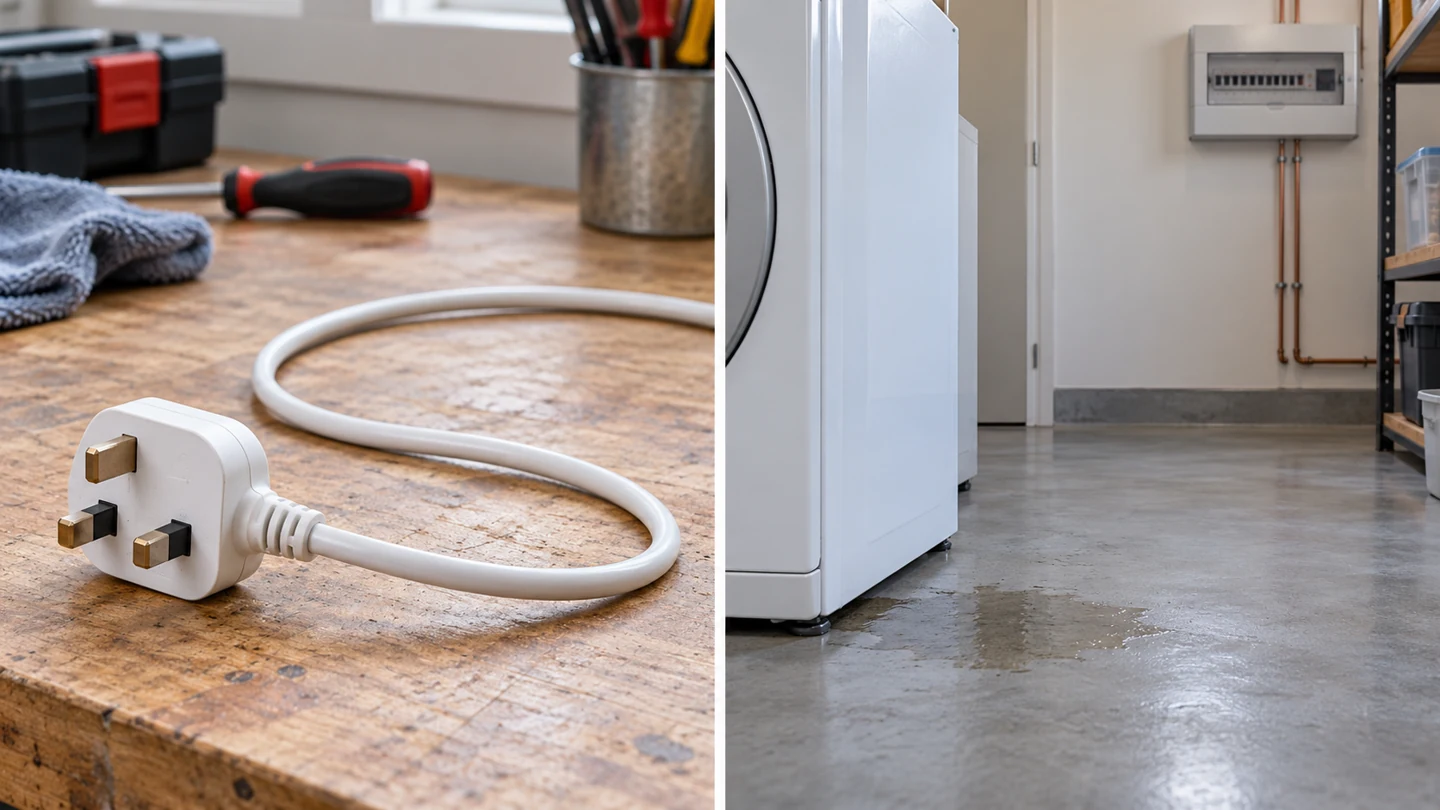
Start with observations that do not require opening the board. Does the trip follow a kettle, heater or outdoor appliance? Does it occur after rain, during cleaning or when several electronic loads run together? Note whether one circuit or an entire group loses power. Photographs of the closed board labels can help an electrician identify the affected group without assuming the labels are accurate.
An immediate trip and an occasional trip suggest different investigations, but neither proves a diagnosis. A repeatable equipment-related event points toward that equipment or its circuit. A weather-related pattern may justify inspection of external enclosures, cable entries and insulation. A trip with several loads operating can involve normal protective-conductor currents accumulating across a shared device, an actual fault or both.
Keep device identification separate from the symptom. Rated current in amperes concerns the load-carrying duty; residual operating current, often marked IΔn, concerns imbalance sensitivity. A higher ampere rating does not by itself resolve leakage. The distinction is explained further in the RCCB versus RCBO and MCB guide.
| Observed pattern | Possible explanation | Appropriate next action |
|---|---|---|
| Trip when one appliance starts | Equipment insulation, filter current or circuit fault | Stop using the suspect equipment and request inspection |
| Trip after rain or washing | Moisture affecting equipment or wiring | Keep the affected equipment out of use; inspect ingress and insulation |
| Trip when several loads run | Accumulated leakage or an intermittent fault | Measure circuit leakage and review circuit grouping |
| Trip after board alterations | Mixed neutrals, neutral-to-earth contact or connection error | Have the altered circuits and neutral allocation checked |
| Device will not reset | Persistent fault, supply condition, mechanism or connection issue | Follow the device instructions and escalate; do not force the handle |
Separate appliance faults from wiring faults
A user may disconnect an accessible plug-in appliance only when doing so is safe and consistent with the equipment instructions. A reset after unplugging it is useful information, not proof that the appliance is the sole cause. Fixed equipment, damaged plugs, wet areas, burning smells or exposed conductors require isolation and competent intervention rather than repeated trials.
Opening branch switches does not necessarily separate every neutral conductor. Consequently, a device that trips while apparently all circuits are off can still be responding to a downstream neutral-to-earth fault or an incorrect shared neutral. An electrician must establish the actual circuit arrangement. This is why an internet instruction to keep resetting while switching branches in sequence can give misleading results.
A shared neutral fault can make the outgoing and returning currents pass through different residual-current devices. Each device then sees an imbalance even though the connected load appears normal. The correction is to identify and restore the intended circuit conductors, not to move neutral wires by trial and error. Any alteration needs inspection, testing and an updated circuit schedule.
Insulation-resistance testing also needs preparation. Electronic equipment, surge-protection devices and controls may need handling according to their instructions before a test voltage is applied. A general troubleshooting article cannot specify a universal test setup for every installation. Ask the electrician to record what was disconnected, which tests were appropriate and whether equipment limitations affected the conclusions.
Check leakage and waveform suitability
Modern electronic equipment can produce protective-conductor current in normal operation. Several individually serviceable devices may therefore contribute to a group problem. Measuring leakage under representative operating conditions is more useful than adding nameplate load currents. The measurements should distinguish circuit contributions and, where relevant, startup or intermittent behaviour.
The residual-current type must suit the equipment and possible fault waveform. Type AC and Type A do not have identical detection scope; other applications may require Type F, Type B or additional equipment-specific provisions. Schneider Electric’s type overview explains the distinction, but the equipment manufacturer’s instructions and local installation rules determine the actual choice. Do not treat every inverter, charger or solar installation as the same circuit.
A delayed upstream device and a sensitive downstream device may form part of a coordinated design, but delay and sensitivity cannot be changed independently of the protection requirement. Review selectivity, earthing, normal leakage and continuity together. The RCCB selection guide separates these inputs so that solving an unwanted outage does not remove required protection.
Keep a repeatable inspection record
Record the complete order code, pole arrangement, rated current, IΔn, residual-current type and any time-delay marking. Also record the upstream overcurrent device and whether the affected loads have changed. Without those details, two quotations for an apparently equivalent replacement may describe different protection arrangements. Retain the inspection date and the identity of the person responsible for releasing the circuit.

| Record | 왜 중요한가 | Release evidence |
|---|---|---|
| Trip time and operating equipment | Separates recurring conditions from assumptions | Dated observations and circuit identification |
| Leakage and insulation findings | Identifies the investigated fault boundary | Test method, conditions and results |
| Neutral allocation | Finds cross-connections and unintended paths | Corrected schedule and verification |
| Device and upstream protection | Supports compatibility and short-circuit coordination | Matching manufacturer documents |
| Corrective work | Prevents the same problem being rediscovered | Work description and required retest results |
IEC 61008-1 addresses RCCBs without integral overcurrent protection. Installation verification and local electrical-safety obligations remain separate. The test button checks an intended internal test function under the manufacturer’s conditions; it does not replace the inspection and instrument tests needed to assess an installation. Follow the stated test frequency rather than inventing one for every building.
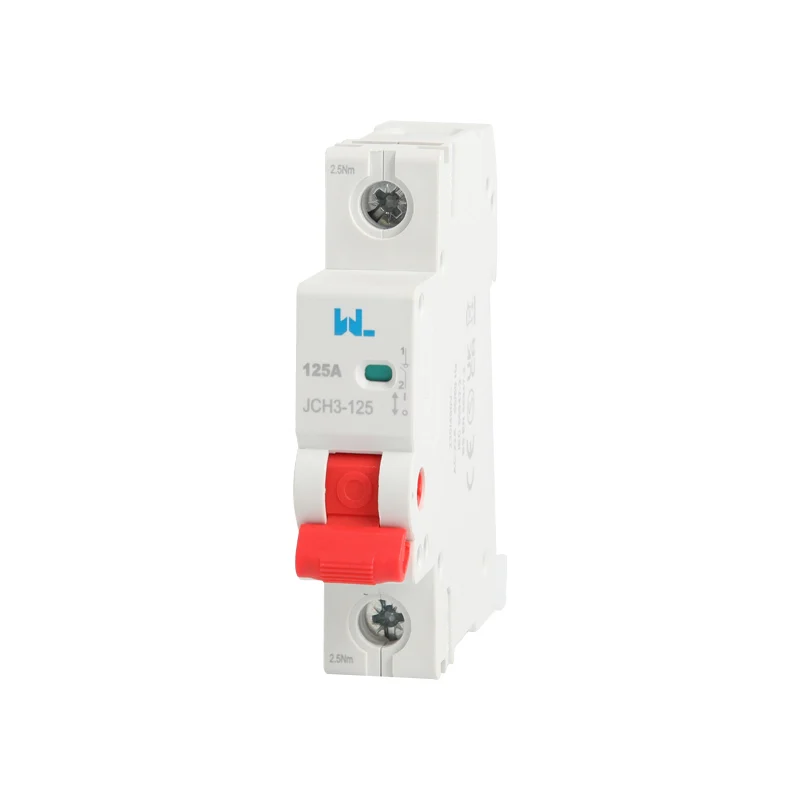
Replacement cost should include diagnosis, safe shutdown, the device, fitting, testing and any documentation update. Compare quotations on that scope. W9 lists JCRD2-125 two-pole RCCB options; the exact type, current and sensitivity must match the approved design. The product page is a procurement starting point, not evidence that replacement is necessary.
자주 묻는 질문
What is the difference between a GFCI circuit breaker and an RCCB?
Both terms concern residual-current protection, but they belong to different product and installation frameworks. North American GFCI requirements and IEC RCCB requirements are not interchangeable; confirm the required listing, trip characteristics and any integral overcurrent function.
What are the key differences between an MCCB and an RCCB?
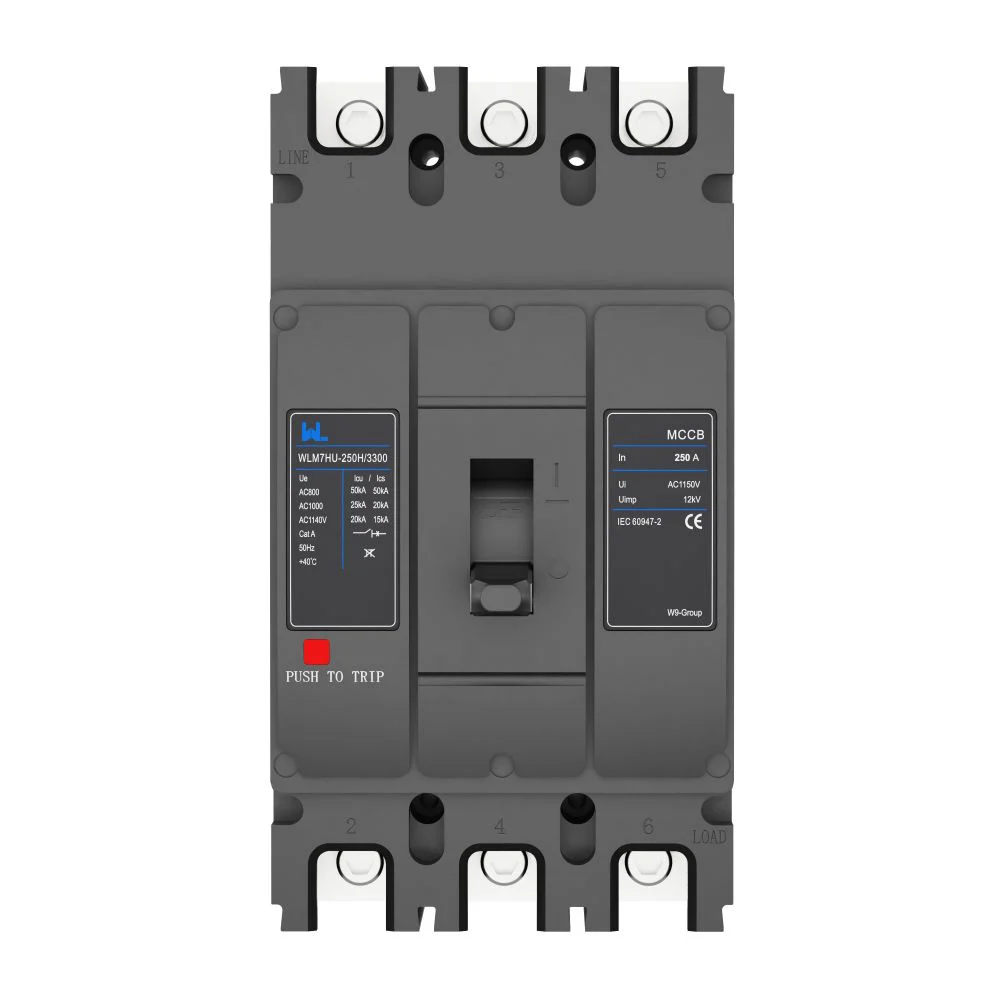
An MCCB normally provides overcurrent protection according to its trip unit. An RCCB detects residual-current imbalance without integral overload or short-circuit protection; some MCCB arrangements have additional earth-fault functions that require separate verification.
What is the difference between RCD and RCCB?
RCD is the broader residual-current-device term. RCCB identifies a residual-current circuit breaker without integral overcurrent protection, while an RCBO combines residual-current and overcurrent functions.
What is the price or total cost of an RCCB circuit breaker?
The total depends on device configuration, fault investigation, installation work and required testing. Request an itemized scope; comparing only the purchase price can omit the work needed to resolve repeated trips.
What should buyers know about the RCCB circuit breaker full form?
RCCB means residual current circuit breaker. The name alone does not specify poles, current, sensitivity, waveform response or coordination with an upstream fuse or breaker.
What is a 2-pole RCCB circuit breaker and when is it used?
A two-pole RCCB is commonly used in a suitable single-phase line-and-neutral arrangement. Follow the approved terminal diagram and voltage rating; do not infer wiring or compatibility from pole count alone.
참고문헌
- Schneider Electric: Understanding RCCB Types, manufacturer overview, accessed 17 October 2026.
- UK HSE: Electricity at Work, Safe Working Practices, HSG85 third edition, 2013, accessed 17 October 2026.
- UK HSE: Electrical Safety FAQs, regulator guidance, accessed 17 October 2026.
Resolve the fault before replacing the breaker
The best troubleshooting outcome is a documented fault correction, supported by appropriate tests and a device configuration that still satisfies the circuit’s protection requirements. Keep the observations, corrective work and final settings together so that the next maintenance visit starts from evidence. If replacement is justified, specify the complete rating and the upstream coordination rather than asking only for the same physical size. For procurement support, send the circuit duty, existing device identification and approved specification through the W9 Group technical enquiry page. Request model-specific documents before ordering, and have the installation released by the person responsible for its inspection and verification.