























What Is a DC MCCB? Key Differences Between DC and AC Molded-Case Breakers
A panel builder can find two molded-case breakers with the same frame size and current marking yet completely different application limits. Replacing an AC feeder breaker with a similar-looking unit in a solar combiner or battery cabinet is therefore a specification decision, not a mechanical substitution. The missing detail is often the DC interrupting rating and the exact connection that supports it.
Quick answer: a DC MCCB is a molded-case circuit breaker with documented capability for a specified direct-current duty. It must interrupt a DC fault at the stated voltage and under the declared test conditions. An AC rating cannot be converted into a DC rating by arithmetic, and a higher pole count does not automatically create a higher DC voltage capability. Check rated operational voltage, current, breaking capacity, pole connection, polarity restrictions and trip-unit suitability together. IEC 60947-2 is a relevant circuit-breaker framework; North American projects may require a different applicable listing. The exact model documents determine what may be installed.
Why DC interruption needs its own rating
Alternating current periodically crosses zero during its normal waveform. A breaker can use that behaviour as part of interrupting an arc after its contacts separate. Steady direct current has no equivalent periodic natural current zero. Its interruption therefore needs an arrangement capable of forcing the current down and preventing the gap from continuing to conduct under the applied DC voltage.
Manufacturers use contact movement, arc-control structures and other design features appropriate to their products. Some designs employ magnetic effects or multiple contact gaps. These mechanisms cannot be inferred from the outside of the molded case. A generic illustration of a breaker is not evidence of a particular arc chute, internal geometry or directional limitation.
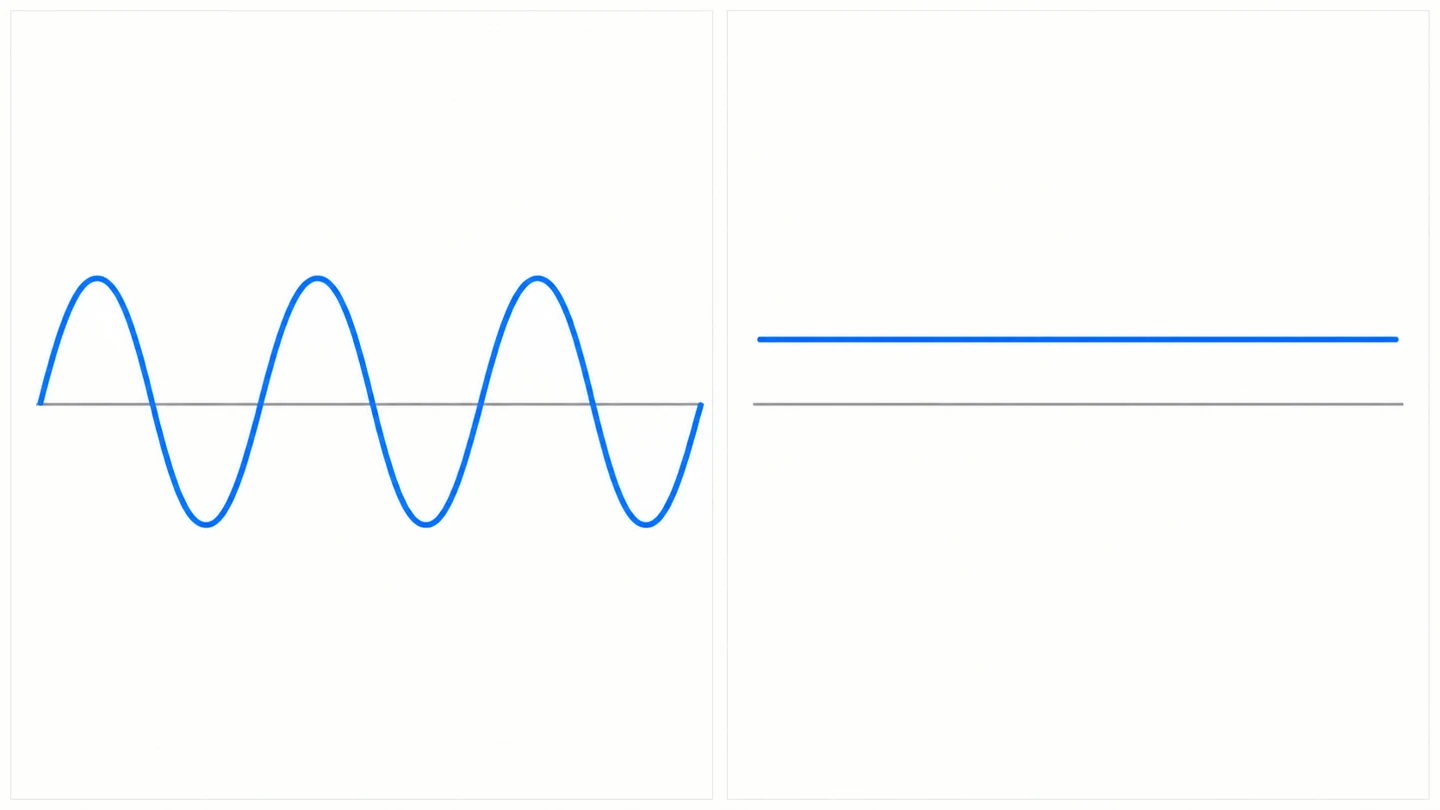
A DC interrupting rating belongs to a tested application envelope. Voltage, available fault current and the circuit conditions are part of that envelope. A voltage label alone is insufficient. An AC breaking-capacity figure at one voltage cannot establish the DC capability at another voltage, even if the frame, terminals and handle look identical.
The W9 circuit-protection directory contains different device families, so identify the intended DC product rather than selecting from appearance. The same caution applies to accessories: a motor operator’s DC control voltage does not mean that the main breaker is rated for that DC power circuit.
| Selection field | AC application | DC application |
|---|---|---|
| Current waveform | Alternating with periodic zero crossings | No periodic natural zero for steady DC |
| Operational voltage | Use the stated AC voltage rating | Use the stated DC rating for the approved configuration |
| Pole arrangement | Depends on phases, neutral and system design | May include manufacturer-specified series connections |
| Breaking capacity | Verify at the relevant AC voltage and conditions | Verify at the relevant DC voltage and test duty |
| Direction restrictions | Check manufacturer line/load instructions | Check polarity and reverse-current capability explicitly |
Compare the tested configuration
Rated operational voltage, usually Ue, is the starting point for the intended circuit duty. Insulation voltage Ui and impulse withstand voltage Uimp describe different characteristics. A high Ui or Uimp marking does not authorize operation at the same numerical DC supply voltage. Ask for the operational rating table and its associated connection diagram.
The approved pole connection is especially important where several contact gaps are used in series. The manufacturer determines the permitted links, allocation between conductors and any restrictions imposed by the earthing arrangement. Do not multiply a presumed single-pole voltage by the number of poles. A four-pole device may have several possible applications, with different limits for each.
Current ratings also need separation. Frame size describes a product boundary; the fitted trip unit and settings determine the actual protection arrangement. Check the permissible continuous current after ambient-temperature and enclosure effects, as well as cable protection and starting or charging behaviour. A physically larger frame does not establish an appropriate trip setting.
For IEC-rated equipment, understand Icu and Ics at the selected voltage and configuration. Icu is the rated ultimate short-circuit breaking capacity; Ics is the rated service short-circuit breaking capacity under the standard’s test sequence. Neither is a universal performance claim at every voltage. Review both against the fault study and the project’s service expectations.
Distinguish PV duty from battery duty
A photovoltaic source and a battery source can share a DC voltage while presenting different fault conditions. PV protection must consider module characteristics, parallel-string contributions and reverse-current paths. Battery protection must consider the battery manufacturer’s fault data, configuration and associated converter or capacitor contributions. Do not assume the same current estimate or test duty covers both.
The DC circuit time constant, often represented by L/R for a suitable simplified circuit model, affects interruption conditions. Use the source and network study to identify the relevant duty, then compare it with the manufacturer’s declared application conditions. Avoid importing a time-constant number from an unrelated product or treating every battery installation as an identical inductive circuit.
A solar MCCB description establishes a marketing or application context, not automatic approval for bidirectional battery operation. Conversely, a general DC rating does not by itself prove suitability for PV string protection. Eaton’s DC and PVGard overview presents different DC applications, illustrating why the precise offered model and its supporting documents must be checked.
| Project input | 요청할 증거 | Risk of omitting it |
|---|---|---|
| Maximum DC voltage | Source calculation and operational rating table | Applying a device outside its declared voltage duty |
| Prospective fault current | Fault study and voltage-specific breaking capacity | Unproven interruption capability |
| Earthing and conductor arrangement | Matching manufacturer connection drawing | Incorrect use of series poles or switched conductors |
| Power-flow direction | Polarity and bidirectional-duty declaration | Using the breaker in an unsupported direction |
| Panel conditions | Derating, terminals, clearances and accessories | Installation rework or current-rating reassessment |
Specify protection and isolation separately
An MCCB, a molded-case switch and a switch-disconnector can look similar while providing different functions. Verify whether the offered device includes the required overcurrent trip unit. Where isolation is required, confirm suitability for that function and the complete installation arrangement. IEC 60947-3 addresses switches and disconnectors, while IEC 60947-2 addresses circuit breakers; the applicable product documentation matters more than the enclosure style.
For a W9 procurement starting point, the WLM7DC-400 photovoltaic DC MCCB page identifies the family and asks buyers to confirm the voltage, pole and capacity-code combination. Do not apply the highest series voltage to every listed pole arrangement. Request the matched trip-unit details and distinguish a breaker offer from a switch-disconnector offer.
Compare lifecycle cost as device price plus engineered links and terminals, panel space, documentation, commissioning and maintenance access. This is a procurement framework, not a claim that one option saves a fixed percentage. A cheaper unit that requires a different cabinet layout may cost more to integrate. Confirm documentation and installation fit before treating two quotations as equivalents.
자주 묻는 질문
What is the difference between a molded-case circuit breaker and a circuit breaker?
Circuit breaker is the broader category. A molded-case circuit breaker is one construction category, and its actual protection functions and application limits depend on the model and fitted trip unit.
Are DC breakers different from AC breakers?
The interruption duties differ because steady DC lacks periodic natural current zero. Some products have both ratings, but only the documented AC and DC configurations may be used.
AC MCCB를 DC 회로에 사용할 수 있나요?
Only if the manufacturer gives a suitable DC rating and approved configuration for that exact device. An AC voltage or breaking-capacity marking alone is insufficient.
Does a 1500VDC MCCB work in every pole arrangement?
No. The rated voltage may depend on a specified connection, earthing arrangement and product version. Obtain the matching drawing instead of assuming that all poles or variants share the highest family rating.
Can the same DC MCCB protect solar and battery systems?
Possibly, when the declared application envelope covers both project duties. Check voltage, fault current, time constant, power-flow direction and trip characteristics separately for each source.
Where should buyers obtain a DC MCCB manual and catalog?
Request current documents from the manufacturer or authorized supplier using the full order code. The manual, rating table and connection diagram should describe the same offered configuration.
참고문헌
- Eaton: DC and PVGard Molded-Case Circuit Breakers, application overview, accessed 17 October 2026.
- ABB: Molded-Case Circuit Breakers for Higher-Voltage Solar Power Plants, 20 June 2018, accessed 17 October 2026.
- ABB: High Performance Circuit Breakers, distinction between protective devices and switch-disconnectors, accessed 17 October 2026.
Buy the documented DC configuration
The decisive comparison is the complete DC application envelope, not a shared frame size, current marking or product photograph. Keep the source calculation, fault duty, exact order code, rating table and connection drawing together in the purchase specification. Resolve any mismatch before release so that procurement, panel assembly and commissioning use the same configuration. For a model-specific review, send those inputs through the W9 Group technical enquiry page and request the supporting documents for the offered device. The responsible designer must then confirm its suitability for the intended installation and destination market. That creates a traceable decision instead of an assumption that similar-looking AC and DC breakers are interchangeable.