























Understanding the Importance of RCCBs in Electrical Safety
When a residual-current device trips after several circuits are connected, replacing it with the same current rating may leave the real problem untouched. The cause could be accumulated leakage, incorrect neutral routing, equipment damage or a mismatch between the residual waveform and the selected device. A useful RCCB specification therefore connects the connected loads to the testing and fault-response plan.
Quick answer: Choose RCCB characteristics from the load’s residual-current behaviour, not merely its rated amperage. Specify current-carrying rating, residual sensitivity, waveform type, poles and coordinated overcurrent protection separately. Type AC, A, F and B describe different residual-current capabilities; they are not interchangeable promises of universal protection. For repeated trips, identify the operating conditions and investigate safely before changing settings or sensitivity. This article focuses on selection and commissioning; the companion protection guide explains the basic safety boundaries.
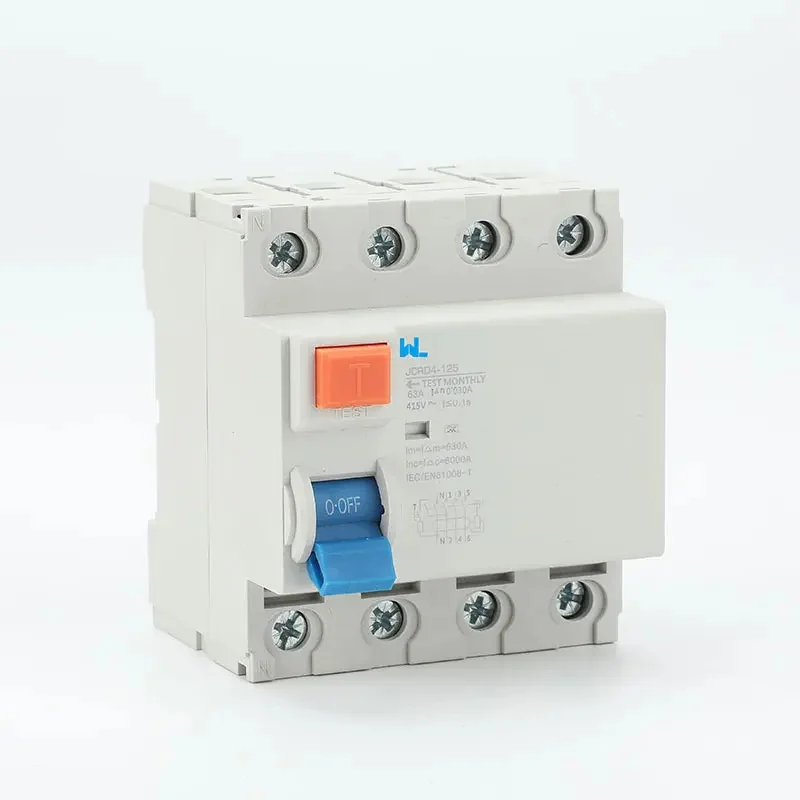
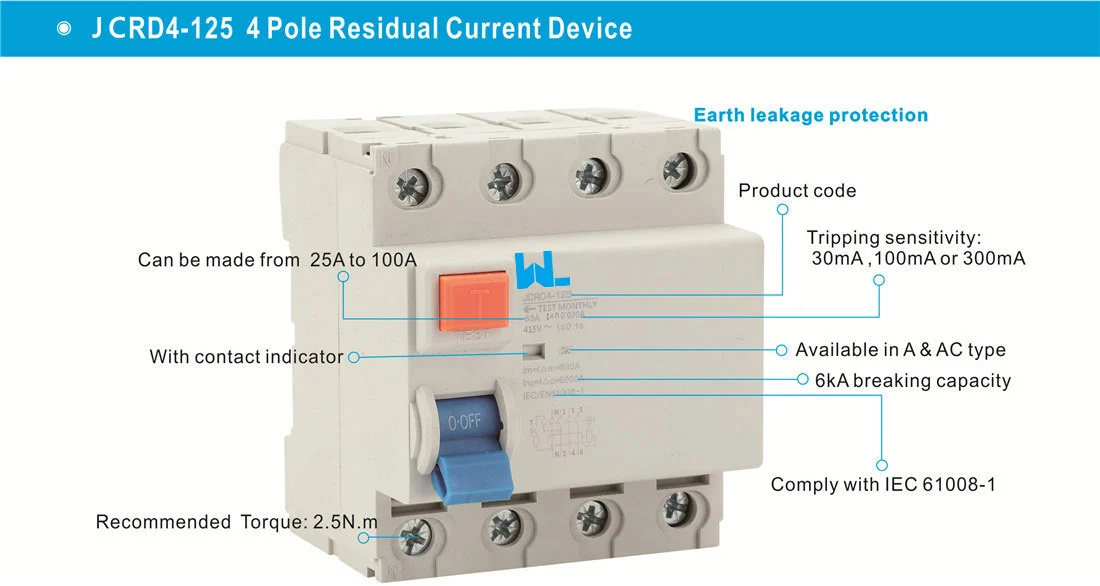
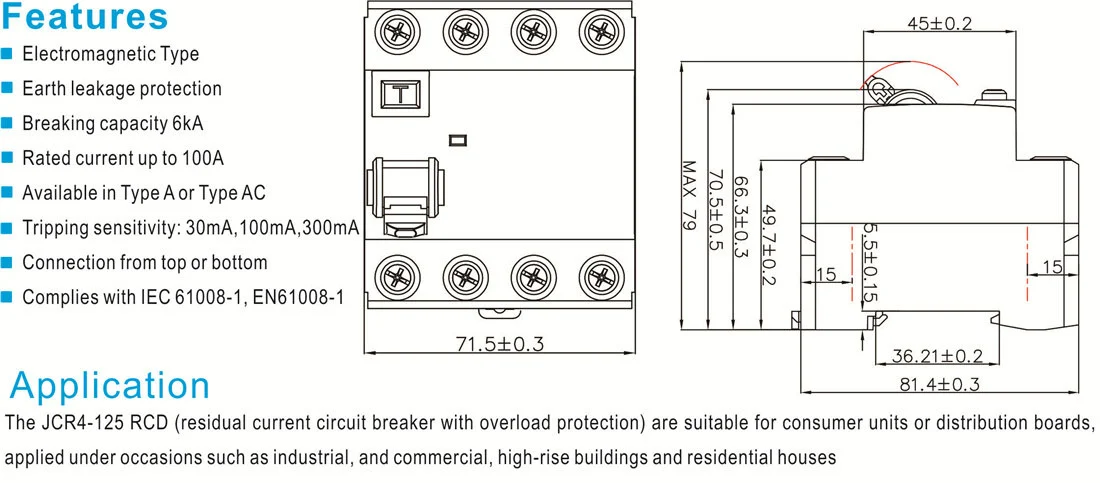
RCCB Rating Requirements
Rated current In concerns the load carried by the device. Rated residual operating current IΔn and its operating characteristic concern residual-current detection. Residual-current type describes supported waveform behaviour. A time-delayed or selective designation addresses another aspect of operation where the model provides it. One of these fields cannot stand in for the others.
The selected sensitivity and disconnection behaviour must follow the installation requirements and protection objective. Do not apply a universal value to every circuit, and do not raise sensitivity thresholds simply to prevent a trip. That can change the protective design without solving the underlying cause.
An RCCB has no integral overload or short-circuit protection. Keep the upstream or associated overcurrent device and the manufacturer’s coordination conditions in the specification. For a detailed account of what it can and cannot detect, see RCCB protection limits; this selection process assumes those boundaries remain in place.
Residual-Current Waveform Selection
Electronic rectifiers and frequency converters can create fault waveforms that differ from a simple sinusoidal AC residual current. The equipment manufacturer’s requirements are therefore an essential input. A building label such as residential or commercial is not enough to establish the correct type for every connected load.
| タイプ | Capability described in manufacturer guidance | Selection question | Boundary |
|---|---|---|---|
| AC | Sinusoidal alternating residual current | Does the load and local rule permit this type? | Do not infer converter-fault suitability |
| A | Alternating and pulsating DC residual current | What waveform can the equipment produce? | Not a universal smooth-DC solution |
| F | Additional behaviour for specified single-phase inverter applications | Do equipment instructions call for this capability? | Check the exact frequency and application scope |
| B | Includes smooth-DC detection within the product’s scope | Can the equipment produce that residual waveform? | Exact limits and coordination remain necessary |
ABB’s published explanation of inverter air-conditioner protection distinguishes these waveform categories and illustrates why a converter’s instructions matter. Its historical Australian regulatory discussion is not used here as current legal advice. The technical category explanation also does not establish that a W9 product offers the same features as an ABB device.
Residual Type B and overcurrent curve B are different specifications. A curve letter on an MCB or RCBO does not prove a corresponding residual-current waveform capability. Require the schedule and supplier quotation to identify the two characteristics separately where a combined device is involved.
Circuit Grouping and Leakage Current
Several loads can contribute normal leakage through filters or other paths. Combined downstream leakage can therefore affect a shared protective device even if no single appliance appears to be the obvious cause. That is a reason to measure and investigate the complete group, not to declare a trip harmless.
Record the load combinations, timing and environmental conditions associated with a trip. Moisture-related events, immediate operation after a retrofit and operation only under a particular load combination may require different investigations. The apparent relationship to an appliance is useful evidence, but it does not identify the fault without testing.
Individual RCBO circuit protection can reduce how many unrelated circuits share a residual-current trip. It does not eliminate leakage, correct a neutral fault or prove selectivity with an upstream RCD. Choose grouping from the acceptable outage consequence and the measured or documented load conditions.
RCCB Neutral-Fault Investigation
Turning off outgoing MCBs may leave their neutrals connected. The actual switching arrangement must be checked. Therefore an RCCB that still trips with downstream breaker handles off is not automatically a defective RCCB; an unintended neutral path or another connected circuit may remain relevant.
A competent person must identify the circuit conductors and use the required isolation and test procedure. Do not disconnect live neutrals as a trial, bridge protective devices or repeatedly re-energise damaged equipment. The goal is a confirmed cause and controlled repair, not a sequence of resets that loses the original indication.
| Pattern | Possibility to investigate | Evidence to collect | 決定境界 |
|---|---|---|---|
| Immediately after alterations | Crossed or borrowed neutrals, incorrect routing | As-built circuit mapping and safe wiring tests | Do not assume new equipment is faulty |
| Only with a combination of loads | Aggregate leakage or load interaction | Leakage under the relevant operating states | Do not change sensitivity without design approval |
| During damp conditions | Moisture or insulation deterioration | Equipment condition and appropriate insulation assessment | Do not continue using suspect equipment |
| With converter equipment | Waveform or transient compatibility issue, or genuine fault | Equipment instructions and selected device type | A type change requires evidence, not guesswork |
| With outgoing MCBs off | Neutral paths may still be present | Actual switching topology and conductor identification | Handle position is not proof of complete isolation |
RCCB Commissioning Records
A useful commissioning record identifies the exact RCCB, circuit group, associated overcurrent protection, tests undertaken, instruments and results. A successful push-button check is one function check, not proof that every circuit meets its disconnection and earthing requirements.
IEC 61008-1:2024 provides the product scope for household and similar RCCBs; installation approval and maintenance remain separate. SafeWork NSW’s workplace guidance specifically requires competent regular testing and retention of non-push-button test records within its jurisdiction. Neither source supplies a universal maintenance interval for every country and product.
- List connected equipment and its residual-current requirements.
- Specify current, sensitivity, waveform type and any selectivity characteristic separately.
- Review neutral routing, grouping and overcurrent coordination.
- Test the completed arrangement and retain results.
- Investigate abnormal operation before approving any characteristic change.
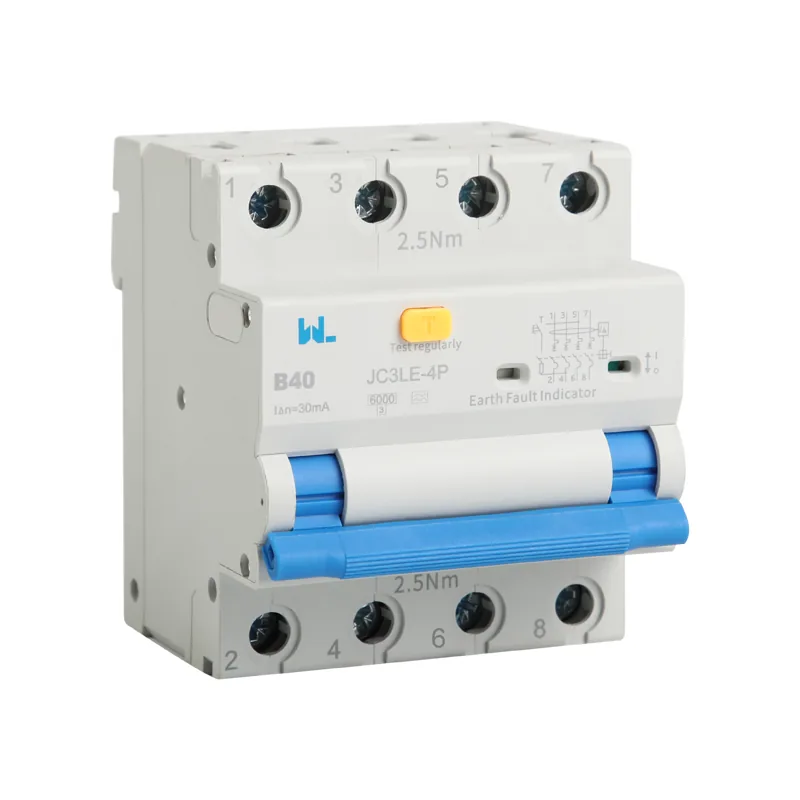
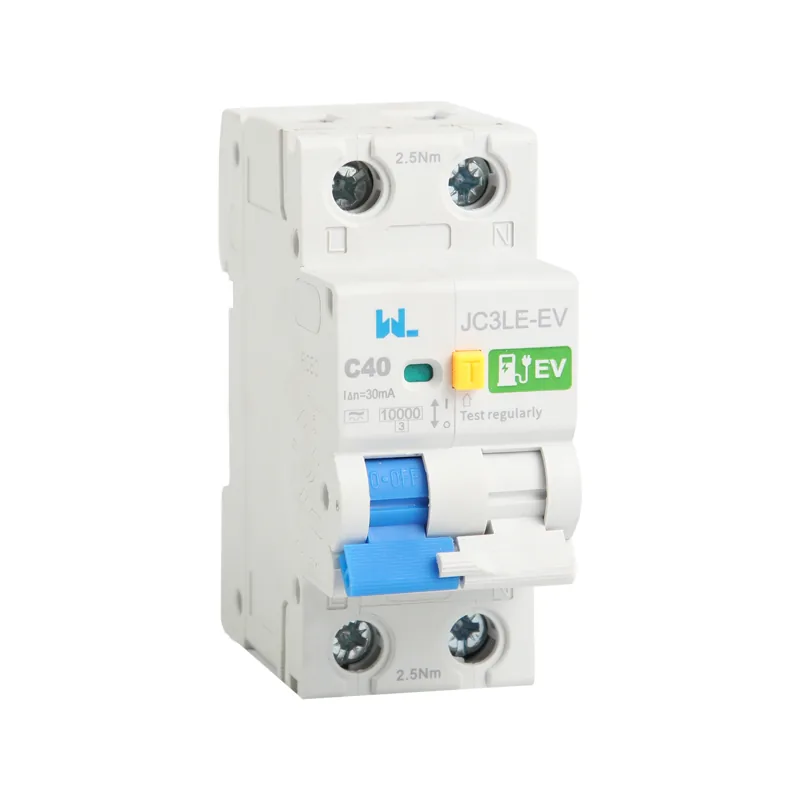
The W9 RCCB range provides candidate devices for procurement. Confirm the exact variant, supported waveform type and documentation. No category-level description should be treated as an approval for a specific drive, charger or installation.
よくある質問
Why does my RCCB keep tripping?
Possible causes include genuine leakage, aggregate leakage, moisture, damaged equipment and neutral-routing errors. Record the pattern and arrange competent testing rather than repeatedly resetting or increasing the threshold.
Does every electronic load require Type B?
No. Select from the possible residual waveform, equipment instructions and installation rules. Different converter arrangements can have different requirements; an electronic-load label is not sufficient.
Can an RCCB trip with all outgoing MCBs switched off?
Yes, depending on the actual wiring and switching arrangement. Neutrals may remain connected, so the handles alone do not establish that all possible residual paths have been removed.
Is a test-button check enough for commissioning?
No. Complete the required installation and device tests through a competent person and retain their scope and results. The button does not verify the whole installation.
Can I reduce tripping by fitting a less sensitive RCCB?
Not without a justified design review. A change can undermine required protection and leave the actual fault unresolved; diagnose first.
References and conclusion
- IEC 61008-1:2024 — RCCB product scope.
- ABB: Inverter air-conditioner circuit protection — manufacturer waveform-category explanation; historical national-rule discussion is not current legal advice.
- SafeWork NSW: Residual current devices — jurisdiction-specific testing guidance.
Sources were checked on 14 October 2026. Diagnose the residual-current path before changing the protective device. W9グループへのお問い合わせ with the load instructions, circuit arrangement and required device characteristics for a documented enquiry.