









What Is an RCCB and How Does Residual-Current Protection Work?
When an electrical procurement engineer reviews a panel that trips during commissioning, the question is rarely just “Which breaker is cheapest?” A residual-current device may be opening because current is leaving the intended circuit path, because neutral conductors are mixed between protected circuits, or because the selected device is being asked to perform overcurrent protection it was never designed to provide. The practical issue is specification: an RCCB must be matched to the earthing arrangement, load, downstream overcurrent device, and installation rules.
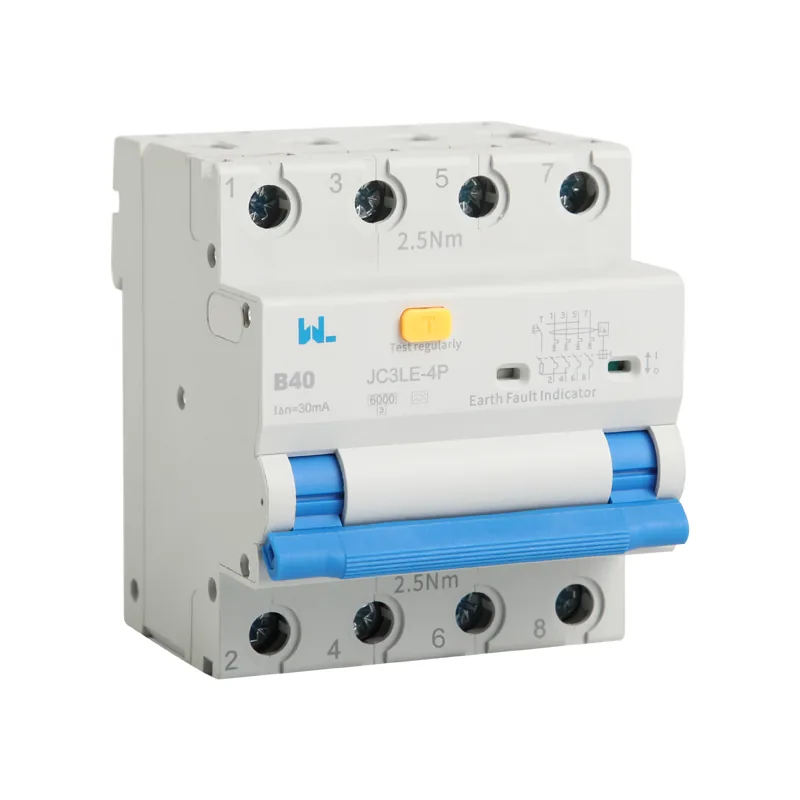
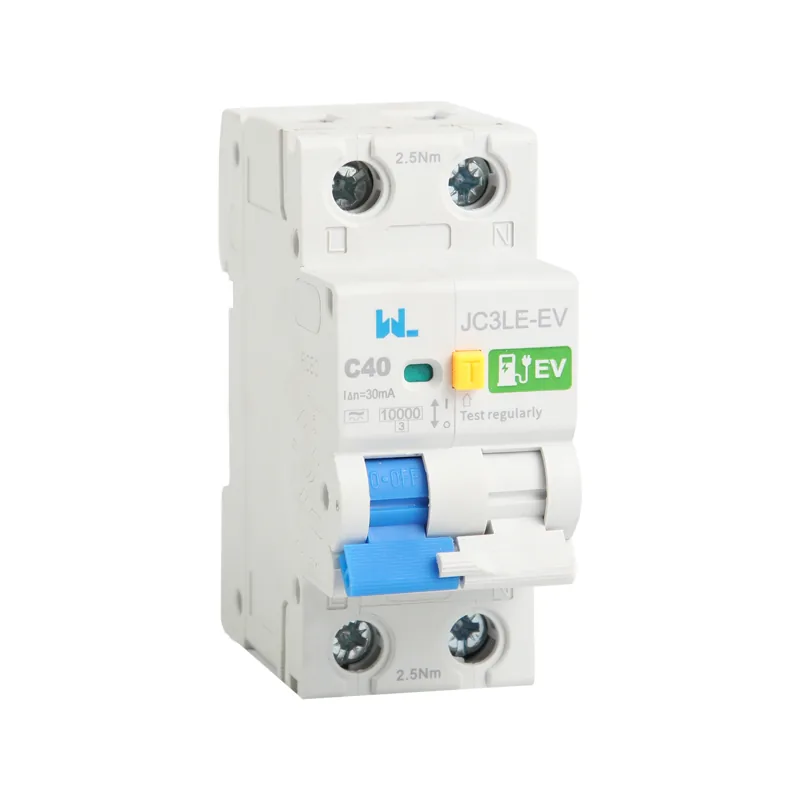
要約: An RCCB (residual-current circuit breaker) compares the current flowing out through the live conductors with the current returning through the neutral. A difference indicates residual current, often caused by insulation failure, an unintended earth path, or contact with an exposed conductive part. The device trips when the residual-current condition reaches its declared operating characteristics. Under IEC 61008-1, an RCCB is a residual-current circuit-breaker without integral overcurrent protection; it is therefore normally coordinated with an MCB, fuse, or another suitable protective device. Before approval, confirm the RCCB type, poles, rated current, residual-current setting, short-circuit coordination, and local installation requirements.
An RCCB is one layer in a protection system, not a complete answer to every electrical fault. It can respond to leakage or imbalance downstream of its sensing point, but it does not automatically detect every overload, line-to-neutral short circuit, or fault upstream of the device. That protection boundary should be visible in the single-line diagram and in the procurement schedule.
How residual-current protection works
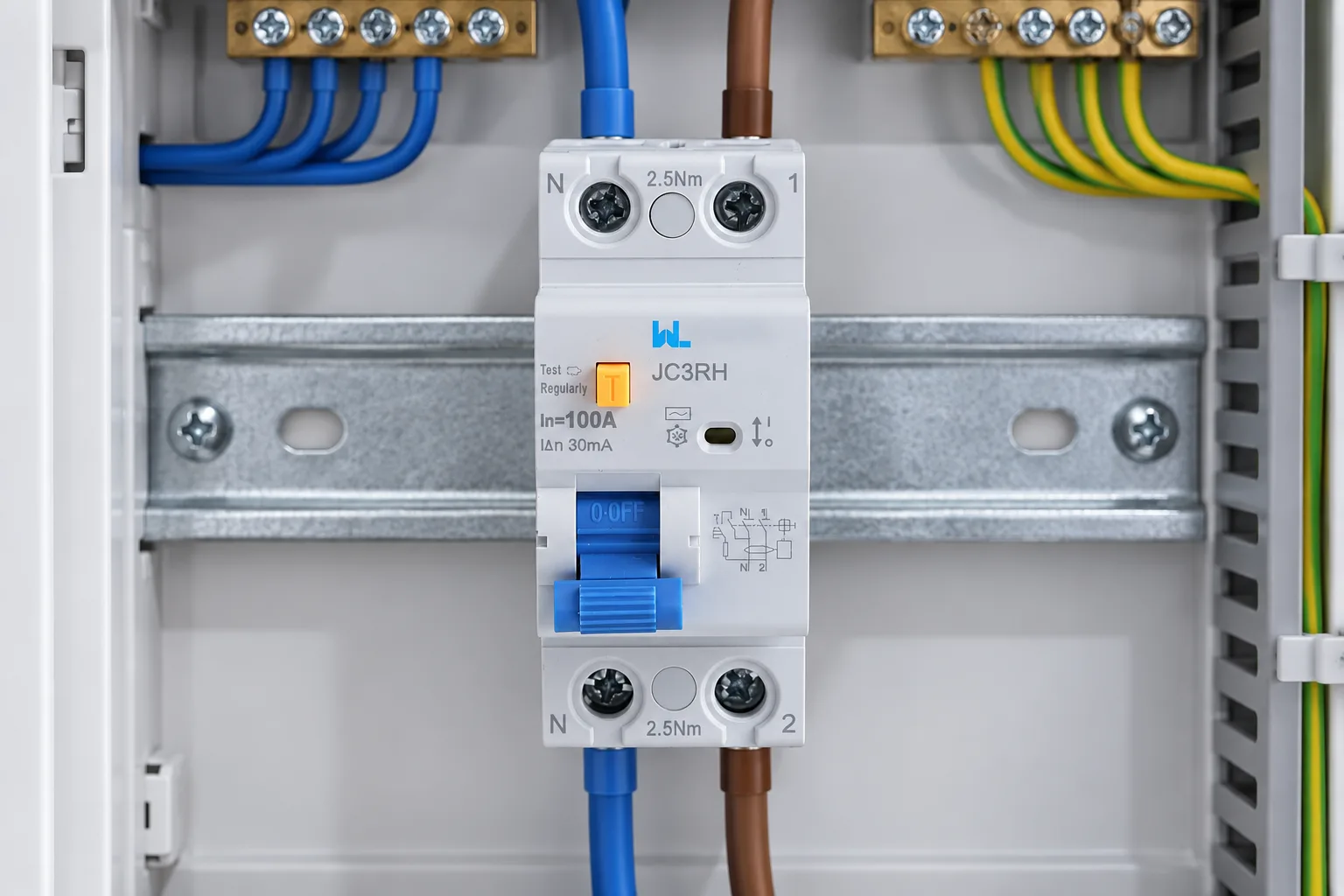
In normal operation, the vector sum of the currents passing through the RCCB’s sensing core is approximately zero. The phase conductor carries current to the load and the neutral returns it. If part of that current flows through protective earth, equipment metalwork, a person, or another unintended path, the currents no longer balance. The sensing and trip mechanism then opens the protected conductors according to the device’s declared operating time and residual-current characteristics.
What the sensing core can and cannot see
All live conductors belonging to the protected circuit must pass through the sensing arrangement. A neutral borrowed from another circuit, a shared neutral placed on the wrong side of the device, or a downstream neutral-to-earth connection can create nuisance tripping or bypass the intended measurement. The device sees the net imbalance through its sensing path; it does not “understand” the load’s purpose.
Residual-current protection is different from overload protection. A motor drawing too much current between phase conductors may trip an MCB or MCCB while producing little residual current. Conversely, a small insulation leakage to earth may trip an RCCB before the load reaches its overcurrent threshold. Coordination between these functions is a design responsibility.
Protection boundary: what an RCCB protects
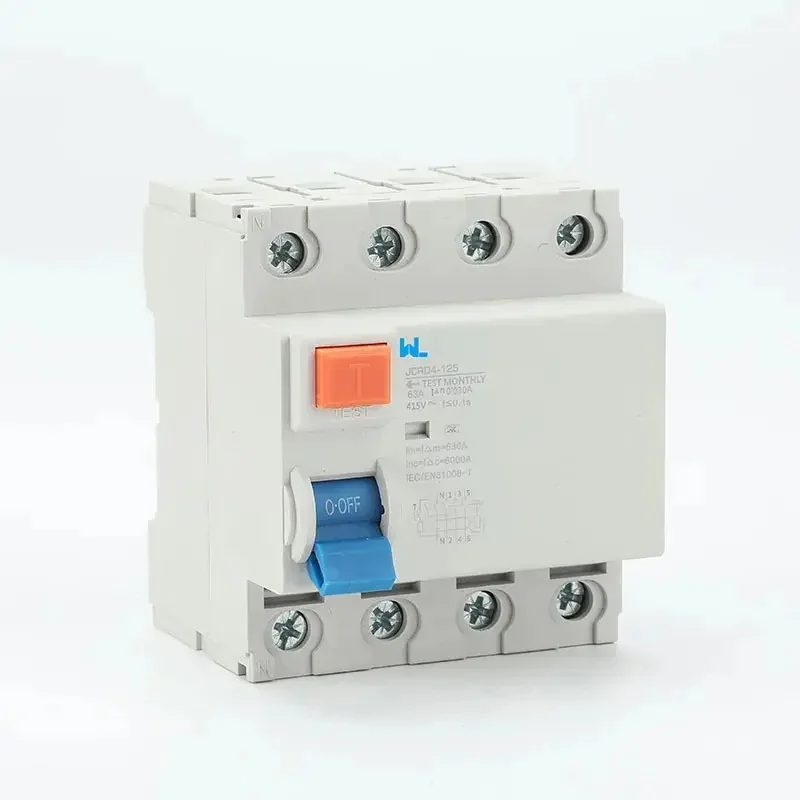
The most useful procurement question is not “Is an RCCB safer?” but “Which conductors and fault paths are inside its zone of protection?” The table below separates the functions commonly confused during specification.
| Condition or requirement | What an RCCB may do | What must be provided or verified separately |
|---|---|---|
| Leakage from a live conductor to earth downstream | Detect the residual-current imbalance and open the protected circuit when the declared operating condition is reached. | Confirm earthing, touch-voltage, disconnection-time, and installation-rule requirements. |
| Overload or line-to-neutral short circuit | Not the primary protective function of an RCCB without integral overcurrent protection. | Coordinate an MCB, fuse, or other overcurrent protective device with the RCCB. |
| Fault upstream of the sensing point | Outside the RCCB’s downstream measurement zone. | Use the upstream protection and system earthing design to cover that section. |
| Neutral and phase conductor arrangement | Requires all relevant live conductors to pass through the correct sensing path. | Check the single-line diagram, neutral segregation, pole count, and wiring instructions. |
| Equipment with electronic power conversion | Response depends on the residual-current waveform and the RCCB type. | Review the manufacturer’s type designation and the load’s possible AC, pulsating DC, or smooth DC components. |
For a project team, this boundary is a useful acceptance check: identify the protected circuit, show the sensing path, assign overcurrent protection, and document what happens if either device trips. Do not infer compatibility from a similar front-panel appearance.
RCCB, RCD, GFCI, and MCCB: functional differences
“RCD” is a broad term used in many markets for a device that operates on residual current. “RCCB” is a more specific product designation commonly used for a residual-current circuit-breaker without integral overcurrent protection. Local standards and product catalogues can use the terms differently, so the product standard and declared functions should control the purchase specification.
| Device or term | Primary sensing/protection | Typical specification question |
|---|---|---|
| RCCB | Residual-current detection and switching; overcurrent protection is normally external. | Which RCCB type, poles, rated current, residual setting, and upstream/downstream coordination are required? |
| RCD | Umbrella term that can include residual-current protective devices such as RCCBs and RCBOs. | Which exact product standard and integral functions does the supplier mean by “RCD”? |
| GFCI circuit breaker | North American terminology for ground-fault protection; construction and listing requirements depend on the product category. | Does the proposed device meet the destination market’s applicable standard and panel rules? |
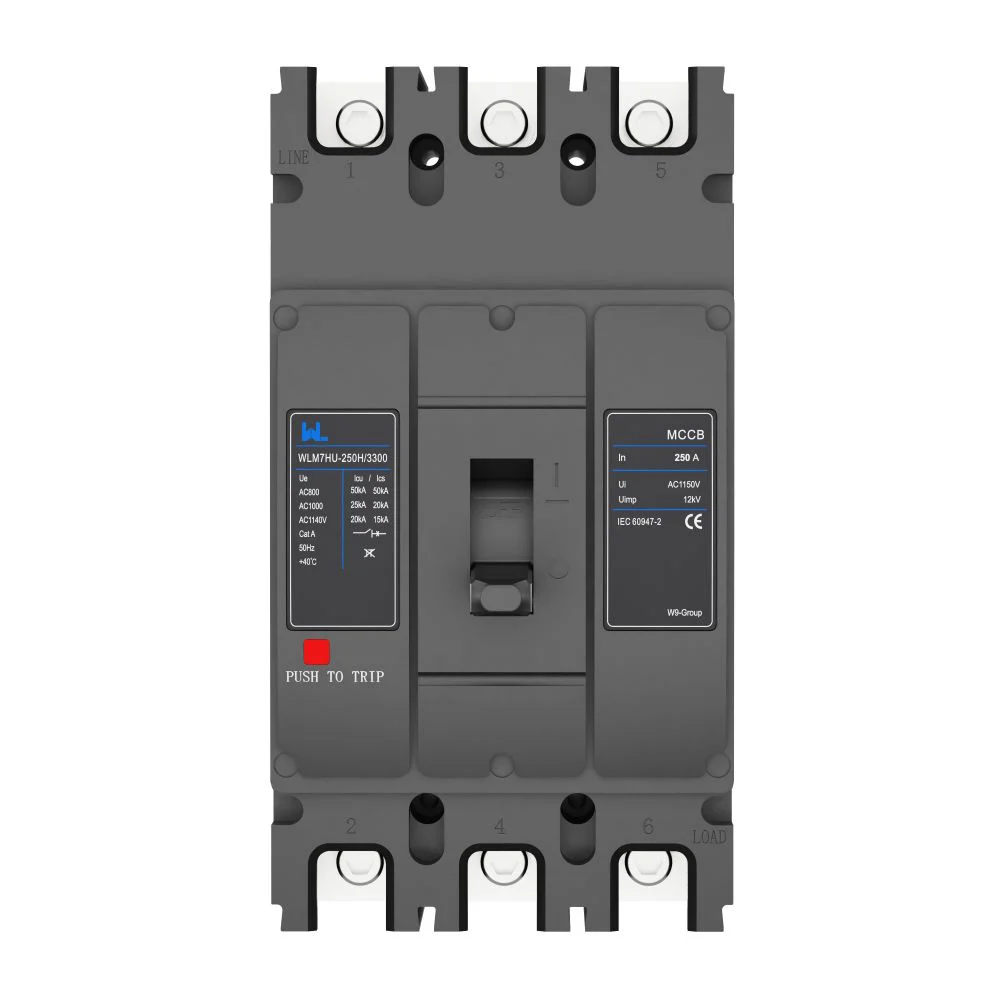
| MCCB | Overload and short-circuit protection, with optional functions depending on the model; residual-current protection is not assumed. | What are the rated current, breaking capacity, trip settings, and coordination requirements? |
| RCBO | Combines residual-current and overcurrent functions in one circuit protective device. | Is combined protection needed per circuit, and are its poles, neutral treatment, and ratings suitable? |
Use the term that appears in the governing standard and data sheet, then state the actual function. The W9 Group RCCB safety overview can provide category context, but it should not replace the selected device’s technical file.
Application matrix for engineers and buyers
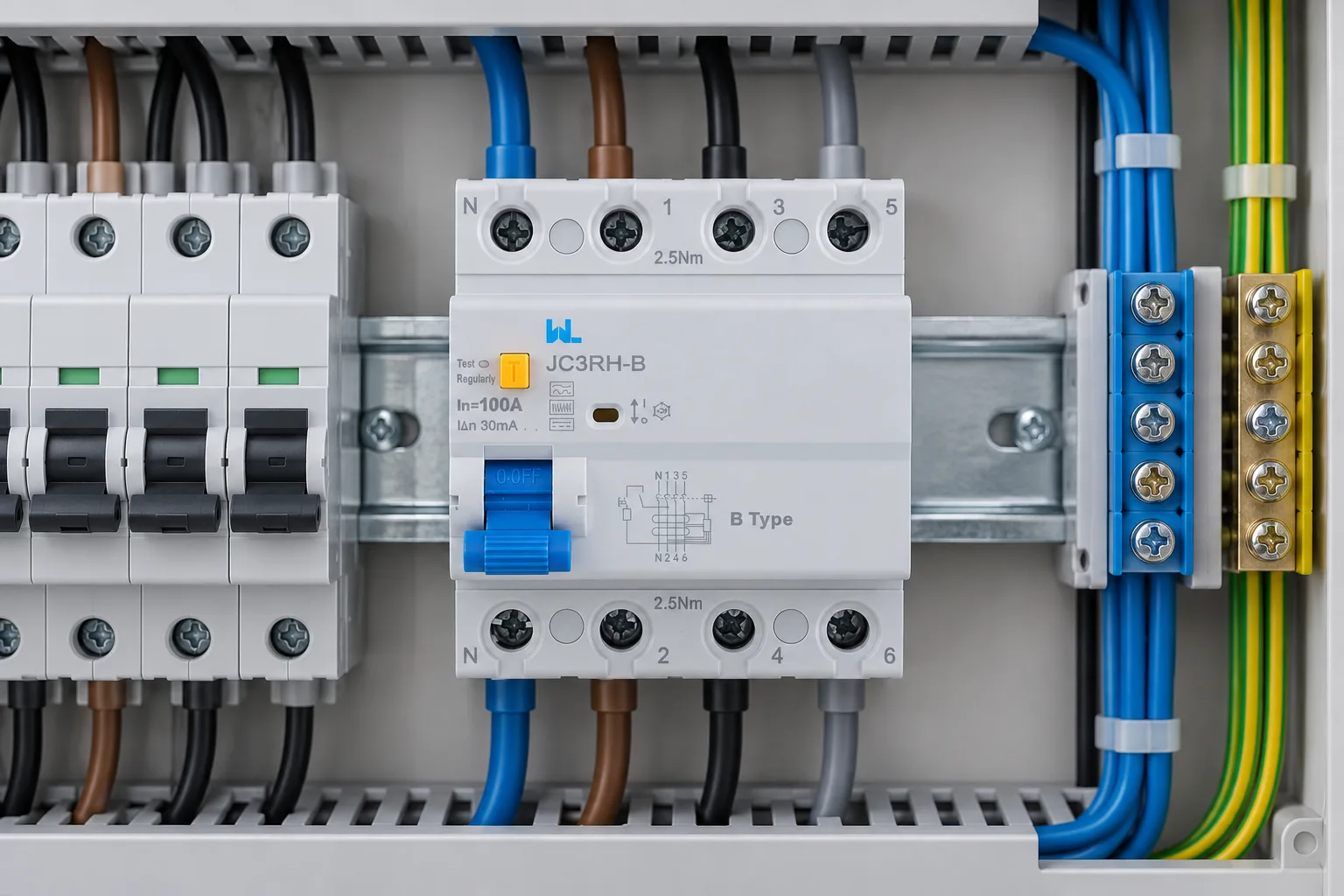
The right configuration depends on the circuit and the consequence of interruption. A two-pole RCCB, for example, is commonly considered for a single-phase line-and-neutral circuit where both conductors must be switched or isolated together. The exact pole arrangement, neutral switching rules, and upstream protection still depend on the destination installation standard and the manufacturer’s instructions.
| Application question | RCCB decision point | Evidence to request before release |
|---|---|---|
| Single-phase final circuit? | Evaluate a two-pole arrangement when simultaneous line and neutral isolation is required by the design. | Single-line diagram, pole definition, neutral arrangement, and installation-rule reference. |
| Three-phase or four-wire feeder? | Include all relevant live conductors in the sensing path and verify neutral handling. | Wiring diagram, phase/neutral identification, and coordination study. |
| Electronic or variable-speed load? | Match the residual-current waveform capability to the equipment and declared RCCB type. | Load manufacturer’s leakage information and RCCB type test/documentation. |
| High available fault current? | Check the RCCB’s conditional short-circuit rating and the specified backup protective device. | Coordination table, prospective fault-current calculation, and product data sheet. |
| Frequent nuisance trips? | Investigate cumulative leakage, neutral mixing, wiring errors, and load behaviour before changing the trip device. | Insulation and leakage measurements, circuit schedule, and commissioning records. |
Standards and compliance boundaries
IEC 61008-1 is the key product-standard reference for residual-current circuit-breakers without integral overcurrent protection. It addresses product characteristics and verification; it does not by itself replace the installation standard, local electrical code, authority requirements, or the switchboard assembly rules. IEC 61009-1 is relevant where the device is an RCBO with integral overcurrent protection. Use the standard applicable to the actual product category.
Procurement files should distinguish four documents: the product data sheet, the applicable standard declaration or test evidence, the installation instructions, and the project-specific coordination or design record. A CE mark, a test report, and compliance with an installation rule are not interchangeable claims. Ask whether the evidence covers the ordered pole configuration, residual-current type, rated voltage, accessories, and backup protection.
Selection actions before purchase
- Define the duty: record system voltage, frequency, earthing arrangement, load type, expected leakage, and whether the circuit is single-phase or multiphase.
- Draw the boundary: mark every conductor through the sensing path and identify which overcurrent device protects the RCCB and downstream wiring.
- Specify the device: confirm rated current, residual-current operating characteristics, type, poles, switching requirements, conditional short-circuit rating, and environmental conditions.
- Review coordination: check selectivity with upstream residual-current devices and overcurrent protection; account for cumulative leakage and likely nuisance-trip conditions.
- Request evidence: obtain current data sheets, wiring diagrams, instructions, declarations or test evidence, and commissioning checks for the exact configuration.
W9 Group provides low-voltage circuit-protection options for OEM, panel-builder, and distribution projects. Buyers can review the W9 Group RCCB category, then confirm the exact model, ratings, documentation, and destination-market requirements before release. For application questions, use the technical support page or send the project information through W9 Group’s contact page.
よくある質問
What should a rccb circuit breaker diagram show?
It should show the supply and load sides, every live conductor passing through the RCCB sensing path, neutral segregation, the associated overcurrent protective device, earthing connections, and the downstream circuits inside the protection boundary. It should also identify pole configuration and any upstream residual-current device used for selectivity. The final diagram must follow the selected product’s wiring instructions and local installation rules.
What is the difference between a GFCI circuit breaker and an RCCB?
Both terms describe ground- or residual-current protection, but they belong to different terminology and regulatory environments. “GFCI circuit breaker” is commonly used in North American product and code contexts, while “RCCB” is a designation used in IEC-oriented markets for residual-current protection without integral overcurrent protection. Compare the applicable standard, listing or declaration, ratings, and actual functions rather than the name alone.
What are the key differences between an MCCB and an RCCB?
An MCCB is primarily selected for overload and short-circuit protection, while an RCCB responds to residual-current imbalance. An RCCB normally needs coordinated overcurrent protection; an MCCB does not automatically provide residual-current protection. Some systems use both, or use an RCBO where combined functions are appropriate.
What is the difference between RCD and RCCB?
RCD is often a general term for residual-current devices, whereas RCCB identifies a particular circuit-breaker type without integral overcurrent protection. Product catalogues and national rules can use terminology differently, so verify the exact standard, trip function, and overcurrent arrangement in the technical documentation.
What should buyers know about RCCB circuit Breaker full form?
RCCB commonly expands to “Residual-Current Circuit-Breaker.” The full form describes its residual-current function, not a complete protection package. Buyers should still specify overcurrent coordination, poles, residual-current type, rated current, short-circuit conditions, and destination-market documentation.
What is a 2-pole rccb circuit breaker and when is it used?
A 2-pole RCCB switches and monitors a line-and-neutral circuit so both conductors can be isolated together, subject to the device design and local rules. It is commonly evaluated for single-phase circuits, but it is not a universal wiring instruction. Confirm neutral switching, terminal arrangement, upstream protection, and the manufacturer’s diagram before installation.
参考文献
- International Electrotechnical Commission (IEC), standards overview, for the applicable publication and edition.
- IEC Webstore, for product-standard scope and current publication records, including IEC 61008-1 and IEC 61009-1.
- Electrical Safety First, RCD guidance, for plain-language residual-current protection context.
- UK Health and Safety Executive, electrical safety guidance, for installation and work-practice context.
The reliable RCCB choice is the one whose sensing path, overcurrent coordination, device type, and installation evidence agree with the actual circuit. Define that boundary first; only then compare catalogue options and request a project-specific review from W9 Group.