





































RCCBの電気安全における重要性:生命と財産の保護
回路は、通常の負荷電流を流しながらも、一部の電流が意図しない経路を通って戻ることがあります。そのため、適切に選定された過電流遮断器だけでは、感電に関するすべての問題を解決できるわけではありません。配電盤を点検する際には、まず欠けている保護機能を特定することが第一であり、単に見慣れた定格電流を持つ機器を追加するだけでは不十分です。.
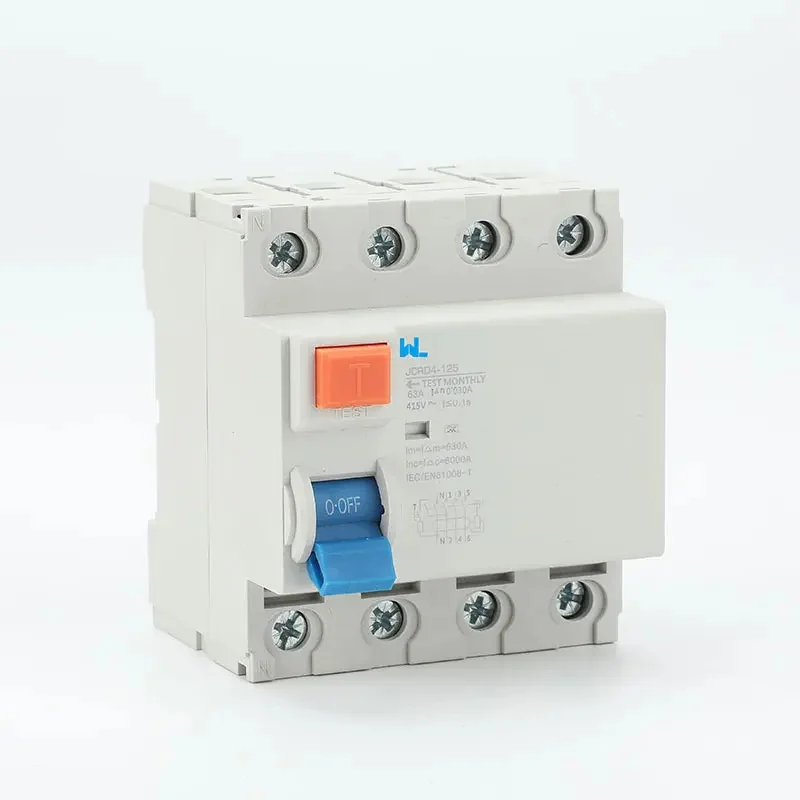
簡潔な回答:RCCBは提供します 残留電流保護 過電流保護機能を内蔵していないもの。監視対象の相導体間の不平衡を検出し、規定された条件下で遮断動作を開始する。IEC 61008-1:2024はRCCBを明示的に対象としており、IEC 61009-1:2024は過電流保護機能も備えたRCBOを対象としている。RCCBは、適切な波形感度、通電容量、試験要件および現地設置に関する要求事項を満たす、整合性のとれた保護システムの一環としてのみ使用すること。RCCBは特定のリスクを低減するが、あらゆる感電や電気火災から確実に保護できるわけではない。.
RCCB 漏れ電流検出
適切に配線された単相回路では、電源側から流れて中性線を通って戻る電流は、検出部において平衡が保たれます。多相回路では、監視対象の電源側導体全体が一体的に評価されます。監視対象の経路外から戻る電流は、残存不平衡を生じさせ、その不平衡を機器が検出します。.
保護導体は、RCCBが監視する相線経路における代替の帰線とはなりません。中性線の配線経路は重要です。借用の中性線や意図しない中性線と大地との接続があると、電流バランスが崩れ、保護回路の動作特性が変化します。これらは、有資格の電気工事士が調査すべき設置上の不具合であり、感度の低い機器を選択して隠蔽すべき状態ではありません。.
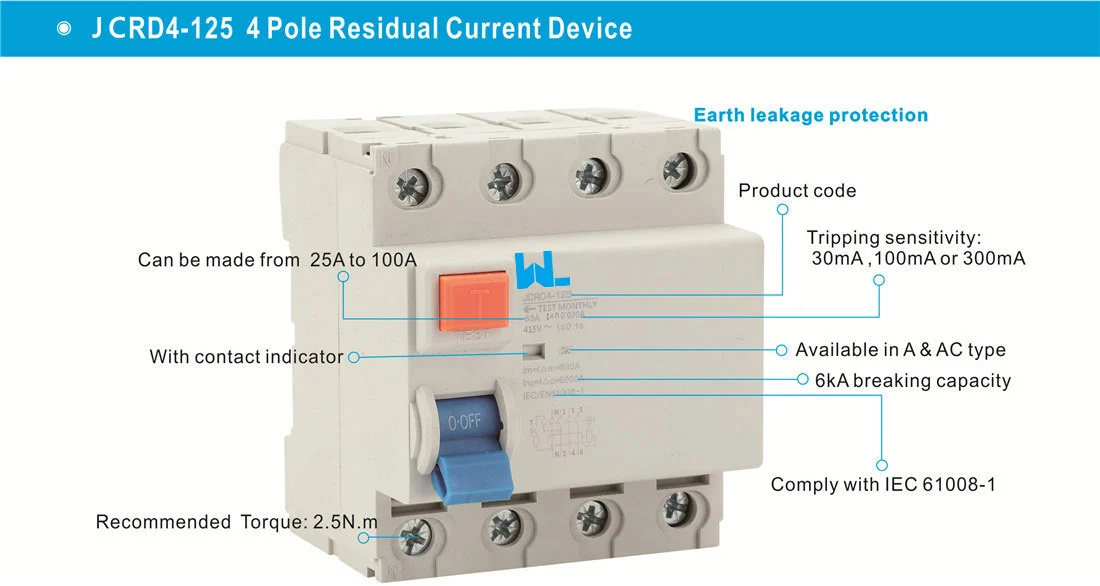
The 定格電流 定格許容動作電流Inと定格残留動作電流IΔnは、それぞれ異なるものを表します。Inは負荷電流の通電能力に関わり、IΔnは残留電流動作特性に関係します。Inが大きいからといって感電に対する感度が向上するわけではありません。安全性に関する要求事項を満たすためには、電圧・周波数、極数配置および残留電流の種類とともに両方の定格を明記し、供給業者がアンペア定格のみで対応できないようにしてください。.
RCCBの保護範囲
線間電流と対地中性点電流が均衡している状態は、残留電流による故障ではありません。監視対象の導体を通過する送り出し電流と戻り電流が均衡したままの場合、RCCB(漏電遮断器)は危険な事象を検知できないことがあります。これが、RCDによる保護が絶縁、障壁、接地および設備のその他の保護措置を補完するものであって、それらに代わるものではない理由の一つです。.
RCCBには、過負荷保護機能も内蔵されていません。 短絡保護. 宣言された条件付き短絡遮断容量は、指定された上流の保護機器および設置条件に依存する場合があります。これは、RCCBが個別にあらゆる想定故障電流を遮断することを証明するものではありません。正確な組み合わせについては、協調動作が保証される機器および適用可能な定格データをご確認ください。.
また、残留電流検知は専用のアーク検知機能ではありません。監視対象の電流経路内や、他の保護閾値以下の範囲に、依然として危険なアークが存在する可能性があります。 AFDD機能 addresses a different detection mechanism. Combining protective functions is a design decision; adding one device does not establish that every risk has been covered.
| アレンジメント | 残留電流検出 | 過電流保護 | 調達の意義 |
|---|---|---|---|
| MCBのみ | その専用機能ではない | その定格および特性曲線の範囲内で提供されます | 漏電保護の追加が必要かどうかを評価する |
| 協調過電流保護機能付きRCCB | RCCBによって提供されました | 別途指定された機器によって提供される | Verify both devices and their combination |
| RCBO on an individual circuit | Integrated | Integrated | Verify both rating sets and assembly compatibility |
| AFDD combination | Only if declared | Only if declared | Check each integrated or paired protective function |
Circuit Grouping and Service Continuity
A shared RCCB can disconnect multiple outgoing circuits when a residual-current event occurs on one circuit. That may be acceptable in some designs but problematic where unrelated lighting, refrigeration or process loads would be lost together. The issue is the consequence of grouping, not evidence that the RCCB has failed.
Individual combined devices can divide that exposure. Read the RCBO protection explanation when comparing arrangements. Circuit-level devices do not automatically guarantee complete selectivity with upstream protection; the entire arrangement, including residual-current and short-circuit behaviour, still needs assessment.
Electronic loads may contribute normal protective-conductor leakage as well as produce particular fault waveforms. Select the residual-current type from the load and manufacturer instructions, not solely from the building’s label. An office, for example, can contain different converter technologies; a location description does not establish which waveform a fault could produce.
RCCB Project Verification
| Project question | Risk or limitation | Evidence or action |
|---|---|---|
| Does this circuit need additional shock protection? | Rules vary by circuit and destination | Applicable installation rule and designer’s protection schedule |
| Can several circuits share an RCCB? | A single event can remove unrelated loads | Circuit grouping and acceptable outage consequence |
| Does connected equipment include converters? | Residual waveform may affect detection | Equipment instructions and selected RCD type |
| What protects the RCCB against overcurrent? | No integral overload/short-circuit function | Manufacturer coordination and backup-device data |
| How will ongoing operation be demonstrated? | A device present in the board may not function correctly | Commissioning tests, user instructions and maintenance records |
SafeWork NSW describes RCDs as protecting against current passing through the body to earth and requires regular competent testing in its applicable workplace context. It also requires records of testing other than push-button testing. This is useful evidence for a maintenance process, not a universal test interval or a wiring rule for every country. The public page still refers to an older AS/NZS 3000 edition, so a current local rule must be checked independently.
RCCB Testing and Compliance Evidence
A push-button test is not a complete installation test. It operates the device’s test function under the specified conditions. It does not prove every earth connection, fault-loop condition, conductor termination or circuit route is correct. Commissioning needs the tests applicable to the installation and exact device, undertaken by a competent person with suitable instruments.
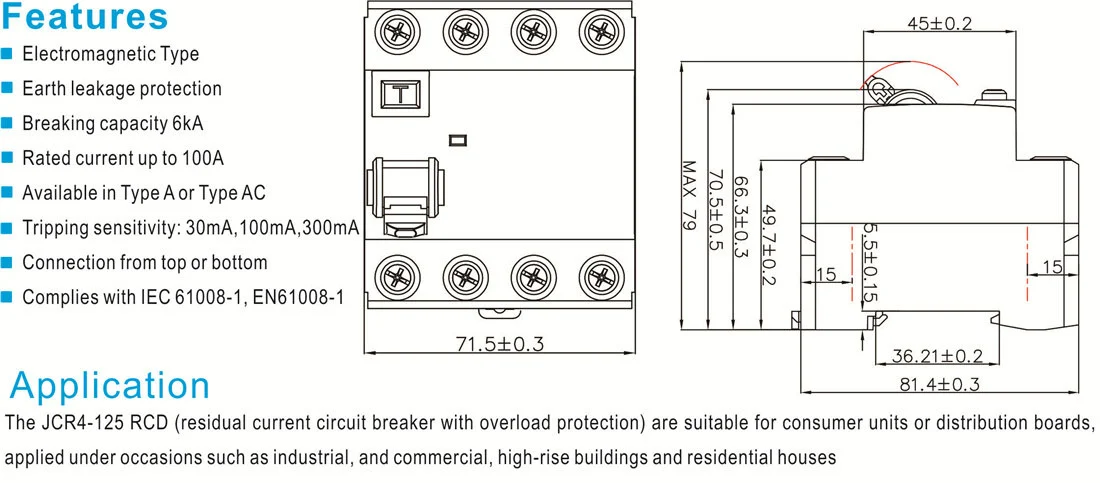
The current IEC 61008-1:2024 public scope describes household and similar RCCBs with operational voltages not exceeding 440 V AC and rated currents not exceeding 125 A. These are scope boundaries, not ratings that every RCCB possesses. Industrial applications and different product categories may require a different evidence route. A standards label is not a substitute for an exact-model declaration, certification where required, or installation approval.
- Define the hazard and applicable installation requirement.
- Specify residual sensitivity and waveform type separately from rated load current.
- Verify poles, neutral arrangement and coordinated overcurrent protection.
- Check board compatibility and circuit grouping.
- Record commissioning results and hand over test and fault-response instructions.
W9 Group’s RCCB product category can help buyers identify candidates. Obtain the exact model documentation and destination-market evidence before approving it; this article does not certify any particular device or assembly.
よくある質問
What does an RCCB protect against?
It detects residual-current imbalance and disconnects under its specified conditions. It can reduce risks associated with leakage to earth, but its scope does not include every possible shock or fire mechanism.
Does an RCCB protect against overload?
No; an RCCB has no integral overcurrent protection. A suitable separate protective device must be coordinated with it, or an appropriate RCBO arrangement must be selected.
Is a higher RCCB current rating more sensitive?
No. Rated 負荷電流 and rated residual operating current are separate specifications. Evaluate sensitivity from IΔn and the operating characteristics, not from In.
Can an RCCB replace earthing?
No. Earthing and the installation’s other protective measures remain necessary. RCD protection must be part of the complete design, not a way to accept missing protective conductors.
Does an RCCB prevent every electrical fire?
No. Some fire mechanisms do not produce the residual current it is designed to detect. Sound wiring, overcurrent protection, inspection and any required arc-fault measures remain separate responsibilities.
References and conclusion
- IEC 61008-1:2024 — RCCBs without integral overcurrent protection.
- IET — どのタイプのRCDですか?.
- IEC 60364-6:2016 — 設置確認.
Public scopes and guidance were checked on 14 October 2026. Specify the protection boundary before choosing the product. Contact W9 Group with the circuit duty, residual-current requirements and destination market to request model-level information.
For waveform and pole selection, W9グループへのお問い合わせ with the circuit topology, load equipment and destination-market rules.