









Importance of RCCB in Electrical Safety: Protecting Life and Property
A circuit can carry a perfectly ordinary load current while some current returns through an unintended path. That is why a correctly selected overcurrent breaker does not answer every electric-shock question. For a buyer reviewing a distribution board, the first task is to identify the missing protective function, not simply add another device with a familiar current rating.
Quick answer: An RCCB provides residual-current protection without integral overcurrent protection. It detects imbalance between the live conductors it monitors and initiates disconnection under its specified conditions. IEC 61008-1:2024 explicitly addresses RCCBs; IEC 61009-1:2024 addresses RCBOs, which also incorporate overcurrent protection. Use an RCCB only within a coordinated protective arrangement, with suitable waveform sensitivity, current-carrying capacity, testing and local installation requirements. It reduces defined risks but cannot guarantee protection against every electric shock or electrical fire.
RCCB Residual-Current Detection
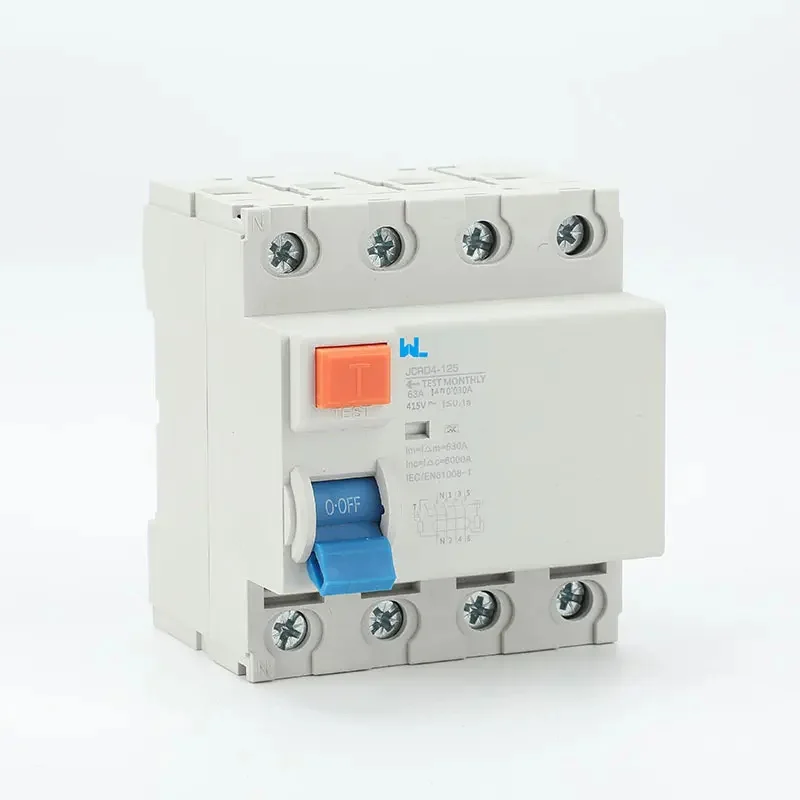
In a correctly arranged single-phase circuit, the current leaving through the line and returning through the neutral is balanced at the sensing system. In a multiphase arrangement, the monitored live conductors are assessed together. Current returning outside that monitored path can create a residual imbalance that the device detects.
The protective conductor is not a substitute return conductor through the RCCB’s monitored live paths. Neutral routing matters: a borrowed neutral or an unintended neutral-to-earth connection can change the balance and the behaviour of the protective arrangement. These are installation faults for a competent electrician to investigate, not conditions to hide by choosing a less sensitive device.
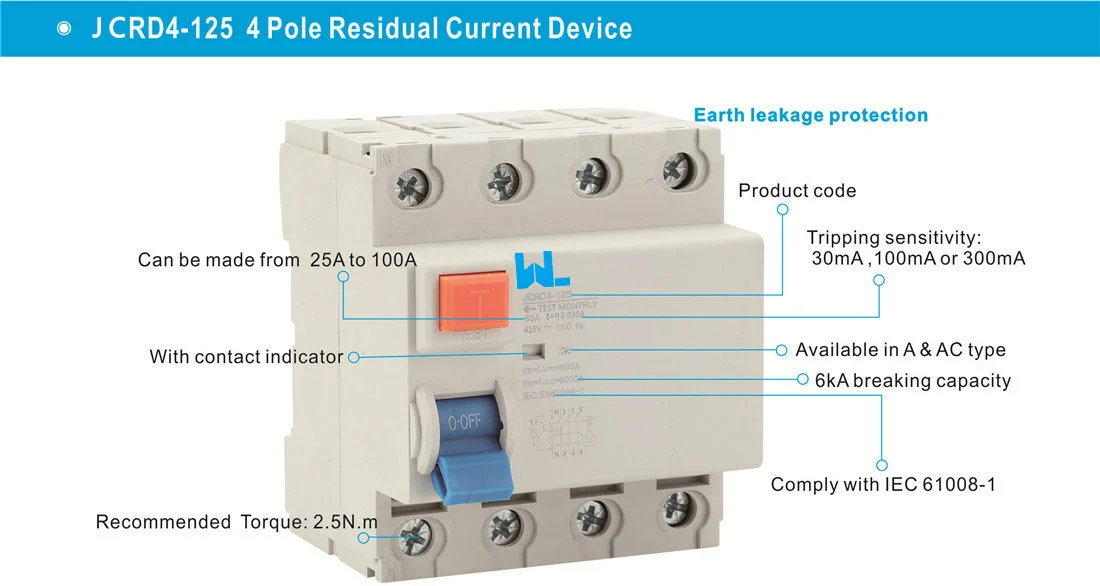
The rated current In and rated residual operating current IΔn describe different things. In concerns carrying load current; IΔn concerns the residual-current operating characteristic. A higher In does not mean better shock sensitivity. Specify both ratings, the voltage and frequency, pole arrangement and residual-current type so the supplier cannot answer a safety requirement with only an ampere rating.
RCCB Protection Limits
Balanced line-to-neutral current is not a residual-current fault. An RCCB may not detect a dangerous event if outgoing and returning current remains balanced through the monitored conductors. This is one reason RCD protection is additional to, not a replacement for, insulation, barriers, earthing and the installation’s other protective measures.
An RCCB also lacks integral overload and short-circuit protection. A declared conditional short-circuit rating can depend on the specified upstream protective device and installation conditions. It must not be read as proof that an RCCB independently interrupts every prospective fault. Ask for the coordinated device and applicable rating data for the exact combination.
Nor is residual-current sensing dedicated arc detection. Some dangerous arcs may remain within the monitored current path or below another protection threshold. The AFDD function addresses a different detection mechanism. Combining protective functions is a design decision; adding one device does not establish that every risk has been covered.
| Arrancamiento | Residual-current detection | Overcurrent protection | Consecuencias para la adquisición |
|---|---|---|---|
| MCB alone | Not its dedicated function | Provided within its rating and curve | Assess whether residual-current protection is additionally required |
| RCCB with coordinated overcurrent protection | Provided by RCCB | Provided by separate specified device | Verify both devices and their combination |
| RCBO on an individual circuit | Integrated | Integrated | Verify both rating sets and assembly compatibility |
| AFDD combination | Only if declared | Only if declared | Check each integrated or paired protective function |
Circuit Grouping and Service Continuity
A shared RCCB can disconnect multiple outgoing circuits when a residual-current event occurs on one circuit. That may be acceptable in some designs but problematic where unrelated lighting, refrigeration or process loads would be lost together. The issue is the consequence of grouping, not evidence that the RCCB has failed.
Individual combined devices can divide that exposure. Read the RCBO protection explanation when comparing arrangements. Circuit-level devices do not automatically guarantee complete selectivity with upstream protection; the entire arrangement, including residual-current and short-circuit behaviour, still needs assessment.
Electronic loads may contribute normal protective-conductor leakage as well as produce particular fault waveforms. Select the residual-current type from the load and manufacturer instructions, not solely from the building’s label. An office, for example, can contain different converter technologies; a location description does not establish which waveform a fault could produce.
RCCB Project Verification
| Project question | Risk or limitation | Evidence or action |
|---|---|---|
| Does this circuit need additional shock protection? | Rules vary by circuit and destination | Applicable installation rule and designer’s protection schedule |
| Can several circuits share an RCCB? | A single event can remove unrelated loads | Circuit grouping and acceptable outage consequence |
| Does connected equipment include converters? | Residual waveform may affect detection | Equipment instructions and selected RCD type |
| What protects the RCCB against overcurrent? | No integral overload/short-circuit function | Manufacturer coordination and backup-device data |
| How will ongoing operation be demonstrated? | A device present in the board may not function correctly | Commissioning tests, user instructions and maintenance records |
SafeWork NSW describes RCDs as protecting against current passing through the body to earth and requires regular competent testing in its applicable workplace context. It also requires records of testing other than push-button testing. This is useful evidence for a maintenance process, not a universal test interval or a wiring rule for every country. The public page still refers to an older AS/NZS 3000 edition, so a current local rule must be checked independently.
RCCB Testing and Compliance Evidence
A push-button test is not a complete installation test. It operates the device’s test function under the specified conditions. It does not prove every earth connection, fault-loop condition, conductor termination or circuit route is correct. Commissioning needs the tests applicable to the installation and exact device, undertaken by a competent person with suitable instruments.
The current IEC 61008-1:2024 public scope describes household and similar RCCBs with operational voltages not exceeding 440 V AC and rated currents not exceeding 125 A. These are scope boundaries, not ratings that every RCCB possesses. Industrial applications and different product categories may require a different evidence route. A standards label is not a substitute for an exact-model declaration, certification where required, or installation approval.
- Define the hazard and applicable installation requirement.
- Specify residual sensitivity and waveform type separately from rated load current.
- Verify poles, neutral arrangement and coordinated overcurrent protection.
- Check board compatibility and circuit grouping.
- Record commissioning results and hand over test and fault-response instructions.
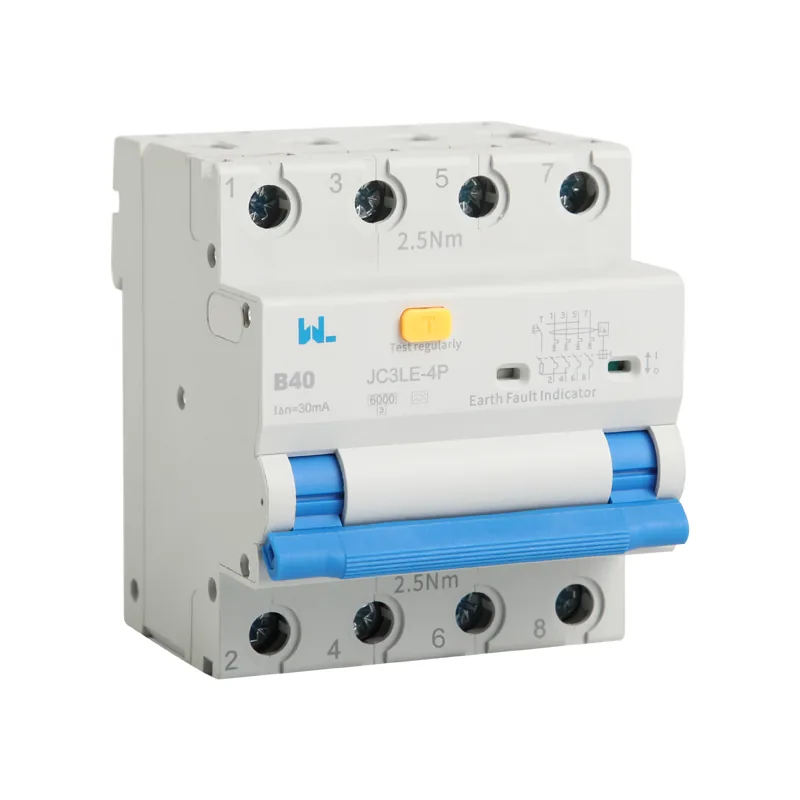
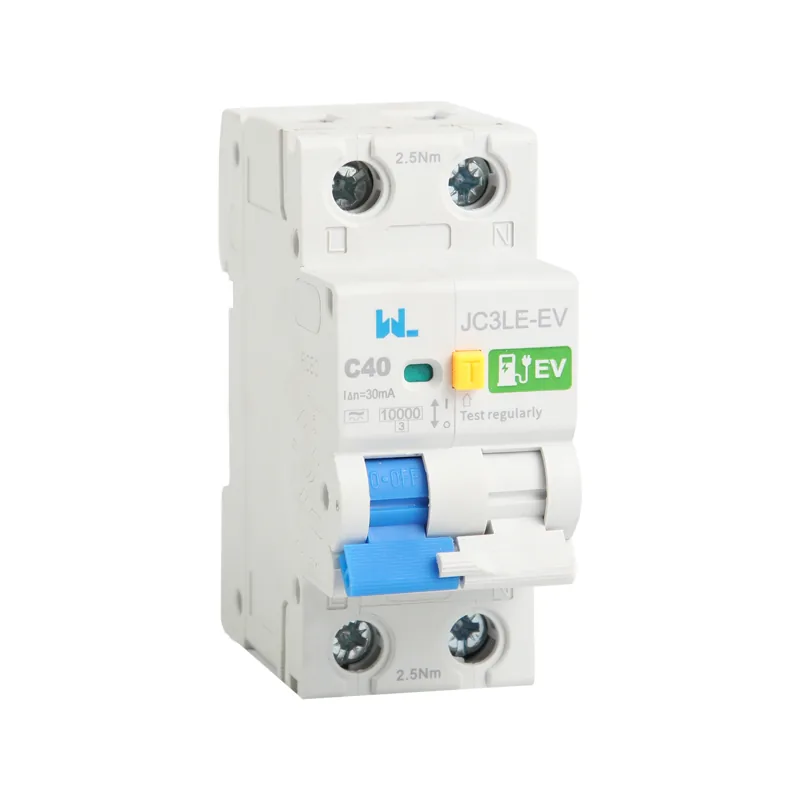
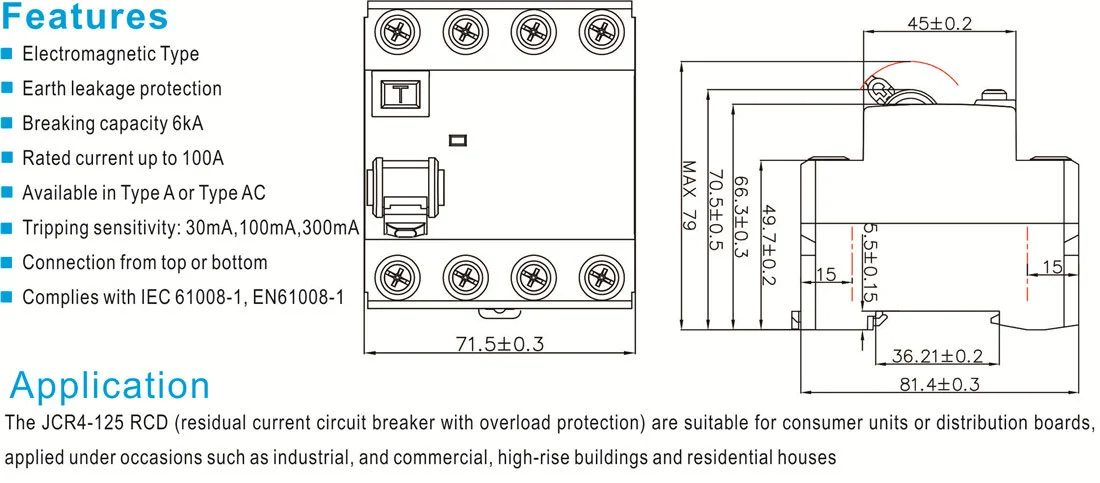
W9 Group’s RCCB product category can help buyers identify candidates. Obtain the exact model documentation and destination-market evidence before approving it; this article does not certify any particular device or assembly.
Preguntas frecuentes
What does an RCCB protect against?
It detects residual-current imbalance and disconnects under its specified conditions. It can reduce risks associated with leakage to earth, but its scope does not include every possible shock or fire mechanism.
Does an RCCB protect against overload?
No; an RCCB has no integral overcurrent protection. A suitable separate protective device must be coordinated with it, or an appropriate RCBO arrangement must be selected.
Is a higher RCCB current rating more sensitive?
No. Rated load current and rated residual operating current are separate specifications. Evaluate sensitivity from IΔn and the operating characteristics, not from In.
Can an RCCB replace earthing?
No. Earthing and the installation’s other protective measures remain necessary. RCD protection must be part of the complete design, not a way to accept missing protective conductors.
Does an RCCB prevent every electrical fire?
No. Some fire mechanisms do not produce the residual current it is designed to detect. Sound wiring, overcurrent protection, inspection and any required arc-fault measures remain separate responsibilities.
References and conclusion
- IEC 61008-1:2024 — RCCBs without integral overcurrent protection.
- IEC 61009-1:2024 — RCBOs with integral overcurrent protection.
- SafeWork NSW: Residual current devices — workplace use and testing guidance, jurisdiction-specific.
Public scopes and guidance were checked on 14 October 2026. Specify the protection boundary before choosing the product. Contacte a W9 Group with the circuit duty, residual-current requirements and destination market to request model-level information.