





































Cómo funcionan las unidades de disparo electrónicas de los MCCB
Una búsqueda de un interruptor automático electrónico puede arrojar como resultados un MCCB industrial, un pequeño módulo de protección para corriente continua o un circuito integrado. Todos ellos incorporan componentes electrónicos, pero resuelven problemas distintos. Un comprador que utilice estos términos como si fueran intercambiables podría terminar comparando productos con diferentes clasificaciones de tensión, métodos de interrupción y requisitos de instalación.
Respuesta rápida: un/a MCCB electrónico Utiliza la detección de corriente y una unidad de disparo electrónica para determinar cuándo debe abrirse el mecanismo del interruptor. El MCCB completo sigue necesitando las clasificaciones adecuadas de corriente, tensión y cortocircuito. Funciones como la protección contra sobrecorriente por tiempo prolongado, por tiempo reducido, instantánea y contra fallas a tierra dependen de la versión del disparador instalada. Electrónico no implica automáticamente interrupción en estado sólido, comunicaciones, pantalla o protección individual contra corrientes residuales. Identifique primero la clase del producto y, a continuación, especifique las funciones de disparo exactas junto con la documentación de soporte.
From current sensing to contact opening
The basic functional chain has four stages: sense current, evaluate the protection settings, issue a trip command and open the mechanical contacts. This is a functional description, not a universal internal wiring diagram. Sensor technology, release supply and actuator details vary by product.
The electronics evaluate current against the implemented protection functions. If the operating condition is met, the release initiates the mechanical trip. The operating mechanism and interruption system must then clear the current within the complete device’s declared capability. Describing the electronics alone leaves out a substantial part of what a circuit breaker must do.
For that reason, a programmable setting cannot increase the breaking capacity of the frame. A different algorithm also does not make an AC-only configuration suitable for DC. The breaker rating and coordination guide explains why the release function and the complete device ratings must be considered together.
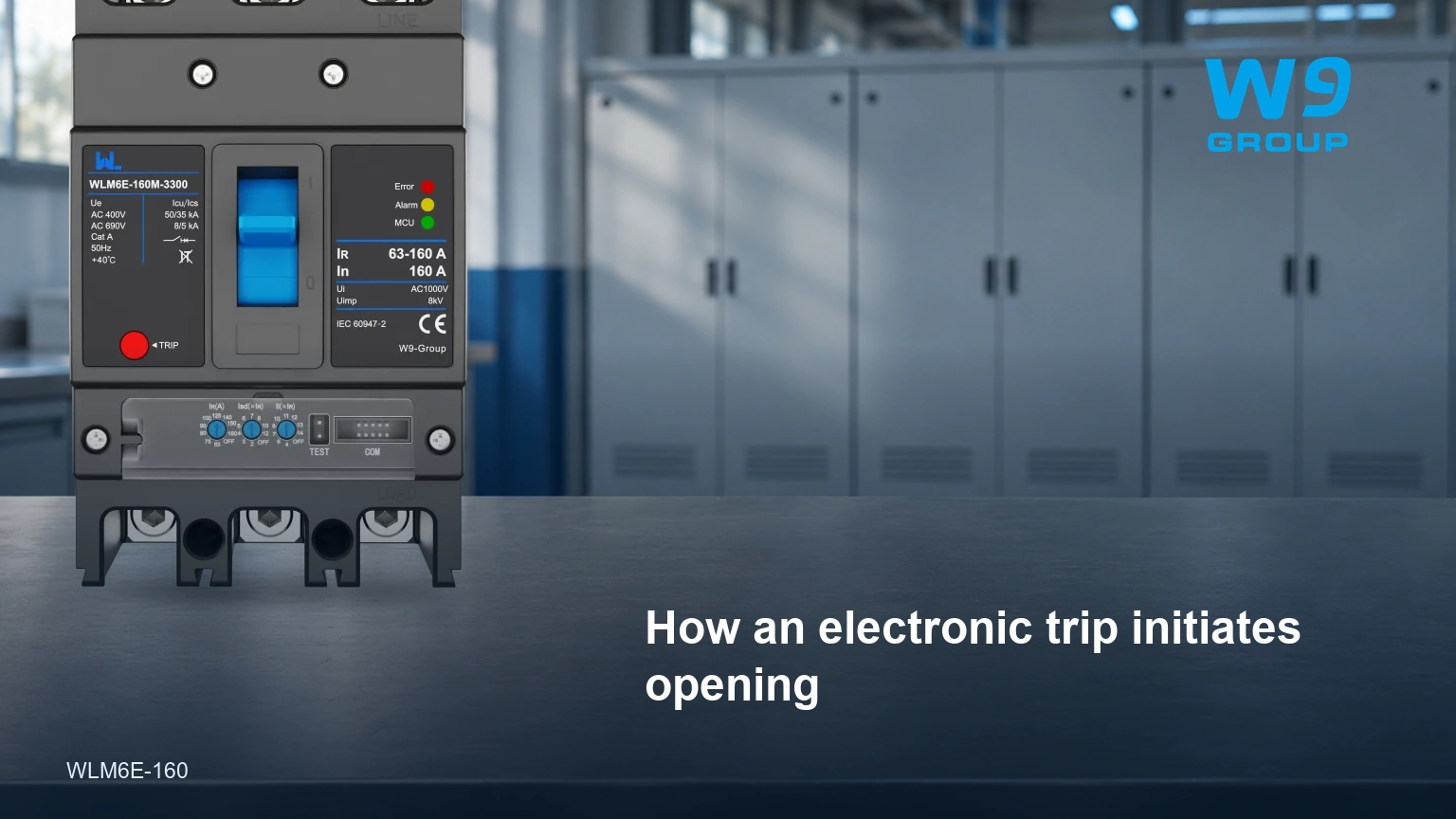
Understand the electronic trip-unit functions
Un unidad de viaje electrónica may provide long-time overload protection, short-time overcurrent protection, instantaneous protection and ground-fault overcurrent protection. The letters L, S, I and G commonly describe these functions in product literature. Read them as a function list for a specified release, not as a feature package included with every electronic breaker.
Long-time settings address overload behaviour. Short-time and instantaneous functions address different parts of the overcurrent response, subject to their permitted settings and application limits. Ground-fault overcurrent functions require the relevant sensing arrangement and must be interpreted within their documented scope.
The setting scale matters as much as the label. A pickup may be a multiple of a sensor or rated-current reference; a delay may have selectable characteristics. The manual must identify those references and any interactions. Never assume a familiar dial position has the same meaning across different releases.
| Function or feature | Purpose when provided | Qué verificar |
|---|---|---|
| Long-time protection | Overload response | Current reference, range and time characteristic |
| Short-time protection | Specified delayed overcurrent response | Pickup, delay and coordination limitations |
| Instantaneous protection | High-current response without an intentional adjustable delay in that function | Pickup band and any fixed overrides |
| Sobrecorriente por falla a tierra | Declared ground-fault protection function | Sensing arrangement and application scope |
| Display or communications | Information and interface functions | Included hardware, power and supported interface |
One electronic release can differ substantially from another even within the same frame family. If a project needs a particular function, put it in the order specification and check it on delivery. A photograph of several adjustment knobs is not sufficient to identify their purpose or ranges.
Keep protection power separate from interface power
Ask how the selected release obtains power for protection and how any display, communication or accessories are powered. Some designs derive protection power from the circuit’s current, while additional features may need a separate supply. The exact arrangement and any minimum operating conditions must come from the product documentation.
A dark display therefore should not be used as a universal test of protection availability. Conversely, an illuminated display does not prove that the complete breaker and trip path are healthy. Use the manufacturer’s indications and test procedure, and record what each check actually exercises.
Protection-function verification also requires an understanding of test scope. A test interface can evaluate certain electronic functions without proving every sensor, connection or mechanical operation. The maintenance plan should distinguish those checks from a complete-path test where the manufacturer requires one.
Distinguish electronic MCCBs from electronic DC protectors
An electronic-trip MCCB is a power-distribution protective device with a particular complete-breaker construction and declared ratings. An electronic DC circuit protector is another product class, often encountered in control-power applications. An electronic circuit-breaker IC is a component used within a designed circuit rather than a complete MCCB ready for installation.
A 24 V label on a control-power module does not establish suitability for an industrial AC feeder. Equally, a large electronic MCCB is not automatically a replacement for a compact DC channel-protection device. Compare intended use, supply characteristics, fault interruption, wiring requirements and applicable approvals before comparing price.
| Search term | Product question to resolve | Evidencia necesaria |
|---|---|---|
| MCCB electrónico | Which complete breaker and release? | Ratings, functions, curves and installation data |
| Electronic circuit breaker 24 VDC | Which DC control-power application? | Supply, channel and fault-response specification |
| Electronic circuit-breaker IC | Which component and surrounding circuit? | Component datasheet and validated system design |
| Aircraft circuit protection | Which approved aircraft application? | Application-specific design and approval requirements |
| Communicating breaker | Which interface is included? | Hardware, protocol and power information |
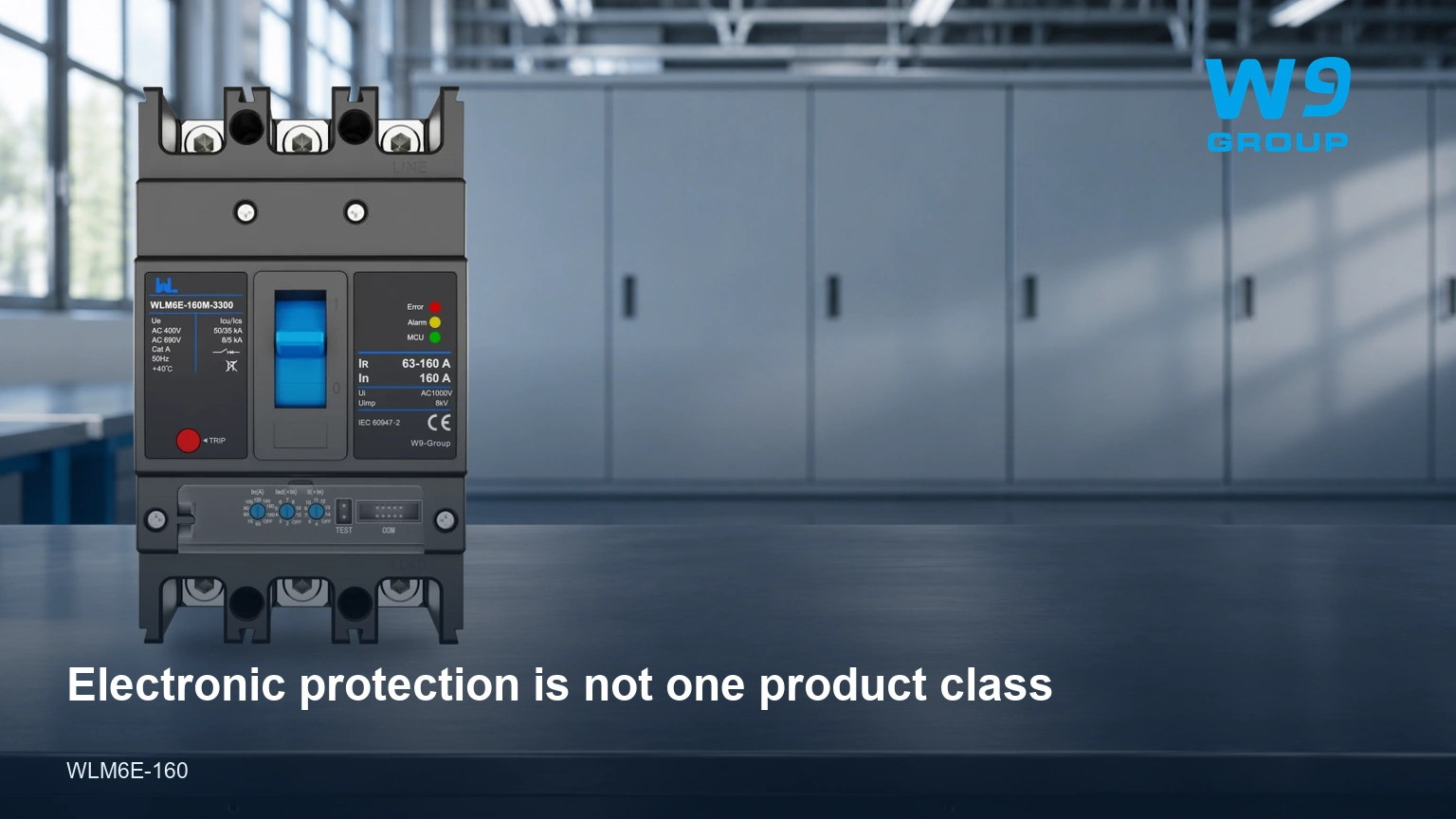
Specify an electronic MCCB that can be commissioned
IEC 60947-2:2024 is relevant to industrial circuit breakers. Its public scope covers circuit breakers intended for instructed or skilled persons, with specified voltage limits. Those limits describe the standard’s scope; they do not grant every electronic product the same voltage rating or approval.
Prepare the load and fault requirements, identify the necessary trip functions, request coordination data and define the commissioning record. For W9 Group’s WLM6E electronic MCCB, confirm the supplied release, pole arrangement and voltage-specific ratings. Request any ground-fault or communications functions separately rather than inferring them from a family name.
Maintain a controlled settings schedule that connects the design to the installed device. It should identify the references used by each setting, the approved values and any sealed or restricted adjustments. A later replacement must preserve the required function, not merely the frame’s current designation.
Total cost includes engineering review, accessories, commissioning, testing and support. An illustrative comparison should list these items using the project’s actual assumptions. A feature that is neither commissioned nor maintained should not be counted as a proven operational saving.
Electronic MCCB Questions
Is an electronic circuit-breaker IC the same as an electronic MCCB?
No. Un circuito integrado es un componente utilizado en el diseño de un circuito. Un MCCB es un dispositivo de protección completo, con su propia estructura, capacidad de interrupción y requisitos de instalación.
¿Es adecuado un protector electrónico de 24 VCC para una línea de alimentación de CA?
No lo dé por sentado. Verifique el uso previsto exacto del producto, el voltaje y las clasificaciones de respuesta ante fallas; la etiqueta electrónica no determina la idoneidad del alimentador de CA.
What affects the price of an electronic MCCB?
Frame, current, breaking capacity, poles, release functions and accessories all affect the offer. Include commissioning and maintenance requirements when comparing total installed cost.
What symbol should be used for an electronic circuit breaker?
Use the drawing convention required by the project and identify the protection functions in the legend or device schedule. A generic symbol alone does not describe the installed release or its settings.
Can an industrial electronic MCCB be used in an aircraft?
No suitability should be inferred from the product name. Aircraft applications require their own design, environmental and approval assessment for the exact equipment.
Is a WAGO electronic circuit protector equivalent to a W9 MCCB?
Not on the basis of those names. Identify the exact WAGO series and W9 model, then compare intended use and complete ratings; they may belong to different product classes.
Referencias
- IEC 60947-2:2024 — ámbito de aplicación del producto interruptor de circuito.
- HSE HSG85 — safe electrical work.
- HSE — electrical maintenance planning. Sources checked 2 November 2026.
Specify the protection function and the complete device together. Compare W9 Group’s MCCB models y request the release and rating documents for your project.