




























Earth-Leakage MCCB vs RCCB: Which Protection Do You Need?
A buyer receives two quotations for “earth-leakage protection.” One is for a molded-case breaker with combined protection functions; the other is for an RCCB intended to work with separate overcurrent protection. In this hypothetical comparison, the lower device price says little about the complete arrangement needed for the circuit.
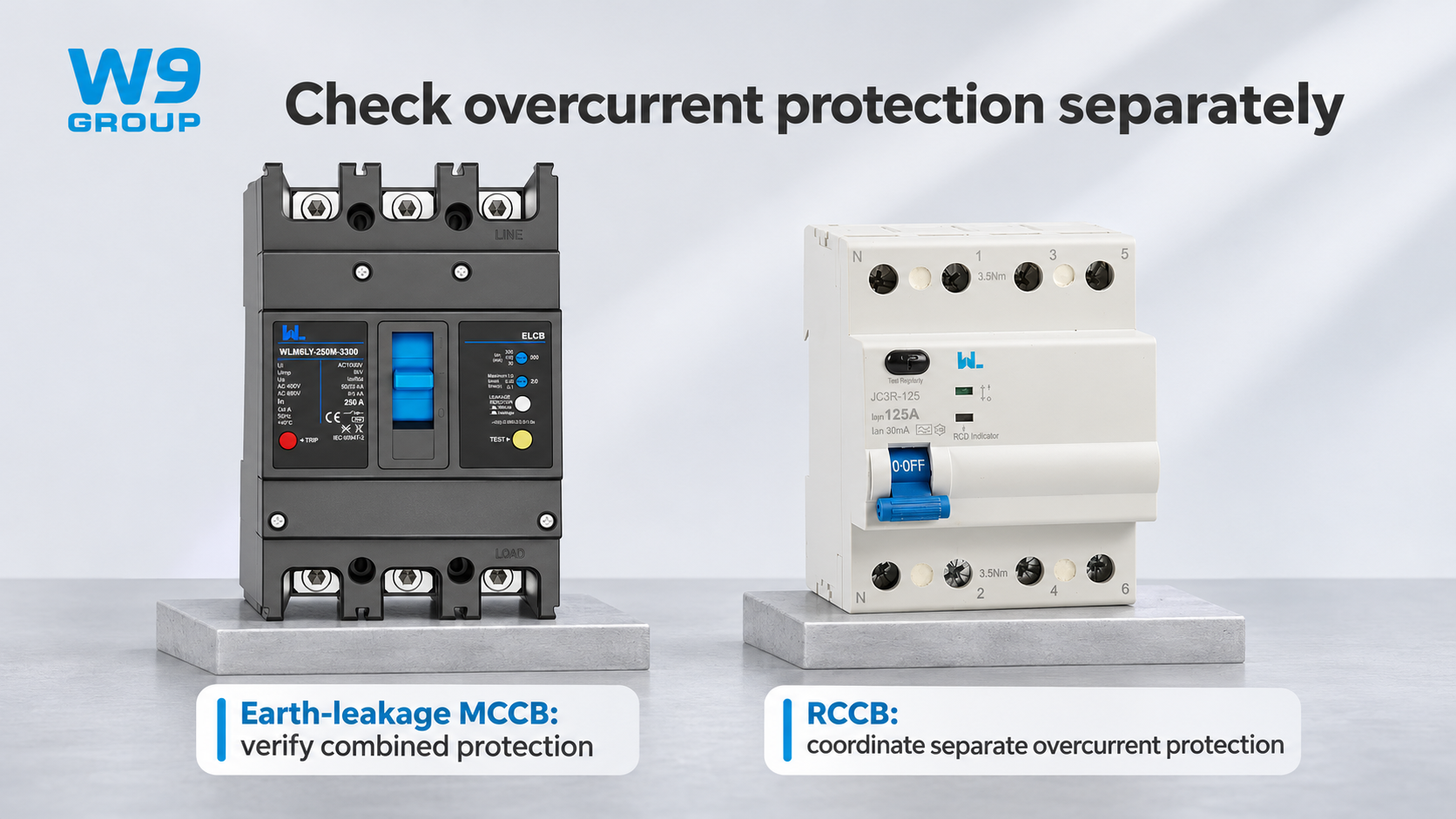
The essential distinction in earth-leakage MCCB vs RCCB selection is protection scope. A suitably configured earth-leakage MCCB combines its documented overcurrent and residual-current functions. An RCCB does not provide integral overcurrent protection. Both must still be matched to the circuit’s voltage, load, residual waveform, sensitivity and fault conditions.
Which Faults Do MCCBs and RCCBs Protect Against?
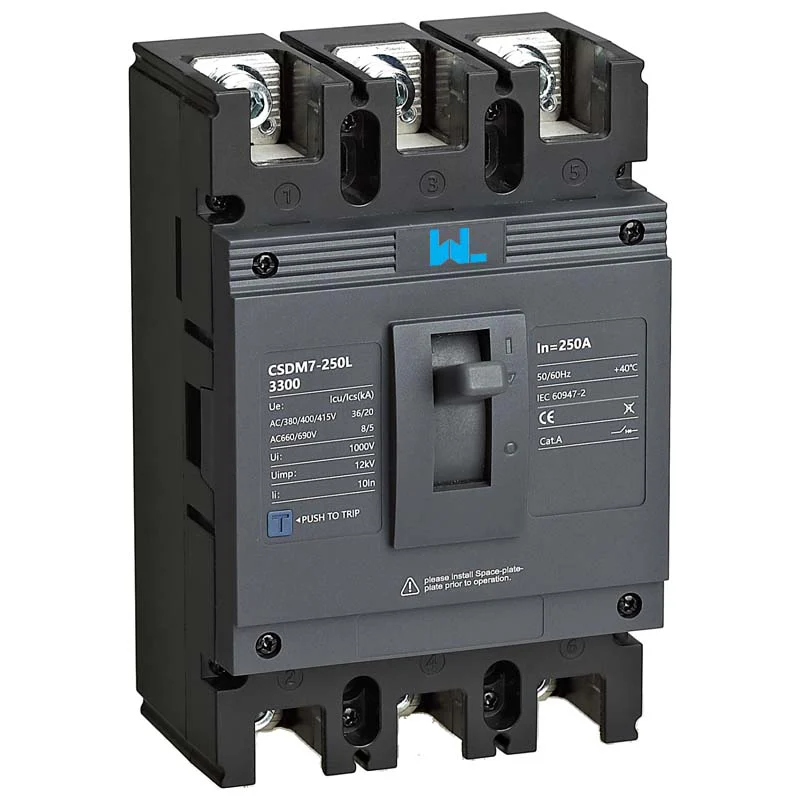
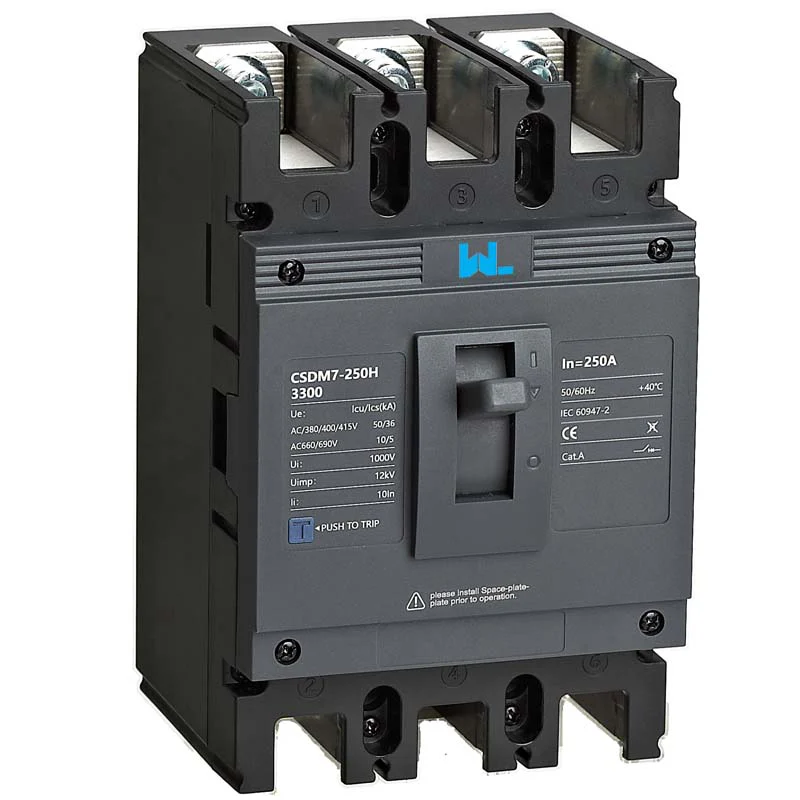
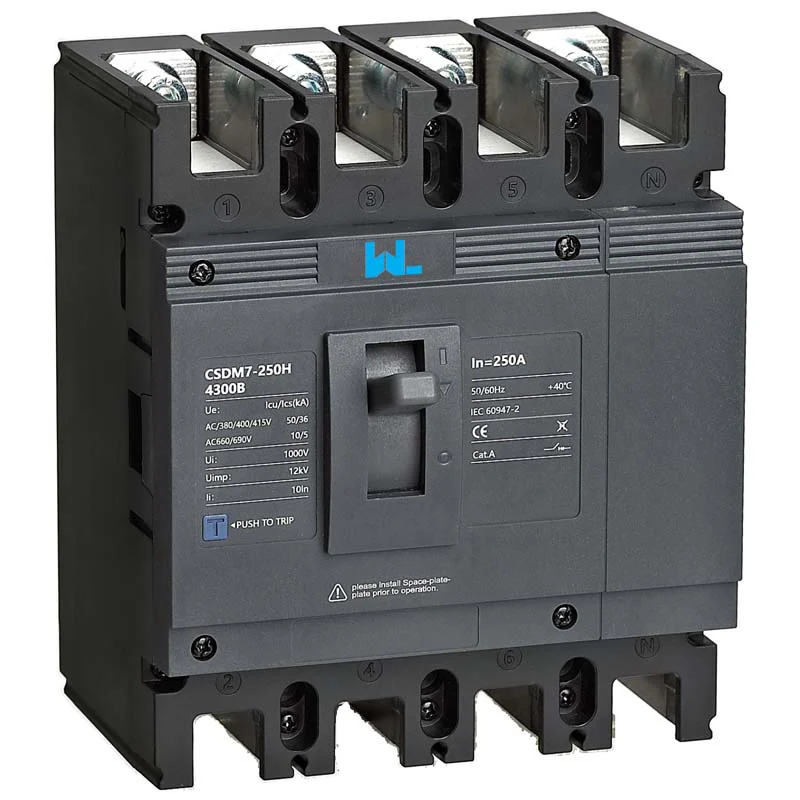
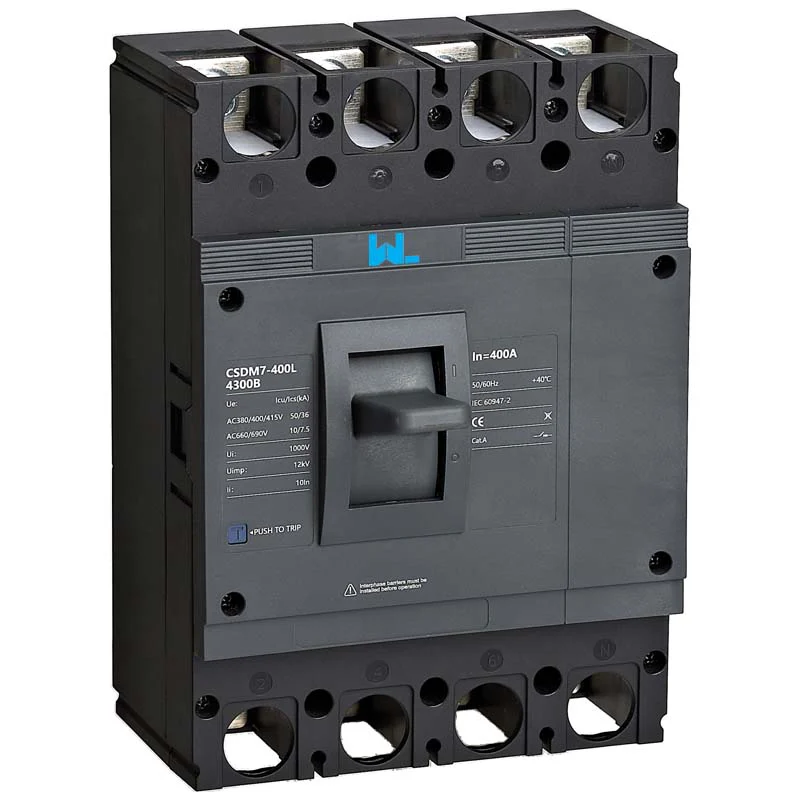
MCCB means molded-case circuit breaker. An earth-leakage version must have the specified residual-current release in addition to its declared overcurrent protection. A standard MCCB without that function must not be assumed to detect a low-level residual-current fault merely because it has a large current rating or an electronic controller.
RCCB means residual-current-operated circuit breaker without integral overcurrent protection. Its current rating describes its permitted current-carrying duty under the specified conditions; it does not turn the device into an overload release. The installation therefore needs suitable overload and short-circuit protection coordinated with that RCCB.
An RCBO is a further category, combining residual-current and overcurrent protection within its declared scope. Do not classify all devices with a test button as RCCBs, or assume that every combined-protection device is an MCCB. The product declaration and complete model documentation resolve the category.
| Selection point | Earth-leakage MCCB | RCCB |
|---|---|---|
| Overcurrent protection | Verify the supplied molded-case release functions | No integral overcurrent protection; coordinate a separate device |
| Residual-current protection | Verify the actual leakage release and its settings | Verify the declared residual response and sensitivity |
| Fault-duty evidence | Use the exact voltage-specific breaker ratings | Use the applicable ratings and backup-protection conditions |
| Installation details | Check poles, neutral, release and mounting configuration | Check poles, neutral, test circuit and coordinated protection |
RCCB Backup Protection and MCCB Selection
An RCCB needs coordinated overcurrent protection. The correct upstream or associated device is not selected only by choosing a lower nominal current. Obtain the manufacturer’s coordination requirements and account for the installation’s prospective fault current and overload conditions.
Similarly, a combined-protection MCCB is not automatically a complete solution for every circuit. Confirm its supported leakage sensitivity, waveform response and time behavior. A convenient combined package is useful only if those functions meet the actual requirements.
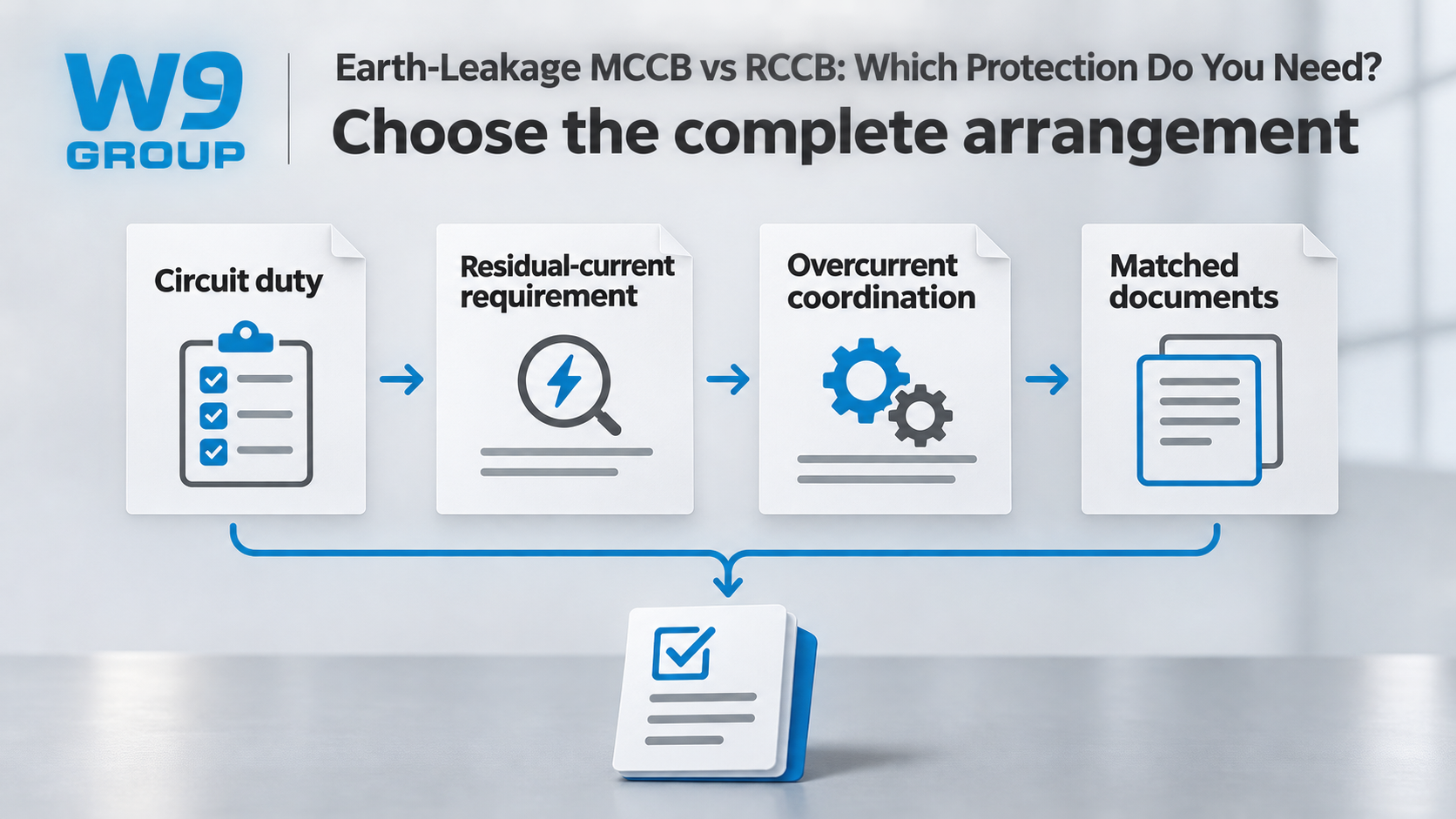
Start with the circuit rather than the preferred housing. Establish the supply, load, conductor protection, earthing arrangement and required disconnection behavior. Then compare complete arrangements that satisfy the same duty. For background on setting flexibility and device selection, see the MCCB selection guide for coordinated feeders.
Division of circuits also matters. A single upstream residual-current device sees the combined residual behavior of the circuits within its sensing boundary. The design must address normal leakage, fault isolation and the consequences of an upstream trip. These are design decisions, not reasons to increase sensitivity settings until nuisance trips disappear.
Residual-Current Sensitivity and Trip Delay
Two devices with the same nominal sensitivity may still have different waveform response or time behavior. Select these characteristics from the connected equipment and installation requirements. Electronic loads can make a generic statement such as “leakage protected” too vague for a purchase specification.
HSE describes the protective role of an RCD rated at no more than 30 mA in certain electric-shock situations, while warning that an RCD cannot protect against every type of shock. A device intended for another residual-current duty does not become equivalent merely because it is called an earth-leakage breaker.
Rated current and residual sensitivity are different ratings. One describes current-carrying duty; the other describes the residual operating threshold. Likewise, a residual making or breaking rating must not be mistaken for the sensitivity. Mixing these quantities can produce a technically plausible-looking enquiry for the wrong function.
Time-delayed and non-delayed versions also need separate consideration. Selectivity depends on the exact devices and their documented characteristics, not simply on putting a larger sensitivity value upstream. Check the permitted disconnection times and manufacturer coordination information before accepting a proposed delay.
Installed Cost of MCCB and RCCB Protection
A useful cost comparison includes the complete protective arrangement, panel integration and commissioning work. An RCCB quotation may require an additional protective device, while an earth-leakage MCCB quotation may require a particular release or accessory. Neither arrangement is inherently the cheapest for every circuit.
| Cost or design factor | Question for both proposals | Document to retain |
|---|---|---|
| Protection scope | Which device provides each required function? | Complete protection schedule |
| Panel integration | What space, connections and accessories are required? | Exact mounting and connection drawings |
| Fault duty | Which ratings and coordination conditions apply? | Matched ratings and backup-protection information |
| Commissioning | What tests and equipment are needed? | Manufacturer instructions and acceptance record |
Industrial MCCBs are assessed within the relevant IEC 60947-2 context. RCCB documentation commonly refers to IEC 61008-1 within its scope. These standard references describe different product requirements; they do not establish that two proposed devices are interchangeable or that a particular product has an independent certification.
Retain declarations and evidence for the exact versions being purchased. If a table or brochure mixes model families, resolve the inconsistency before approving the design. The time spent obtaining a corrected schedule can avoid a much larger delay when the panel is ready for acceptance.
WLM6LY-250 and JC3R-125 Selection Requirements
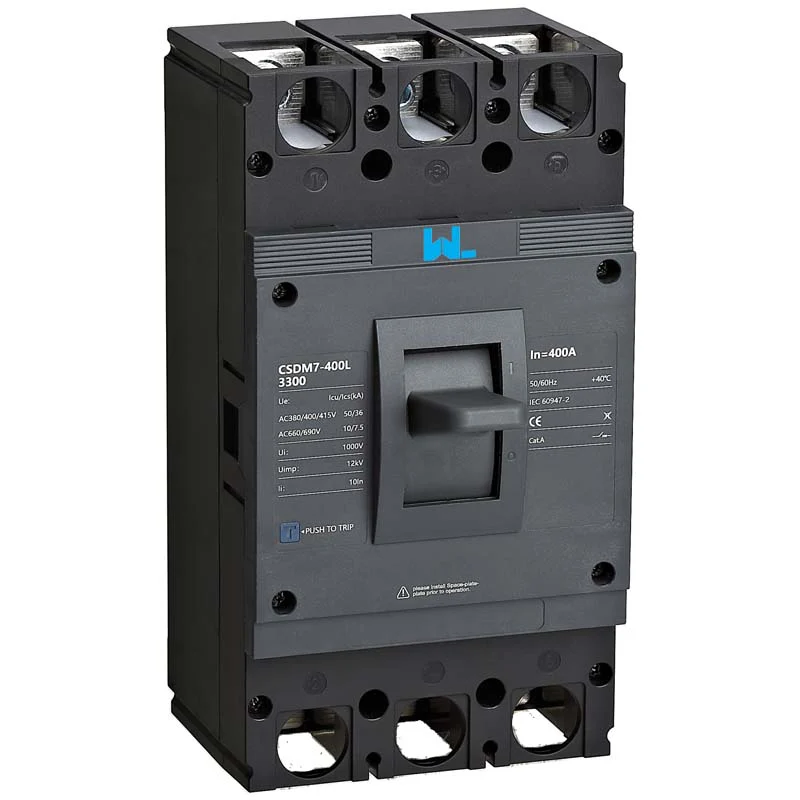
The WLM6LY-250 earth-leakage MCCB page identifies thermal overcurrent and electronic leakage releases. It does not establish a complete sensitivity schedule for every offered version. Request the exact pickup, delay, waveform and alarm or trip configuration.
The JC3R-125 residual-current device page separately calls for coordinated overcurrent protection. It also lists different response and sensitivity variants. Those variants should be selected explicitly; a family-level list does not mean one delivered unit includes every choice.
- Allocate each required protection function to a documented device.
- Match sensitivity, waveform response and time behavior to the circuit.
- Confirm pole, neutral and test-circuit arrangements.
- Obtain ratings, coordination evidence and commissioning instructions for the complete proposal.
Compare complete arrangements, not product labels. W9 can be contacted with the circuit duty and documentation requirements so the offered configuration can be identified before the quotation is accepted.
Earth-Leakage MCCB and RCCB FAQ
Does an Earth-Leakage Breaker Also Protect Against Overload?
It detects the specified leakage condition and performs its declared action, usually tripping where that function is provided. Confirm whether the actual product includes overcurrent protection or needs a separate coordinated device.
When Does a Circuit Need a Two-Pole Leakage Breaker?
Use a supported two-pole version where its supply, switching and sensing arrangement matches the circuit design. Confirm the exact neutral and test-circuit requirements rather than selecting by pole count alone.
Can a Leakage Trip Identify the Fault Cause?
Insulation damage, moisture or another unintended conductive path can contribute to leakage. Normal equipment leakage and a fault must be distinguished through competent assessment; the cause cannot be identified from a trip alone.
Are ELCBs and Modern Residual-Current Devices the Same?
The term is still used inconsistently. Older voltage-operated ELCBs and residual-current-operated devices have different principles, so identify the actual equipment and applicable rules before making a replacement decision.
How Is an Earth-Leakage Protector Classified?
It is a general description rather than a complete product classification. Ask whether the device is an RCCB, RCBO, leakage relay or combined-protection MCCB, and confirm the declared functions.
Does Every ELCB Provide the Same Protection?
Its protection depends on the operating principle and supplied configuration. The name alone does not establish overload protection, sensitive shock protection or suitability for every residual-current waveform.
References
- IEC 60947-2:2024: industrial circuit-breaker scope
- HSE electrical safety FAQ: residual-current protection and limitations
- HSE HSG85: safe working practices
The right choice is the arrangement whose complete protection can be demonstrated. Explore the W9 electrical-protection range and contact the team with your circuit details to request a matched proposal.