








How RCBOs Enhance Electrical Safety for Homes and Businesses
How RCBOs Enhance Electrical Safety for Homes and Businesses
When Priya, an electrical contractor in Manchester, commissioned an office refurbishment, a final circuit tripped as soon as the kitchenette kettle and server cabinet were energised. The visible failure looked like a defective breaker. A review found a shared neutral and an incorrectly selected protective curve; replacing the device would have left the circuit vulnerable. Re-segregating the neutral, checking prospective fault current, and selecting a coordinated RCBO restored reliable operation.
Summary: RCBO electrical safety comes from combining residual-current detection with overcurrent interruption in one device. Under IEC 61009-1, an RCBO is a residual current circuit breaker with overload protection; an RCCB needs a separate MCB for overloads. For a new circuit or retrofit, verify pole and neutral arrangement, current and fault ratings, residual-current type and sensitivity, and upstream/downstream selectivity before installation.
An RCBO monitors the current leaving and returning through the protected conductors. An imbalance indicates leakage to earth; the residual-current release opens the circuit. Its thermal-magnetic or electronic overcurrent element responds to overloads and short circuits. This dual action is the core of RCBO electrical safety: people and wiring receive complementary protection, while each final circuit can be isolated and diagnosed independently.
Why combine residual-current and overcurrent functions?
A conventional MCB protects conductors from excessive current but cannot detect a small earth-leakage current that may pass through a person. An RCCB detects residual current but does not provide overload or short-circuit protection. A combined RCBO protection scheme closes that gap at the final circuit. It also limits nuisance impact: a fault on an outdoor socket can disconnect that circuit rather than an entire domestic or commercial distribution board.
Consider an illustrative single-phase load supplied at 230 V and protected at 16 A. The notional maximum apparent power is 230 V × 16 A = 3.68 kVA, before diversity, power factor, ambient, and cable-installation corrections. The calculation does not select a breaker by itself; compare design current, cable ampacity, prospective short-circuit current, and disconnection time. It shows why RCBO protection must be coordinated with the installation rather than chosen from load current alone.
RCBO vs RCCB vs MCB: what changes in practice?
Device choice affects wiring, fault finding, board space, and trip consequences. An RCBO is typically assigned to one final circuit. An RCCB commonly protects a group of circuits, each with its own MCB; cumulative leakage and a shared trip can slow diagnosis. An MCB alone is appropriate only where residual-current protection is not required by the design or local rules.
| Device | Overload/short-circuit | Residual-current | Typical arrangement | Operational implication |
|---|---|---|---|---|
| RCBO | Integrated | Integrated | One device per final circuit | Local trip indication and fault isolation; confirm neutral routing. |
| RCCB | External MCB or fuse required | Integrated | Several circuits beneath one RCCB | Lower device count can mean shared-trip exposure and more leakage summation. |
| MCB | Integrated | None | One device per circuit or downstream of RCCB | Protects conductors, not earth leakage by itself. |
Neutral handling and pole count
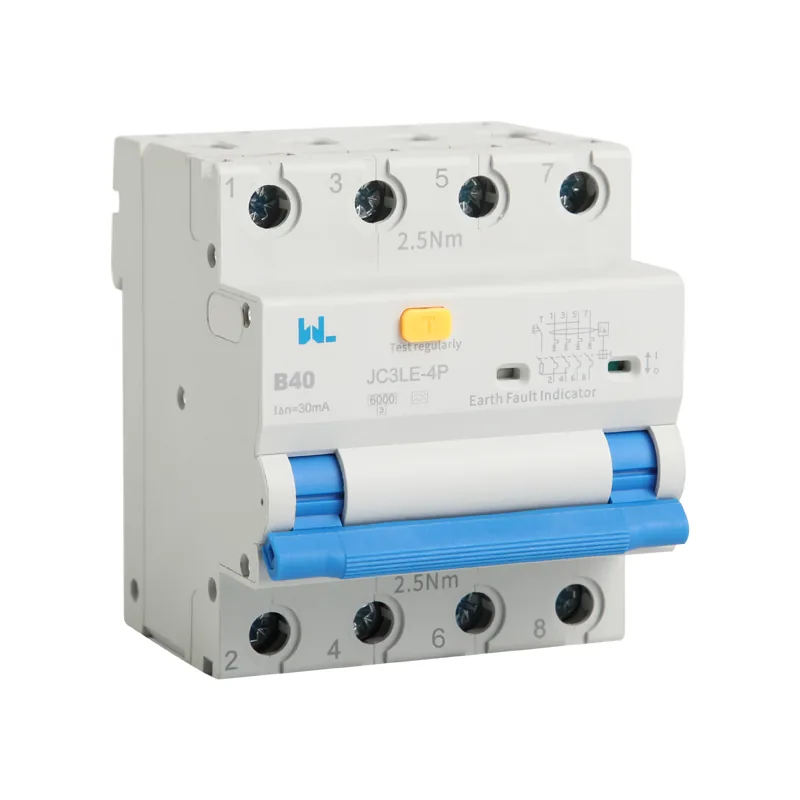
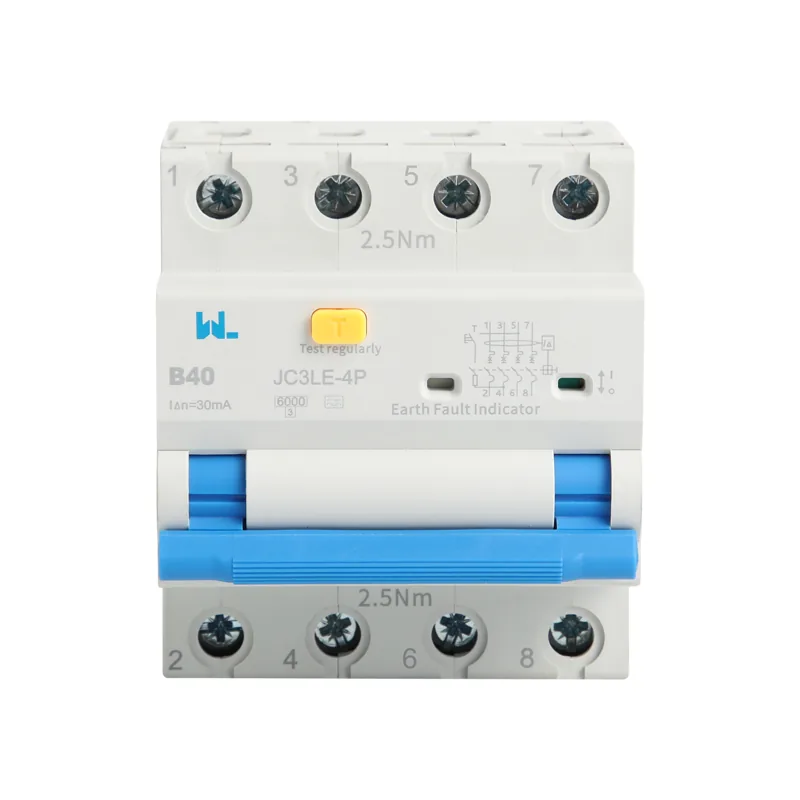
Every live conductor passing through the sensing core must be accounted for. In a single-phase circuit, line and neutral normally pass through the RCBO sensing path; a borrowed neutral can create an imbalance and unwanted trip. A four-pole device is used where three phases and neutral must be switched and monitored together, subject to the installation standard. Follow the manufacturer’s wiring diagram and terminal torque instructions.
Selectivity and system coordination
Selective RCBO protection means a downstream device should clear its own fault before an upstream protective device. Compare residual-current thresholds and time characteristics, short-circuit ratings, and manufacturer coordination data. A time-delayed upstream RCD can support discrimination in some systems, but it is not a universal solution. Check total leakage from drives, filters, LED power supplies, and medical or IT equipment; normal leakage close to the trip threshold erodes selectivity and availability.
Testing, commissioning, and maintenance
The test button checks the operating mechanism and a test circuit; it does not prove the installation. During commissioning, use an installation tester suited to the device type to measure residual operating current and trip time, verify protective-conductor continuity, and confirm polarity and insulation resistance. Apply IEC 60364 methods and project limits. Record circuit, settings, instrument, date, and result.
Routine RCBO electrical safety depends on a planned interval based on risk, occupancy, environment, and the authority having jurisdiction. Facility teams should investigate repeated trips instead of resetting the device: moisture, damaged cords, insulation deterioration, neutral sharing, or electronic-load leakage are common causes. Isolate safely, identify the circuit, and have a competent person test before re-energising.
Applications in homes and commercial facilities
In homes, individual RCBOs are useful for bathrooms, outdoor outlets, kitchens, EV supply equipment, and other circuits where a fault should not darken the whole dwelling. The required residual-current type depends on the loads; equipment with rectifiers or frequency converters may require a device capable of detecting smooth DC or mixed-frequency components. Follow the appliance and local wiring requirements.
Commercial buildings add continuity and coordination concerns. Offices, retail units, workshops, and hospitality sites may separate refrigeration, lighting, sockets, HVAC controls, and life-safety auxiliaries onto dedicated RCBO-protected circuits. Review inrush, harmonics, standby supplies, and emergency procedures. RCBO protection supports targeted isolation, but it does not replace bonding, earthing, surge protection, arc-fault measures where required, or safe work practices.
| Application | Design prompt | RCBO electrical safety focus |
|---|---|---|
| Dwelling bathroom or outdoor outlet | Moisture, accessible equipment, local disconnection rules | Residual-current sensitivity, enclosure, and test access |
| Kitchen or laundry | Mixed appliances and cumulative leakage | Device type, neutral integrity, and nuisance-trip review |
| Office IT or LED circuits | Inrush, filters, harmonics, continuity needs | Selectivity, leakage headroom, and documented testing |
| Workshop or EV supply | Motor/drive or converter characteristics | Residual-current waveform capability and coordination study |
Standards and market-specific scope
IEC 61009-1 covers residual current circuit-breakers with integral overcurrent protection for household and similar uses (RCBOs), including performance and test requirements. In plain language, an RCBO is a residual current circuit breaker with overload protection. IEC 60947-2 addresses circuit-breakers for industrial and similar applications; the exact product category, ratings, and conformity route must be confirmed. IEC 60364 guides design, selection, erection, verification, and protection measures; it does not certify a brand.
In North America, UL 943 addresses ground-fault circuit-interrupter (GFCI) devices, while UL 489 addresses molded-case circuit breakers and switches. These scopes are not interchangeable with IEC designations. State the destination market, supply system, intended application, and required marking or certification. Unsupported compliance claims can delay approval, invalidate a panel listing, or create liability even when a device appears electrically similar.
Selection checklist for procurement teams
- Define the circuit: Record supply voltage, phase arrangement, frequency, design current, cable method, ambient conditions, and prospective fault current.
- Choose residual-current behaviour: Match AC, A, F, B, or another permitted type to the connected equipment; set sensitivity and any time delay to the risk assessment and coordination study.
- Confirm poles and neutral path: Specify switched-pole requirements, terminal layout, busbar compatibility, and a clear neutral segregation plan.
- Verify evidence: Request the applicable declaration, test documentation, installation instructions, and coordination information for the destination market. Treat IEC 61009-1, IEC 60947-2, UL 943, and UL 489 as scope references, not blanket endorsements.
- Plan service: Label circuits, provide safe test access, define inspection intervals, and keep replacement devices interoperable with the board and accessories.
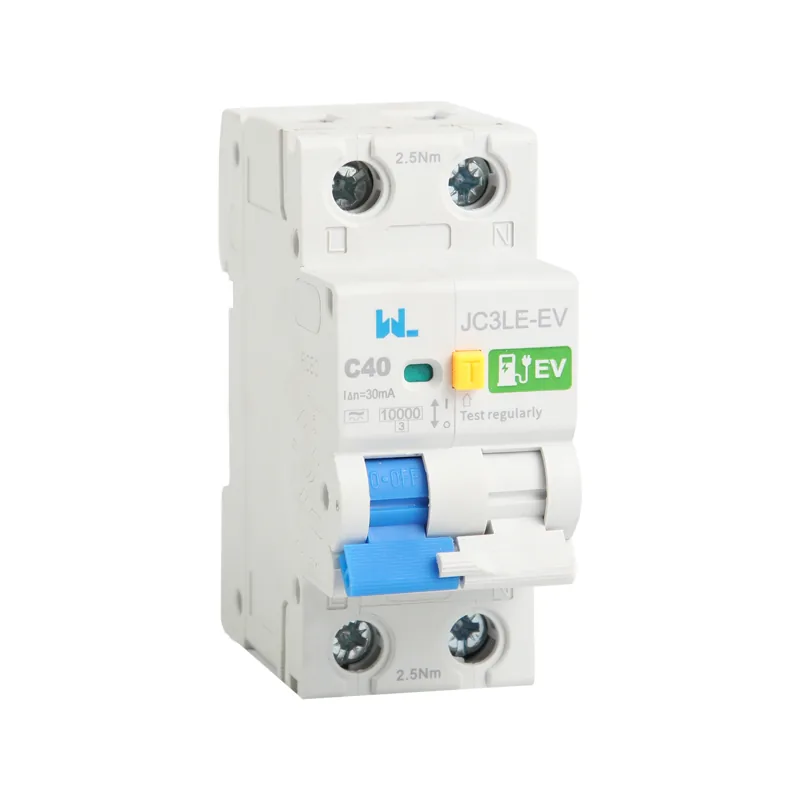
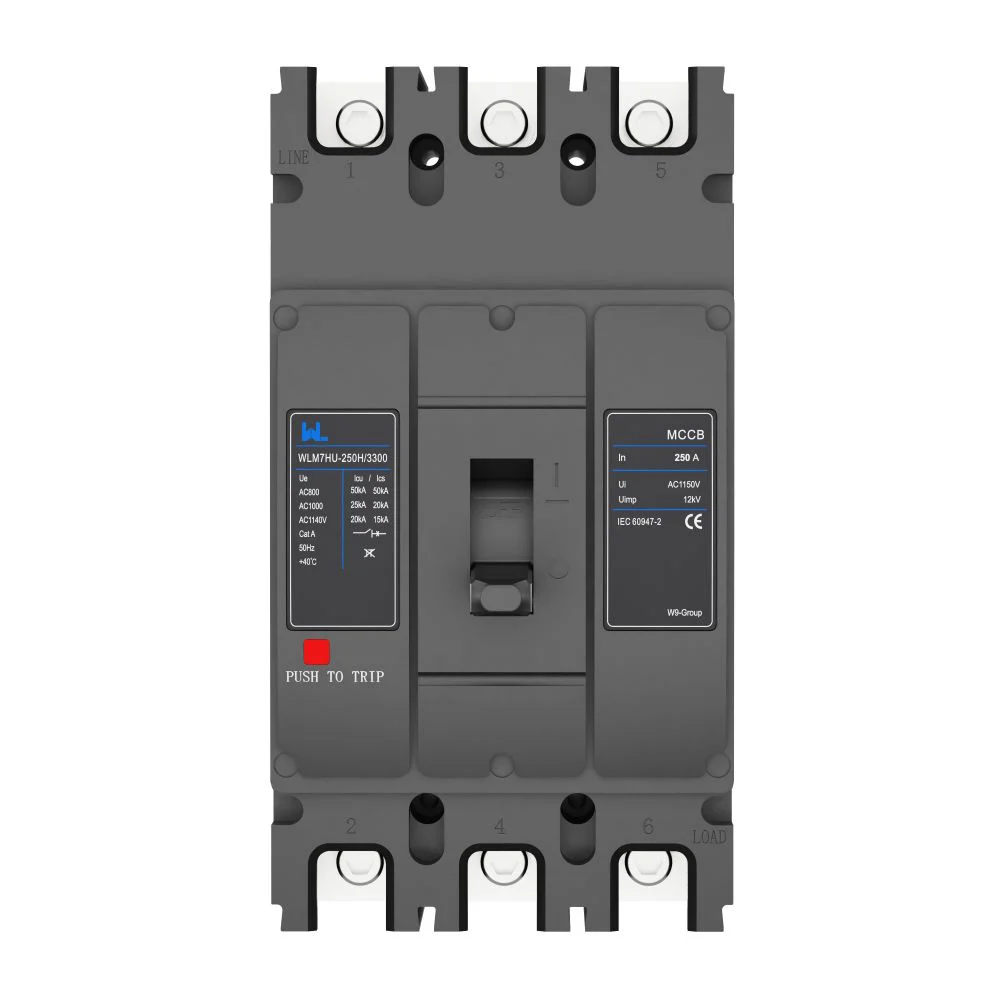
For OEM and project buyers, Zhejiang W9 Group Technology Co., Ltd., founded in 2020, supplies low-voltage protection products and discusses OEM/ODM configuration, documentation, and testing support. Confirm the model, market approvals, and technical file for each project. See the JC3LE four-pole electromagnetic RCBO as a reference, not a substitute for design verification.
Frequently asked questions
What is the main advantage of an RCBO?
An RCBO combines residual-current and overcurrent functions for a defined circuit, so leakage, overload, and short-circuit faults can be cleared by one coordinated device. Individual circuits can trip without necessarily disconnecting unrelated loads. Correct neutral routing and installation testing remain essential to RCBO electrical safety.
Can an RCBO replace an RCCB and MCB?
For a circuit within its rated application, an RCBO can provide the functions otherwise supplied by an RCCB plus an MCB. The panel designer must still check fault ratings, pole arrangement, busbar compatibility, and selectivity with upstream protection. Local rules may prescribe a particular arrangement.
Why does an RCBO trip when the load current is normal?
Residual leakage, a shared or crossed neutral, moisture, insulation damage, or unsuitable device type can trip the residual-current element even when amperage is below the overload setting. Disconnect loads methodically and have a competent person perform insulation and leakage tests. Do not defeat the device or increase sensitivity without engineering justification.
How often should RCBOs be tested?
Use the test button at the interval required by the manufacturer, local regulation, and site risk assessment; higher-risk or public environments may need more frequent inspection. A test button alone is not a substitute for periodic instrument-based verification. Record results and investigate any failure or abnormal trip time.
Which standard applies: IEC 61009-1 or IEC 60947-2?
IEC 61009-1 is the principal RCBO product standard for household and similar applications. IEC 60947-2 covers a broader industrial circuit-breaker scope, so applicability depends on construction, use, ratings, and the conformity route in the target market. Ask the manufacturer to state the precise standard and evidence for the supplied configuration.
For related explanations, read what an RCBO does, how RCD functions work, and complete circuit protection principles. An EV-oriented image is available for context: 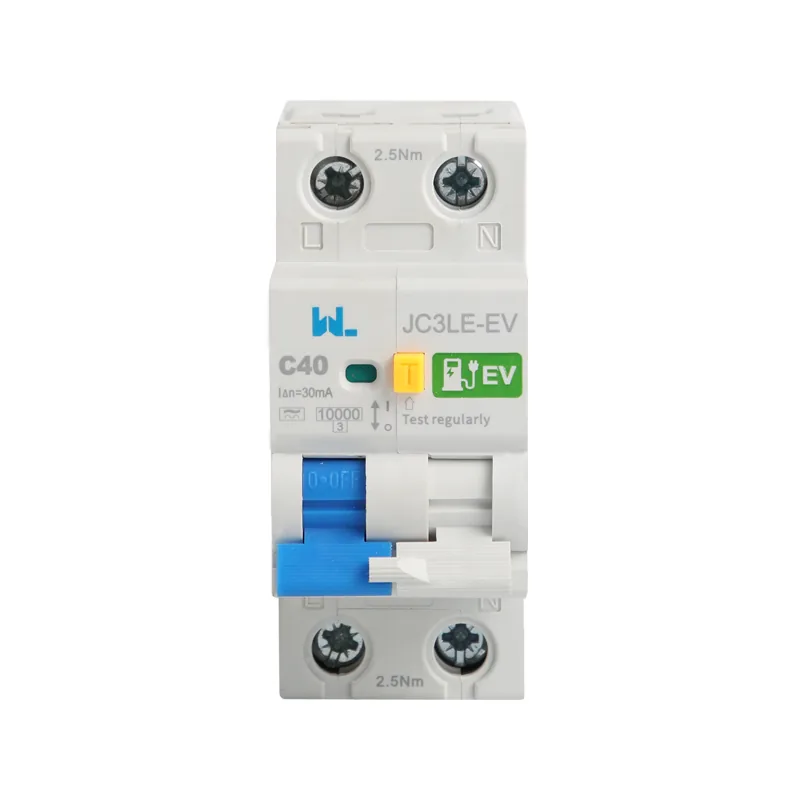 .
.
References
- International Electrotechnical Commission (IEC), IEC 61009-1 and IEC 60364 series.
- International Electrotechnical Commission (IEC), IEC 60947-2.
- UL Solutions, UL 943 and UL 489 scope information.
- National Fire Protection Association, NFPA 70 (National Electrical Code) context for GFCI and overcurrent protection.
The dependable principle is simple: RCBO electrical safety works when device, wiring, testing, and documentation agree. For project-specific RCBO protection, OEM sourcing, or a compliant replacement schedule, review W9’s product range and contact the team with your circuit and destination-market requirements.