























Как выбрать коммутатор ACB для промышленных нужд
An industrial main breaker is part of the switchboard’s operating plan as well as its protection system. A quote that states only current and voltage leaves unanswered how faults are cleared, how maintenance is performed and whether a replacement unit fits the existing assembly. Resolve these questions before freezing the ACB schedule.
Summary: Choose an ACB circuit breaker by starting with system voltage, continuous load, prospective short-circuit current and the required selectivity study—not by frame size alone. IEC 60947-2 addresses low-voltage circuit-breaker performance, while UL 1066 covers low-voltage AC power circuit breakers used in North American practice; the applicable standard changes the evidence your supplier must provide. Build a written schedule for frame and trip ratings, fixed or withdrawable construction, protection functions, environment and maintenance, then verify the complete assembly before purchase.
ACB Electrical Duty Requirements
An ACB circuit breaker is normally the main or feeder protective device in a low-voltage assembly where high current, frequent switching or service access makes a molded-case device less suitable. In that role, the industrial circuit breaker becomes part of the plant’s operating strategy, not just a catalog line. Confirm the system’s nominal voltage, frequency, phase arrangement and earthing method. Then calculate the design current from the actual load profile, including motors, transformers, drives, heaters and future expansion.
Separate three ratings in your schedule: the frame rating (the physical current class), the trip-unit or sensor rating (the current basis for protection), and the long-time pickup setting (the chosen operating threshold). A larger frame does not automatically provide more usable capacity; a trip unit set too high can leave conductors unprotected, while one set too low can cause nuisance operation. Ask for manufacturer time-current curves and the exact sensor and trip options being quoted.
Short-circuit duty is equally important. Obtain the calculated prospective fault current at the installation point and compare it with the breaker’s interrupting rating and short-time withstand rating at the stated voltage. If the design relies on a downstream device clearing a fault after a short delay, the ACB must withstand that current for the specified duration. Do not substitute a headline interrupting number for a coordinated withstand check.
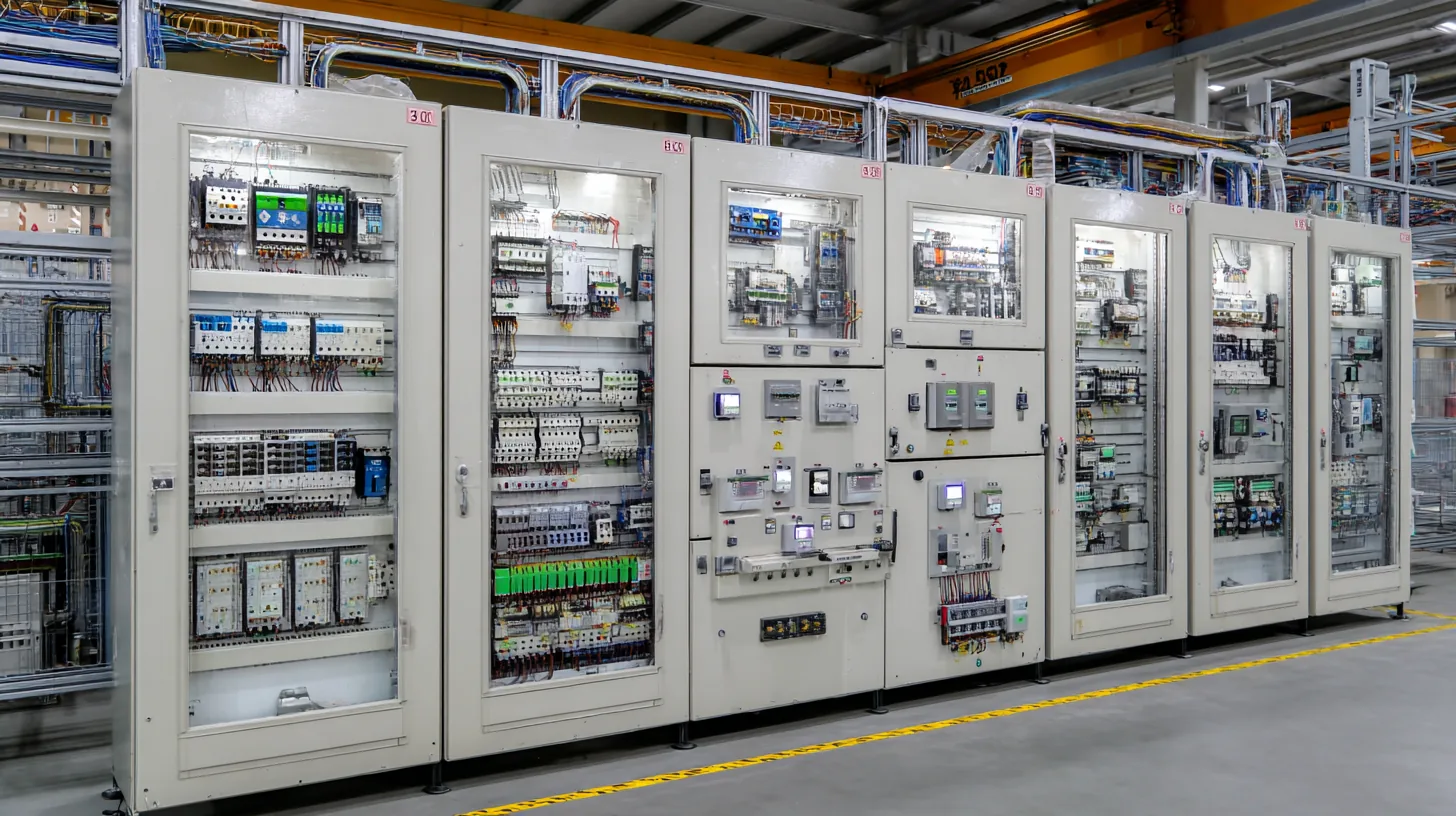
Short-Time Withstand Duration
Icw is a short-time withstand rating with a specified duration; it is not an interrupting capacity. If the protection design intentionally delays an upstream ACB, compare the duty during that delay with both breaker and assembly withstand. Check any instantaneous override or other restriction in the exact trip-unit documentation. A coordination drawing that ignores a mandatory override can overstate selectivity.
ACB Construction Requirements
A fixed ACB remains installed in its mounting arrangement, while a withdrawable model uses a compatible cradle with declared connected, test and disconnected positions. The exact position functions must be confirmed from the instructions. Withdrawal can support a planned maintenance or spare strategy; it does not make the entire compartment de-energized or authorize work on live equipment. Record the isolation and racking procedures before selecting this format.
Use the following comparison during design review:
| Размер решения | Fixed construction | Withdrawable construction | Best fit |
|---|---|---|---|
| Initial integration | Fewer mechanical parts; simpler panel layout | Requires cradle, position indication and interlocks | Fixed for stable, space-constrained boards |
| Maintenance access | Isolation and disconnection are normally needed | Test or service position supports planned work | Withdrawable for critical or continuously operated plants |
| Spare strategy | Replacement is device-specific | A compatible spare can reduce outage duration | Withdrawable where downtime has high impact |
| Total cost | Lower hardware tendency; consider outage labor | Higher hardware tendency; consider lifecycle availability | Decide on total cost of ownership, not purchase price |
Check door clearances, cable termination, arc-fault boundaries, lifting access and the manufacturer’s racking procedure. A withdrawable design only delivers its maintenance benefit when operators can safely reach the test position and the assembly’s interlocks are documented.
ACB Protection Coordination
Selectivity (discrimination) means the device nearest the fault opens first, keeping healthy loads energized. Compare long-time, short-time, instantaneous and ground-fault settings across the ACB and downstream breakers. Time-current curves are essential, but electronic trip units may also require energy let-through, I2t, or zone-selective-interlocking data. Confirm whether the project needs zone interlocking, communication, metering or shunt/undervoltage releases.
For an industrial circuit breaker, the assembly interface matters. Busbar bracing, terminals, source impedance, cable arrangement and the selected protective settings affect the fault review. Require a switchboard verification route in addition to breaker product evidence. Include transformer, generator and other credible supply contributions under their relevant operating states. Review the advanced trip devices guide as background, then use the exact manufacturer’s curves and coordination tables.
Illustrative calculation (not a project design): If a three-phase load is 1,200 kW at 400 V and 0.90 power factor, estimated current is I = 1,200,000/(√3 × 400 × 0.90) ≈ 1,925 A. An engineer would then apply duty cycle, ambient derating, harmonics, motor starting and code factors before choosing the sensor setting or frame. The example shows why voltage and power factor must accompany a current request.
ACB Installation Environment
Temperature, altitude, humidity, dust, corrosive vapors and vibration can change an ACB circuit breaker’s usable rating and service interval. Obtain derating data for the actual enclosure and ambient conditions; do not infer it from a generic catalogue page. In dusty or chemically aggressive areas, specify sealing, creepage and clearance requirements with the panel manufacturer. The industrial circuit breaker should be reviewed against these conditions before the panel layout is frozen.
Define maintenance before approving the bill of materials. The plan should follow the manufacturer on inspection, cleaning, permitted lubrication, mechanical operation, contact-wear assessment and trip testing. Do not set a universal service interval or apply cleaning and lubrication methods from a different breaker family. Record firmware and setting changes where applicable, and compare the outage, service and spare costs without inventing a saving.
A disciplined ACB selection review also records who owns each decision: the electrical engineer confirms duty and coordination, the panel builder confirms clearances and interlocks, and the operator confirms access and test procedures.

Complete ACB Spare Requirements
A drawout spare must match the cradle, terminals, interlocks, sensor or trip configuration and required accessories. Same frame current alone does not prove interchangeability. Ask for the approved breaker-cradle combination and record commissioning settings before swapping units. Compare the cost of the spare, storage, periodic checks, handling equipment and planned outage labour; the calculation is a project-specific ownership-cost framework, not a promised payback.
Application-based ACB selection
| Заявление | Primary concern | Акцент на спецификациях | Useful evidence |
|---|---|---|---|
| Manufacturing main incomer | High fault duty and continuity | Withstand, selectivity, withdrawable option, service spares | Short-circuit study, coordination curves, maintenance schedule |
| Data or process-critical facility | Fast restoration and monitoring | Withdrawable construction, position interlocks, communications | Racking procedure, alarms list, test records |
| OEM power-control panel | Repeatability across builds | Stable frame/trip configuration, accessories, drawings | Approved bill of materials, wiring diagrams, inspection plan |
| Utility or infrastructure board | Harsh environment and long service | Derating, enclosure interface, corrosion control, spares | Environmental data, assembly verification, service support |
ACB Compliance Requirements
IEC 60947-2 specifies requirements and verification tests for circuit breakers used in low-voltage switchgear and controlgear. It is a product standard; confirm the declared ratings and test evidence for the exact configuration. UL 1066 is the North American standard for low-voltage AC power circuit breakers, with construction and performance requirements that may differ from an IEC declaration. A project using UL-listed equipment must verify the listing, installation conditions and marking through the applicable certification body.
NFPA 70 (National Electrical Code) governs electrical installation in the United States. It addresses conductor protection, equipment ratings, working space and other installation matters; it does not replace the breaker product standard. Requirements depend on destination market, system architecture and the authority having jurisdiction. Unsupported claims such as “UL compliant” or “IEC certified” can delay approval, invalidate a tender response or create warranty disputes.
ACB Supplier Evaluation Checklist
- Issue a data sheet stating voltage, continuous current, poles, frequency, fault current, withstand time, trip functions and ambient conditions.
- Choose fixed or withdrawable construction after comparing outage cost, space, interlocks, spare strategy and operator procedures.
- Run a coordination and short-circuit review with the complete upstream/downstream network; retain curves and settings as controlled documents.
- Verify the exact product documentation, inspection plan, routine tests and accessory compatibility before release to the panel builder.
- For sourcing discussions, Zhejiang W9 Group Technology Co., Ltd. (founded in 2020) describes low-voltage protection products and supports OEM/ODM plus testing and inspection coordination. Ask W9 for configuration-specific drawings and evidence rather than relying on a generic statement.
For a practical product reference, see the WEW1 air circuit breaker product page. Pair any quotation with the approved schedule, applicable standard and project test requirements.
Часто задаваемые вопросы
What is the difference between an ACB and an MCCB?
An ACB circuit breaker commonly serves higher-current mains and feeders and is designed for accessible protection, switching and coordination in a low-voltage assembly. An MCCB is often more compact and suited to downstream circuits. The correct choice depends on current, fault duty, space, selectivity and maintenance—not on a simple current threshold.
How do I size an air circuit breaker?
Calculate design current from the actual load, verify conductor ampacity and ambient derating, then check interrupting and short-time withstand ratings against the prospective fault current. Set long-time, short-time, instantaneous and ground-fault functions through a coordination study. Have the final settings reviewed by the responsible electrical engineer.
When should I specify a withdrawable ACB?
Specify withdrawable construction when reduced outage time, routine testing or rapid replacement has meaningful operational value. Confirm room for racking, shutters, interlocks and lifting, and train operators on the manufacturer’s procedure. For a small, lightly serviced board, fixed construction may have a better total-cost balance.
Does IEC 60947-2 mean a breaker is UL listed?
No. IEC 60947-2 and UL 1066 are different product standards with different evaluation and marking systems. A North American project should request the applicable UL evidence and installation conditions; an IEC declaration alone is not a substitute.
What documents should an industrial buyer request?
Request a datasheet for the exact frame and trip unit, time-current curves, short-circuit and withstand ratings, dimensional and wiring drawings, accessory list, routine-test or inspection records, installation instructions and maintenance guidance. Add the project’s coordination study and approved settings to the handover file.
Ссылки
- IEC 60947-2:2024, circuit-breaker public scope. Общественная сфера и руководство проверены 15 октября 2026 года.
- IEC 61439-1:2020, assembly general rules. Общественная сфера и руководство проверены 15 октября 2026 года.
- IET BS 7671 installation-standard resources; national adoption remains project-specific. Общественная сфера и руководство проверены 15 октября 2026 года.
Choose the ACB only when electrical duty, assembly evidence and the operating plan agree. Discuss the current schedule and site conditions alongside the WEW1 product documentation. Review the product range with the intended destination-market requirements and retain the approved drawings, settings and maintenance procedure with the switchboard.