























Cómo elegir un interruptor de circuito ACB para necesidades industriales
An industrial main breaker is part of the switchboard’s operating plan as well as its protection system. A quote that states only current and voltage leaves unanswered how faults are cleared, how maintenance is performed and whether a replacement unit fits the existing assembly. Resolve these questions before freezing the ACB schedule.
Summary: Choose an ACB circuit breaker by starting with system voltage, continuous load, prospective short-circuit current and the required selectivity study—not by frame size alone. IEC 60947-2 addresses low-voltage circuit-breaker performance, while UL 1066 covers low-voltage AC power circuit breakers used in North American practice; the applicable standard changes the evidence your supplier must provide. Build a written schedule for frame and trip ratings, fixed or withdrawable construction, protection functions, environment and maintenance, then verify the complete assembly before purchase.
ACB Electrical Duty Requirements
Un disyuntor ACB normalmente es el dispositivo de protección principal o de alimentación en un sistema de baja tensión en el que la alta corriente, los frecuentes cambios de estado o el acceso al servicio hacen que un dispositivo de carcasa moldeada sea menos adecuado. En ese rol, el disyuntor industrial se convierte en parte de la estrategia operativa de la planta, y no simplemente en una línea de productos. Confirme la tensión nominal, la frecuencia, la disposición de las fases y el método de puesta a tierra del sistema. Luego calcule la corriente de diseño a partir del perfil de carga real, incluidos los motores, los transformadores, los accionamientos, los calentadores y futuras ampliaciones.
Incluya tres valores en su programación: el valor de la trama (la clase de corriente física), el valor de la unidad de viaje o sensor (la base de corriente para la protección) y la configuración de captación a largo plazo (el umbral de operación seleccionado). Un valor de trama más alto no garantiza automáticamente una mayor capacidad utilizable; un valor de unidad de viaje demasiado alto puede dejar los conductores sin protección, mientras que uno demasiado bajo puede causar problemas de funcionamiento. Solicite las curvas de tiempo-corriente del fabricante y las opciones exactas de sensor y unidad de viaje que se ofrezcan.
Short-circuit duty is equally important. Obtain the calculated prospective fault current at the installation point and compare it with the breaker’s interrupting rating and short-time withstand rating at the stated voltage. If the design relies on a downstream device clearing a fault after a short delay, the ACB must withstand that current for the specified duration. Do not substitute a headline interrupting number for a coordinated withstand check.
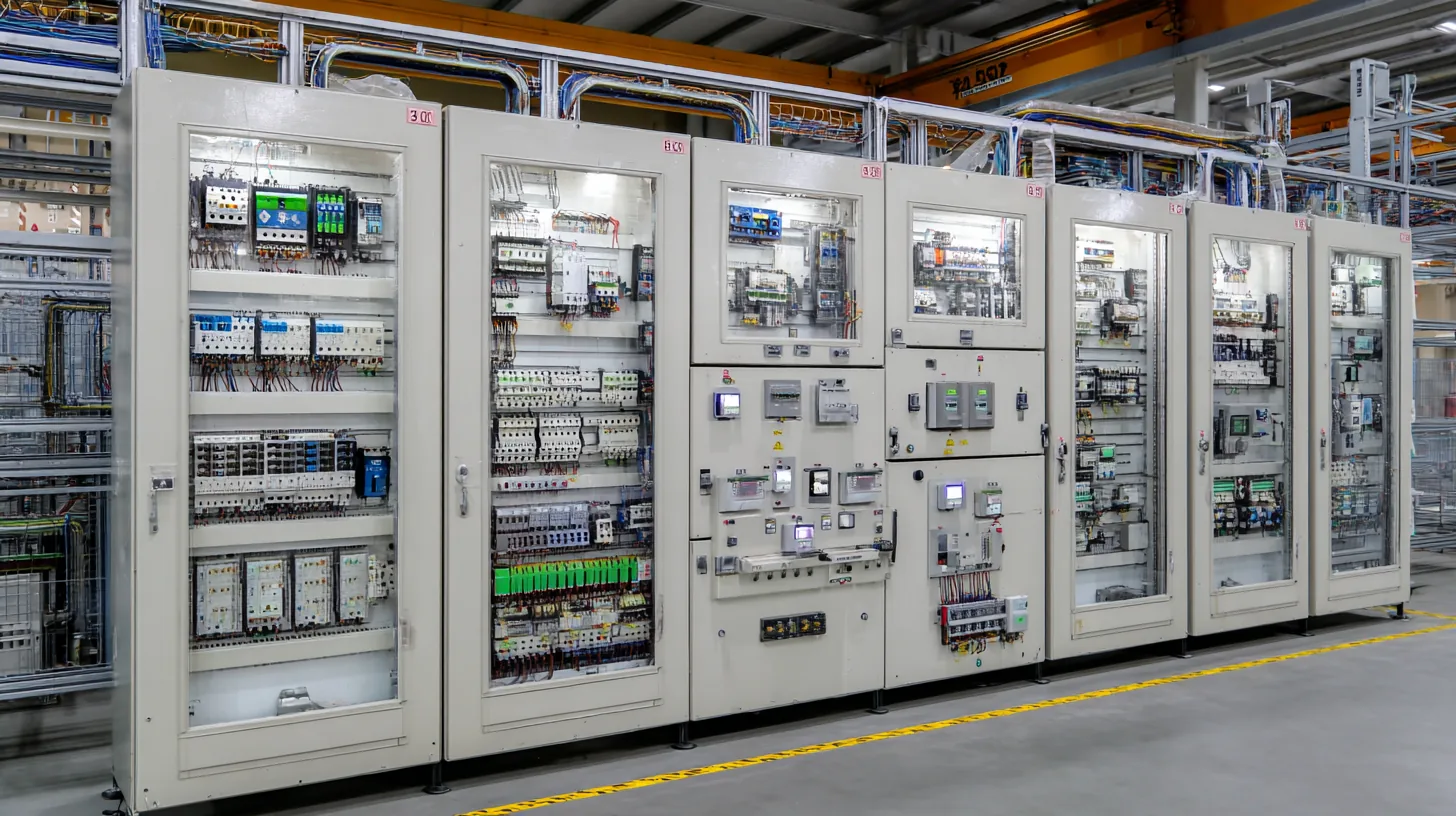
Short-Time Withstand Duration
Icw is a short-time withstand rating with a specified duration; it is not an interrupting capacity. If the protection design intentionally delays an upstream ACB, compare the duty during that delay with both breaker and assembly withstand. Check any instantaneous override or other restriction in the exact trip-unit documentation. A coordination drawing that ignores a mandatory override can overstate selectivity.
ACB Construction Requirements
A fixed ACB remains installed in its mounting arrangement, while a withdrawable model uses a compatible cradle with declared connected, test and disconnected positions. The exact position functions must be confirmed from the instructions. Withdrawal can support a planned maintenance or spare strategy; it does not make the entire compartment de-energized or authorize work on live equipment. Record the isolation and racking procedures before selecting this format.
Utilice la siguiente comparación durante la revisión del diseño:
| Dimension de la decisión | Construcción fija | Construcción extraíble | La mejor combinación |
|---|---|---|---|
| Integración inicial | Menos piezas mecánicas; diseño de panel más simple | Requiere soporte para el bebé, indicación de posición y sistemas de bloqueo | Corregido para tarjetas con espacio limitado y que funcionan de forma estable |
| Acceso a la conservación | Normalmente se necesitan aislamiento y desconexión. | La posición de prueba o servicio respalda el trabajo planificado | Disponibles para plantas que operan de forma crítica o continua |
| Estrategia de reserva | La sustitución es específica del dispositivo | Un reemplazo compatible puede reducir la duración de la interrupción del servicio. | Retirable cuando la interrupción de la actividad tenga un impacto significativo |
| Cost total | Menor tendencia a problemas de hardware; considere la posibilidad de contratar personal de mantenimiento | Mayor tendencia hacia el hardware de gama alta; considere la disponibilidad a lo largo del ciclo de vida | Decida el coste total de propiedad, no el precio de compra |
Compruebe los espacios de acceso a las puertas, la terminación de los cables, los límites de fuga de arco, el acceso para levantar cargas y el procedimiento de montaje del fabricante. Un diseño retráctil solo aporta los beneficios de mantenimiento cuando los operadores pueden acceder de forma segura a la posición de prueba y los dispositivos de bloqueo de la instalación están documentados.
ACB Protection Coordination
La selectividad (discriminación) significa que el dispositivo más cercano al fallo se enciende primero, manteniendo las cargas sanas en funcionamiento. Compare las configuraciones de cortocircuito a largo plazo, cortocircuito instantáneo y cortocircuito en tierra en el ACB y en los interruptores posteriores. Las curvas de tiempo-corriente son esenciales, pero las unidades electrónicas de parada también pueden requerir que se permita la corriente, I2t, o datos de interconexión selectiva por zona. Confirme si el proyecto requiere interconexión por zonas, comunicación, medición o desconexiones de carga o subtensión.
For an industrial circuit breaker, the assembly interface matters. Busbar bracing, terminals, source impedance, cable arrangement and the selected protective settings affect the fault review. Require a switchboard verification route in addition to breaker product evidence. Include transformer, generator and other credible supply contributions under their relevant operating states. Review the advanced trip devices guide as background, then use the exact manufacturer’s curves and coordination tables.
Cálculo ilustrativo (no un diseño de proyecto): Si la carga trifásica tiene una potencia de 1.200 kW a 400 V y un factor de potencia de 0,90, la corriente estimada es I = 1.200.000/(√3 × 400 × 0,90) ≈ 1.925 A. Luego, un ingeniero aplicaría un ciclo de trabajo, una reducción de rendimiento en condiciones ambientales, armónicos, arranque del motor y factores de código antes de elegir la configuración del sensor o el frame. El ejemplo muestra por qué la tensión y el factor de potencia deben acompañar la solicitud de corriente.
ACB Installation Environment
La temperatura, la altitud, la humedad, la suciedad, los vapores corrosivos y la vibración pueden alterar la capacidad de uso y el intervalo de servicio de un disyuntor ACB. Obtenga datos de reducción de rendimiento para el recinto real y las condiciones ambientales; no los infera de una página del catálogo general. En áreas con polvo o condiciones químicas agresivas, especifique los requisitos de sellado, paso libre y espacio entre piezas con el fabricante del panel. El disyuntor industrial debe ser revisado en función de estas condiciones antes de congelar el diseño del panel.
Define maintenance before approving the bill of materials. The plan should follow the manufacturer on inspection, cleaning, permitted lubrication, mechanical operation, contact-wear assessment and trip testing. Do not set a universal service interval or apply cleaning and lubrication methods from a different breaker family. Record firmware and setting changes where applicable, and compare the outage, service and spare costs without inventing a saving.
Una revisión disciplinaria de la selección de la ACB también registra quién es el titular de cada decisión: el ingeniero eléctrico confirma la función y la coordinación, el constructor de paneles confirma los puntos de conexión y los cierres, y el operador confirma los accesos y los procedimientos de prueba.

Complete ACB Spare Requirements
A drawout spare must match the cradle, terminals, interlocks, sensor or trip configuration and required accessories. Same frame current alone does not prove interchangeability. Ask for the approved breaker-cradle combination and record commissioning settings before swapping units. Compare the cost of the spare, storage, periodic checks, handling equipment and planned outage labour; the calculation is a project-specific ownership-cost framework, not a promised payback.
Selección de ACB basada en aplicaciones
| Solicitud | Principales preocupaciones | Hincapié en la especificación | Evidencia útil |
|---|---|---|---|
| Principal fuente de ingresos de la industria manufacturera | Alta disponibilidad y continuidad de servicio | Withstand, selectivity, withdrawable option, service spares | Short-circuit study, coordination curves, maintenance schedule |
| Data or process-critical facility | Fast restoration and monitoring | Withdrawable construction, position interlocks, communications | Racking procedure, alarms list, test records |
| OEM power-control panel | Repeatability across builds | Stable frame/trip configuration, accessories, drawings | Approved bill of materials, wiring diagrams, inspection plan |
| Utility or infrastructure board | Harsh environment and long service | Derating, enclosure interface, corrosion control, spares | Environmental data, assembly verification, service support |
ACB Compliance Requirements
IEC 60947-2 specifies requirements and verification tests for circuit breakers used in low-voltage switchgear and controlgear. It is a product standard; confirm the declared ratings and test evidence for the exact configuration. UL 1066 is the North American standard for low-voltage AC power circuit breakers, with construction and performance requirements that may differ from an IEC declaration. A project using UL-listed equipment must verify the listing, installation conditions and marking through the applicable certification body.
NFPA 70 (National Electrical Code) governs electrical installation in the United States. It addresses conductor protection, equipment ratings, working space and other installation matters; it does not replace the breaker product standard. Requirements depend on destination market, system architecture and the authority having jurisdiction. Unsupported claims such as “UL compliant” or “IEC certified” can delay approval, invalidate a tender response or create warranty disputes.
ACB Supplier Evaluation Checklist
- Issue a data sheet stating voltage, continuous current, poles, frequency, fault current, withstand time, trip functions and ambient conditions.
- Choose fixed or withdrawable construction after comparing outage cost, space, interlocks, spare strategy and operator procedures.
- Run a coordination and short-circuit review with the complete upstream/downstream network; retain curves and settings as controlled documents.
- Verify the exact product documentation, inspection plan, routine tests and accessory compatibility before release to the panel builder.
- For sourcing discussions, Zhejiang W9 Group Technology Co., Ltd. (founded in 2020) describes low-voltage protection products and supports OEM/ODM plus testing and inspection coordination. Ask W9 for configuration-specific drawings and evidence rather than relying on a generic statement.
For a practical product reference, see the WEW1 air circuit breaker product page. Pair any quotation with the approved schedule, applicable standard and project test requirements.
Preguntas frecuentes
What is the difference between an ACB and an MCCB?
An ACB circuit breaker commonly serves higher-current mains and feeders and is designed for accessible protection, switching and coordination in a low-voltage assembly. An MCCB is often more compact and suited to downstream circuits. The correct choice depends on current, fault duty, space, selectivity and maintenance—not on a simple current threshold.
How do I size an air circuit breaker?
Calculate design current from the actual load, verify conductor ampacity and ambient derating, then check interrupting and short-time withstand ratings against the prospective fault current. Set long-time, short-time, instantaneous and ground-fault functions through a coordination study. Have the final settings reviewed by the responsible electrical engineer.
When should I specify a withdrawable ACB?
Specify withdrawable construction when reduced outage time, routine testing or rapid replacement has meaningful operational value. Confirm room for racking, shutters, interlocks and lifting, and train operators on the manufacturer’s procedure. For a small, lightly serviced board, fixed construction may have a better total-cost balance.
Does IEC 60947-2 mean a breaker is UL listed?
No. IEC 60947-2 and UL 1066 are different product standards with different evaluation and marking systems. A North American project should request the applicable UL evidence and installation conditions; an IEC declaration alone is not a substitute.
What documents should an industrial buyer request?
Request a datasheet for the exact frame and trip unit, time-current curves, short-circuit and withstand ratings, dimensional and wiring drawings, accessory list, routine-test or inspection records, installation instructions and maintenance guidance. Add the project’s coordination study and approved settings to the handover file.
Referencias
- IEC 60947-2:2024, circuit-breaker public scope. Alcance y orientación públicas verificados el 15 de octubre de 2026.
- IEC 61439-1:2020, assembly general rules. Alcance y orientación públicas verificados el 15 de octubre de 2026.
- IET BS 7671 installation-standard resources; national adoption remains project-specific. Alcance y orientación públicas verificados el 15 de octubre de 2026.
Choose the ACB only when electrical duty, assembly evidence and the operating plan agree. Discuss the current schedule and site conditions alongside the WEW1 product documentation. Review the product range with the intended destination-market requirements and retain the approved drawings, settings and maintenance procedure with the switchboard.