








Harnessing the Versatility of Adjustable Thermal-Magnetic MCCBs: W9 Group WLM6RT Series
Harnessing the Versatility of Adjustable Thermal-Magnetic MCCBs: W9 Group WLM6RT Series
When a maintenance manager in Monterrey reset a feeder after a motor-start trip, he followed the panel label and increased the breaker size. Within minutes, a second fault opened the main device and stopped the line. The rapid failure was not proof that the breaker was poor; the selection and coordination assumptions were wrong. That practical question—how to match an adjustable thermal-magnetic MCCB to the installation—is the focus of this guide.
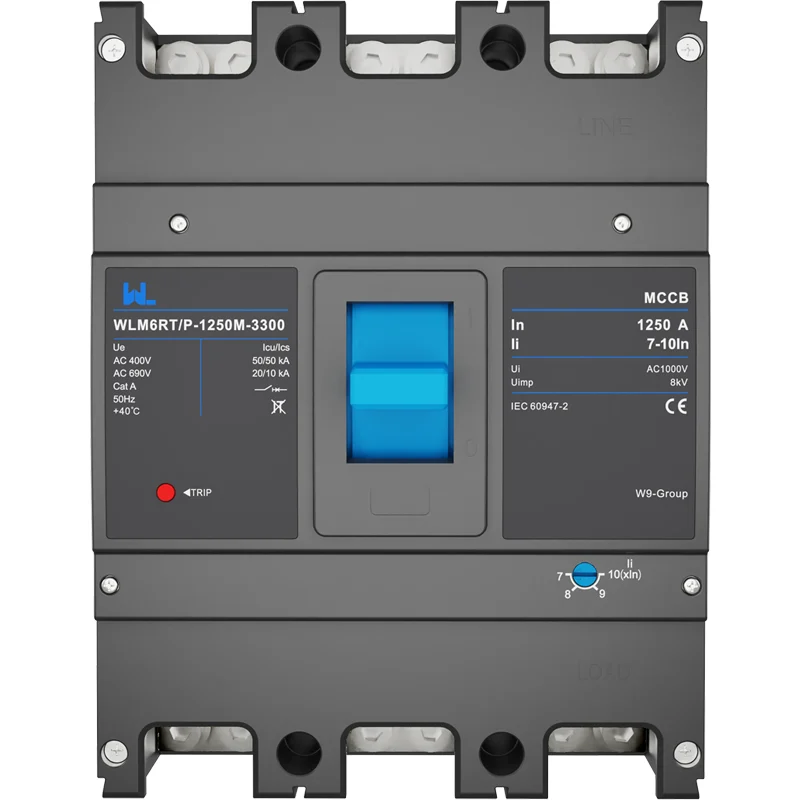
Summary: The W9 Group WLM6RT family is a published range of adjustable thermal-magnetic moulded-case circuit breakers covering 125 A, 160 A, 250 A, 400 A, 630 A, 800 A and 1250 A frame variants, with 3-pole or 4-pole configurations listed for 400–690 V systems. Under IEC 60947-2, the declared ratings and type tests—not a catalogue name—determine suitability. We recommend starting with a load, fault-current and coordination study, then recording each long-time and magnetic setting during commissioning. This protects conductors, limits nuisance trips and preserves a defensible total-cost decision.
Why adjustable thermal-magnetic protection matters
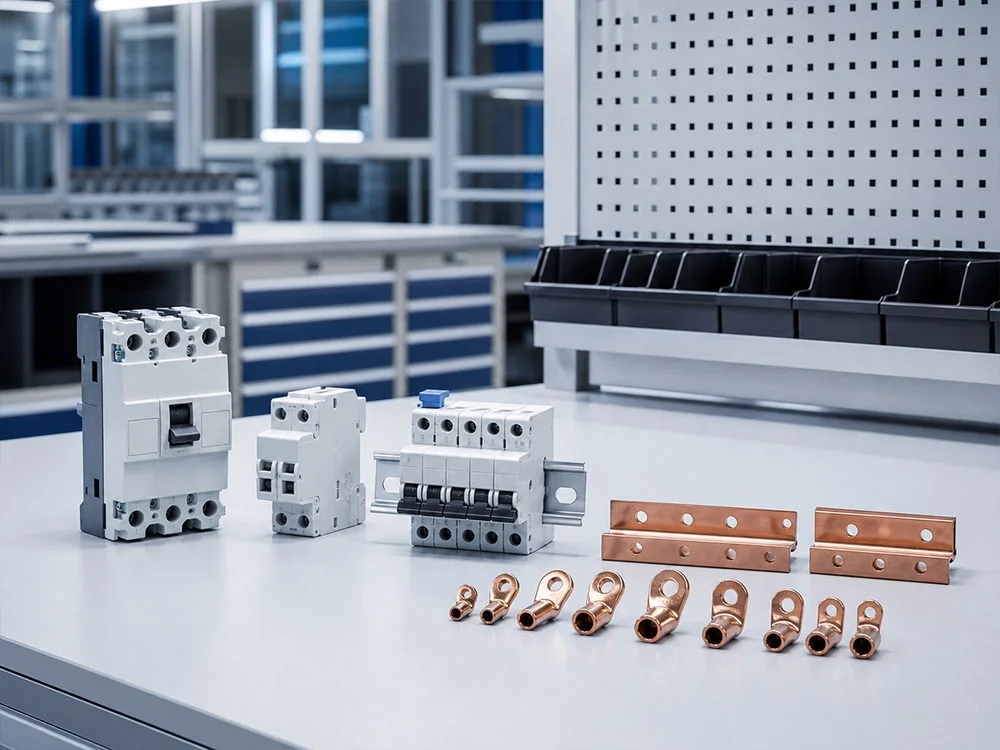
An MCCB combines switching, insulation and overcurrent interruption in a moulded enclosure. Its thermal element responds to sustained heating caused by overload; its magnetic element reacts to high current associated with short circuits. An adjustable release lets an engineer tune pickup within the manufacturer’s permitted range instead of forcing every feeder to use one fixed curve.
That flexibility is useful when a 400 V distribution board feeds motors, HVAC drives and general loads with different starting currents. The adjustment does not increase the interrupting rating, conductor ampacity or enclosure temperature limit. IEC 60947-2 requires the selected device to be applied within its declared voltage, current and short-circuit characteristics, while IEC 61439 governs the low-voltage assembly around it.
Thermal response and magnetic response do different jobs
Long-duration overloads are managed by the thermal bimetal; short-circuit events are handled by the magnetic actuator. Ambient temperature, enclosure ventilation and mounting orientation influence thermal behavior, so the time-current curve for the exact WLM6RT order code is the controlling evidence. A dial position is not a universal ampere value.
WLM6RT range and engineering fit
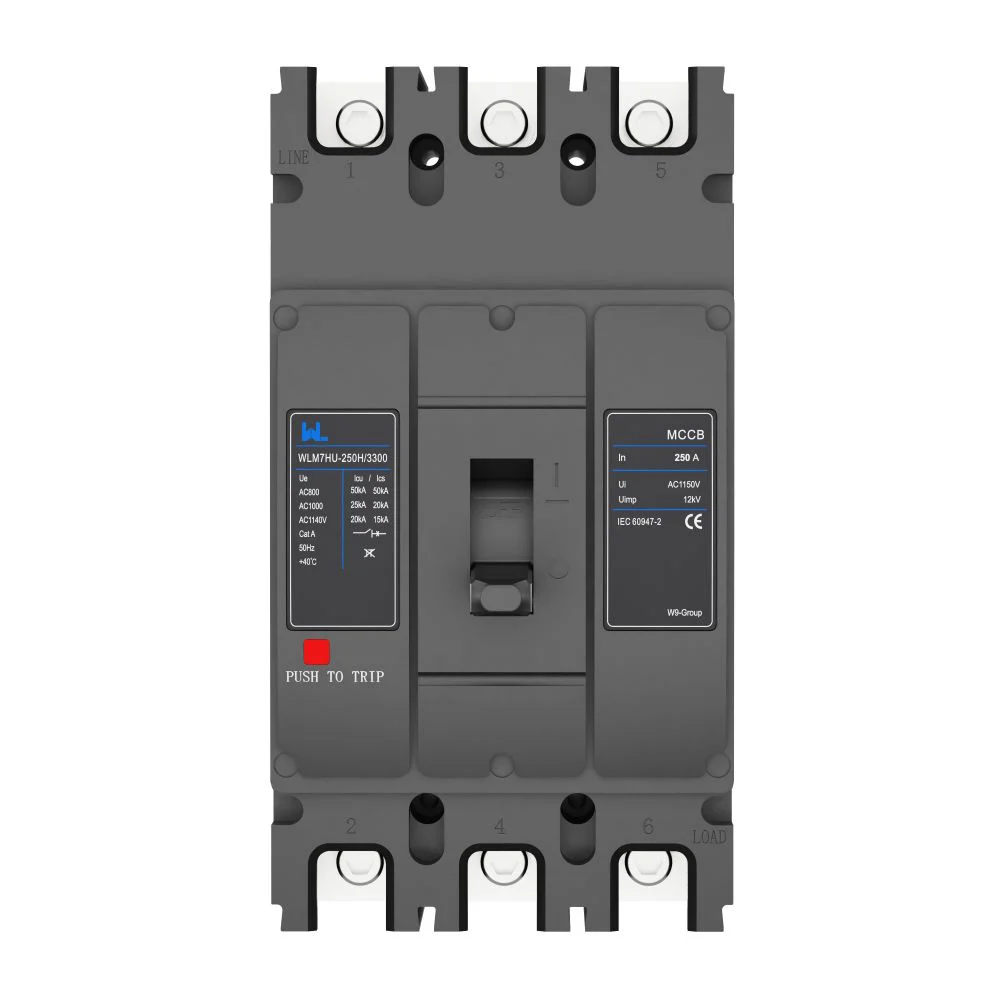
W9 Group’s public product listings identify WLM6RT variants from 125 A through 1250 A, including 3-pole and 4-pole versions. The listings describe 400 V and 690 V application classes; final utilization voltage, frequency and interrupting capacity must be checked on the model datasheet. This breadth can simplify a multi-feeder bill of materials, but it does not justify choosing one frame without a study.
| Published WLM6RT variant | Typical configuration shown | Design check before release |
|---|---|---|
| 125 A and 160 A | 3P/4P, thermal-magnetic adjustable | Small feeder ampacity, neutral switching and terminal size |
| 250 A and 400 A | 3P/4P, 400–690 V listings | Motor inrush, busbar temperature and prospective fault current |
| 630 A and 800 A | 3P/4P, industrial feeder applications | Coordination with upstream ACB/MCCB and enclosure heat rise |
| 1250 A | 3P/4P, large-frame listing | Assembly short-circuit rating, connection geometry and service access |
For each line item, procurement should request the current catalogue page, time-current curves, dimensional drawing, terminal arrangement, accessory schedule and routine-test evidence. If a project needs ground-fault sensing, communications or metering, verify that function separately; a standard thermal-magnetic release should not be assumed to include it.
Coordination, sizing and hidden lifecycle costs
Selective coordination means the protective device closest to a fault clears first. Engineers overlay upstream and downstream curves, checking the available fault current and the clearing time of each device. An adjustable thermal-magnetic MCCB can improve the overlap by setting the feeder below the upstream pickup while keeping magnetic pickup above documented motor inrush. The honest answer is that adjustment helps only when the curves remain separated at the actual fault levels.
Illustrative calculation (not a WLM6RT rating): a three-phase load study reports 180 A at 400 V. With a 25% planning margin, the design current is 225 A. The engineer still has to select a frame whose verified ampacity, terminals, temperature correction and interrupting rating meet the project; the final thermal setting comes from the approved study and manufacturer tolerance, not from 225 A alone.
Total cost includes engineering hours, panel rework, commissioning tests, spare inventory and the consequence of an avoidable outage. A common frame family may reduce spare complexity when several feeders share accessories. Conversely, an oversized frame with a high setting can expose conductors to excess energy and increase arc-flash risk. Compare the complete lifecycle—not only the breaker line item.
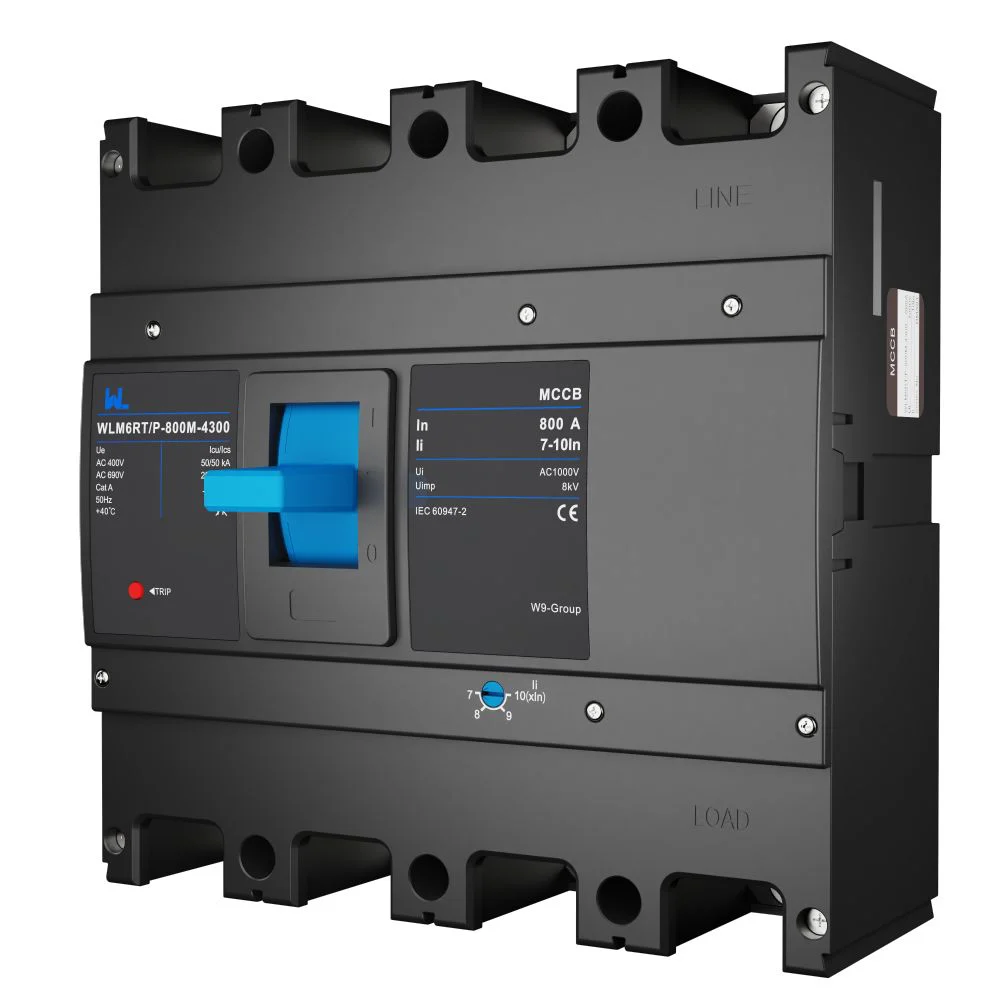
Value comparison: adjustable versus fixed thermal-magnetic MCCBs
| Decision dimension | Fixed thermal-magnetic MCCB | Adjustable WLM6RT approach | Buyer implication |
|---|---|---|---|
| Initial specification | Few settings; quick selection | Requires a setting schedule and curve review | Allow study and documentation time |
| Load variation | Hardware change may be needed | Pickup can be reset within verified limits | Useful for phased capacity |
| Motor or transformer inrush | Fixed response may nuisance-trip | Magnetic setting can be checked against inrush | Use measured or documented starting data |
| Maintenance | Simple inspection and functional test | Add setting verification and records | Control who may alter settings |
| TCO | Lower configuration effort | Potentially lower outage and rework cost | Compare engineering, testing and spares |
Application matrix for WLM6RT planning
| Application | Useful WLM6RT characteristic | Questions to close before purchase |
|---|---|---|
| OEM and process panels | Several frame currents and 3P/4P choices | Are variants mechanically interchangeable and accessories consistent? |
| Commercial feeders | Adjustable pickup supports coordination as tenants change | Who owns settings after fit-out and handover? |
| Motor and HVAC distribution | Thermal-magnetic response can be matched to starting current | Is locked-rotor current below the magnetic pickup with margin? |
| Photovoltaic AC collection | Frame choice can follow feeder current and backfeed study | Have reverse power, isolation and local code requirements been reviewed? |
Standards, testing and commercial compliance
IEC 60947-2 is the principal international product standard for low-voltage circuit-breakers; it defines rated characteristics and verification tests. IEC 61439 addresses the assembled switchboard, including temperature rise and short-circuit performance. In the United States, UL 489 covers listed moulded-case breakers, while NFPA 70 (the National Electrical Code) governs installation. These are not interchangeable labels: a test method or installation code does not automatically certify a product.
For export projects, map the destination market, voltage system and authority having jurisdiction before the purchase order. Unsupported certification wording can delay inspection, trigger redesign or invalidate a warranty. Keep the declaration, test report and model number aligned; never reuse a certificate from a different frame or trip unit.
Selection and commissioning checklist
- Record voltage, frequency, phase and neutral arrangement, grounding method, continuous load and prospective short-circuit current.
- Select frame current and poles from verified WLM6RT data; apply ambient, altitude, enclosure and conductor derating.
- Overlay time-current curves with upstream and downstream devices, including motor or transformer inrush.
- Confirm terminals, accessories, creepage, clearances and door operation on the panel drawing.
- Commission to the project test plan, record as-left settings and lock the setting-change process.
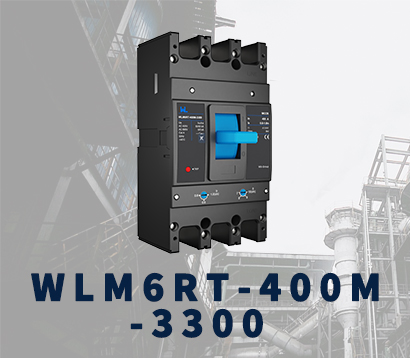
W9 Group’s published WLM6RT information gives buyers a practical starting point for comparing adjustable thermal-magnetic MCCB frame options. Review the WLM6RT 400 A product page and request the exact drawing and test documentation for the order code. The site’s guidance on choosing a thermal-magnetic circuit breaker and MCCB features and applications adds useful coordination context.
Frequently asked questions
What is an adjustable thermal-magnetic MCCB?
It is a moulded-case circuit breaker with thermal and magnetic overcurrent elements whose pickup can be set within a declared range. Adjustment must remain coordinated with conductor ampacity, fault current and the manufacturer’s curve.
What current range does the WLM6RT series cover?
W9 Group’s public listings show 125 A, 160 A, 250 A, 400 A, 630 A, 800 A and 1250 A variants, with 3-pole and 4-pole options listed. Confirm the exact rating, voltage class and interrupting capability on the current datasheet.
Can I use a WLM6RT breaker on a 690 V system?
The listings identify 400–690 V application classes, but suitability depends on the exact model, utilization category, fault level and installation assembly. Obtain written confirmation for the order code before energizing.
Does thermal-magnetic adjustment provide ground-fault protection?
Not by itself. Ground-fault protection requires a suitable dedicated function or device and must be coordinated with the system grounding method and local code.
Which standard should a buyer request?
Request evidence to the product standard required in the destination market—commonly IEC 60947-2 or UL 489—and verify the panel standard and installation code separately. A certificate is meaningful only when its model, frame and trip unit match the delivered equipment.
References
- IEC 60947-2: Low-voltage switchgear and controlgear—Circuit-breakers.
- IEC 61439: Low-voltage switchgear and controlgear assemblies.
- UL 489: Molded-Case Circuit Breakers and Enclosures.
- NFPA 70, National Electrical Code.
The dependable breaker is not the one with the largest frame; it is the one whose settings, test evidence and installation remain aligned. When your team is ready to evaluate the WLM6RT family, explore W9 Group’s adjustable MCCB range and contact the engineering team with your one-line diagram, load data and destination-market requirements.