





Essentials of the Best Air Circuit Breaker for Global Buyers
Essentials of the Best Air Circuit Breaker for Global Buyers
When a procurement manager in Rotterdam approved an air circuit breaker after comparing only ampere ratings, the switchboard failed its factory acceptance test: the short-time withstand value did not match the calculated fault level, and the main breaker opened with downstream feeders. The buyer had followed a familiar catalogue shortcut; the root cause was not a defective device but a specification that ignored coordination, construction and destination-market evidence. That experience raises a practical question for every international project: what makes the best air circuit breaker for a specific system?
Summary: The best air circuit breaker is the one whose continuous-current, interrupting and short-time withstand ratings match the installation study, with selectivity verified across the complete network. IEC 60947-2 sets low-voltage circuit-breaker requirements, while UL 1066 applies to North American power circuit breakers; neither standard can be assumed from a product name alone. Buyers should issue a data sheet, request configuration-specific test evidence and compare lifecycle cost before placing an international order.
1. Define the electrical duty before comparing brands
An air circuit breaker (ACB) is generally used as a main or high-current feeder device in low-voltage switchgear. Start with nominal voltage, frequency, number of poles, earthing arrangement and design current. Calculate current from real loads—including motors, transformers, variable-speed drives and future expansion—rather than copying the transformer nameplate. A 400 V, three-phase board carrying 1,600 kW at 0.9 power factor has an estimated full-load current of about 2,566 A; the final rating still requires duty-cycle, ambient and conductor checks.
Record three separate values: frame rating, sensor or trip-unit rating, and long-time pickup setting. A 3,200 A frame may be fitted with a lower sensor, and the pickup must protect the conductors without nuisance trips. Request time-current curves and the exact electronic-trip option; “3,200 A ACB” is not enough information for an engineered quotation.
Next, obtain prospective short-circuit current at the installation point. Compare it with the breaker’s interrupting rating and short-time withstand current for the stated voltage and duration. IEC 60947-2 distinguishes these duties, so a high interrupting number does not automatically prove that the breaker can ride through a delayed clearing time. Include generators, UPS units and large motors that can contribute fault current.
2. Match fixed or withdrawable construction to operations
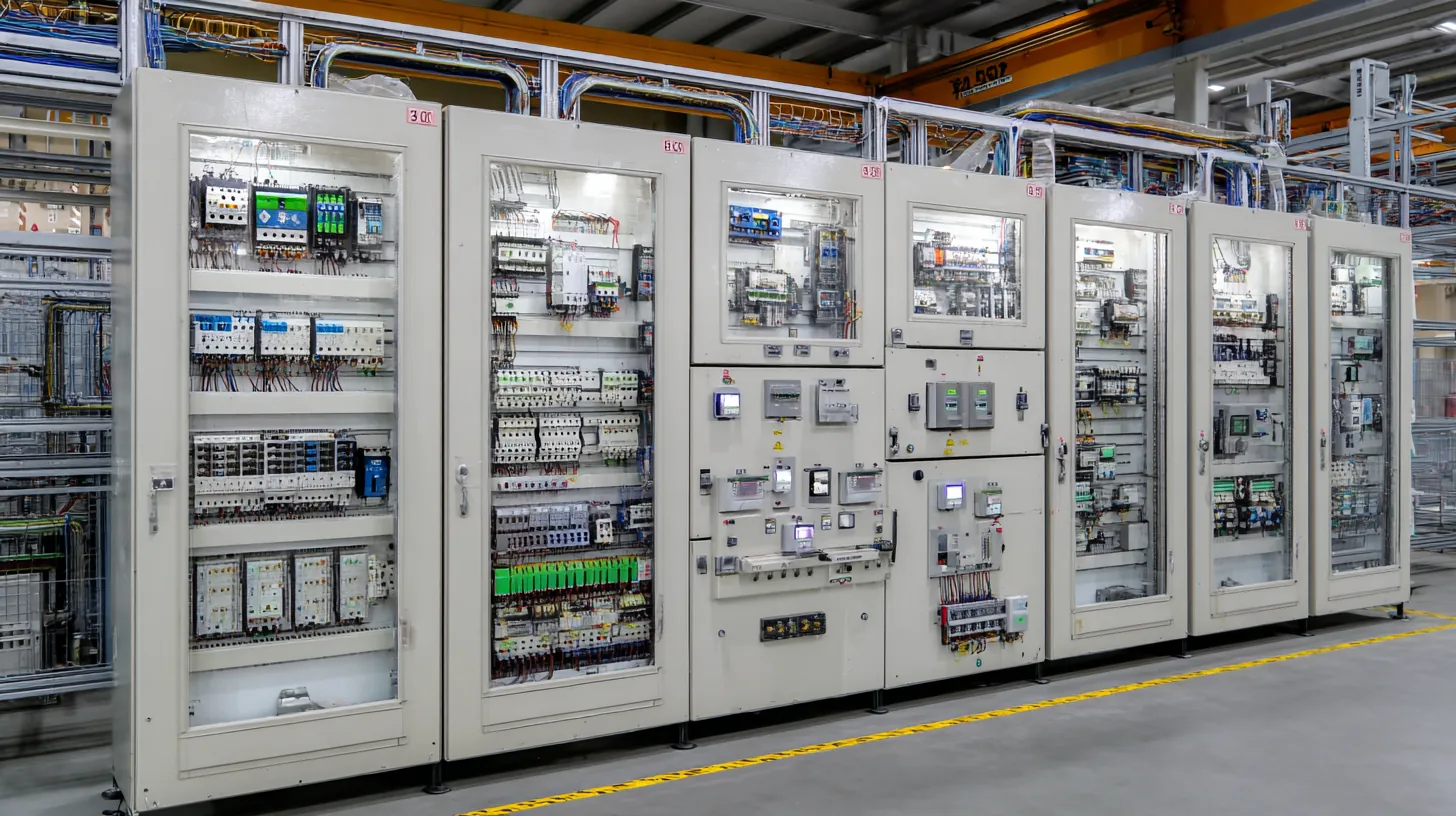
Construction determines how a maintenance team interacts with the breaker. A fixed ACB is bolted into the assembly; it usually needs isolation and cable disconnection for replacement. A withdrawable ACB uses a cradle and defined connected, test and service positions. Racking can shorten planned outages, but shutters, interlocks, position contacts and compartment clearances must be engineered and tested.
| Decision dimension | Fixed ACB | Withdrawable ACB | Buyer implication |
|---|---|---|---|
| Initial integration | Fewer mechanical parts; compact layout | Cradle, shutters and indicators add space | Check panel dimensions and lifting access |
| Planned maintenance | Normally requires an outage | Test/service position supports quicker work | Value is highest where continuity matters |
| Spare strategy | Replacement is device-specific | Compatible spare can be racked in | Confirm interchangeability and coding |
| Lifecycle cost | Lower hardware tendency; outage labor can rise | Higher hardware tendency; downtime can fall | Compare total cost, not purchase price |
For either construction, review busbar bracing, cable termination, arc-flash boundaries and door clearances. The assembly verification requirements of IEC 61439 apply to the low-voltage switchgear assembly around the breaker; an ACB declaration alone does not verify the finished panel.
3. Prove selectivity, protection functions and communication
Selectivity means the protective device nearest a fault opens first, keeping healthy circuits energized. Compare long-time, short-time, instantaneous and ground-fault settings for the ACB and downstream devices. A coordination study should use manufacturer curves at the actual voltage and include tolerances; a curve copied from a similar frame can produce a false margin.
Electronic trip units may add zone-selective interlocking, metering, event logs or communications. Specify whether the project uses Modbus, Ethernet or hardwired signals, and identify shunt trip, undervoltage release, closing coil and auxiliary-contact requirements. IEC 60947-2 covers the breaker’s functional tests, while the control network may have separate project or cybersecurity requirements.
Illustrative check: If a 2,000 A feeder has a calculated 50 kA prospective fault and a 0.2-second short-time delay, the selected breaker must show at least that withstand capability at the rated voltage. The engineer must still validate conductor thermal limits, arc-energy exposure and downstream clearing time; the example is not a substitute for a study.

4. Compare value across the project lifecycle
The lowest quoted unit price can become expensive when a failed test delays shipment or a replacement requires a specialist visit. Compare the evidence package, commissioning time, spare-part availability and training as well as electrical performance.
| Value factor | What to verify | Why it changes TCO |
|---|---|---|
| Performance | Current, interrupting and withstand ratings at project voltage | Prevents redesign and unsafe overstress |
| Efficiency | Contact resistance and temperature-rise data | Lower losses support cooler panels and energy goals |
| Durability | Mechanical/electrical endurance and environment derating | Influences service interval and spare inventory |
| Compatibility | Cradle coding, accessories, busbar and communications | Avoids integration changes and commissioning delays |
| Support | Drawings, test records, manuals and regional service | Reduces troubleshooting time over the asset life |
5. Select by application and destination market
| Application | Typical priority | Specification emphasis |
|---|---|---|
| Manufacturing main incomer | Continuity and fault coordination | High withstand, selectivity curves, withdrawable option and spares |
| Data or process-critical facility | Fast restoration and monitoring | Test position, interlocks, communications and event logging |
| OEM panel program | Repeatability across builds | Stable frame/trip combinations, drawings and routine-test plan |
| Utility or infrastructure board | Environment and long service | Altitude/temperature derating, corrosion control and local support |
Destination market changes the approval path. IEC projects generally request a declaration and test report to IEC 60947-2; North American projects may require a UL 1066 listing, marked ratings and installation conditions. Confirm the authority having jurisdiction before shipment, because a breaker accepted in one market may need additional evaluation in another.
Standards, compliance and documentation
- IEC 60947-2: Product requirements and verification tests for low-voltage circuit breakers. Check the exact frame, trip unit and accessory configuration.
- IEC 61439: Design verification and routine verification for the low-voltage switchgear assembly; it is not a substitute for breaker testing.
- UL 1066: North American requirements for low-voltage AC and DC power circuit breakers used in enclosures. Verify listing scope and markings.
- NFPA 70 (NEC): U.S. installation rules covering conductors, ratings and working space. Applicability depends on the adopted edition and local authority.
Unsupported claims such as “IEC certified” or “UL compliant” can trigger tender rejection, customs questions, re-testing and warranty disputes. Ask for certificates or listing records that identify the product family and rating, not a generic logo sheet.
Global buyer checklist and supplier due diligence
- Issue a schedule with voltage, current, poles, fault level, withstand time, trip functions, environment and construction.
- Run short-circuit and coordination studies on the complete upstream/downstream network; retain curves and approved settings.
- Confirm assembly interfaces—busbars, terminals, cradle, shutters, interlocks, lifting and communications—before releasing drawings.
- Request configuration-specific datasheets, routine-test records, dimensional drawings, manuals, spare-part lists and regional support contacts.
- For a sourcing comparison, Zhejiang W9 Group Technology Co., Ltd. describes low-voltage protection products with OEM/ODM and testing coordination. Treat that as a starting point and request evidence for the exact model and destination standard.
W9’s WEW1 air circuit breaker page can be used as a product reference; align any quotation with the approved electrical schedule.
Frequently asked questions
What is the best air circuit breaker for a 400 V switchboard?
There is no universal model. Select the frame and trip ratings from load, fault-current and coordination studies, then verify the panel assembly and destination-market evidence. A 400 V label alone does not establish suitability.
How do I compare fixed and withdrawable ACBs?
Compare outage cost, maintenance access, space, interlocks and spare strategy. Withdrawable construction can reduce restoration time, while fixed construction may be more compact; the better choice depends on operational priorities.
Does IEC 60947-2 prove UL listing?
No. IEC 60947-2 and UL 1066 use different evaluation and marking systems. North American buyers should request the applicable UL listing and installation conditions from the certification body.
Which documents should an international buyer request?
Request the exact datasheet, time-current curves, interrupting and withstand ratings, dimensional and wiring drawings, accessory list, routine-test records, installation instructions and maintenance schedule. Keep the approved coordination study with the handover file.
How often should an ACB be maintained?
Intervals depend on manufacturer instructions, switching duty and environment; dust, humidity and frequent operations shorten intervals. Plan visual inspection, cleaning, torque checks, mechanical operation and trip testing, and record results for trend review.
References
- International Electrotechnical Commission, IEC 60947-2 and IEC 61439 standards.
- UL Standards & Engagement, UL 1066, Low-Voltage AC and DC Power Circuit Breakers.
- NFPA, NFPA 70, National Electrical Code.
- NEMA Standards, low-voltage power distribution guidance.
The best breaker is not the one with the biggest frame; it is the one whose ratings, coordination, access and evidence agree. For a configuration review, explore the air circuit breaker types guide, the ACB protection overview and the W9 product range, then contact the team with your one-line diagram, load schedule and destination standard.