





홈블로그Understanding AC Surge Protective Devices to Safeguard Electrical Systems

Understanding AC Surge Protective Devices to Safeguard Electrical Systems

Release Time: 2026-06-12

Understanding AC Surge Protective Devices to Safeguard Electrical Systems

When a facility manager in Milan reviewed the storm report, she saw the same pattern across three rooftop air-handling units: each HVAC control board had failed within minutes of a thunderstorm. She had followed the installer’s equipment list, approved replacement boards and watched the units restart—only to see another failure the next week. The reversal came during a protection audit: the panels had no coordinated surge protection, and the grounding path was long and poorly bonded. The boards were not “randomly defective”; the electrical system had never been specified to manage transient energy.

요약: A correctly coordinated AC surge protective device (SPD) diverts transient current before it reaches sensitive loads. IEC 61643-11 distinguishes test duties and discharge ratings; in a typical 230/400 V facility, the design team may use a service-entrance Type 1 or Type 1+2 device, then Type 2 at distribution boards and Type 3 close to electronics. Confirm the system earthing arrangement, prospective short-circuit current, Up (voltage protection level), In/Imax and lead length before buying; a qualified electrician should verify installation to IEC 60364-4-44.

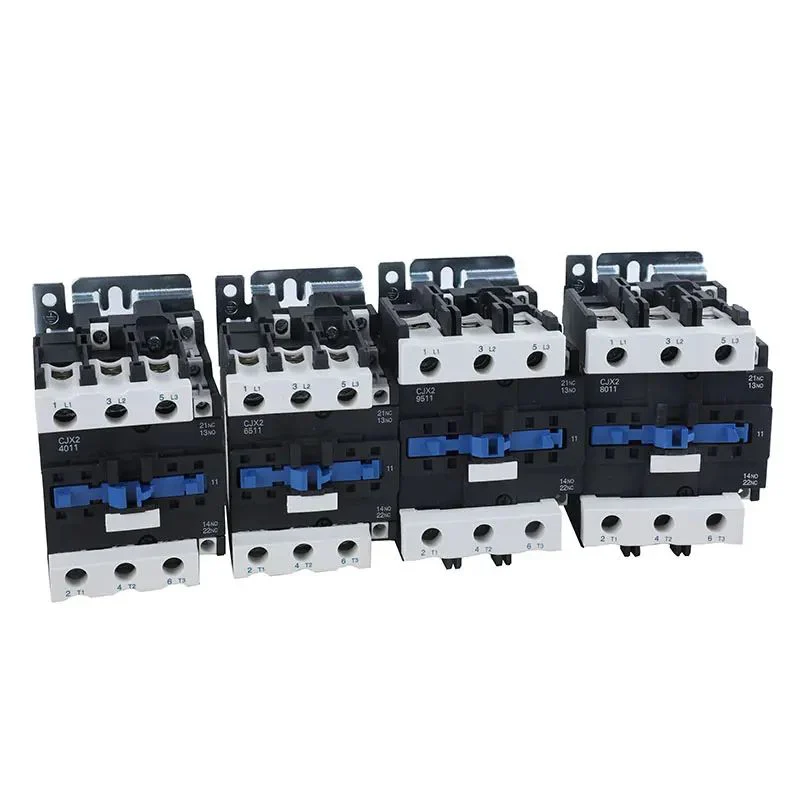
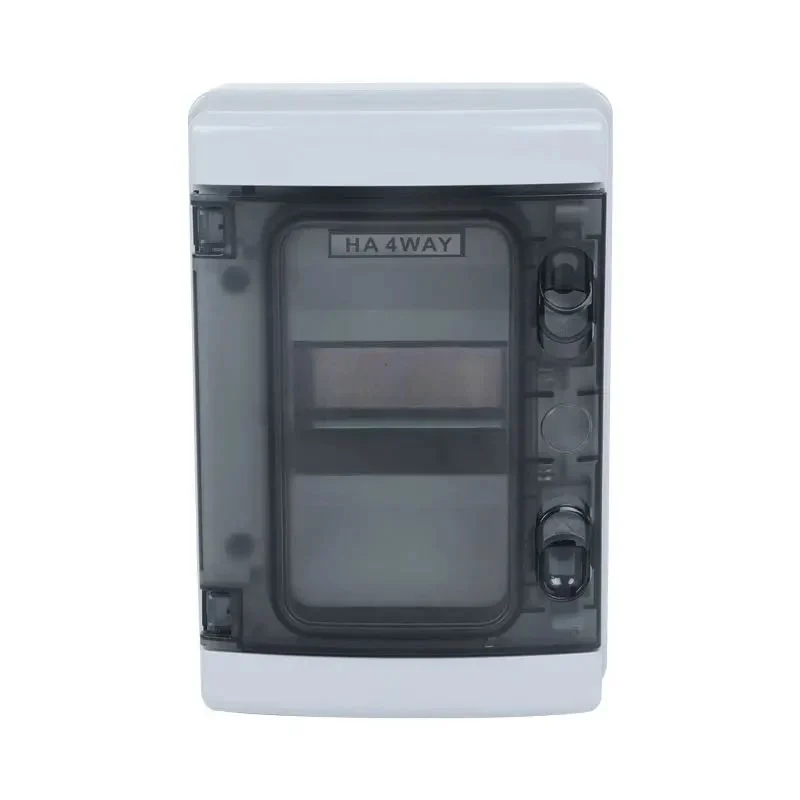
AC surge protective device installed in a commercial HVAC distribution board
AC surge protective device installed in a commercial HVAC distribution board.

What an AC SPD does—and why HVAC controls expose weak coordination

An SPD is a parallel-connected protective assembly, commonly using metal-oxide varistors (MOVs) and a thermal disconnector. At normal voltage it presents high impedance; during a surge it becomes a low-impedance path to protective earth, limiting the residual voltage seen by downstream equipment. A correctly rated surge protection device is designed for this impulse duty; a power strip is not. Lightning coupling, utility switching and motor contactor operations can all create microsecond transients, even when a building has never taken a direct strike.

HVAC drives and control boards are vulnerable because their DC buses, communication ports and switching power supplies contain semiconductor junctions with limited impulse withstand. A 1–2 kV transient can puncture insulation or progressively degrade components without tripping an overcurrent breaker. IEC 60364-4-44 therefore treats overvoltage protection as a system design issue: the AC surge protective device, bonding network and cable geometry must work together.

Type 1, Type 2 and Type 3: matching the protection zone

The phrase Type 1 Type 2 Type 3 SPD describes installation location and test waveform—not a simple “good, better, best” ranking. IEC 61643-11 uses an 8/20 μs current impulse for many Type 2 tests and a 10/350 μs impulse for Type 1 duty, representing a higher-energy lightning-current component. A Type 3 unit is tested for lower-energy residual surges near the final load; specifying the full Type 1 Type 2 Type 3 SPD sequence keeps protection zones coordinated.

  • Type 1: At the service entrance where a lightning-current component may enter, especially where an external lightning-protection system or overhead supply exists. Select an Iimp rating and pole configuration appropriate to the earthing system.
  • Type 2: At main or sub-distribution boards to handle induced and switching surges. For W9 Group’s JCS T family, published information lists nominal discharge current In 30 kA and maximum discharge current Imax 60 kA on an 8/20 μs waveform; verify the exact model datasheet before specification.
  • Type 3: Close to sensitive loads such as HVAC controllers, PLC panels or IT racks. It complements upstream devices; it does not replace them.

Coordination depends on let-through voltage and wiring inductance. Keep connecting conductors short and straight; every extra metre can add significant voltage during a fast front. Follow the manufacturer’s minimum separation or use a decoupling inductance where required by the coordination study.

AC SPD wiring and protective earth bonding in a distribution board
SPD wiring and protective-earth bonding should be documented during commissioning.
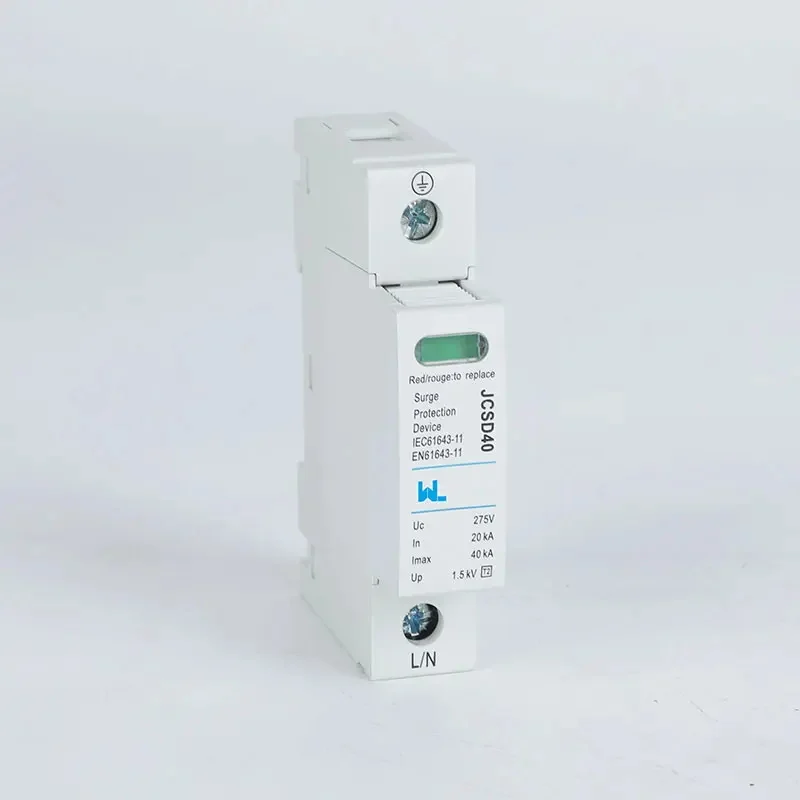
DIN rail surge protection device with status indication
DIN-rail SPD status indication gives maintenance teams a visible replacement trigger.

Ratings that determine real protection

Do not compare SPDs on kA alone. The following parameters should be recorded on the equipment schedule and checked against the installation:

Parameter What it means Procurement check
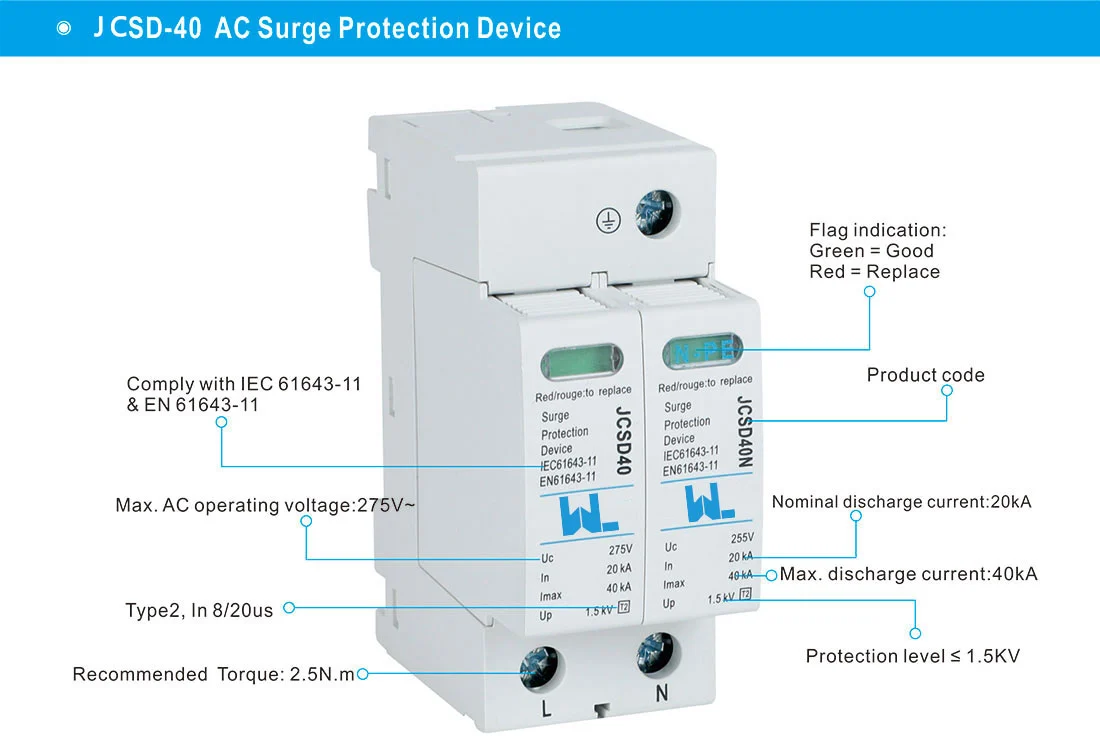
Uc (maximum continuous operating voltage) Highest RMS voltage the SPD can withstand continuously. Match line-to-neutral voltage and earthing arrangement; avoid nuisance conduction.
Up (voltage protection level) Residual voltage during the declared test current. Choose Up below the impulse withstand of HVAC controls and downstream equipment.
In / Imax Nominal and maximum discharge current on the specified waveform. Use the lightning-risk assessment and expected recurrence; do not treat Imax as a lifetime guarantee.
Short-circuit withstand and backup protection Fault current the assembly can safely interrupt with its disconnector. Coordinate with the upstream breaker or fuse and prospective short-circuit current.
Status indication and replacement Visual or remote indication that the protective element has disconnected. Provide inspection access and a maintenance trigger in the BMS or panel schedule.

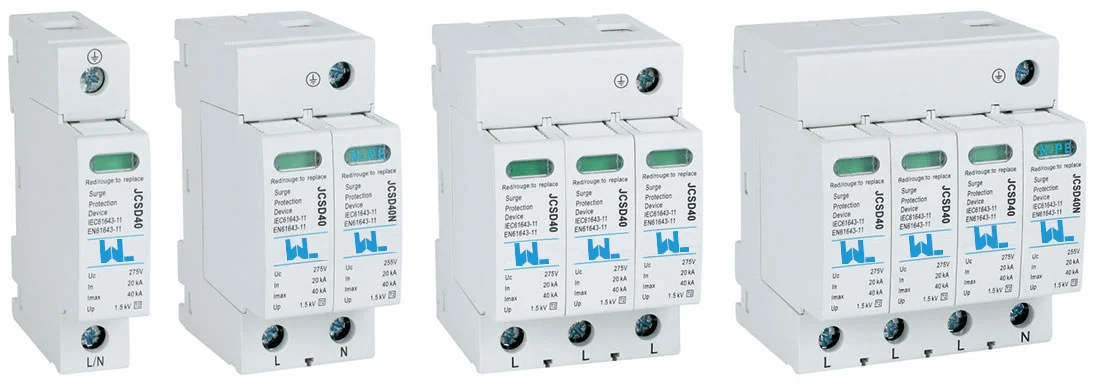
For a 230/400 V three-phase board, a four-pole configuration may be necessary where the neutral is switched or where the system arrangement requires line-to-neutral and neutral-to-earth protection. A qualified designer must confirm whether a 3P, 3P+N or 1P+N topology is appropriate.

Value comparison: coordinated protection versus repeated replacement

The total-cost question is broader than the SPD purchase price. An illustrative facility calculation: three HVAC board failures at €1,200 each, plus eight hours of emergency labor and lost production, can exceed the installed cost of a coordinated protection scheme in a single storm season. Actual savings depend on equipment value, downtime and exposure; document assumptions rather than promising a universal payback.

Approach Performance Maintenance and TCO Compatibility risk
No dedicated SPD Leaves transient energy to insulation and electronics. Low initial cost; high, unpredictable failure and downtime cost. High—especially for drives, PLCs and rooftop equipment.
Single Type 2 at main board Reduces common induced surges, but may leave long feeder sections exposed. Moderate cost; inspection of indicator and connections required. Medium—check lead length and downstream coordination.
Type 1+2 plus local Type 2/3 Layered energy sharing and lower residual voltage at loads. Higher installation effort; easier fault localization and planned replacement. Lower when Uc, Up, poles and earthing are engineered together.

Application matrix for distributors, EPCs and OEM panels

응용 Typical layer Design emphasis
Commercial rooftop HVAC Type 2 at board; Type 3 at controller Outdoor cable routes, motor switching and enclosure IP rating.
Industrial plant with external LPS Type 1 or Type 1+2, then Type 2 IEC 62305 lightning-risk assessment, equipotential bonding and Iimp.
Data room or automation cell Type 2 upstream; Type 3 at sensitive rack/panel Low Up, short PE path, signal-line protection and documented selectivity.
OEM packaged machine Panel SPD matched to declared supply Clear wiring diagram, replacement part number and destination-market approvals.

Standards and compliance checkpoints

IEC 61643-11 specifies performance and safety tests for low-voltage AC SPDs; it is a product standard, not a blanket approval for every installation. IEC 60364-4-44 addresses protection against overvoltages within low-voltage installations. IEC 62305 provides the lightning-protection risk and bonding framework. In North American projects, UL 1449 is the applicable SPD standard where the authority having jurisdiction requires it. Confirm the edition, marking and certification scope for the destination market; unsupported “certified” claims can delay approval, create warranty disputes or trigger rework.

SPD selection and commissioning checklist

  1. Map the system: record voltage, frequency, earthing arrangement, pole count and prospective short-circuit current.
  2. Assess exposure: use IEC 62305 methods, building geometry, overhead lines and local storm history; frequent-storm regions may justify higher discharge ratings.
  3. Coordinate layers: set Type 1/2/3 locations, Up targets and conductor lengths; verify manufacturer coordination tables.
  4. Plan verification: torque terminals to the data sheet, test PE continuity, label the device and schedule visual checks of status indicators.
  5. Evidence: For SPD selection, obtain the exact model datasheet, test reports, installation instructions and market-specific approvals before release.

W9 Group describes itself as a Yueqing, Wenzhou-based low-voltage electrical manufacturer and trading group founded in 2024, with a reported 37,000 m² factory, exports to more than 20 countries and ISO 9001, ISO 14001 and OHSAS 18001 systems. Its JCS T SPDs are described as DIN-rail-mountable T2 and T2+3 devices. Treat these as supplier-provided claims and verify model-level documentation for the project; technical files and support for SPD selection are available through the technical support team.

자주 묻는 질문

Do I really need a surge protector on my air conditioner?

Often, yes—especially for rooftop or inverter HVAC exposed to long outdoor feeders and storms. An SPD cannot correct poor earthing or replace an overcurrent breaker, so have the complete circuit assessed and coordinate protection at the distribution board and unit. A dedicated surge protection device is particularly valuable where control boards are costly or downtime is critical.

How do you know which surge protector to buy?

Start with Uc, earthing arrangement, pole configuration, Up, In/Imax and short-circuit withstand; then check the applicable IEC 61643-11 or UL 1449 evidence. The honest answer is that a kA headline alone is not enough—use the project’s risk assessment and the equipment impulse withstand.

What should never be plugged into a surge protector?

Do not use a small plug-in strip as a substitute for a properly installed SPD on high-current loads such as compressors, welders or heaters. Never connect equipment beyond the strip’s current rating, daisy-chain strips or defeat the protective-earth connection; a plug-in surge protection device also cannot replace panel-level coordination.

What is type 1, type 2, and type 3 surge protection?

Type 1 Type 2 Type 3 SPD refers to progressively downstream protection zones and their test duties: Type 1 handles higher-energy lightning current at the service entrance, Type 2 handles induced and switching surges at distribution boards, and Type 3 trims residual surges close to sensitive loads. The three levels are complementary, not interchangeable.

How often should an SPD be replaced?

Inspect status indicators and remote contacts during planned maintenance and after a major surge event. Replace the cartridge or device when its indicator shows end-of-life, when test results fail or when the manufacturer’s service instructions require it.

For project teams comparing an AC surge protective device, review the documented options in the W9 Group product range and request a model-specific compliance pack. Protection works when energy paths, standards and maintenance decisions align; the device is only one part of that chain. For a coordinated specification or OEM panel discussion, contact W9 Group.

참고문헌

Protection is not a single box—it is a coordinated path from lightning risk to grounded, maintainable equipment.