




































電気システムを保護するための交流サージ保護装置の理解
An AC SPD specification is incomplete when it contains only a maximum surge-current number. The device must suit the supply topology, protective modes and installation location, and its wiring must preserve the intended protection at the equipment.
An SPD limits transient overvoltage within its declared duty. It does not replace overload protection, correct all sustained-voltage faults or guarantee equipment survival in every lightning event.
比較する surge protective device range by system topology, Uc, Up, test duty and backup protection.
Match the network and protective modes
Identify voltage, phases, neutral and earthing arrangement before choosing the SPD. Line-to-line, line-to-neutral and line-to-earth modes are not interchangeable or universally required in the same combination. Follow the exact model diagram and installation rules.
Continuous operating voltage Uc must fit the actual system conditions. Protection level Up concerns declared transient performance; neither should be selected using an unqualified “bigger” or “lower is always better” rule. Confirm temporary-overvoltage behaviour as part of the selection.
「use」を Type 1+2 SPD listing as a model reference and request its current wiring and backup-device instructions.

Compare classification and surge ratings correctly
Type and discharge-current declarations refer to defined duties and test waveforms. Compare like with like; a Type 2 Imax number is not interchangeable with a Type 1 impulse-current declaration. A larger headline current does not settle location, protective modes or equipment coordination.
| フィールド | Decision supported |
|---|---|
| Uc | Continuous operating compatibility |
| Up | Declared protection level |
| タイプ | Required surge duty and location |
| In or Imax | Defined discharge-current characteristic |
| Backup device | Fault coordination and disconnection |
| Enclosure | Installed environmental suitability |
Installation changes the delivered protection
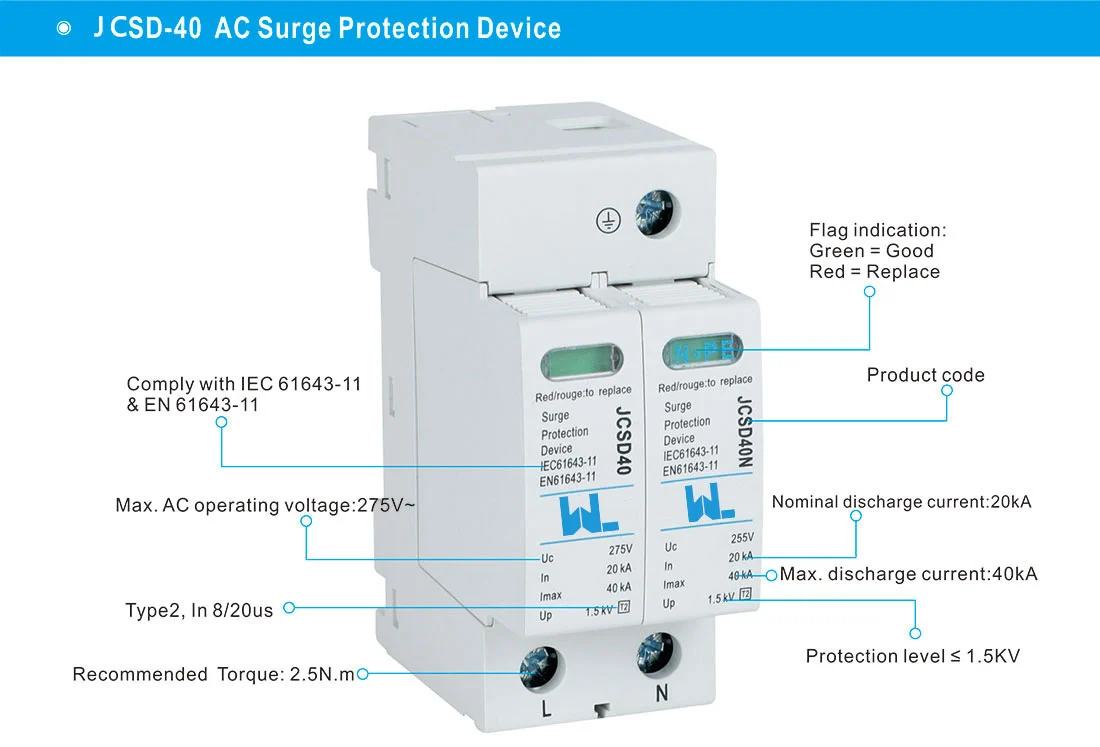
Connecting conductor length and routing can increase the voltage appearing at equipment during a transient. Follow specified routing, conductor and bonding requirements, keeping the arrangement within manufacturer and installation-rule limits. Do not improvise a separate earth path or use wire colour as the sole terminal guide.
| Installation review | 証拠 |
|---|---|
| Circuit identification | Actual supply and earthing diagram |
| Backup protection | Exact approved protective device |
| 接続 | Manufacturer drawing, conductor size and torque |
| メンテナンス | Indicator instructions and compatible replacement |
Keep inspection and replacement practical
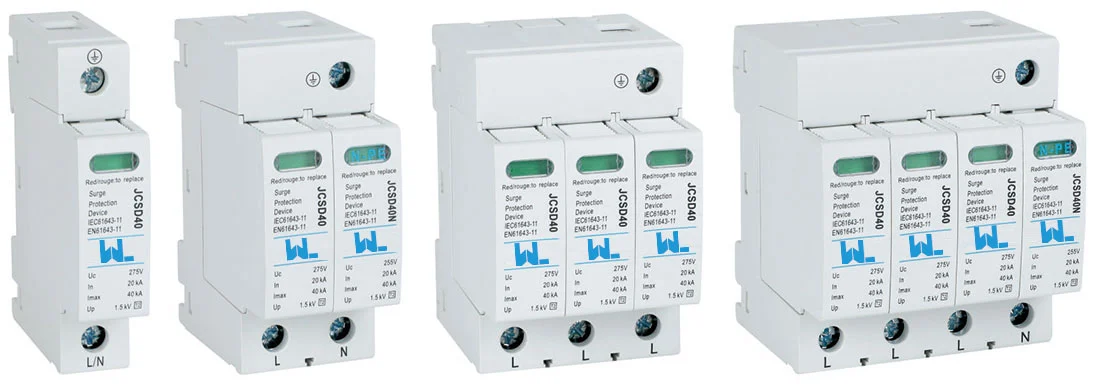
Check the status indication as instructed and define who replaces an exhausted module. The indicator describes a product state, not a complete test of the installation’s bonding or all downstream equipment. Replacement needs the correct module and review of any underlying fault condition.
IEC 61643 references concern SPD product requirements, while installation and destination-market rules remain separate. Ask W9 for the matching datasheet and diagram rather than a universal household-SPD recommendation.
よくある質問
What does an AC SPD protect against?
It limits transient overvoltage within its declared scope. It is not protection against every sustained supply fault or equipment failure.
Where should an SPD be installed?
Use the design protection location, product Type and manufacturer instructions under the applicable installation rules. There is no single location suitable for every system.
Why is Imax alone insufficient?
It does not identify Uc, Up, Type, protective modes, topology or backup protection. All are relevant to suitability.
Does a healthy indicator guarantee complete protection?
No. It indicates the state defined by the manufacturer. Correct connections, bonding and coordination remain separate requirements.
参考文献
- IET — BS 7671 installation-rules scope.
- HSE — electrical safety and competent work.
- IEC catalogue — verify the applicable IEC 61643 edition and product scope.
For an SPD review, W9グループへのお問い合わせ with the supply arrangement, protection location, equipment withstand and installation constraints.