








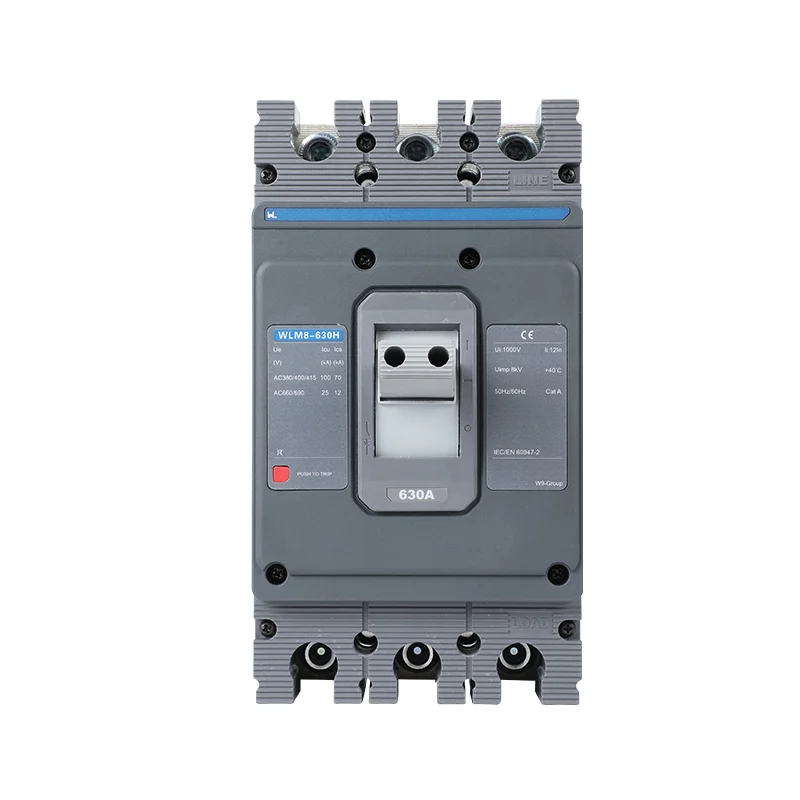
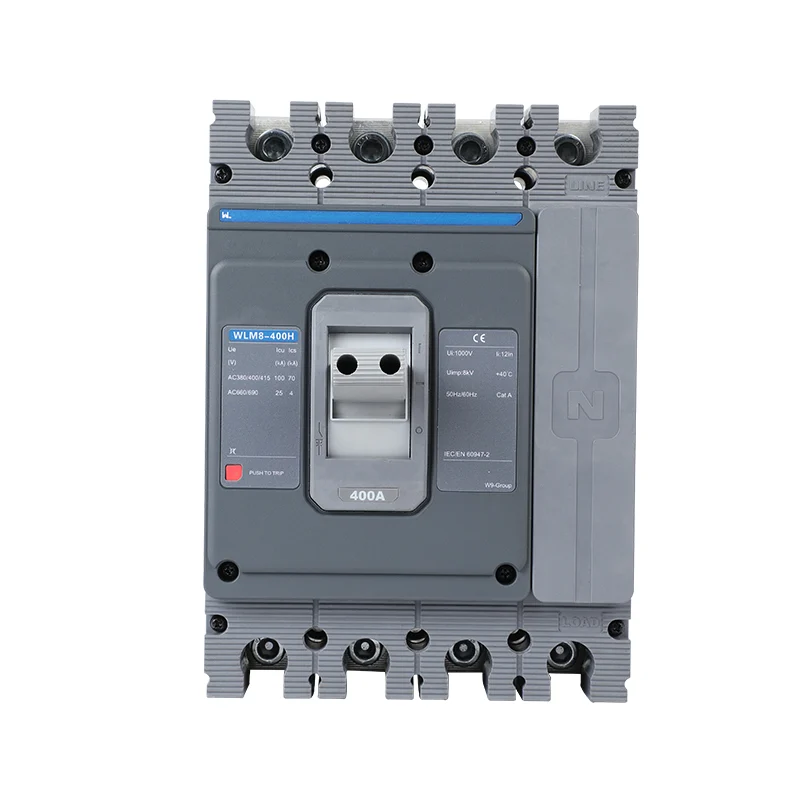
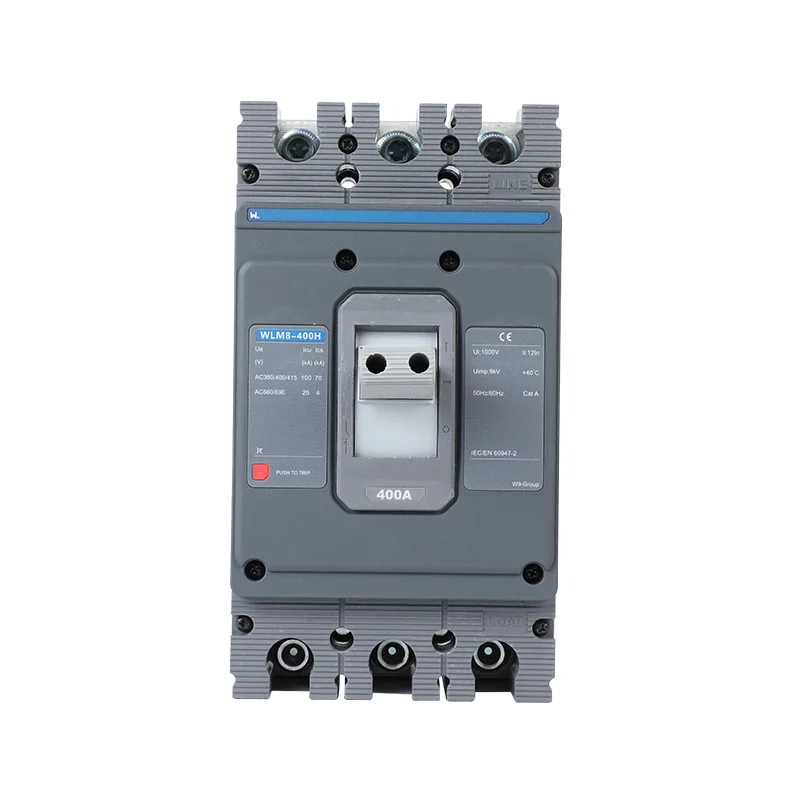
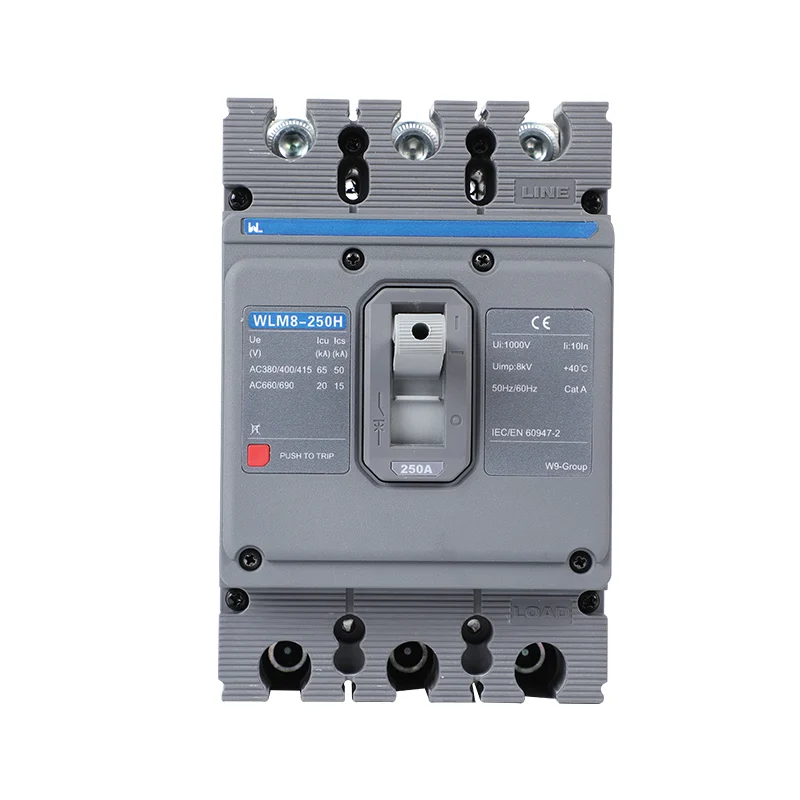















열전자기 스위치는 무엇이며 어떻게 작동하나요?
An overload and a short circuit can operate different parts of a thermal-magnetic release. Understanding that distinction helps a maintenance team investigate a trip without assuming that a larger breaker is the solution.
Quick answer: the thermal element uses heating from current to create a time-delayed overload response, while the magnetic element responds to a high-current event with a much shorter delay. The actual trip curve depends on the device, ambient conditions, current level and installation. Verify the product curve and 협업 연구 before selecting a breaker.

Thermal Overload Release
A bimetal or equivalent thermal mechanism responds to heating caused by sustained overcurrent. It normally allows a short overload without an instantaneous trip, then moves the trip mechanism when the thermal condition persists. Ambient temperature, enclosure heat and conductor installation can affect the result. See MCCB protection category for the relevant product or guidance.

Magnetic Short-Circuit Release
The magnetic release reacts to a high-current event and is intended to operate quickly when the current reaches its magnetic threshold. Motor starting, transformer inrush and capacitor charging can make instantaneous settings important. A magnetic element is not a substitute for a residual-current device or a complete protection study. See thermal-magnetic MCCB selection for the relevant product or guidance.

Thermal-Magnetic Protection Limits
A breaker must have a suitable voltage, current, pole arrangement and interrupting rating. The 예상 불량 전류, conductor impedance, enclosure and coordination with other devices determine whether the selected curve fits the installation. See MCCB selection guide for the relevant product or guidance.

Compare the two release mechanisms
| Mechanism | Responds to | Selection input |
|---|---|---|
| Thermal | Sustained current-related heating | Load, conductors and temperature |
| Magnetic | High current in declared pickup range | 초전압 및 사용 가능한 과부하 전류 |
| Combined response | Current-time envelope | Exact curve and coordination study |


Use the curve rather than a single trip time
Thermal operation depends on current magnitude, duration and prior heating, while magnetic operation has its own pickup tolerance. The exact time-current curve therefore provides more information than a claim that a breaker trips instantly or after a fixed number of seconds. Check both regions against load starting and fault conditions.
A hot terminal can add heat without proving a circuit overload. After safe isolation, investigate loading, conductor preparation and connection condition using the manufacturer’s method. Increasing the rating or setting before investigating can reduce required conductor protection.

Standards and test evidence
IEC 60947-2:2024 publishes the scope for low-voltage circuit-breakers up to the stated AC and DC limits. IEC 60364-4-43:2023 addresses installation overcurrent protection and coordination. A standard reference is not a model certificate; request the exact product documents and keep installation records separate.

Thermal-Magnetic Breaker Specifications
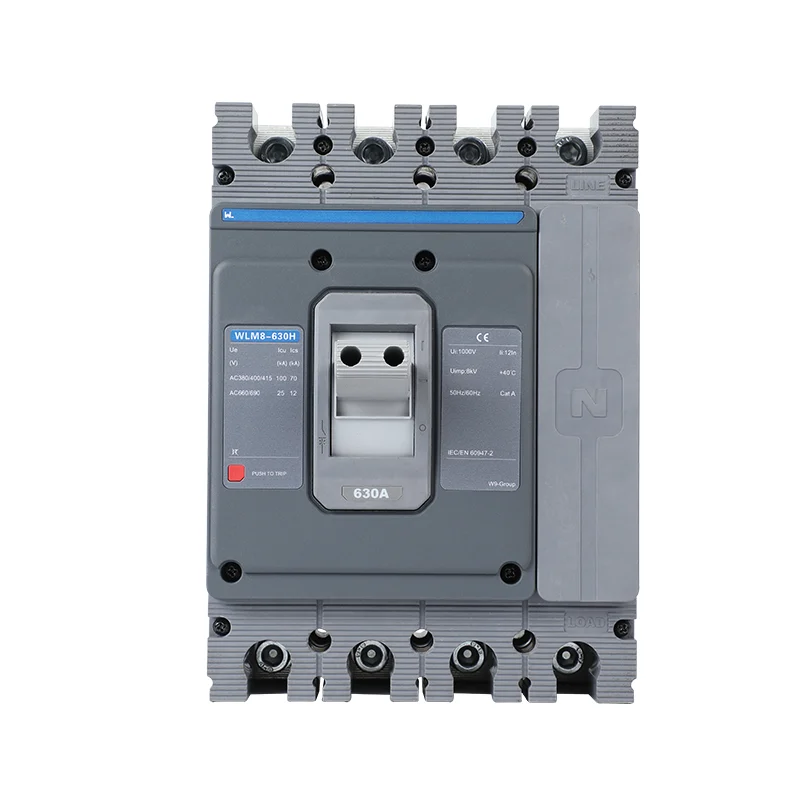
Provide load current, conductor data, fault level, inrush profile, voltage, poles, ambient range, enclosure and coordination target. For a W9 thermal-magnetic MCCB, confirm the exact WLM6 series rating and trip information from the product documentation. See request a thermal-magnetic MCCB review for the relevant product or guidance.

Breaker Selection Records
At design stage, write the electrical duty and the unresolved assumptions before choosing a catalogue number. State the system voltage, frequency, continuous current, poles, prospective fault current, load profile, ambient conditions and enclosure. This creates a common baseline for every quotation and prevents a supplier from answering a different question with a different configuration.
At quotation stage, ask for a controlled datasheet, model code, outline drawing, terminal arrangement, accessory schedule, setting range, test scope and document revision. Compare like with like: a fixed device, a withdrawable device and a device with communications are different scopes even when the headline current is similar. Record what is included, what is optional and what must be supplied by the panel builder.
At assembly and commissioning stage, confirm the physical identity, mounting, wiring, labels, torque, settings and functional checks against the approved file. If the application is outside the published product scope, stop the release and obtain engineering clarification. This evidence trail is more valuable than a generic “top” label because it lets the next engineer understand why the device was accepted.
| 프로젝트 단계 | Question to close | 보존할 증거 |
|---|---|---|
| 디자인 | What duty and fault level must be protected? | Load schedule and protection study |
| Quotation | Which exact model and accessories are included? | Configuration sheet and revision-controlled datasheet |
| 의회 | Does the device fit the verified board arrangement? | Drawings, wiring and assembly records |
| 시운전 | Do settings and functions match the approved design? | Test record, setting file and as-built schedule |
Keep a written boundary around every claim. A product standard is not an installation certificate; a display is not automatically a communication system; an AC rating is not a DC rating; and a supplier category page is not a project-specific approval. Where evidence is missing, turn the statement into a request for a document or a technical confirmation. That habit makes procurement faster because the unanswered items are visible before the purchase order.
자주 묻는 질문
How does the thermal element work?
Current-related heating acts on the release mechanism to provide an overload response over time. The exact curve and temperature conditions determine operation.
How does the magnetic element differ?
It responds to high current in its declared pickup range with a much shorter operating delay. Use the manufacturer’s curve and tolerance for coordination.
Why can motor starting cause a trip?
Starting current can enter the magnetic or thermal operating region. Compare the actual starting envelope with the selected curve before changing protection.
Does thermal-magnetic protection detect all leakage?
No. It is overcurrent protection, not residual-current waveform detection. Provide the required RCD function separately.
References and next step
Use the following public sources to verify scope, then request the exact product documents for your project:
W9 Group provides low-voltage circuit protection options for OEM, panel-builder and distribution projects; confirm the exact model, ratings, documentation and destination-market requirements before release.
제안된 구성을 검토하기 위해, W9 그룹에 문의하기 로드 스케줄에 따라 사용 가능 과부하 전류 그리고 목적지 시장의 요구 사항도 있습니다.