











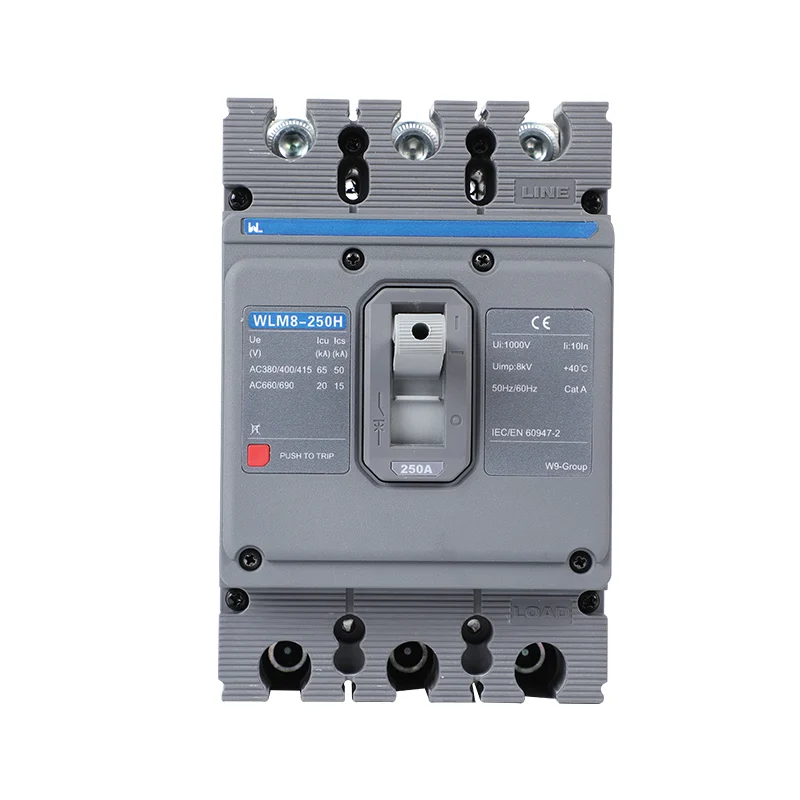





















How to Choose a Circuit Breaker for a Distribution Board
Choosing a distribution-board breaker starts with the circuit it will protect. The load tells you what the circuit needs to carry; the cable and installation conditions set limits on the protection you can use. A larger breaker is therefore not a simple cure for unwanted tripping.
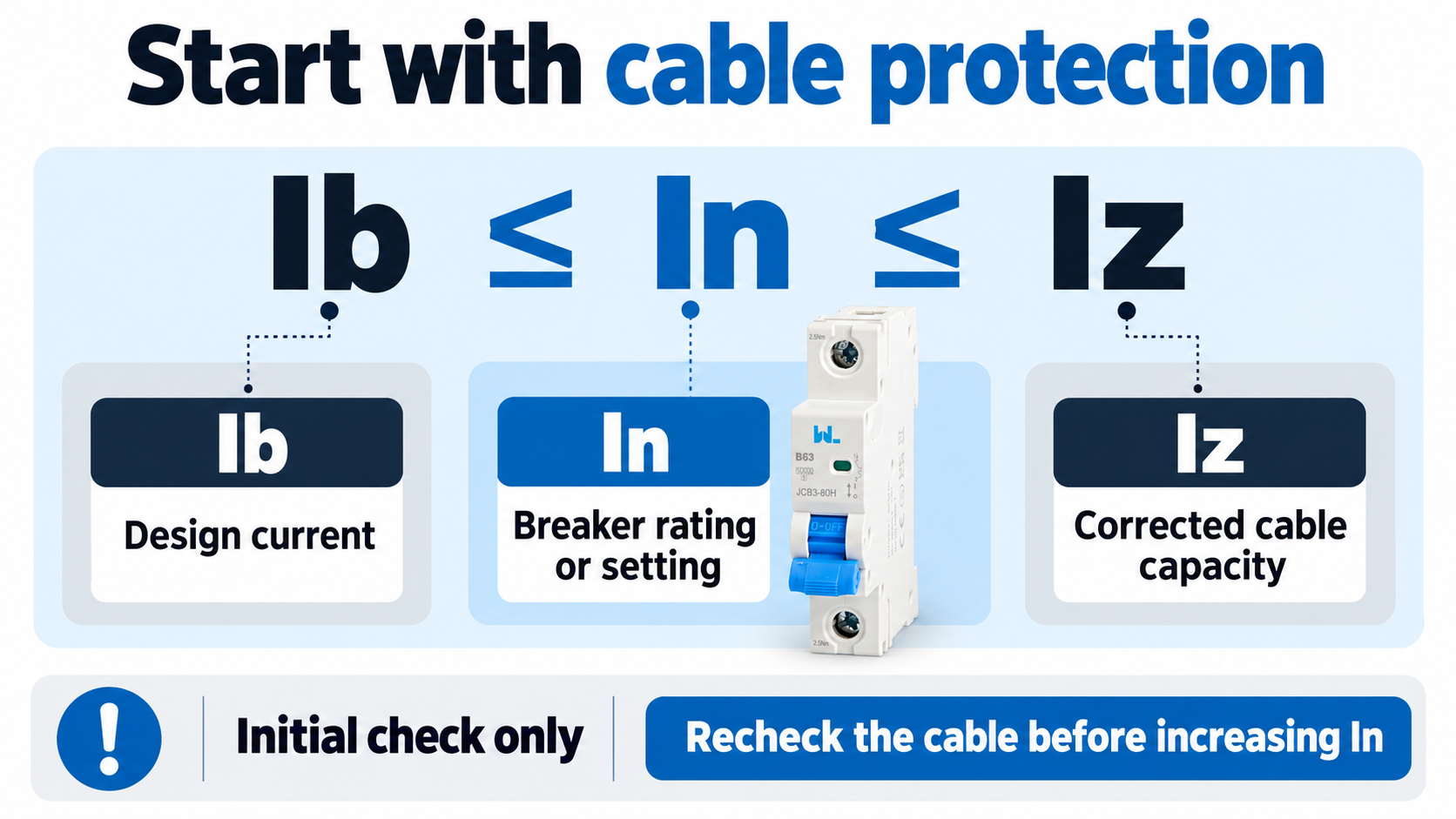
For distribution board circuit breaker selection, work through the load and cable first, then fault rating, trip behaviour, residual-current protection and board compatibility. The familiar relationship Ib ≤ In ≤ Iz helps with conventional overload coordination, but it is only one part of the design.
Distribution Board Supply and Load Requirements
Record the supply voltage, AC or DC duty, frequency where relevant, phases and earthing arrangement. Include alternative sources such as a generator or UPS. Their fault contribution can differ from the utility supply, so the protection needs to work in each required operating mode.
Find out how the load behaves as well as how much current it normally draws. Motors, lighting drivers and power supplies may produce brief starting or energization currents. Use that information to assess the trip characteristic while keeping the cable adequately protected.
Apply the installation rules and assembly requirements relevant to the project. IEC 60364-related guidance addresses conductor protection, while the relevant IEC 61439 requirements cover low-voltage assemblies. Selecting a compliant breaker is one part of verifying the completed board.
Circuit Breaker Sizing for Cable Protection
In Ib ≤ In ≤ Iz, Ib is the design current, In is the protective-device rating or applicable setting, and Iz is the cable’s current-carrying capacity in its installed conditions. Correct Iz for temperature, grouping and installation method where required. The governing rules also include operating-current and fault-protection checks.
Take an illustrative load of 28 A and a cable with a corrected capacity of 36 A. A 32 A breaker passes this particular inequality, but still needs the right trip behaviour, breaking capacity, disconnection time and board compatibility. If the corrected cable capacity falls below 32 A, that choice no longer passes the initial check.
Keep the conductor protection check with the cable schedule. Record material, size, insulation, installation conditions and the selected setting. Where the breaker is adjustable, commissioning should confirm that setting against the approved design.
| Design input | What to obtain | 왜 중요한가 |
|---|---|---|
| Load duty | Design current and inrush information | Coordinates normal operation with protection |
| Cable installation | Corrected capacity and applicable fault checks | Prevents selection from an uncorrected ampacity |
| Fault level | Prospective current at the board | Sets the required interruption duty |
| Earthing arrangement | Fault path and disconnection requirements | Determines the applicable protection assessment |
| Assembly interface | Approved device and busbar arrangement | Avoids unsupported mixing of products |
Breaker Fault Ratings and Trip Curves
The circuit breaker short-circuit rating must cover the prospective fault current at the installation point, or be supported by an applicable tested backup arrangement. Check which product standard defines the rating: IEC 60898-1 uses Icn, while IEC 60947-2 uses Icu and Ics with different test duties.
B, C and D describe MCB trip characteristics under the applicable product framework. Select among them using the load’s inrush and the current available to clear a fault. Changing the instantaneous characteristic to avoid starting trips can also change fault-disconnection performance.
Assess residual-current protection separately. An MCB does not provide it by itself. An RCCB needs coordinated overcurrent protection, while an RCBO combines the functions within its stated scope. Our MCB, RCCB and RCBO guide explains these options; the project designer determines which protection is required.
Circuit Breaker Coordination and Board Compatibility
Next, check the outgoing breaker against the upstream device. Different ampere ratings do not guarantee total selectivity. Use the manufacturer’s curves and tables for the actual pair and settings, noting any current limit. Backup or cascading arrangements likewise need the tested combination and its stated conditions.
| Board situation | Additional selection question | 보존할 증거 |
|---|---|---|
| 모터 부문 | Does starting current coordinate with motor and cable protection? | Starting data and selected protection arrangement |
| Electronic loads | Are inrush and residual-current characteristics addressed? | Load data and protection assessment |
| Mixed-use building | Which circuits need continuity or additional protection? | Circuit schedule and applicable rule review |
| Board modification | Is the proposed device approved for the existing assembly? | Assembly documentation and authorized modification details |
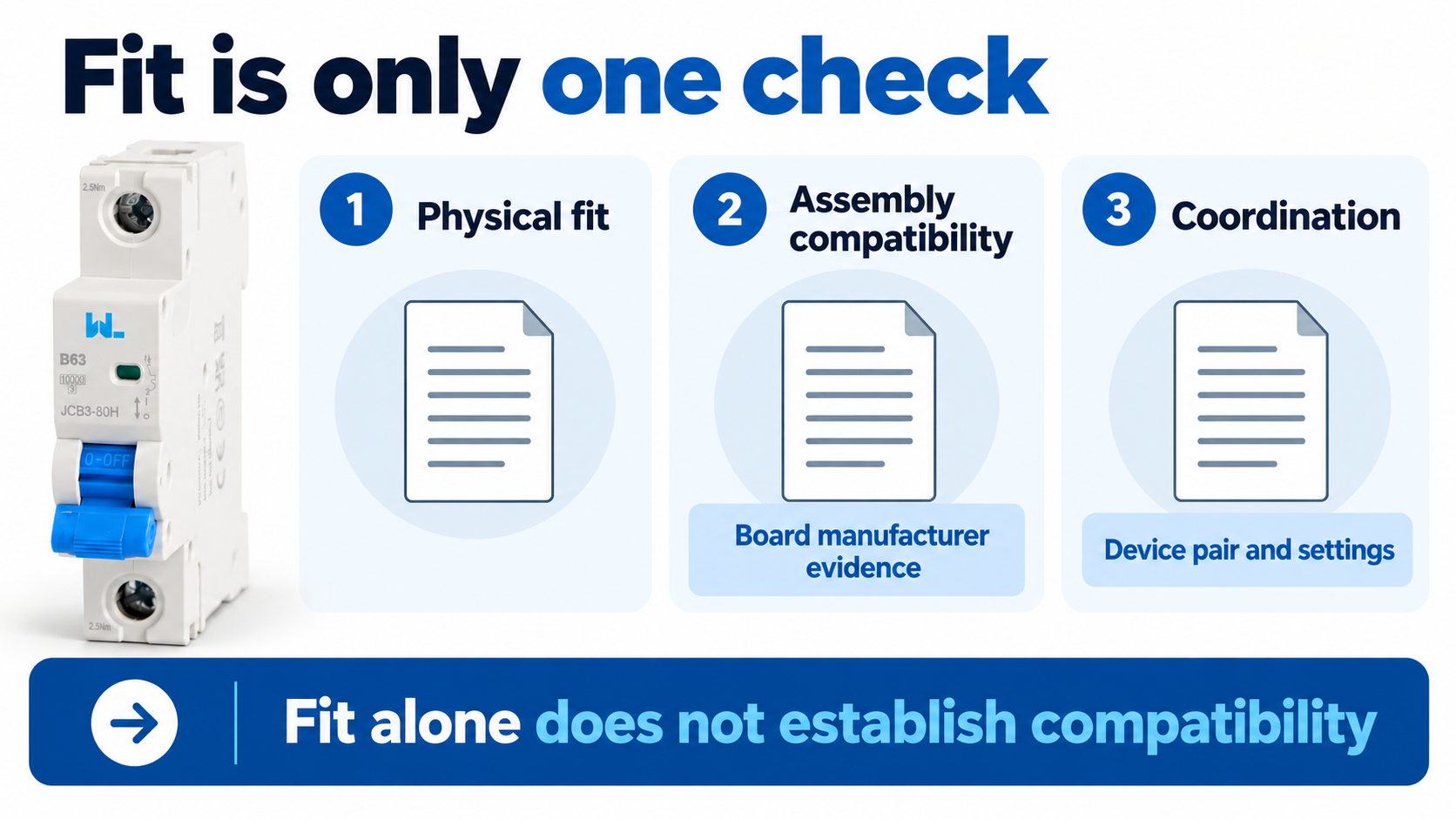
Distribution board compatibility includes busbar contacts, terminals, clearances, temperature rise and the cover arrangement. Follow the assembly manufacturer’s instructions. A breaker that clips onto the same rail may still be unsuitable for that board.
When considering W9’s JCB3-80H MCB, specify the required current, trip characteristic and approvals, then request the exact variant’s datasheet and terminal instructions. Those details let the panel designer review it against the complete board requirements.
Distribution Board Breaker FAQs
Where can I find distribution board breaker specifications?
Start with the manufacturer’s current catalogue, then get the selected variant’s datasheet and manual. For an existing board, also obtain the assembly manufacturer’s compatibility information.
Which wiring instructions apply to a distribution board breaker?
Use the manual for the exact model together with the approved project drawing. It should establish terminal connections, permitted supply direction and the neutral arrangement.
Who can install a low-voltage distribution board breaker?
The installer needs competence appropriate to the equipment and must meet local licensing requirements. Secure isolation and verification are essential for work on low-voltage power boards.
Can a higher-rated circuit breaker prevent nuisance tripping?
First investigate why it trips. Increasing the rating without reviewing the circuit can leave the cable inadequately protected and the underlying problem unresolved.
When is an MCCB used in a distribution board?
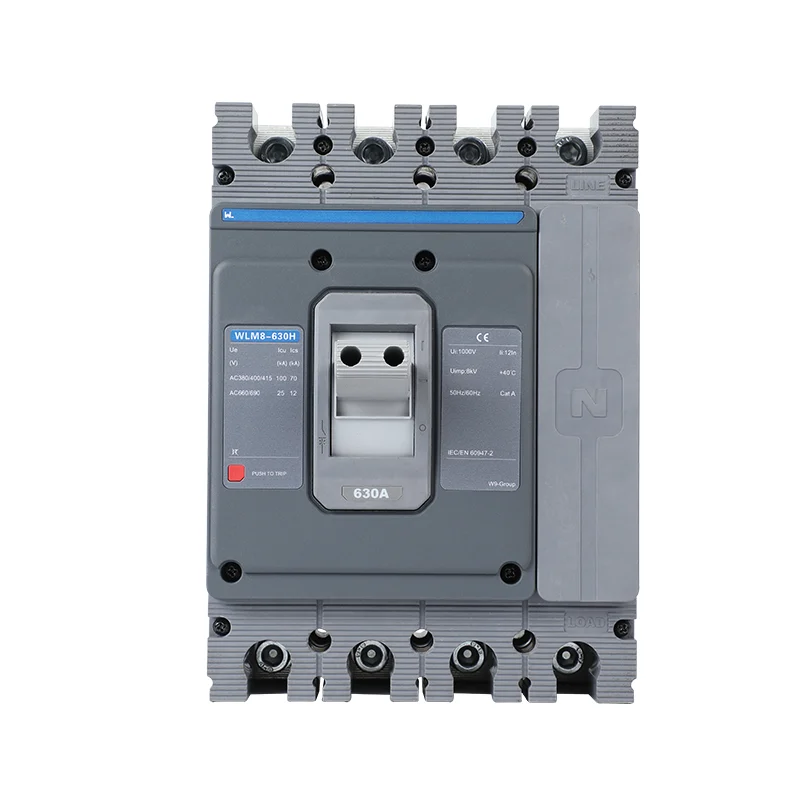
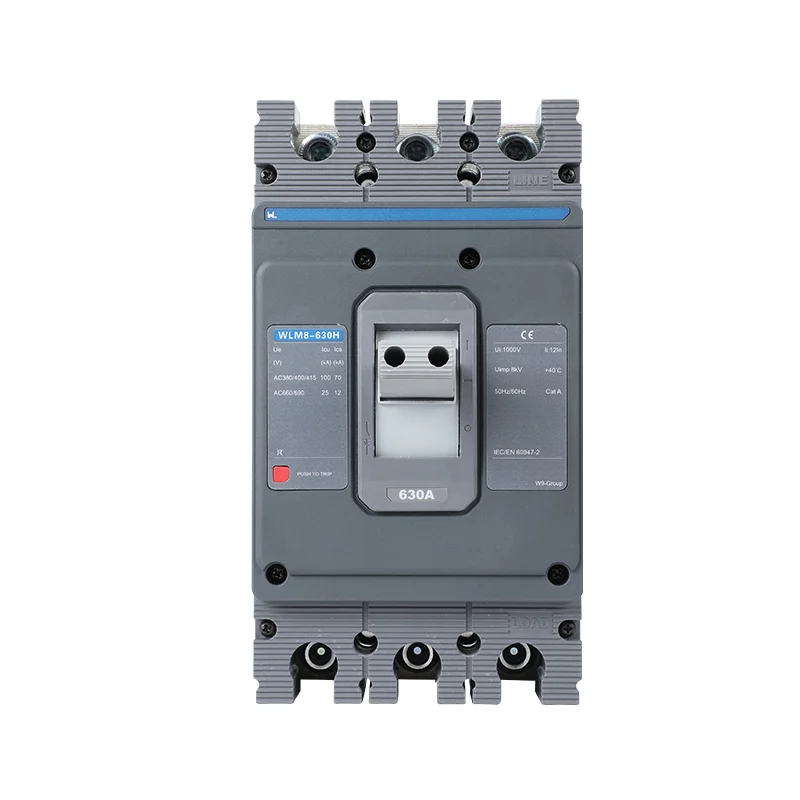
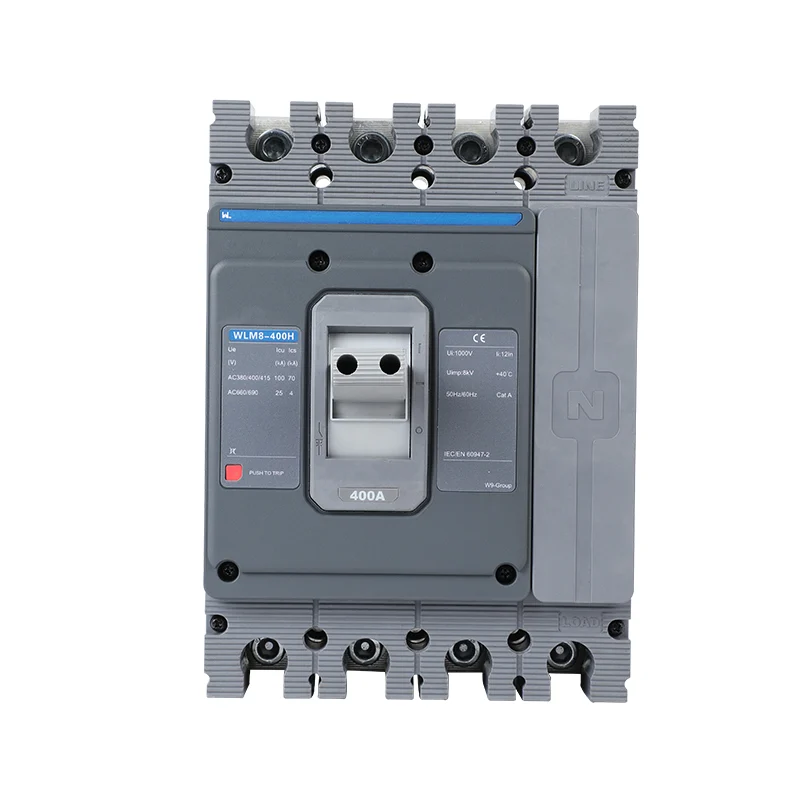
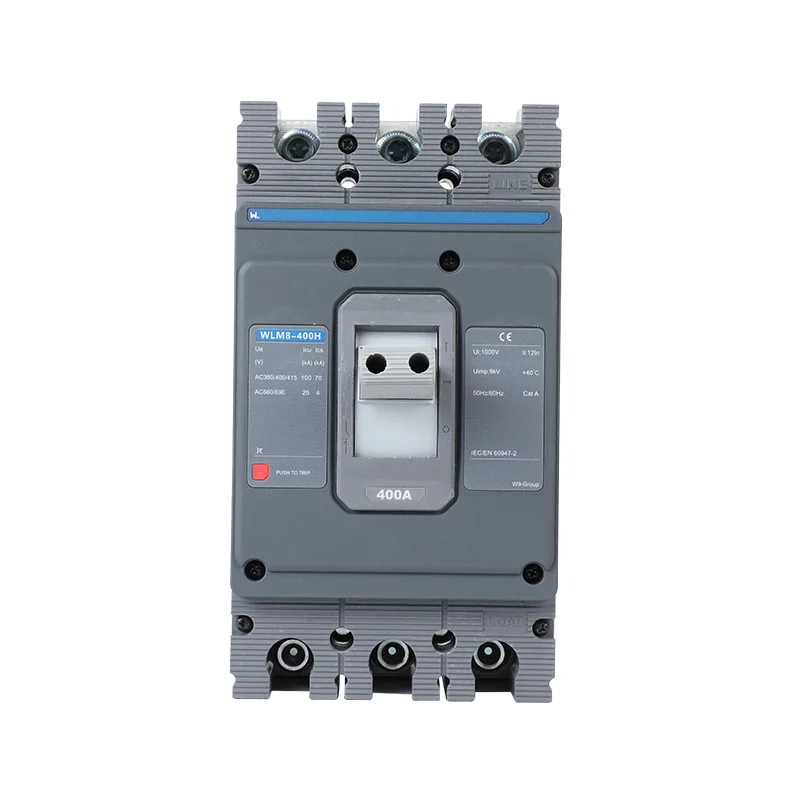
An MCCB may be appropriate for an incomer or feeder where its ratings, settings and interfaces suit the design. The choice depends on those requirements rather than a universal current threshold.
Does physical fit prove distribution board breaker compatibility?
No. Mechanical fit must be assessed alongside electrical ratings, approvals and the assembly requirements. Similar dimensions or an equal current rating do not establish an approved replacement.
Circuit Breaker Selection References
- Electrical Installation Guide: circuit-breaker selection
- Electrical Installation Guide: ratings and characteristics
- Electrical Installation Guide: coordination principles
- HSE: electrical competence and secure isolation
Distribution Board Breaker Selection Records
Record the selected breaker and settings alongside the circuit and cable schedule, including any selectivity or backup limits. If you need a W9 quotation, send the board details, supply, load data, fault level and required approvals through our distribution breaker enquiry form.