





































전기 안전을 보장하는 RCCB 장치의 중요성
여러 전자 부하가 동시에 작동할 때 동작하는 RCCB는 감도를 변경하기에 앞서 배선 및 누전 상태를 점검해야 합니다. 중성선 공유, 상시 누전, 또는 잔류전류 특성이 적합하지 않은 경우에도 유사한 증상이 나타날 수 있습니다. 원인을 정확히 파악해야 설계된 안전 기능을 보호하고, 회로의 문제를 해결하지 않은 채 멀쩡한 장치만 교체하는 일을 방지할 수 있습니다.
요약: 누전차단기(RCCB)는 회로를 통해 흘러나가고 돌아오는 전류를 비교하여 잔류 차이가 동작 범위에 도달하면 회로를 차단합니다. 필요 시 추가적인 감전 방지를 위해 일반적으로 30 mA 설정을 사용하며, 더 높은 설정은 설비 보호나 화재 위험 저감 목표에 부합할 수 있습니다. RCCB의 전기 안전성은 중성선과 접지선의 올바른 분리, 적용되는 표준 범위 내에서 AC, A 또는 B 유형의 적절한 선택, 상·하위 장치와의 협조, 그리고 문서화된 점검 체계에 달려 있습니다. 설치를 먼저 계획한 다음, 장치를 선정하고 성능을 검증해야 합니다.
RCCB 보호 범위
An RCCB (residual current circuit-breaker) uses a toroidal current transformer to monitor all live conductors passing through it. In a single-phase circuit, phase and neutral should carry equal and opposite currents. If some current flows to protective earth through damaged insulation, a person, or connected equipment, the magnetic balance changes; the trip mechanism opens the circuit. This is the core of residual current protection, and explains why RCCB devices must enclose every intended live conductor.
An RCCB normally does not provide overload or 단락 보호. Pair it with a suitable overcurrent protective device, or choose an RCBO when each circuit needs both functions in one unit. This residual current protection can reduce shock and fire risk from earth leakage, but it cannot prevent every shock, detect a line-to-neutral short with no earth path, or replace bonding, insulation, enclosure, and safe work practices.
RCCB Type and Trip Selection
Residual-Current Type Selection
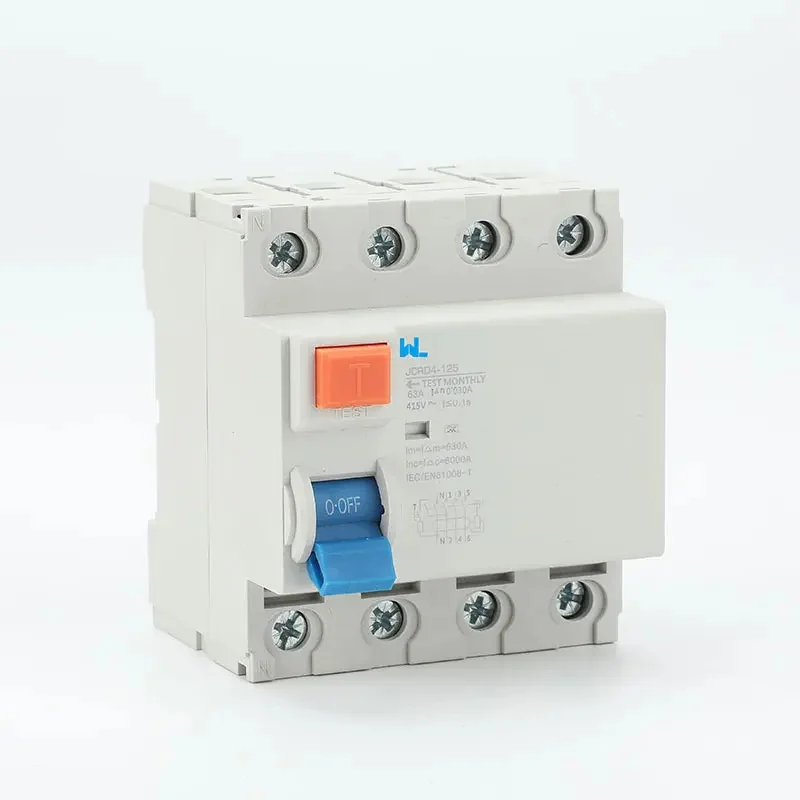
Type AC devices are intended for sinusoidal alternating residual current. Type A devices also respond to pulsating direct residual current, which can occur in circuits containing single-phase rectifiers, LED drivers, or electronic power supplies. Type B devices extend detection to smooth DC and higher-frequency components associated with equipment such as drives and some charging systems. This residual current protection is waveform-dependent, so use a type only where the product standard, manufacturer instructions, and installation rules support the intended waveform; do not infer suitability from the letter alone.
RCCB Trip Characteristics
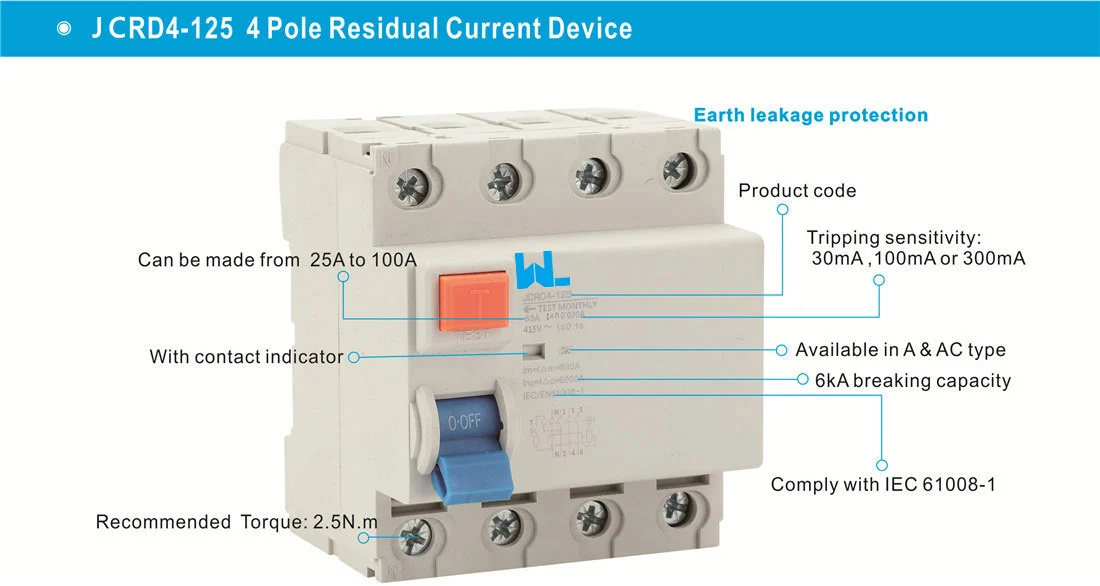
Choose the number of poles and rated current for the conductors and system arrangement. Residual operating current (IΔn), non-operating current, and disconnection time must align with the protection objective and the governing installation code. A selective (time-delayed) RCCB upstream can allow a downstream 30 mA device to clear a final-circuit fault first, but only when their time/current characteristics and manufacturer coordination data demonstrate discrimination.
| 차원 | RCCB | RCBO |
|---|---|---|
| Primary function | Residual-current protection for a group of circuits | Residual-current plus overload/short-circuit protection per circuit |
| Fault isolation | A leakage fault can disconnect several downstream circuits | Usually isolates only the affected final circuit |
| Panel planning | Fewer devices; requires coordinated overcurrent breakers | More devices and space; simpler circuit-level coordination |
| Nuisance-trip diagnosis | Aggregated leakage can make the source harder to locate | Smaller zones make troubleshooting more direct |
| 일반적인 착용감 | Existing boards or grouped loads with known leakage | New projects seeking continuity and selective circuit protection |
Specify Amperes and Milliamperes Separately
정격 전류 states the current-carrying duty under the declared conditions; IΔn specifies the residual operating-current rating. Neither value replaces the other, and neither turns an RCCB into an overload protective device. Confirm the suitable upstream overcurrent protection and any conditional short-circuit rating against the exact manufacturer’s combination. A larger RCCB ampere rating does not justify increasing the circuit’s protective-device setting.
Use the load maker’s residual-current guidance to select the sensing type. The IET’s Which RCD Type? article explains why waveform matters, including possible effects on upstream devices. Its publication date and UK context should be kept separate from the rules adopted for a new project.
RCCB Installation Requirements
Every live conductor that the RCCB is intended to protect must pass through its sensing core. A protective-earth conductor must never pass through the core. Downstream neutrals must remain separated from upstream neutrals and from earth; a borrowed neutral or a neutral-to-earth connection downstream creates an imbalance and an immediate or intermittent trip. Four-pole units are used on three-phase, four-wire systems when the neutral must be switched and monitored with the phases. These details are foundational to RCCB electrical safety in both domestic boards and commercial panels.
Persistent nuisance trips are a diagnostic signal, not a reason to defeat the protection. Measure standing leakage with a leakage-current clamp, inspect filters and heating elements, and test circuits individually. Electronic loads can produce short transients at energisation; staggering start-up or using a device with suitable characteristics may help, but never bypass the RCCB. Check that upstream surge protective devices, inverters, generators, and changeover equipment follow the RCCB maker’s wiring diagram.
Illustrative leakage arithmetic only: 8 mA from one load group, 7 mA from another and a simultaneous 5 mA component would total 20 mA if those measurements are directly comparable. A nominal 30 mA marking is not a guaranteed 30 mA operating threshold, so this does not establish a 10 mA no-trip margin. Waveform, timing, the device’s specified operating band and instrument uncertainty matter. Investigate sources and circuit grouping instead of using subtraction from IΔn as proof of immunity.
Keep a Trip Evidence Log
Record time, operating loads, weather or moisture exposure, recent changes and which device opened. Add leakage readings with the clamp method and load state, plus any instrument test results with the selected mode. Comparing repeatable conditions is more useful than describing every event as nuisance tripping. If a neutral fault or damaged insulation is suspected, isolate and investigate the circuit using an approved method.
Do not raise IΔn or add delay solely to stop unexplained trips where additional protection is required. Review neutral routing, equipment leakage and the permitted circuit arrangement first. Separate standing leakage measurements from installation acceptance tests; neither one, on its own, proves every aspect of 잔류 전류 보호.
RCCB Applications
In homes, RCCBs can provide additional protection for socket outlets, outdoor circuits, bathrooms, kitchens, and other locations identified by the local installation code. In commercial buildings, they support safer maintenance of lighting, office equipment, HVAC, and small power circuits. Industrial and OEM panels require more analysis: drives, UPS systems, welders, medical equipment, and charging equipment may introduce DC components or leakage that influence type, sensitivity, and selectivity.
| 응용 | Questions to answer | Verification before handover |
|---|---|---|
| Residential final circuits | Which circuits require additional shock protection? Are neutrals grouped correctly? | Polarity, continuity, insulation and RCD trip tests recorded |
| Retail or office distribution | Will accumulated filter leakage approach the operating range? Is continuity of service important? | Leakage survey, circuit schedule and selectivity review |
| Motor drives or UPS | Can smooth DC or frequency components occur? Does the manufacturer specify type A or B? | Waveform-compatible device and functional test under representative load |
| OEM equipment | What is the earthing system, prospective fault current and destination-market code? | Design file links device data, test method and user instructions |
RCCB Testing Requirements
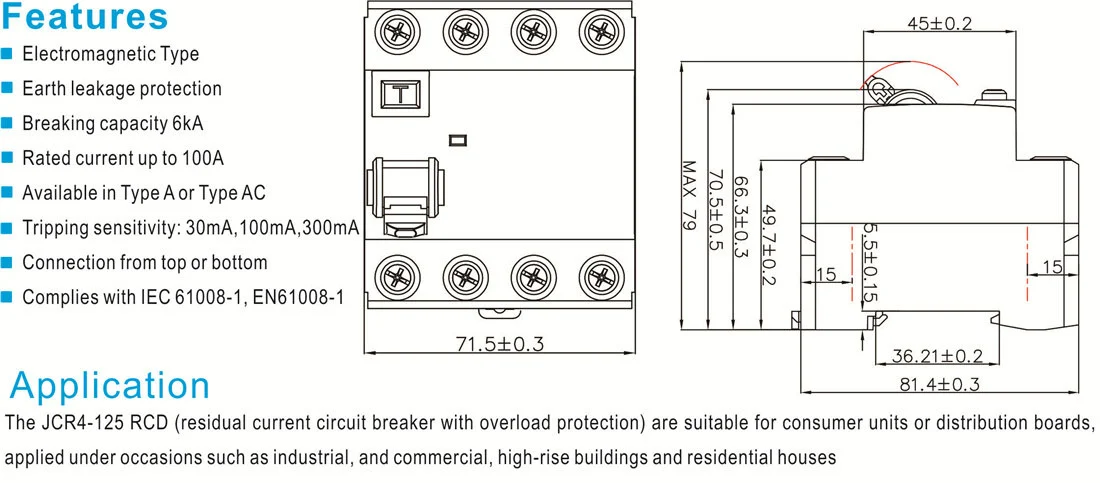
IEC 61008-1 covers residual current operated circuit-breakers without integral overcurrent protection for household and similar uses. IEC 60947-2 addresses circuit-breakers for low-voltage switchgear and controlgear; its applicability depends on the device construction and declared use, so confirm the exact product standard. IEC 60364 provides installation principles, including protective measures and verification. In the United States, UL 943 covers personnel-protection ground-fault circuit-interrupters; it is not a blanket equivalent to an IEC RCCB designation. NFPA 70 (the National Electrical Code) sets installation requirements, while the adopted edition and local amendments control.
Commissioning must follow the adopted installation rules and approved instrument method. Check wiring, polarity and the prescribed residual-current operation, treating connected electronics as instructed during insulation tests. Record the instrument, selected RCD type, test waveform or mode and results. The test button checks only the functions described by the manufacturer; it does not prove protective-conductor continuity, installation disconnection performance or all product-standard tests.
RCCB Procurement Checks
- Define the earthing system, poles, rated current, residual operating current and required disconnection time.
- List connected loads and likely residual-current waveforms; obtain manufacturer guidance for drives, converters and electronic filters.
- Map neutral and earth paths on the schematic, then verify them on site before energisation.
- Coordinate RCCB and RCBO devices with upstream breakers, surge protection and generator/changeover equipment; document selectivity assumptions.
- Specify acceptance tests, spare identification, inspection intervals and user instructions in the purchase package.
For a product reference, review the 2-pole RCD residual-current circuit breaker and request the exact type, current rating, residual sensitivity, wiring diagram and backup-protection requirements. W9 Group can provide product information, while the designer verifies suitability for the complete circuit and destination-market rules.
자주 묻는 질문
Are RCCB devices the same as circuit breakers?
No. An RCCB responds to residual current, while a conventional MCB responds to overload and short circuit. They are complementary unless an RCBO combines both functions.
Why does my RCCB trip when equipment is switched on?
Input filters, motor capacitors and wiring capacitance can create leakage or a brief transient. Measure the circuit, check neutral separation and consult the equipment and RCCB instructions before changing type or delay.
Is Type A always safer than Type AC?
Type A covers a broader residual-current waveform, but the correct choice depends on the load and the applicable product and installation standards. A mismatched or poorly coordinated device is not made safe by a higher letter.
How often should an RCCB be tested?
Use the test button at the interval required by local rules, the manufacturer and the site’s risk assessment. Qualified personnel should also perform measured trip tests during commissioning and periodic inspection.
Should a project use an RCCB or individual RCBOs?
Choose an RCCB with separate overcurrent breakers when grouped protection and panel economics suit the design. Choose RCBOs when circuit-level isolation, fault finding and continuity are higher priorities; see this RCBO safety comparison for application context.
참고문헌
- IEC 61008-1:2024 — RCCBs without integral overcurrent protection.
- IET — 어떤 RCD 타입인가?.
- IEC 60364-6:2016 — 설치 검증.
The dependable principle is simple: residual-current protection works as a system—device, wiring, load, testing and human practice must agree. When you are ready to review models or OEM options, explore W9’s 저전압 보호 제품 and contact the technical team with your circuit schedule and destination-market requirements.
For waveform and pole selection, W9 그룹에 문의하기 with the circuit topology, load equipment and destination-market rules.