





































اهمیت دستگاههای RCCB در تضمین امنیت برق
یک دستگاه RCCB که هنگام راهاندازی چندین بار الکترونیکی عمل میکند، نیازمند بررسی مدارسازی و نشت جریان است، قبل از اینکه به حساسیت متفاوت نیاز پیدا کند. سیم خنثی مشترک، نشت جریان دائمی و پاسخ نامناسب به جریان باقیمانده میتوانند علائم مشابهی ایجاد کنند. شناسایی علت، عملکرد ایمنی مورد نظر را حفظ میکند و از تعویض یک دستگاه سالم بدون اصلاح مدار جلوگیری میکند.
خلاصه: دستگاههای RCCB جریان ورودی و خروجی از یک مدار را مقایسه کرده و هنگامی که اختلاف باقیمانده به محدوده عملکرد خود برسد، قطع میشود. تنظیم 30 میلیآمپر به طور معمول برای حفاظت اضافی در برابر شوک الکتریکی در موارد لازم استفاده میشود؛ تنظیمات بالاتر ممکن است برای رسیدن به اهداف مربوط به تجهیزات یا کاهش خطر آتشسوزی استفاده شوند. ایمنی الکتریکی دستگاه RCCB به جدا سازی صحیح بین سیم خنثی و زمین، انتخاب نوع مناسب (AC، A یا B در چارچوب استاندارد معتبر)، هماهنگی با دستگاههای بالادستی و پاییندستی و یک برنامه تست مستند وابسته است. ابتدا نصب را مشخص کنید، سپس دستگاه را انتخاب کرده و معتبرسازی کنید.
دامنه حفاظت RCCB
یک RCCB (قطبزن گذار جریان باقیمانده) از یک ترانسفورماتور جریان حلقهای برای نظارت بر تمام سیمهای زندهای که از آن عبور میکنند، استفاده میکند. در یک مدار یکفاز، فاز و خنثی باید جریانهایی برابر و متضاد را حمل کنند. اگر بخشی از جریان از طریق عایقبندی آسیبدیده، یک فرد یا تجهیزات وصل شده به زمین محافظتی جریان یابد، تعادل مغناطیسی تغییر میکند؛ و مکانیزم قطع مدار را باز میکند. این هسته اصلی محافظت جریان باقیمانده, and explains why RCCB devices must enclose every intended live conductor.
An RCCB normally does not provide overload or حفاظت در برابر اتصال کوتاه. Pair it with a suitable overcurrent protective device, or choose an RCBO when each circuit needs both functions in one unit. This residual current protection can reduce shock and fire risk from earth leakage, but it cannot prevent every shock, detect a line-to-neutral short with no earth path, or replace bonding, insulation, enclosure, and safe work practices.
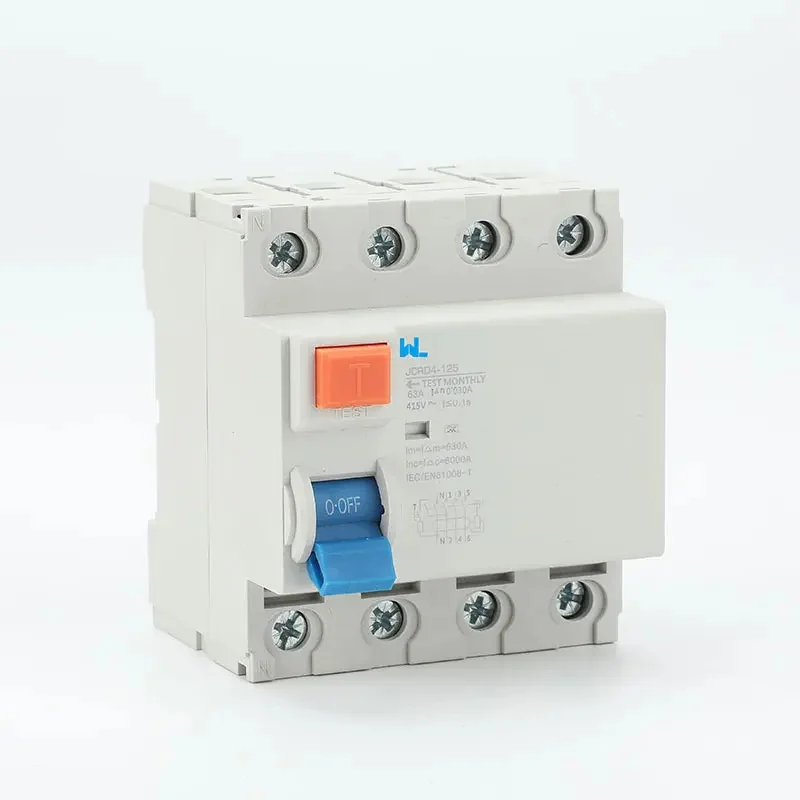
RCCB Type and Trip Selection
Residual-Current Type Selection
Type AC devices are intended for sinusoidal alternating residual current. Type A devices also respond to pulsating direct residual current, which can occur in circuits containing single-phase rectifiers, LED drivers, or electronic power supplies. Type B devices extend detection to smooth DC and higher-frequency components associated with equipment such as drives and some charging systems. This residual current protection is waveform-dependent, so use a type only where the product standard, manufacturer instructions, and installation rules support the intended waveform; do not infer suitability from the letter alone.
RCCB Trip Characteristics
Choose the number of poles and rated current for the conductors and system arrangement. Residual operating current (IΔn), non-operating current, and disconnection time must align with the protection objective and the governing installation code. A selective (time-delayed) RCCB upstream can allow a downstream 30 mA device to clear a final-circuit fault first, but only when their time/current characteristics and manufacturer coordination data demonstrate discrimination.
| ابعاد | RCCB | RCBO |
|---|---|---|
| Primary function | Residual-current protection for a group of circuits | Residual-current plus overload/short-circuit protection per circuit |
| Fault isolation | A leakage fault can disconnect several downstream circuits | Usually isolates only the affected final circuit |
| Panel planning | Fewer devices; requires coordinated overcurrent breakers | More devices and space; simpler circuit-level coordination |
| Nuisance-trip diagnosis | Aggregated leakage can make the source harder to locate | Smaller zones make troubleshooting more direct |
| اندازه معمولی | Existing boards or grouped loads with known leakage | New projects seeking continuity and selective circuit protection |
Specify Amperes and Milliamperes Separately
مقدار جریان ورودی states the current-carrying duty under the declared conditions; IΔn specifies the residual operating-current rating. Neither value replaces the other, and neither turns an RCCB into an overload protective device. Confirm the suitable upstream overcurrent protection and any conditional short-circuit rating against the exact manufacturer’s combination. A larger RCCB ampere rating does not justify increasing the circuit’s protective-device setting.
Use the load maker’s residual-current guidance to select the sensing type. The IET’s Which RCD Type? article explains why waveform matters, including possible effects on upstream devices. Its publication date and UK context should be kept separate from the rules adopted for a new project.
RCCB Installation Requirements
Every live conductor that the RCCB is intended to protect must pass through its sensing core. A protective-earth conductor must never pass through the core. Downstream neutrals must remain separated from upstream neutrals and from earth; a borrowed neutral or a neutral-to-earth connection downstream creates an imbalance and an immediate or intermittent trip. Four-pole units are used on three-phase, four-wire systems when the neutral must be switched and monitored with the phases. These details are foundational to RCCB electrical safety in both domestic boards and commercial panels.
Persistent nuisance trips are a diagnostic signal, not a reason to defeat the protection. Measure standing leakage with a leakage-current clamp, inspect filters and heating elements, and test circuits individually. Electronic loads can produce short transients at energisation; staggering start-up or using a device with suitable characteristics may help, but never bypass the RCCB. Check that upstream surge protective devices, inverters, generators, and changeover equipment follow the RCCB maker’s wiring diagram.
Illustrative leakage arithmetic only: 8 mA from one load group, 7 mA from another and a simultaneous 5 mA component would total 20 mA if those measurements are directly comparable. A nominal 30 mA marking is not a guaranteed 30 mA operating threshold, so this does not establish a 10 mA no-trip margin. Waveform, timing, the device’s specified operating band and instrument uncertainty matter. Investigate sources and circuit grouping instead of using subtraction from IΔn as proof of immunity.
Keep a Trip Evidence Log
Record time, operating loads, weather or moisture exposure, recent changes and which device opened. Add leakage readings with the clamp method and load state, plus any instrument test results with the selected mode. Comparing repeatable conditions is more useful than describing every event as nuisance tripping. If a neutral fault or damaged insulation is suspected, isolate and investigate the circuit using an approved method.
Do not raise IΔn or add delay solely to stop unexplained trips where additional protection is required. Review neutral routing, equipment leakage and the permitted circuit arrangement first. Separate standing leakage measurements from installation acceptance tests; neither one, on its own, proves every aspect of حفاظت از جریان باقی مانده.
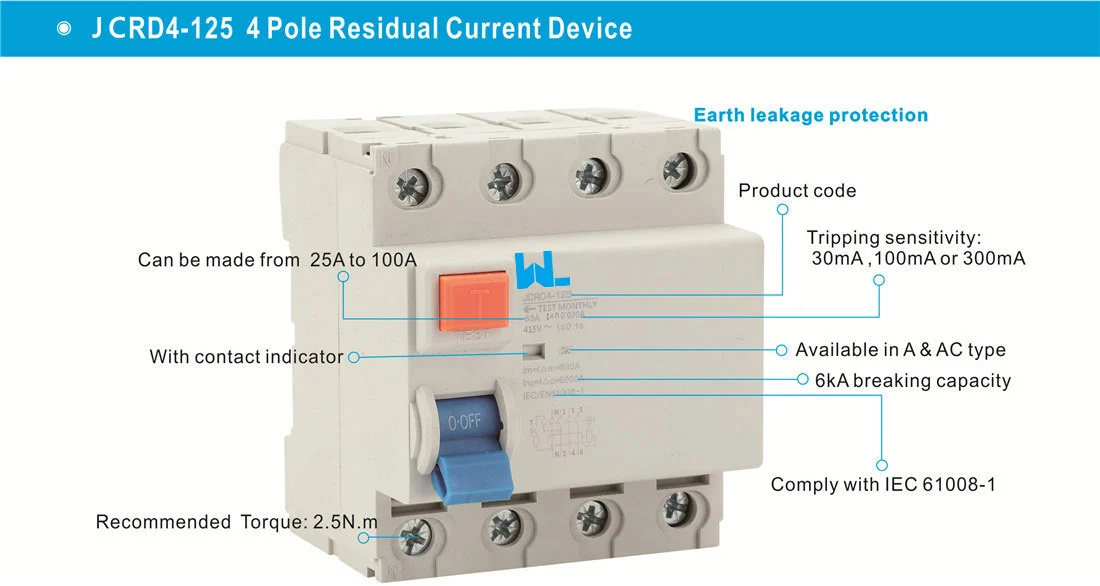
RCCB Applications
In homes, RCCBs can provide additional protection for socket outlets, outdoor circuits, bathrooms, kitchens, and other locations identified by the local installation code. In commercial buildings, they support safer maintenance of lighting, office equipment, HVAC, and small power circuits. Industrial and OEM panels require more analysis: drives, UPS systems, welders, medical equipment, and charging equipment may introduce DC components or leakage that influence type, sensitivity, and selectivity.
| اطلاعنامه | Questions to answer | Verification before handover |
|---|---|---|
| Residential final circuits | Which circuits require additional shock protection? Are neutrals grouped correctly? | Polarity, continuity, insulation and RCD trip tests recorded |
| Retail or office distribution | Will accumulated filter leakage approach the operating range? Is continuity of service important? | Leakage survey, circuit schedule and selectivity review |
| Motor drives or UPS | Can smooth DC or frequency components occur? Does the manufacturer specify type A or B? | Waveform-compatible device and functional test under representative load |
| OEM equipment | What is the earthing system, prospective fault current and destination-market code? | Design file links device data, test method and user instructions |
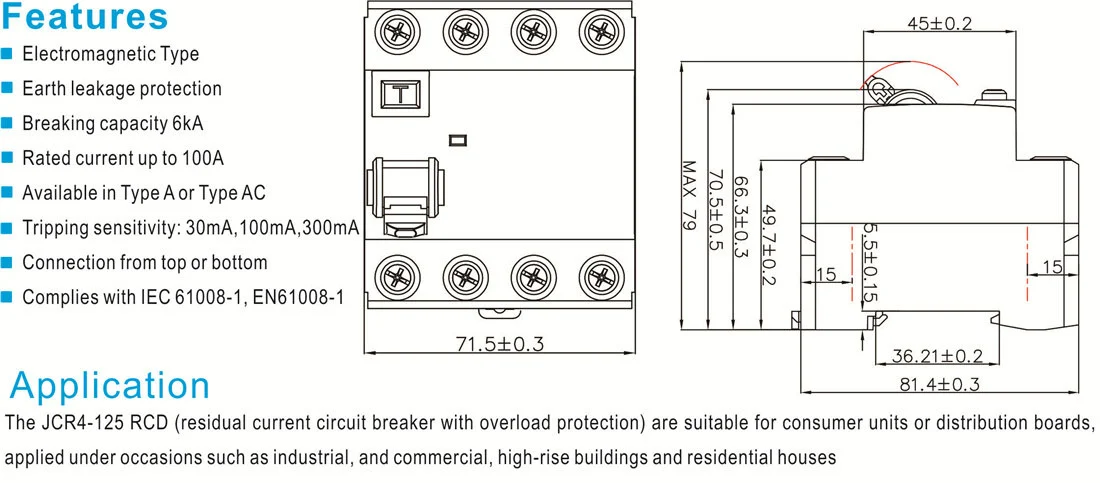
RCCB Testing Requirements
IEC 61008-1 covers residual current operated circuit-breakers without integral overcurrent protection for household and similar uses. IEC 60947-2 addresses circuit-breakers for low-voltage switchgear and controlgear; its applicability depends on the device construction and declared use, so confirm the exact product standard. IEC 60364 provides installation principles, including protective measures and verification. In the United States, UL 943 covers personnel-protection ground-fault circuit-interrupters; it is not a blanket equivalent to an IEC RCCB designation. NFPA 70 (the National Electrical Code) sets installation requirements, while the adopted edition and local amendments control.
Commissioning must follow the adopted installation rules and approved instrument method. Check wiring, polarity and the prescribed residual-current operation, treating connected electronics as instructed during insulation tests. Record the instrument, selected RCD type, test waveform or mode and results. The test button checks only the functions described by the manufacturer; it does not prove protective-conductor continuity, installation disconnection performance or all product-standard tests.
RCCB Procurement Checks
- Define the earthing system, poles, rated current, residual operating current and required disconnection time.
- List connected loads and likely residual-current waveforms; obtain manufacturer guidance for drives, converters and electronic filters.
- Map neutral and earth paths on the schematic, then verify them on site before energisation.
- Coordinate RCCB and RCBO devices with upstream breakers, surge protection and generator/changeover equipment; document selectivity assumptions.
- Specify acceptance tests, spare identification, inspection intervals and user instructions in the purchase package.
For a product reference, review the 2-pole RCD residual-current circuit breaker and request the exact type, current rating, residual sensitivity, wiring diagram and backup-protection requirements. W9 Group can provide product information, while the designer verifies suitability for the complete circuit and destination-market rules.
سوالات متداول
Are RCCB devices the same as circuit breakers?
No. An RCCB responds to residual current, while a conventional MCB responds to overload and short circuit. They are complementary unless an RCBO combines both functions.
Why does my RCCB trip when equipment is switched on?
Input filters, motor capacitors and wiring capacitance can create leakage or a brief transient. Measure the circuit, check neutral separation and consult the equipment and RCCB instructions before changing type or delay.
Is Type A always safer than Type AC?
Type A covers a broader residual-current waveform, but the correct choice depends on the load and the applicable product and installation standards. A mismatched or poorly coordinated device is not made safe by a higher letter.
How often should an RCCB be tested?
Use the test button at the interval required by local rules, the manufacturer and the site’s risk assessment. Qualified personnel should also perform measured trip tests during commissioning and periodic inspection.
Should a project use an RCCB or individual RCBOs?
Choose an RCCB with separate overcurrent breakers when grouped protection and panel economics suit the design. Choose RCBOs when circuit-level isolation, fault finding and continuity are higher priorities; see this RCBO safety comparison for application context.
منابع
- IEC 61008-1:2024 — RCCBs بدون حفاظت از جریان بیش از حد.
- IET — چه نوع رادیاتور را انتخاب کنم؟.
- IEC 60364-6:2016 – تأیید نصب.
The dependable principle is simple: residual-current protection works as a system—device, wiring, load, testing and human practice must agree. When you are ready to review models or OEM options, explore W9’s محصولات حفاظت از ولتاژ پایین and contact the technical team with your circuit schedule and destination-market requirements.
برای انتخاب شکل موج و قطب،, تماس با گروه W9 با توپولوژی مدار، تجهیزات بارگذاری و قوانین بازار مقصد.