








Understanding the Power of 200kA MCCB 160A in JC125 4P Miniature Circuit Breaker
Understanding the Power of 200kA MCCB 160A in JC125 4P Miniature Circuit Breaker
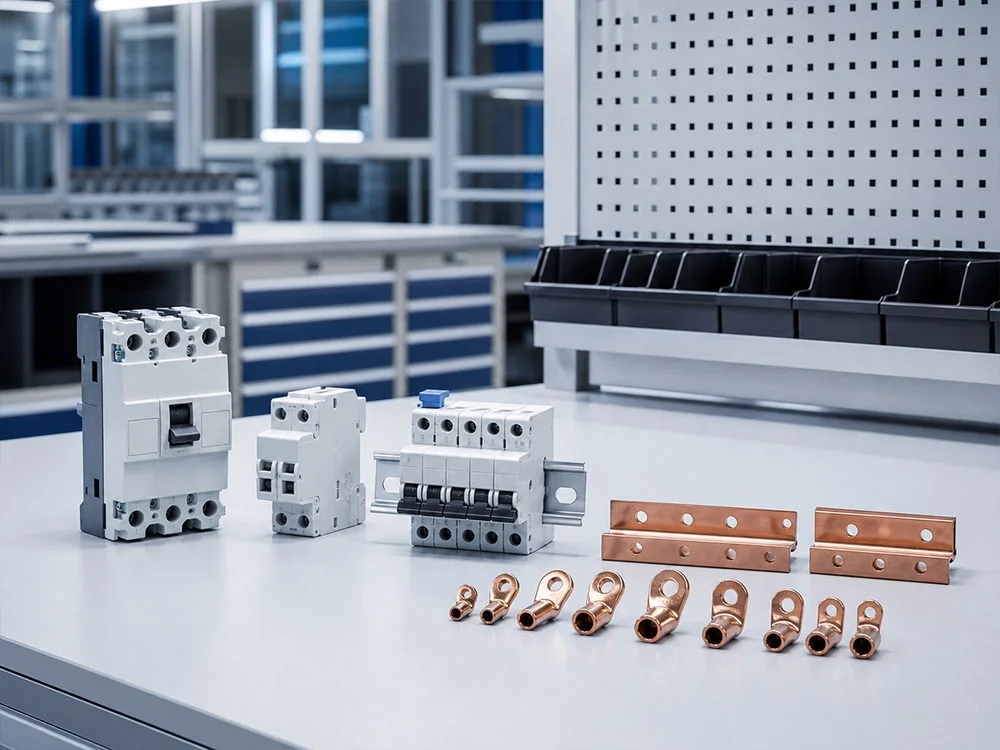
When a panel buyer in Manchester marked “200kA MCCB 160A” on a four-pole replacement schedule, the JC125-4P that arrived looked right but tripped during the first functional test. The visible failure was a nuisance trip; the underlying problem was specification, not a bad breaker. The schedule had merged an interrupting-capacity figure, a current rating and the product family name without checking the manufacturer’s data.
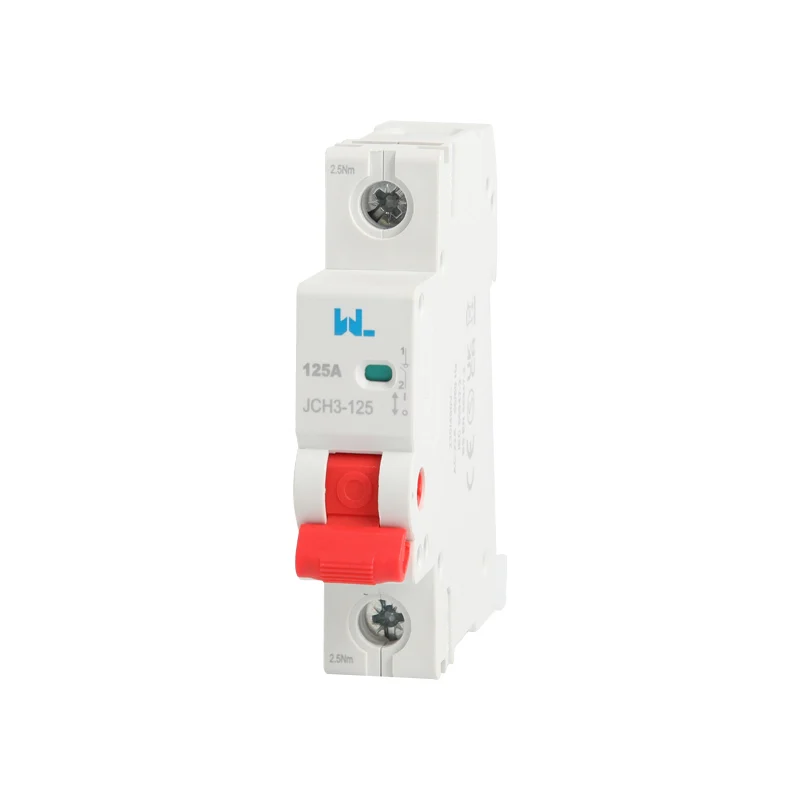
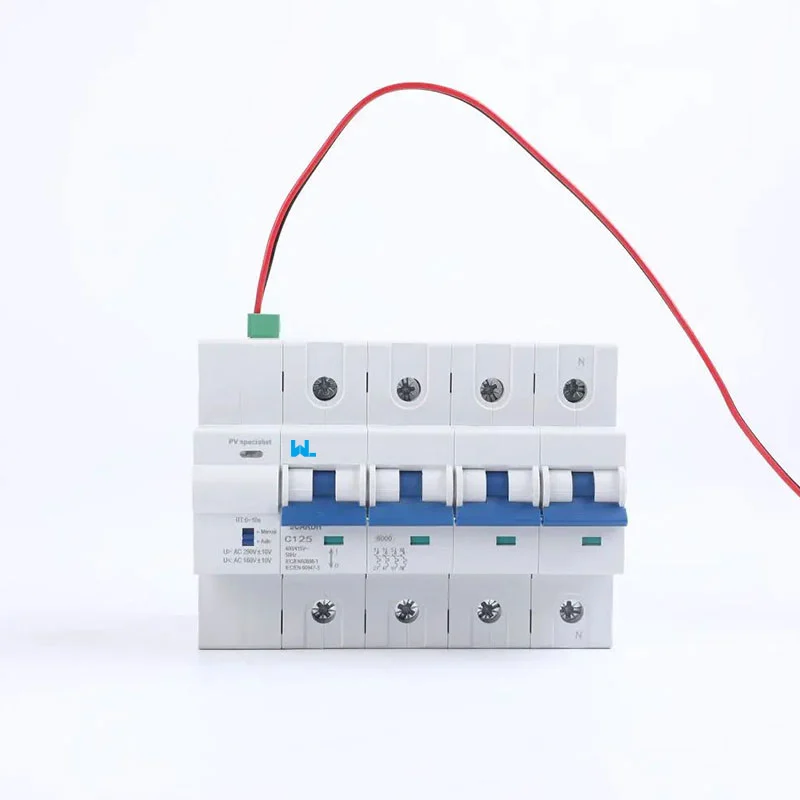
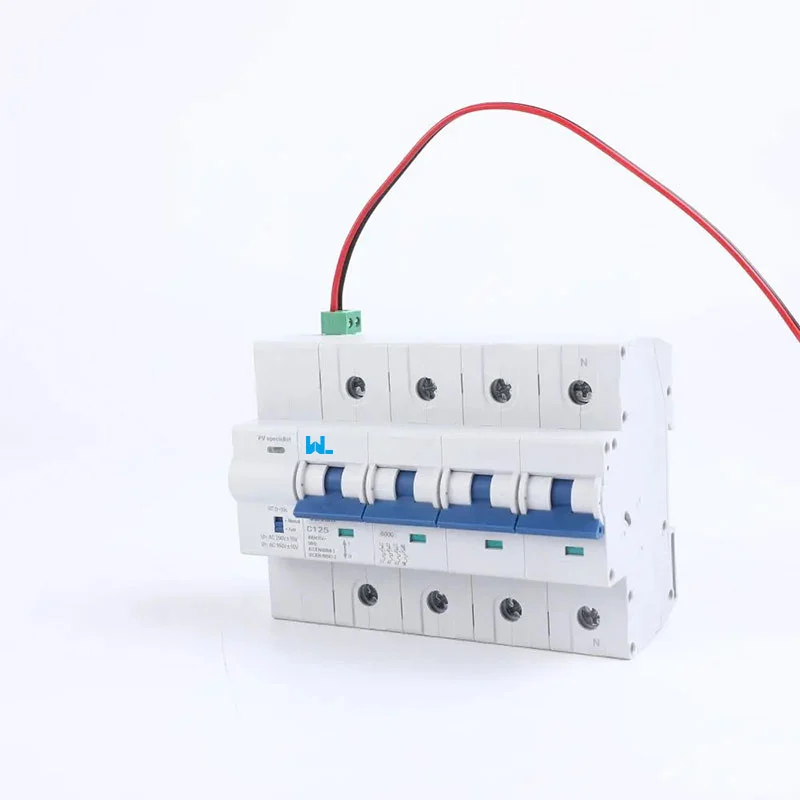
요약: The JC125-4P product page identifies a miniature circuit breaker for 50/60 Hz AC distribution, with 500 V rated insulation voltage, 230/400 V rated working voltage and rated current below 125 A. It does not publish a 160 A rating or a 200 kA short-circuit rating. In IEC terminology, kA is a breaking-capacity value (Icn or Icu, depending on the device and test duty), while amperes describe continuous current. We recommend treating “200kA MCCB 160A” as a verification prompt: obtain the datasheet and test certificate, confirm four-pole requirements, and never substitute an MCCB or a higher current rating for an MCB without a coordinated design review.
Why the 200kA MCCB 160A label causes confusion
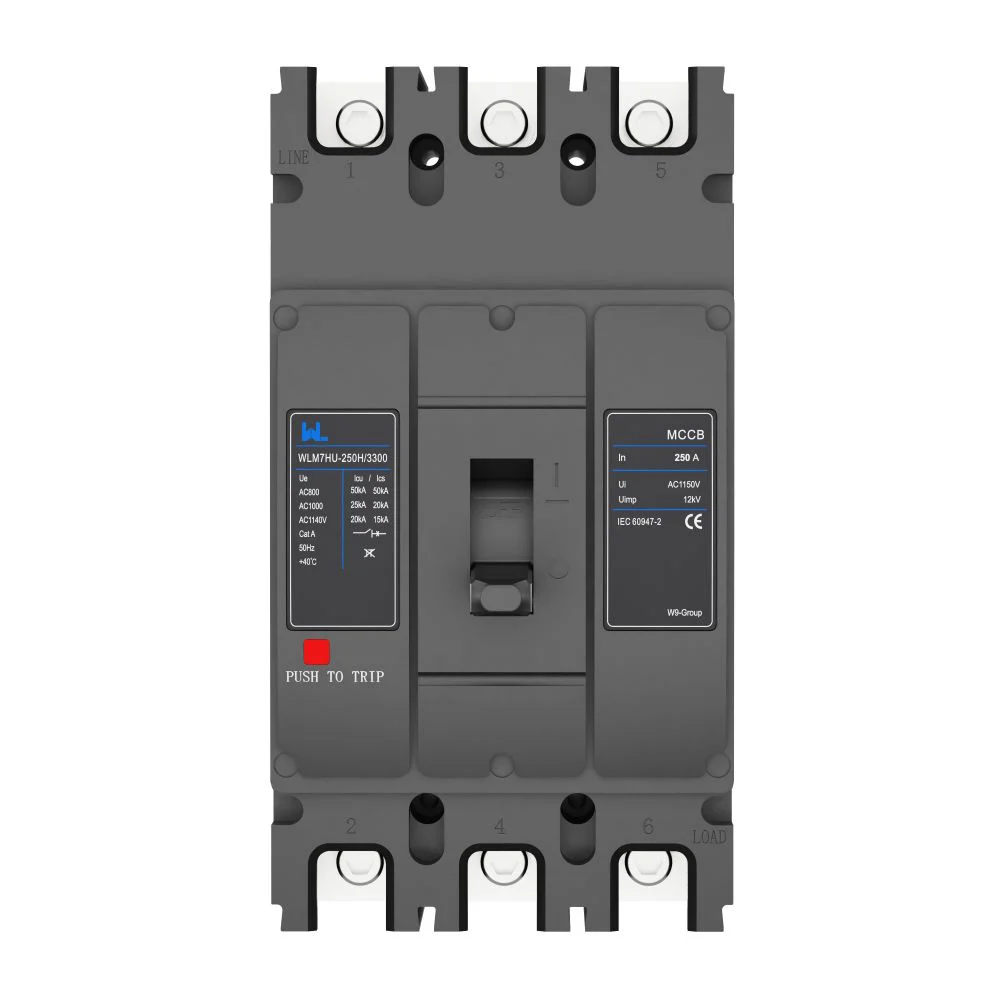
Product shorthand often places several fields next to one another. “160A” normally means rated current (In), the current a device can carry under stated conditions. “200kA” refers to a prospective short-circuit current that a device may interrupt only when the manufacturer declares and tests that value. It is not the current the feeder should carry continuously. An MCCB is a moulded-case circuit breaker; an MCB is a miniature circuit breaker. Their frames, thermal limits, accessories and conformity routes are different.
For JC125-4P, the published description says the rated current is below 125 A and the working voltage is 230/400 V. That wording supports a family selection, not a blanket 160 A or 200 kA claim. A buyer who needs 160 A should compare an appropriately rated MCCB or a different MCB family, then check cable ampacity, enclosure temperature and prospective fault current. The honest answer is that “200kA MCCB 160A in JC125-4P” cannot be accepted as a verified model designation without additional manufacturer evidence.
What the JC125-4P product data actually tells an engineer
The JC125-4P page gives several useful boundaries. Its 500 V insulation rating describes dielectric separation; it is not permission to connect the breaker to a 500 V operating circuit. The 230/400 V working-voltage statement indicates an AC distribution context, with 230 V line-to-neutral and 400 V line-to-line systems commonly associated with four-pole protection. The 50/60 Hz statement identifies frequency suitability. The page also cites GB/T 10963.1 for AC circuit breakers used in household and similar locations and GB/T 19334 for mounting rails.
Neither cited standard automatically proves a 200 kA interrupting capacity. IEC 60898-1 (the international counterpart for many household and similar MCBs) uses declared short-circuit ratings and prescribed test sequences; IEC 60947-2 applies to industrial circuit breakers, including many MCCBs. The applicable standard depends on the product construction, intended use and destination market. Request the declaration of conformity and the exact model’s test report rather than inferring performance from a marketing phrase.
Four poles can disconnect three phases plus neutral, which helps with maintenance isolation and certain supply arrangements. Neutral-pole switching rules vary by system and local code, so the fourth pole must be selected and wired according to the project’s earthing and transfer-switch design.
Breaking capacity, rated current and coordination
Three checks prevent most ordering errors:
- Load current: Calculate continuous and non-continuous loads, apply conductor derating and verify that In does not exceed permissible ampacity.
- Fault duty: Calculate prospective short-circuit current at the installation point. Select a device whose declared breaking capacity is at least that value at the actual voltage and pole configuration.
- Coordination: Compare time-current curves with upstream and downstream devices. A high kA number alone does not guarantee selectivity or low arc energy.
For an illustrative calculation, a feeder measured at 118 A after derating might justify a 125 A class device if the installation rules and manufacturer limits permit. A 160 A device could leave conductors under-protected, while a 200 kA claim could be irrelevant if the available fault current is 12 kA. These numbers are examples only; the approved load and short-circuit studies control the final selection.
| Label or value | What it means | How to verify | JC125-4P status |
|---|---|---|---|
| 160 A | Continuous rated current (In) | Datasheet, nameplate and temperature conditions | Not published; page states below 125 A |
| 200 kA | Prospective short-circuit/breaking-capacity claim | IEC/GB test report at stated voltage and duty | Not published on product page |
| 500 V | Rated insulation voltage (Ui) | Product marking and dielectric-test documentation | Published |
| 230/400 V AC | Rated working voltage (Ue) | Wiring diagram and conformity data | Published |
| 4P | Four switched poles, subject to neutral rules | Terminal diagram and local installation code | Published as JC125-4P |
MCB or MCCB: choose by application, not by the biggest number
MCBs are compact and suited to branch and distribution circuits within their declared current and breaking ranges. MCCBs provide larger frames, higher current options and, on some models, adjustable trip units and accessories. Moving from an MCB to an MCCB changes mounting, cable termination, heat dissipation and coordination assumptions. The replacement should therefore be engineered as a system change, not a simple drop-in swap.
| Decision dimension | JC125-4P MCB | 160 A MCCB candidate | 조달의 의미 |
|---|---|---|---|
| Typical role | AC branch/distribution protection | Feeder or larger distribution circuit | Match device class to panel architecture |
| Current basis | Below 125 A per published page | 160 A only when declared by model | Check conductor ampacity and derating |
| Interrupting duty | Use declared Icn/Icu value | Use declared Icu/Ics at voltage | Do not infer kA from frame size |
| Adjustability | Usually fixed thermal-magnetic curve | May offer adjustable trip unit | Require curves and setting schedule |
| Installation | DIN-rail format, compact terminals | Panel-mounted frame and larger lugs | Verify mechanical and thermal clearances |
Standards, testing and commercial risk
GB/T 10963.1 addresses AC circuit breakers for household and similar applications; it is a product standard, not a universal guarantee of every advertised kA value. GB/T 19334 specifies standard rails and dimensions for low-voltage switchgear supports. IEC 60898-1 and IEC 60947-2 define different product scopes and test regimes, while UL 489 is commonly used for North American moulded-case breakers. NFPA 70 (the National Electrical Code) governs installation in applicable U.S. jurisdictions. A test method or installation code should not be presented as a product certification.
Unsupported “200 kA” language creates commercial exposure: a consultant may reject the submittal, an authority having jurisdiction may require replacement, and a fault study may show inadequate protection. Keep the quotation, datasheet revision, declaration of conformity, routine-test records and approved one-line diagram together. If the destination market requires third-party certification, ask for the certificate number and scope; do not rely on a logo copied from a catalogue.
Selection checklist and where W9 can help
Use this sequence before releasing a purchase order:
- Write the system voltage, frequency, phases, neutral arrangement, earthing method and installation category.
- Record calculated load current and prospective short-circuit current at the breaker terminals.
- Request the exact JC125-4P datasheet, six-gallery-image identification, wiring diagram and declared breaking capacity.
- Confirm DIN-rail dimensions, terminal torque, ambient limits and four-pole neutral behavior.
- Have a qualified person perform functional, insulation and—where required—short-circuit or injection verification before energization.
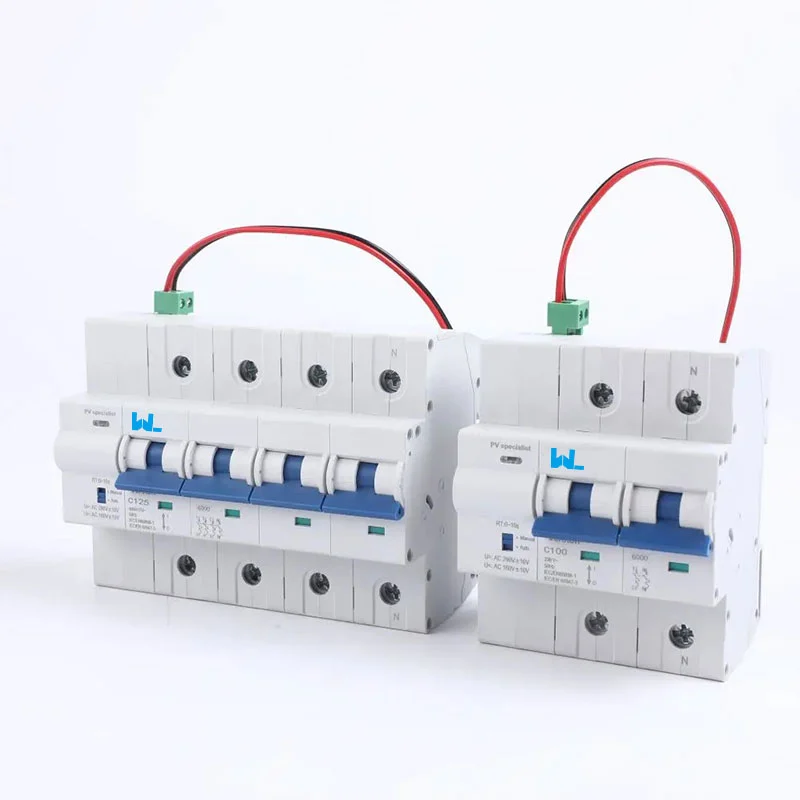
Zhejiang W9 Group Technology Co., Ltd. publishes the JC125-4P miniature circuit breaker page and can discuss documentation or OEM/ODM requirements. Buyers comparing alternatives can review the MCB product category and broader circuit-protection range. For background, see our guide to choosing a moulded-case circuit breaker.
자주 묻는 질문
Is the JC125-4P a 200kA MCCB 160A breaker?
No. The published page identifies it as a miniature circuit breaker with rated current below 125 A. A 200 kA interrupting claim and 160 A rating require separate, model-specific evidence and should not be inferred from the JC125 name.
What does 200 kA mean on a circuit breaker?
It normally describes a declared short-circuit breaking capacity or prospective fault level at a specified voltage and test duty. It is not the normal load current. Check whether the document states Icn, Icu or Ics and which standard was used.
Can I replace a 125 A MCB with a 160 A MCCB?
Only after a qualified engineer reviews conductor ampacity, enclosure heat, terminals, fault duty, coordination and local code. The physical replacement may also require new mounting and cabling.
Why does a four-pole breaker switch the neutral?
A fourth pole can isolate the neutral with the phases in systems where the code and transfer arrangement require it. The neutral must not be switched or protected incorrectly; follow the earthing design and manufacturer wiring diagram.
Which standards should I request for JC125-4P?
Start with the product page’s GB/T 10963.1 and GB/T 19334 references, then request the declaration of conformity and the destination-market standard. Ask for the exact short-circuit test data rather than assuming a generic IEC or GB reference proves 200 kA.
Authoritative references
- IEC 60898-1, Circuit-breakers for overcurrent protection for household and similar installations.
- IEC 60947-2, Low-voltage switchgear and controlgear—Circuit-breakers.
- NFPA 70, National Electrical Code.
- UL 489, Molded-Case Circuit Breakers and Circuit-Breaker Enclosures.
The dependable specification is the one that separates load current from fault duty and proves both with the right test record. Review the JC125-4P documentation and contact W9 with your one-line diagram, calculated fault current and destination-market requirements before you approve a 200 kA or 160 A claim.