








The Triple-Threat Protector: How RCBOs Guard Modern Circuits
The Triple-Threat Protector: How RCBOs Guard Modern Circuits
When Elena, an electrical contractor in Manchester, added a heat-pump circuit to a townhouse, she switched on the test load and watched the kitchen, alarm and internet equipment go dark. The fault was on one branch, yet an upstream device disconnected several circuits. Review showed shared residual-current protection and poor coordination. The equipment was not “bad”; selection and circuit grouping were wrong.
요약: An RCBO puts overcurrent protection and residual-current protection in the same circuit-level device, so one branch can be isolated without needlessly removing power elsewhere. Under IEC 61009-1, an RCBO is a residual-current circuit-breaker with integral overcurrent protection; IEC 60364 then guides how it is selected and installed. Map each circuit’s load, fault level, neutral arrangement and required IΔn before choosing a pole configuration, then verify the finished installation with the tests required by local rules.
Modern buildings add electronic loads, outdoor equipment and power-conversion stages. Leakage can be normal, while a loose termination or insulation fault can become dangerous. RCBO protection contains events at the point where they occur when device and wiring are coordinated. Proper RCBO protection assigns residual current protection to the responsible branch.
What the three protective functions actually do
An RCBO combines three responses that are often specified separately:
- Overload protection: a thermal element responds when a circuit carries more current than its cable and terminals can safely dissipate over time.
- Short-circuit protection: a magnetic element reacts rapidly to a high fault current, limiting thermal and mechanical stress on conductors.
- Residual-current protection: a core-balance sensor compares currents leaving and returning through the intended conductors. An imbalance indicates current flowing elsewhere, such as through protective earth or a person, and initiates disconnection at the selected sensitivity.
This integration is the practical difference between RCBO protection and a residual-current device that needs a separate breaker. It also means the manufacturer’s curves, terminal limits and wiring instructions must be treated as one system. Do not assume that combining functions increases interrupting capacity or solves upstream selectivity.
Illustrative load check
Suppose a single-phase branch is designed for 16 A at 230 V. Its notional maximum apparent power is 16 × 230 = 3.68 kVA. If a measured design demand is 2.4 kW, the continuous current at unity power factor is about 2,400 ÷ 230 = 10.4 A, leaving margin for starting current and temperature derating. This is an illustrative calculation, not a prescription: the installer still checks cable capacity, installation method, prospective short-circuit current, voltage drop and the RCBO’s declared characteristics.
RCBO vs RCCB: Why circuit-level selectivity matters
With one upstream RCCB feeding many MCBs, a small earth-leakage event can open the common RCCB and interrupt every downstream circuit. Individual RCBO protection moves the residual-current decision to each branch. A fault on an EV charger can then disconnect the charger while refrigeration, access control and emergency lighting remain energized—subject to the distribution design and local requirements.
True selectivity is not guaranteed merely because devices have different ampere ratings. Compare residual-current operating characteristics, short-circuit energy limits and manufacturer coordination tables. Time-delayed upstream devices, where permitted, may help discrimination, but only a documented study using the actual combinations is defensible. This is a central RCBO vs RCCB design distinction: the RCBO offers finer fault localization, while an RCCB-plus-MCB arrangement may suit an intentional common trip or tighter budget.
For example, an upstream RCCB feeding eight branches can disconnect all eight when one branch leaks; eight branch RCBOs localize the expected trip to one branch, subject to coordination.
| Dimension | RCBO on each branch | One RCCB with branch MCBs |
|---|---|---|
| Fault localization | Trips the affected circuit; easier diagnosis. | Common trip can remove several circuits. |
| Panel space | More modules or compact two-in-one devices, depending on design. | Fewer residual-current devices, plus separate MCBs. |
| Neutral management | Neutral is routed with the protected branch as specified. | All downstream neutrals must remain on the correct RCCB side. |
| Coordination work | Check branch and upstream curves for selectivity. | Check RCCB immunity, MCB curves and shared leakage. |
| Maintenance impact | One branch can be isolated for testing or service. | Testing may affect a larger group. |
| Unit-cost tendency | Higher device count cost, often offset by reduced downtime. | Lower device count cost, with possible outage and troubleshooting cost. |
Neutral, poles and electronic loads
The current-sensing path must include every live conductor that belongs to the circuit; a neutral borrowed from another circuit can create nuisance tripping or defeat residual-current protection. Follow the wiring diagram for line-neutral devices and for two-, three- or four-pole arrangements. A switched neutral, a solid neutral and a neutral pole that opens with the phases each have different consequences for isolation and maintenance.
In a three-phase, four-wire feeder, a four-pole device monitors the phases and neutral together. In a single-phase circuit, a two-pole RCBO commonly switches line and neutral, but the arrangement depends on the earthing system and national rules. Verify terminal markings, torque and conductor preparation; these details are part of overcurrent protection performance.
Variable-speed drives, LED drivers, heat pumps and EV chargers can produce smooth DC or high-frequency leakage. Select the residual-current type and immunity specified by the equipment maker and installation standard. An RCBO sensitive to the wrong waveform can nuisance-trip—or fail to provide the intended residual current protection.
Standards: what each document covers
IEC 61009-1 sets product requirements for residual-current circuit-breakers with integral overcurrent protection (RCBOs) for household and similar uses. It addresses construction, operating characteristics and verification tests; it is not blanket installation approval.
IEC 60364 is the low-voltage installation framework. Its national adoptions address residual current protection, shock, overcurrent, isolation, verification and special locations. Apply the locally adopted edition, including rules for EV charging, bathrooms or medical areas where relevant.
IEC 60947-2 covers circuit-breakers for industrial and similar applications. It is broader in many commercial settings than the household-focused IEC 61009-1 scope; do not market an IEC 61009-1 device as an IEC 60947-2 breaker without evidence that it is designed and tested to that standard.
In North America, UL 943 addresses ground-fault circuit-interrupters (GFCIs), while UL 489 covers molded-case circuit breakers and enclosures. They are distinct scopes. Do not transfer a claim between them without applicable listing and evaluation. Match destination market, voltage, marking and inspection authority.
Application choices for homes, facilities and OEM panels
| 응용 | Primary concern | Design action |
|---|---|---|
| Domestic sockets and wet rooms | Human contact and cumulative leakage. | Use the locally required residual-current sensitivity; keep neutrals segregated and test at commissioning. |
| EV charging point | DC components and outdoor exposure. | Follow charger instructions for residual-current type, earthing and upstream coordination. |
| Commercial refrigeration or HVAC | Continuity and motor starting current. | Review inrush, ambient derating and selectivity so one fault does not stop unrelated loads. |
| Data, controls and fire systems | Nuisance trips have operational consequences. | Document leakage budget, immunity requirements and a safe maintenance bypass where allowed. |
| OEM machine panel | Repeatable production wiring and compliance evidence. | Specify pole count, interrupting rating, terminals and test records in the bill of materials. |
See our guides on what an RCBO does, RCBO safety for homes and businesses, and RCBO selection for EV chargers.
Selection and commissioning checklist
- Record nominal voltage, phases, frequency, earthing system, design current and prospective short-circuit current.
- Choose the overcurrent curve and rating from cable capacity, ambient conditions, inrush and coordination—not from load current alone.
- Choose residual-current type and IΔn from equipment leakage, touch-protection rules and the authority having jurisdiction.
- Confirm pole and neutral handling, terminal capacity, enclosure compatibility and the manufacturer’s tightening instructions.
- Plan verification: continuity of protective conductors, insulation resistance, polarity, loop or fault impedance as applicable, and RCBO test-button and instrument tests required by the adopted installation standard.
- Keep datasheets, declarations, wiring diagrams, test results and change control with the panel record.
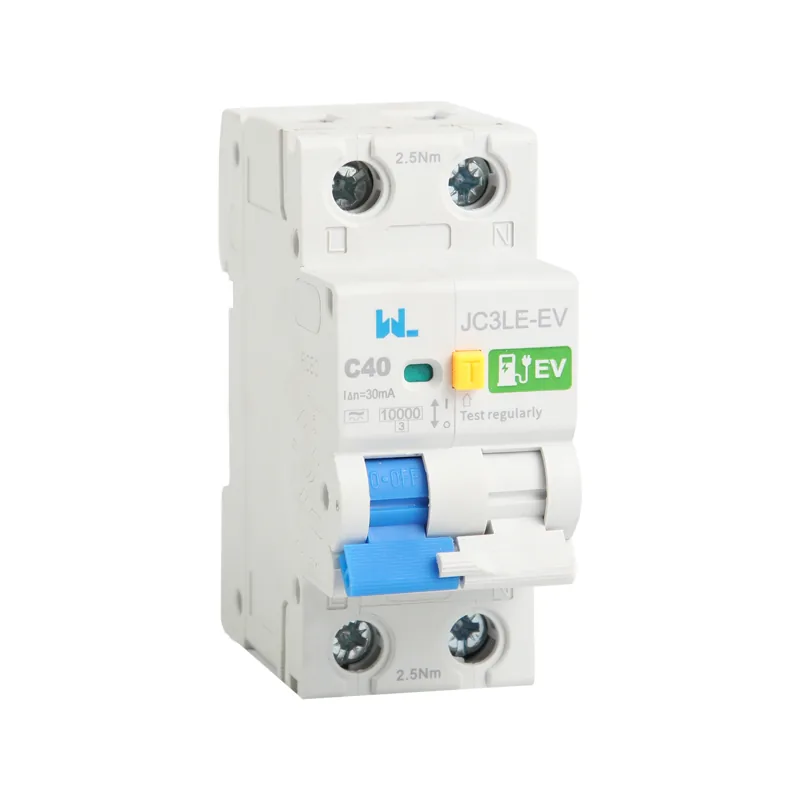
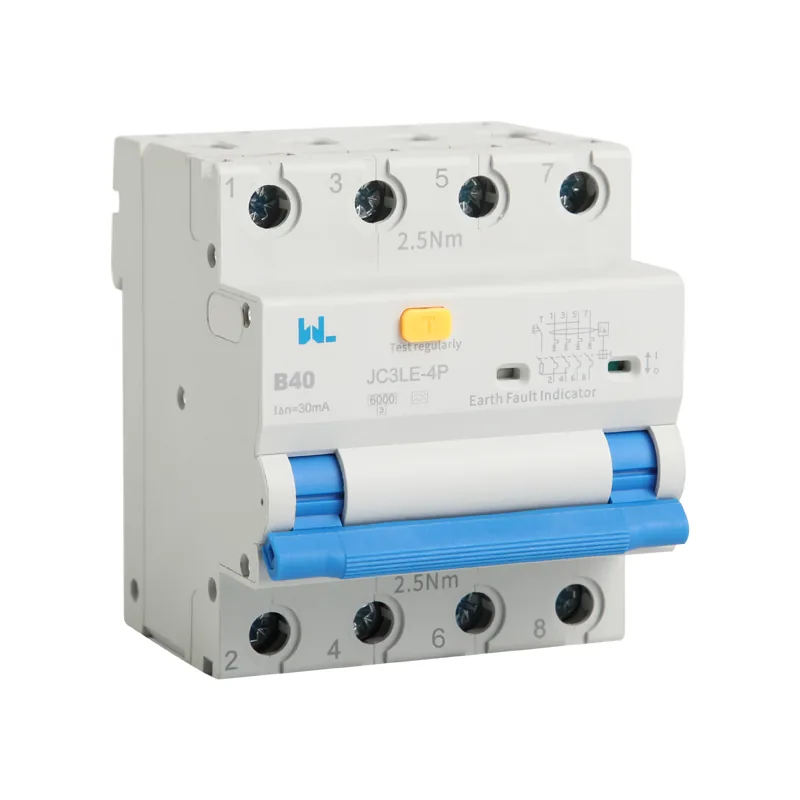
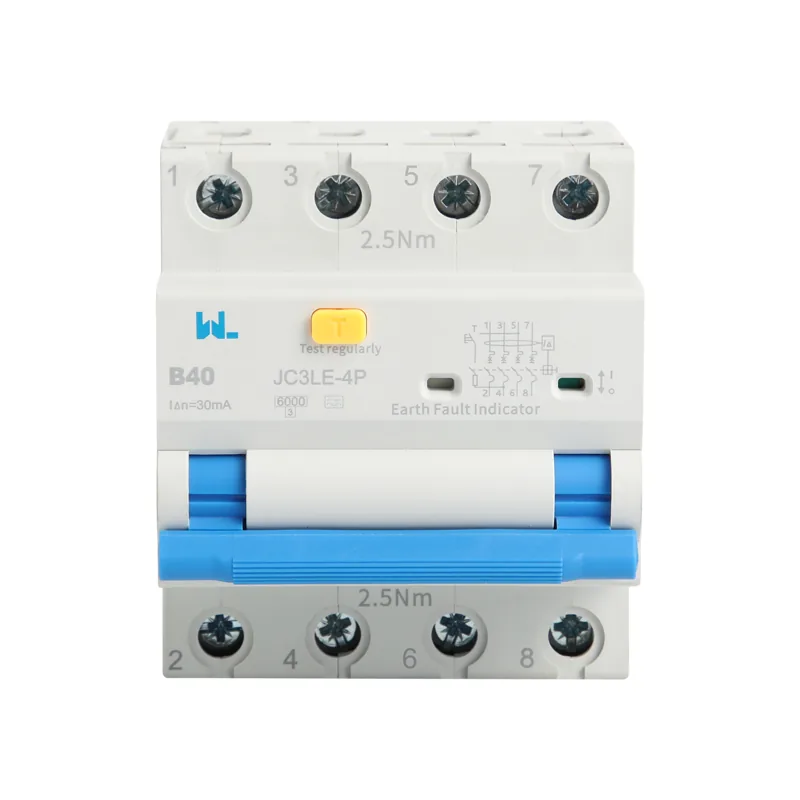
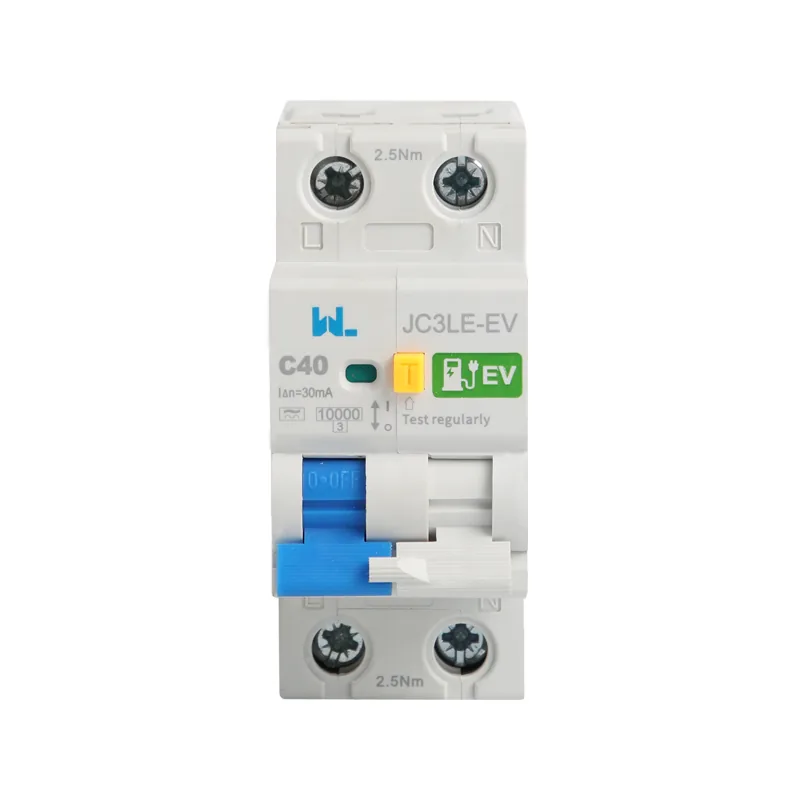
Zhejiang W9 Group Technology Co., Ltd., founded in 2020, supplies low-voltage protection products with OEM/ODM, documentation and testing support. Evaluate it against your specification and destination-market evidence; supplier support does not replace design verification. One example is the JC3LE 4P electromagnetic RCBO. Document RCBO protection choices in the bill of materials.
자주 묻는 질문
What is the difference between RCBO and RCCB?
An RCBO combines residual-current and overcurrent functions for one circuit. An RCCB provides residual-current protection only and normally works with separate MCBs for overload and short-circuit protection. In an RCBO vs RCCB comparison, circuit grouping, selectivity and panel space usually drive the choice.
Does an RCBO replace an MCB?
For the functions covered by its product rating, an RCBO can replace the branch MCB and separate RCCB. Confirm the declared short-circuit capacity, voltage, curve and installation category; an RCBO is not automatically suitable for every feeder.
Why does my RCBO trip when nothing appears faulty?
Aggregate leakage from filters, drives, heaters or long cables can approach the device threshold. Incorrectly shared neutrals and waveform mismatch are common causes. Isolate branches methodically, measure leakage with suitable instruments and check the wiring diagram before changing sensitivity.
How often should an RCBO be tested?
Use the test button and inspection interval required by the local installation rules, workplace policy and manufacturer instructions. Periodic verification should also include functional and instrument tests by a competent person, especially after modifications or faults.
Can one RCBO protect an EV charger?
It can when its residual-current type, pole arrangement, rating and coordination match the charger instructions and local code. Some chargers require additional DC-sensitive measures; review the complete protective scheme rather than selecting by ampere rating alone.
참고문헌
- 국제 전기기술위원회(IEC), IEC 61009-1, IEC 60364 and IEC 60947-2 standards catalog.
- UL Solutions, UL 943 and UL 489 product-safety standards information.
- NFPA, National Electrical Code resources for installation requirements in the United States.
Design principle: let the smallest practical protective zone take the trip, and prove that decision with calculations, coordination data and commissioning records.
Ready to review a branch schedule or OEM bill of materials? Browse the protection range and contact W9 for application and documentation support.