























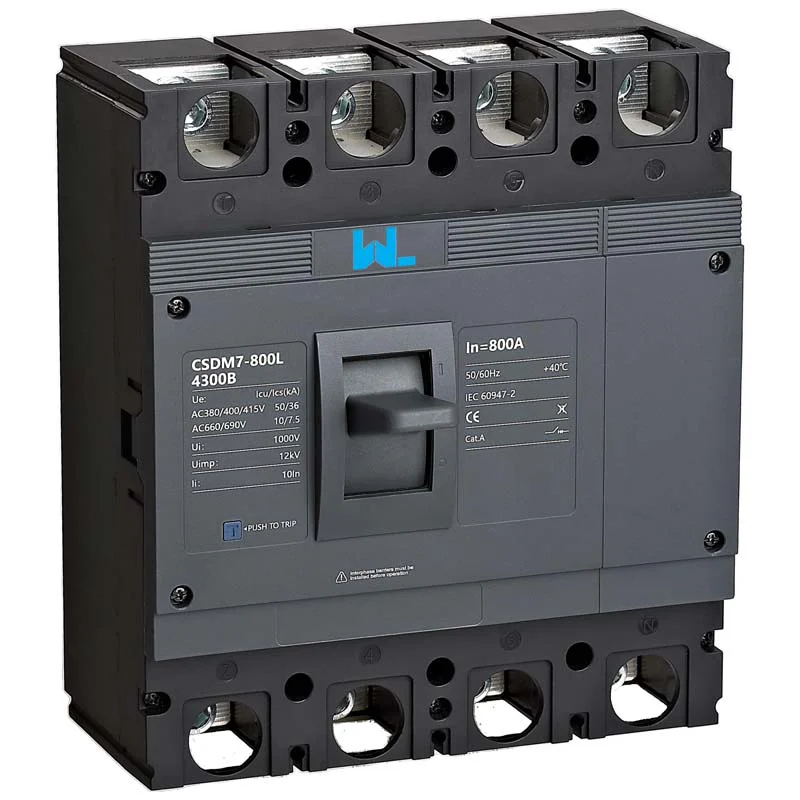
MCCBのハイライト
The Long-Time protection function of the CSDM7 MCCB is designed to handle overcurrent conditions that persist for an extended period. This feature is crucial for protecting electrical systems from sustained overloads, which can lead to overheating and damage to the conductors and equipment. By accurately detecting and responding to long-term overcurrents, the CSDM67 MCCB helps prevent potential hazards and ensures the continuous and safe operation of the electrical system.
Molded Case Circuit Breakers (MCCBs) are fundamental components in electrical distribution systems, prized for their robust protective capabilities. Their primary function is to automatically interrupt electrical current in the event of an overload, short circuit, or, in many modern versions, a ground fault. This safeguards downstream equipment and wiring from damage and helps prevent electrical fires. Unlike smaller miniature circuit breakers (MCBs), MCCBs are designed for higher current ratings, typically ranging from around 15 amps up to several thousand amps, making them suitable for a wide array of commercial and industrial applications, from large machinery to main power distribution panels.
A defining characteristic of advanced MCCBs is their adjustable trip settings. This feature allows engineers to finely tune the breaker’s response to overcurrents based on the specific load requirements and coordination studies of the electrical system. For instance, the long-time delay (Ir) can be set to define the overload current threshold, while the short-time pickup (Im) and instantaneous pickup (Ii) settings manage the response to high-level short-circuit currents. This adjustability ensures selective coordination, where only the breaker closest to a fault trips, minimizing disruption to the rest of the installation and enhancing overall system reliability and uptime.