











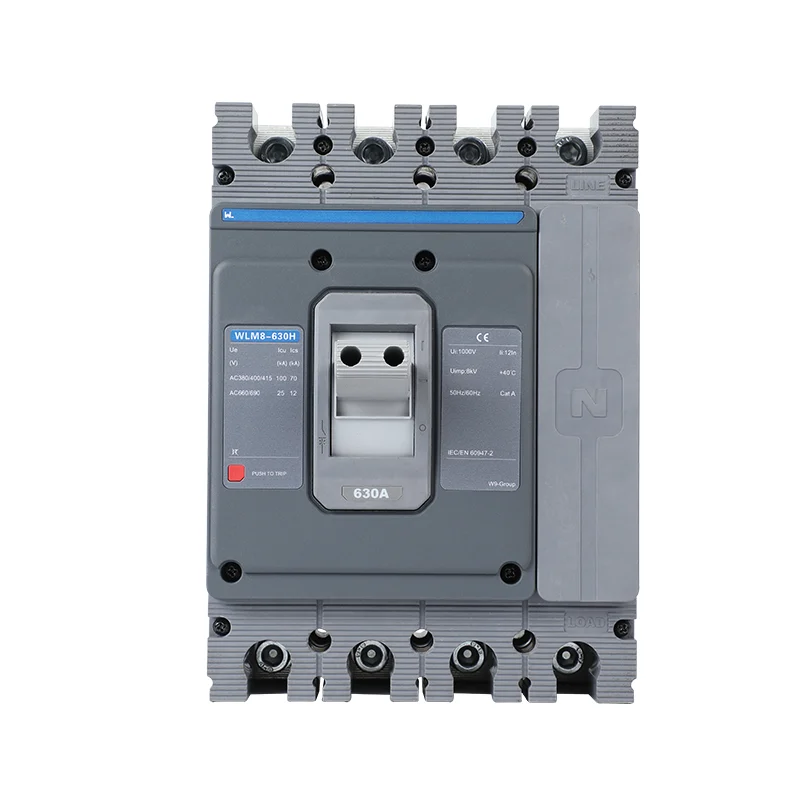
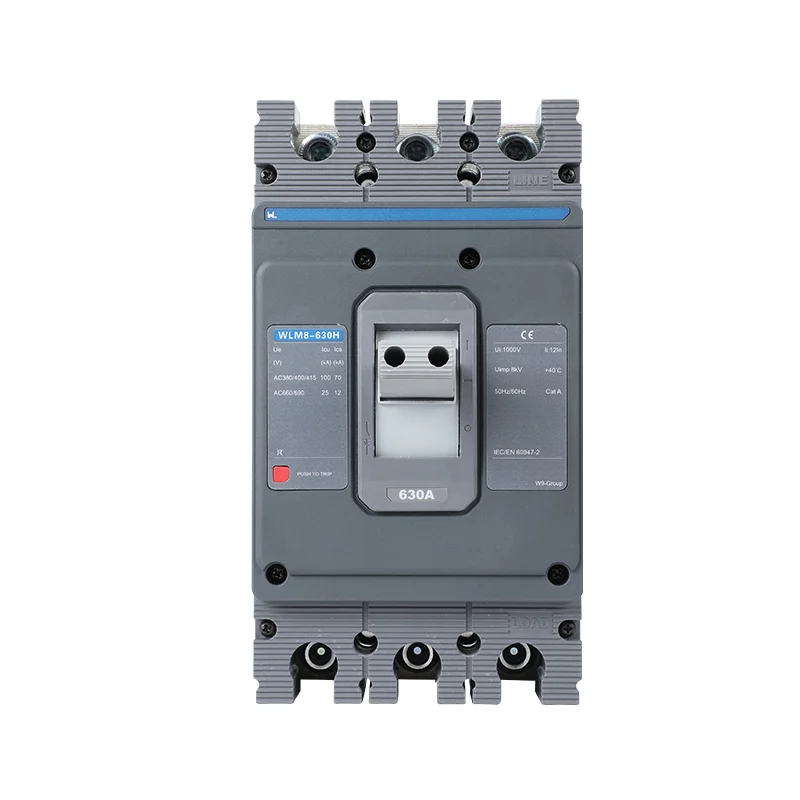
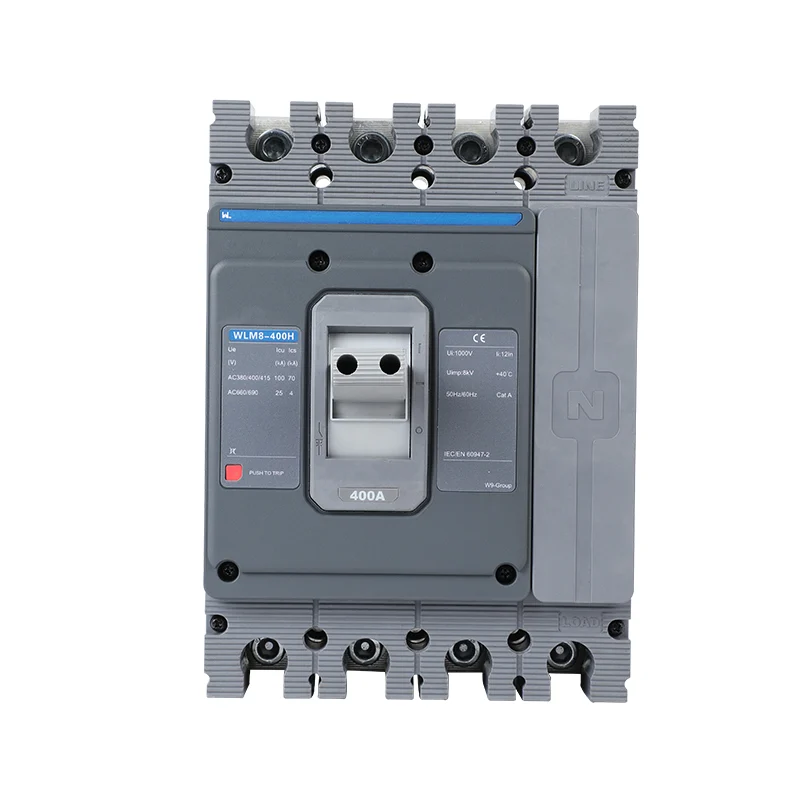
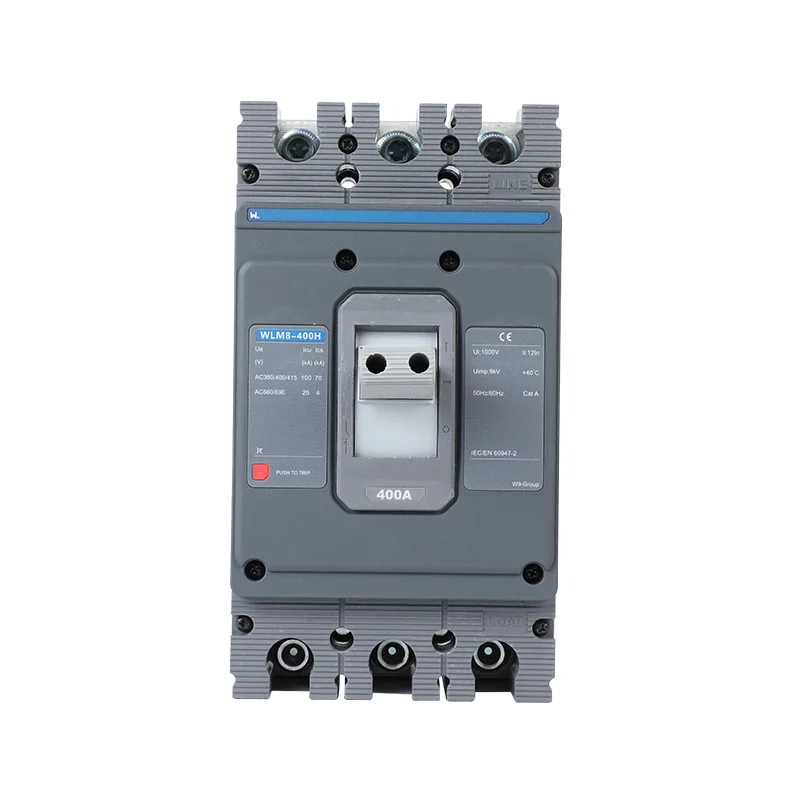
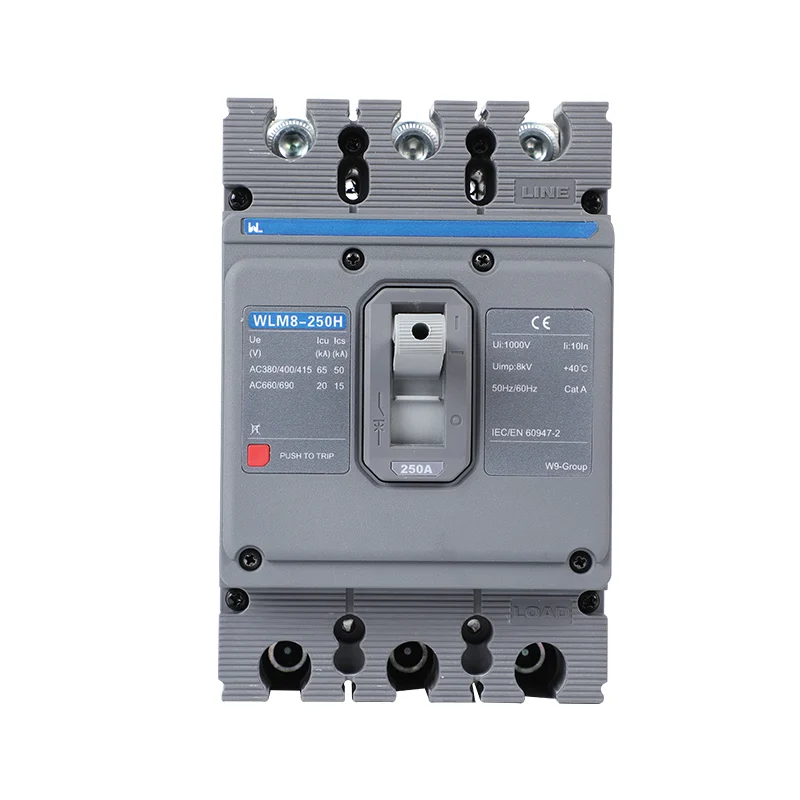





















Consideraciones sobre la clasificación de la tensión al elegir MCCBs solares para sistemas fotovoltaicos
Selecting the right Solar MCCB is make-or-break for your PV array’s safety and efficiency—and voltage rating stands as the most critical factor. Get this wrong, and you risk equipment failure, safety hazards, or even lost energy production. Below’s a buyer-focused guide to navigating voltage ratings for Solar MCCBs, tailored to real-world PV project needs.
Solar MCCB Functions
Unlike standard MCCBs, Solar MCCBs are engineered for the unique demands of fotovoltaico systems—primarily handling direct current (DC) and withstanding wide voltage fluctuations from sunlight intensity changes. They act as the “safety gatekeepers” for PV arrays, protecting inverters, combiner boxes, and wiring from overcurrents and short circuits. A core industry trait is their dual focus on DC performance and compliance with PV-specific standards, as AC-focused breakers simply can’t handle the sustained DC arcs in solar setups.
El DC MCCB guide explains why an AC rating cannot establish DC interruption capability.
Voltage Ratings for Solar MCCBs
1. Match Voltage Rating to System Type
PV arrays operate on DC power before inversion to AC, so your Solar MCCB’s DC voltage rating is non-negotiable. Most modern PV systems use 1000V DC or 1500V DC—with 1500V DC becoming the standard for large-scale arrays due to higher energy efficiency. For example, ABB’s Tmax PV series supports up to 1500V DC, aligning with advanced trends. Never use an AC-only MCCB for DC circuits; DC lacks natural current zero-crossing, making arc extinction far harder, which is why Solar MCCBs require specialized design.
For AC-side applications , ensure the Solar MCCB’s AC voltage rating matches your grid connection—380V for distributed PV and 35kV+ for centralized utility-scale projects.
2. Comply with PV-Specific Standards
Voltage rating validity depends on adherence to global standards. Look for Solar MCCBs certified to UL 489B and IEC 60947-2. UL 489B is critical as it tests breakers under PV-specific DC fault conditions, ensuring they can safely interrupt arcs at rated voltages. Without these certifications, a breaker’s voltage rating is unreliable—even if the numbers match your system.
3. Account for System Voltage Fluctuations
PV arrays experience voltage spikes—especially during early morning/late evening or when pass. Your Solar MCCB’s rated voltage must exceed the system’s maximum possible voltage by a safety margin. For a 1500V DC system, avoid cutting corners with 1000V DC breakers; voltage surges could cause insulation breakdown and equipment damage.
4. Adapt to Project Scale
Voltage requirements vary drastically between distributed and centralized PV projects: Distributed PV : Usually 380V AC or 1000V DC, so Solar MCCBs with 1000V DC/400V AC ratings suffice.Centralized PV: Relies on 1500V DC for higher efficiency, requiring Solar MCCBs rated for 1500V DC. These projects may also need AC breakers rated for 10kV+ for grid integration.
Voltage and circuit-location checks
| Circuit | Voltage basis | Additional evidence |
|---|---|---|
| PV DC array | Maximum calculated array voltage | Permitted pole connection and polarity |
| Salida de CA del inversor | Actual AC system voltage | AC fault capacity and backfeed conditions |
| Battery circuit | Battery system maximum voltage | Source fault current and energy |
| Auxiliary circuit | Its own supply voltage | Control-device ratings |
| Common shortcut | Correct verification |
|---|---|
| Use nominal module voltage only | Apply the relevant maximum-voltage design method |
| Apply AC rating to DC | Obtain exact DC declaration |
| Add pole ratings freely | Follow the approved connection drawing |
| Assume solar means battery-ready | Review the actual source separately |
El guía de distribución fotovoltaica Distingue las hipótesis de la cadena fotovoltaica de las funciones de corriente de falla de la batería.

Use the maximum voltage for the correct circuit
For a PV array DC circuit, use the design maximum voltage under the applicable temperature and module conditions. For an inverter’s AC output, use the actual AC system rating and associated fault duty. Do not collapse those decisions into a generic “solar MCCB” voltage.
Check pole connections, earthing and any polarity restrictions against the manufacturer’s exact drawing. A multipole voltage table does not authorise arbitrary series wiring. Battery circuits additionally require their own source-energy and fault-current review; a PV label does not establish battery suitability.
Common Solar MCCB Rating Mistakes
Buyers often prioritize current rating over voltage—this is a costly error. A breaker with the right current but insufficient voltage rating will fail under normal operation. Other pitfalls include ignoring high-altitude derating and using non-PV-certified breakers to save costs.
Solar MCCB Voltage Selection
While higher voltage ratings offer more safety, they come at a premium. For small distributed projects, 1000V DC Solar MCCBs are cost-effective and sufficient. For large-scale arrays, 1500V DC models deliver long-term value by supporting higher energy output. Always cross-verify with your inverter and combiner box specs—voltage compatibility across components is key.
By centering voltage rating decisions on system type, standards, and project scale, you’ll select a Solar MCCB that protects your PV array and maximizes its lifespan. When in doubt, prioritize certified models tailored to PV DC circuits—they’re designed to handle the unique challenges of solar energy systems.
Preguntas frecuentes
Should PV voltage selection use only the nominal module voltage?
No. Use the applicable maximum-voltage calculation and equipment instructions, including the relevant temperature conditions.
Does an 800 V AC rating establish 800 V DC suitability?
No. Obtain an explicit DC rating and permitted connection arrangement for the exact model.
Can poles be placed in series however the installer prefers?
No. Follow the manufacturer’s approved pole connection and earthing diagram. Voltage values cannot be combined arbitrarily.
Is a PV breaker automatically suitable for batteries?
No. Battery Corriente de fallo and stored energy can differ substantially. Verify the exact DC duty for that source.
Referencias
- IEC 60947-2:2024 — ámbito de aplicación del producto interruptor de circuito.
- IEC 60364-7-712:2025 — photovoltaic electrical installations.
- IEC 60947-3 consolidated edition — switches, disconnectors and switch-disconnectors.
For a PV or DC selection, Contacte con W9 Group with maximum voltage, operating and fault current, earthing and the intended pole connection.