





































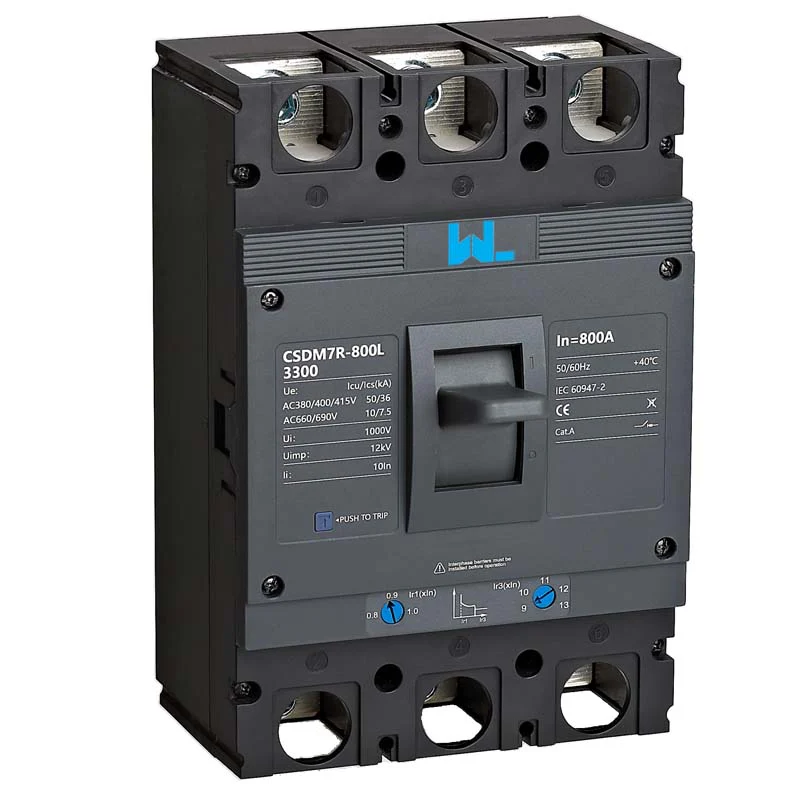
Disjuntor MCCB3P con funciones de protección contra sobrecarga y cortocircuito
Escenario ilustrativo, no un caso documentado de cliente: Cuando un ingeniero de instalaciones en Monterrey revisó una cotización para una línea de empaque trifásica, seleccionó un interruptor compacto de tres polos, copió la corriente nominal del motor en el pedido y esperaba una puesta en marcha sin complicaciones. El interruptor se disparó durante el primer turno de producción; una segunda unidad se sobrecalentó debido a una conexión suelta en el terminal. La causa raíz no fue un producto defectuoso. La especificación había omitido el tiempo de sobrecarga, la corriente de cortocircuito prevista y la necesidad de proteger las tres fases conjuntamente. Por eso los compradores preguntan qué es un MCCB3P interruptor automático con sobrecarga y Protección contra cortocircuitos lo que realmente hace una función y cómo especificarla correctamente.
Resumen: Un interruptor automático de caja moldeada (MCCB) 3-pole combina un disparador de sobrecarga con tiempo inverso con un disparador magnético o electrónico de cortocircuito, abriendo todos los polos de fase cuando se detecta una falla. Seleccione el marco, la corriente continua, la capacidad de interrupción y Configuración de la excursión para que coincida con la instalación, no solo con la etiqueta de carga, y verificar el diseño conforme a IEC 60947-2 (o la adopción nacional aplicable). Un estudio de coordinación y un cronograma de pruebas documentado suelen costar menos que una sola interrupción innecesaria.
Lo que protegen los tres polos
“3P” significa tres polos portadores de corriente accionados por un único mecanismo. En una típica alimentación de motor V, 400, 50 Hz, el interruptor se encuentra aguas arriba de un contactor, un relé de sobrecarga o un variador de velocidad. La apertura de los tres polos aísla conjuntamente los conductores de fase, evitando que el motor siga funcionando con dos fases. La norma IEC 60947-2 trata el dispositivo como un interruptor automático para distribución de baja tensión y especifica la verificación de la elevación de temperatura, la rigidez dieléctrica, las características de funcionamiento y el rendimiento en caso de cortocircuito.
El interruptor automático no sustituye todas las funciones de protección. Sigue siendo necesario un dispositivo diferencial donde se requiera protección contra corrientes de fuga a tierra, y un arrancador de motor puede necesitar componentes separados para la protección contra sobrecargas, el control y la parada de emergencia. La función del MCCB es la interrupción selectiva de una corriente de fase excesiva, al tiempo que se mantiene la continuidad del servicio requerida.
How overload and short-circuit releases work
Overload protection is time dependent
An overload is a sustained current above the cable or equipment design value—for example, a conveyor motor carrying more product than planned. A thermal bimetal or electronic long-time element responds with an inverse-time curve: a modest overcurrent takes longer to trip, while a larger one trips faster. IEC 60947-2 uses defined current levels and time bands for these tests; the exact curve and tolerances belong to the selected trip unit. Engineers should set the long-time pickup below the conductor ampacity and above the normal operating current, allowing for documented starting inrush.
Short-circuit protection is instantaneous
A phase-to-phase or phase-to-ground short circuit can reach kiloampere levels in milliseconds. The magnetic element (or the instantaneous region of an electronic trip) drives the mechanism without waiting for thermal heating. The interrupting rating, expressed as Icu y yocs under IEC 60947-2, must be no lower than the calculated Corriente de fallo potencial at the installation point. Icu is the ultimate breaking capacity; Ics is the service breaking capacity after which the breaker is expected to remain serviceable under the standard test sequence.
For example, if a panel calculation gives 18 kA prospective current, a 25 kA-rated breaker provides a design margin; a 10 kA device does not. This is an illustrative selection check, not a substitute for a short-circuit study or the manufacturer’s tested combinations.
Three-Pole MCCB Rating Requirements
Start with the system voltage and earthing arrangement, then record the continuous corriente de carga, conductor size, ambient temperature and enclosure conditions. A 3P breaker may be available with fixed or adjustable current settings; adjustment cannot increase the frame’s certified interrupting capacity. Derating can apply above the reference ambient (often 40 °C in product standards), in a crowded enclosure, or when several devices carry load side by side.
- Ue and frequency: verify the rated operational voltage and AC frequency for the destination network.
- In / Ir: coordinate the frame and long-time setting with cable ampacity and expected load; never use the dial as a reason to oversize conductors.
- Icu y yocs: compare both with the prospective short-circuit current and the project requirement for post-fault service.
- Terminal and accessory limits: confirm lug torque, conductor range, shunt trip, auxiliary contact and undervoltage-release compatibility.
IEC 60947-1 provides common definitions and general rules, while IEC 60947-2 supplies the circuit-breaker-specific tests. In North America, UL 489 covers molded-case circuit breakers; certification marks and installation rules remain market- and product-specific.
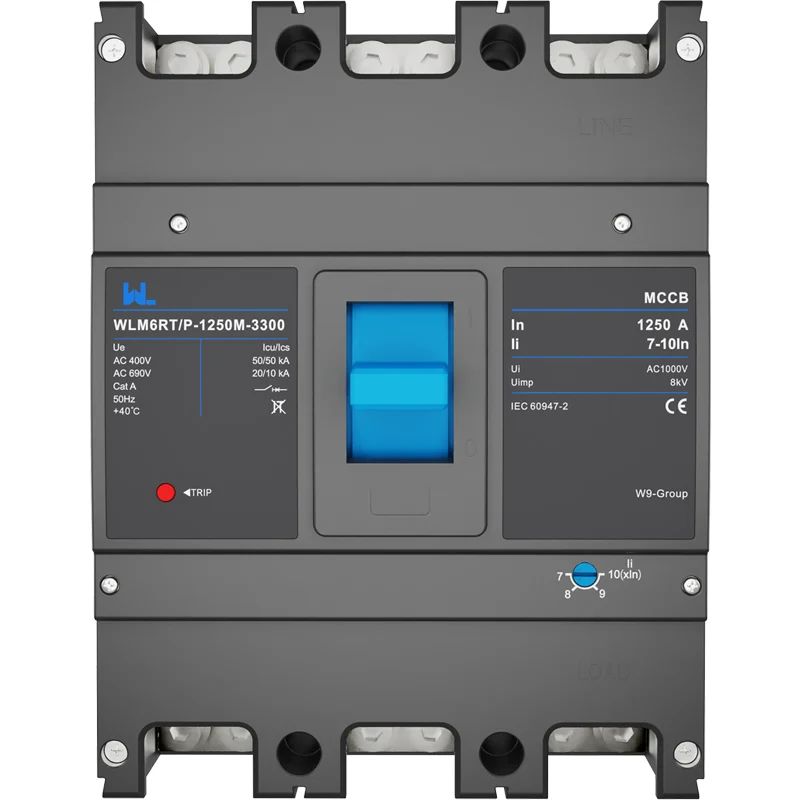
Fixed vs Adjustable Three-Pole MCCBs
| Dimension de la decisión | Fixed thermal-magnetic 3P MCCB | Adjustable or electronic-trip 3P MCCB |
|---|---|---|
| Protection setting | Factory-set long-time and instantaneous values; simple to apply. | Field-selectable ranges; supports staged coordination when documented. |
| Deuda de culpa | Choose a tested Icu/Ics combination for the installation. | Same breaking-capacity obligation; electronics do not increase Icu. |
| Entregue | Visual and torque checks plus functional trip test. | Add setting verification, injection or manufacturer-approved test procedure. |
| Up-front cost tendency | Usually lower for standard feeders. | Usually higher, offset when one frame can serve varied loads. |
| Costo total de propiedad | Fewer settings to misconfigure; limited flexibility after a load change. | Better adaptability, but requires records, trained technicians and periodic review. |
The honest answer is that neither type is universally better. A stable lighting feeder may benefit from a fixed trip, while a process plant with 30–100% load variation can justify adjustment when coordination and maintenance resources are available.
Application and performance matrix
| Solicitud | Typical design question | Evidencia para solicitar |
|---|---|---|
| Motor or compressor feeder | Can the long-time curve ride through starting current without exceeding cable limits? | Trip curve, motor-start data and coordination study. |
| Tablero de distribución comercial | Will downstream breakers trip first, preserving selectivity? | Manufacturer selectivity tables at the actual voltage and fault level. |
| PV or battery DC combiner | Is the breaker specifically rated for DC polarity, voltage and arc interruption? | DC-specific IEC 60947-2 data; do not substitute an AC-only model. |
| Harsh or high-ambient enclosure | What derating applies at the measured temperature and altitude? | Derating curves, enclosure test conditions and installation instructions. |
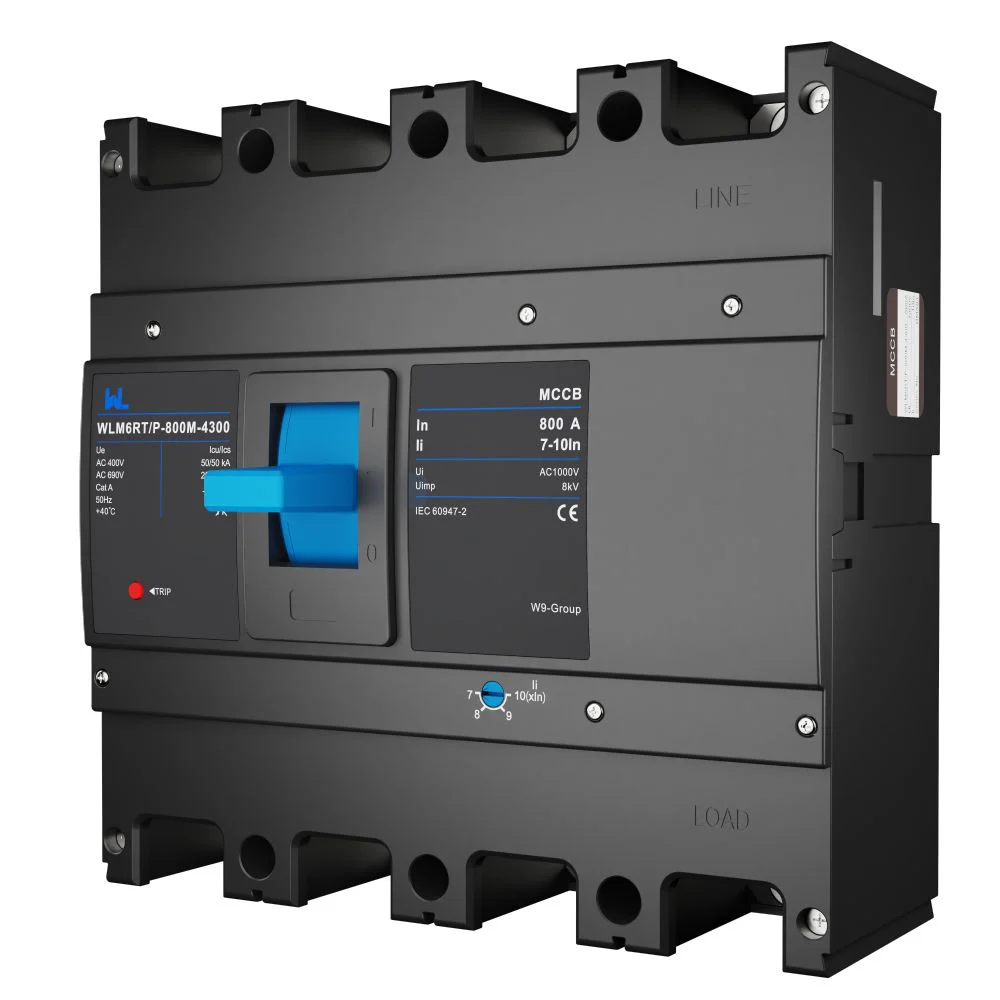
Normas aplicables para MCCB
Compliance is a chain of evidence, not a logo on a quotation. IEC 60947-2 defines type tests such as temperature-rise, overload, dielectric and short-circuit sequences; IEC 60947-1 supplies common terminology and test conventions. UL 489 is the relevant product standard for many US and Canadian installations, while local wiring codes determine conductor sizing, protective-device placement and inspection. A CE mark, where applicable, indicates conformity with relevant EU legislation; it is not itself proof of a particular Icu value.
Ask for a current datasheet, declaration or certificate that identifies the exact frame, pole configuration, voltage and trip unit. Unsupported “10 kA” or “industrial grade” claims can lead to failed inspection, insurance disputes, forced replacement and downtime. The installation designer remains responsible for applying the standard edition and national deviations in the destination market.
Lista de verificación para la adquisición de MCCB
- Calculate maximum demand and prospective fault current at the breaker terminals; record assumptions for future review.
- Match long-time pickup to conductor ampacity, then check starting and inrush currents against the published time-current curve.
- Confirm three-pole switching, neutral arrangements, terminal capacity and required accessories before issuing a purchase order.
- Request routine-test records, installation torque values and a commissioning form; retain the final trip settings in the panel file.
- Plan a post-installation functional test and a periodic inspection interval appropriate to the duty, environment and local code.
W9 Group’s circuit-protection portfolio can be evaluated at the Productos de protección de circuitos page; buyers should still compare the exact model data sheet, tested accessories and destination-market approvals. Related guidance on MCCB features and applications and choosing a moulded-case circuit breaker can support the design review.
Preguntas frecuentes
What does MCCB 3P mean?
MCCB 3P means a molded-case circuit breaker with three mechanically linked poles for a three-phase circuit. It opens the phase conductors together when its trip unit detects an overload or short circuit. Verify whether the project also requires switched neutral or earth-leakage protection.
Does an MCCB protect against overload and short circuit?
A thermal-magnetic or electronic MCCB can provide both functions when the selected trip unit includes long-time and instantaneous (or short-time) elements. Its settings and interrupting rating must be coordinated with the conductors and calculated fault current. It does not automatically provide residual-current or arc-fault protection.
How do I choose the breaking capacity of a 3P MCCB?
Use the prospective short-circuit current at the installation point, then select an I cu at least as high and check the required I cs for service continuity. The value is voltage- and configuration-dependent, so use the manufacturer’s tested table rather than a generic catalogue headline. A qualified engineer should confirm the final result.
Can a 3P MCCB be used for a motor?
Yes, provided the trip curve tolerates documented starting current and the motor circuit includes any required overload, isolation and control devices. Check coordination with the contactor and downstream protection using the manufacturer’s curves. Frequent nuisance trips usually indicate settings or coordination issues, not a higher breaker size by default.
How often should an MCCB be tested?
Follow the equipment manufacturer, site risk assessment and local code; high-fault, dusty or high-temperature environments generally justify shorter inspection intervals. A typical program includes visual inspection, connection-torque checks and a functional trip test, with secondary injection when an electronic unit or protection study requires it. Keep dated records for maintenance and audits.
Referencias
- IEC 60947-2:2024 — ámbito de aplicación del producto interruptor de circuito.
- IEC 61439-1:2020 — Normas generales para la instalación de baja tensión.
- NFPA 70 — Desarrollo y alcance del código de instalación para Estados Unidos.
The difference is not just in the ampere number—it is in the fault study, tested curve and maintenance record that make that number trustworthy. W9 Group builds circuit-protection options for that decision point; review the product range and contact the technical team with your voltage, load and fault-current data.
Para revisar la configuración propuesta, Contacte con W9 Group con el plan de carga, la corriente de fallo disponible y los requisitos del mercado de destino.