











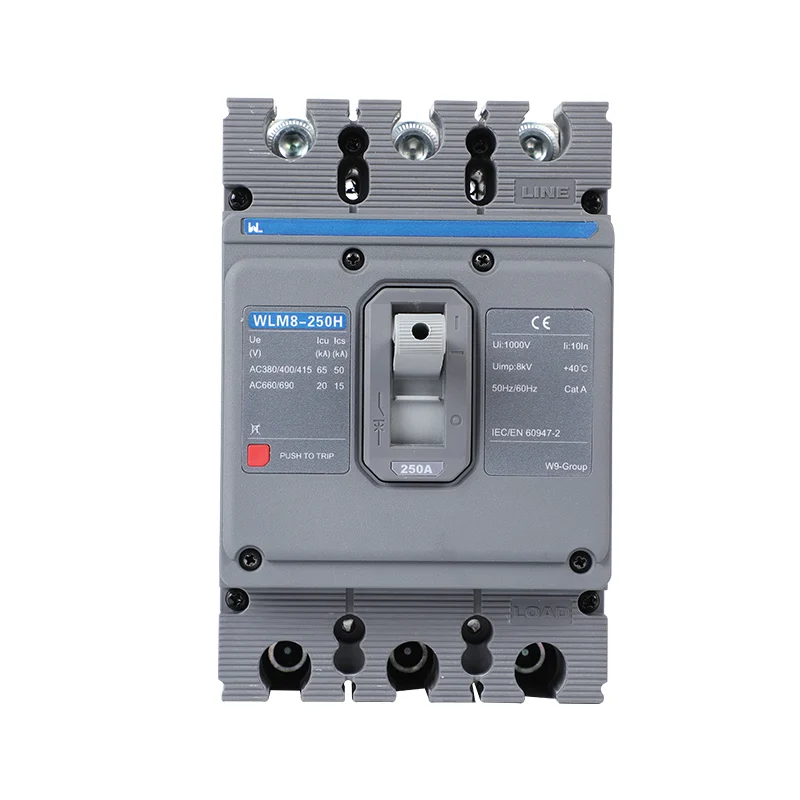





















서지 보호 장치는 무엇을 하는가?
Separate the protective functions
| Event | Relevant protection to verify | SPD boundary |
|---|---|---|
| Transient voltage | Suitable surge limitation | Within declared duty |
| Sustained high voltage | Appropriate voltage protection | Not inferred from transient rating |
| Overload | Overcurrent device | SPD does not replace it |
| Residual current | RCD arrangement | SPD does not replace it |
| SPD field | 질문 |
|---|---|
| Uc | Does it fit continuous system conditions? |
| Up | Does the declared level suit the protection design? |
| 형태 | Does the duty and location match? |
| Backup device | Is the exact protective arrangement approved? |
| 연결 | Are length, routing and bonding correct? |

Distinguish transient limitation from other protection
An SPD limits transient voltage within its declared operating scope. It is not an overload breaker, a residual-current device or a general voltage regulator. A sustained supply overvoltage or an open-neutral event requires its own protective design; a transient-limiting label does not establish that function.
Choose the SPD Type, Uc, Up and protective modes for the actual network and location. Then coordinate the backup device and connection arrangement. High discharge-current capability cannot compensate for the wrong continuous operating voltage or an unsuitable earthing arrangement.
Silent Guardians: The Unsung Heroes Saving Your Gadgets from a Shocking Demise
In a world powered by technology, from the smartphone in your pocket to the refrigerator in your kitchen, an invisible war is constantly being waged. The enemy? Sudden, massive surges of electrical energy that can fry circuits, melt motherboards, and turn your expensive electronics into expensive doorstops in a microsecond. But standing guard on the front lines is a silent, often overlooked hero: the Surge Protective Device (SPD).
So, what’s the big deal? Imagine your home’s electrical wiring is a network of highways, and electricity is the cars flowing at a safe, consistent speed—say, 120 volts. Now, imagine a sudden, massive tidal wave crashing down that highway. That’s an electrical surge. These surges can be caused by external forces like a lightning strike on a nearby power line or internal ones, like a power-hungry air conditioner kicking on.
Without protection, this tidal wave of voltage races through your outlets and straight into your devices. The delicate microchips inside your laptop, television, and gaming console are designed for a smooth flow, not a tsunami. The result is often immediate and catastrophic: a fried device, lost data, and a hefty replacement bill.
Enter the Surge Protective Device: The Ultimate Electrical Bodyguard.
An SPD doesn’t look like much—often a simple strip or a small box tucked behind your router. But inside, it’s a master of lightning-fast redirection. Its primary function is to detect any voltage that exceeds a safe threshold instantly. When it senses that dangerous spike, it doesn’t hesitate. It actively “opens the gates,” creating a low-resistance path to the ground, effectively diverting the massive surge away from your connected equipment and safely into the earth.
The bottom line is simple. In our connected world, an SPD isn’t just an accessory; it’s a necessity. It’s the vigilant guardian ensuring that the next time a storm rolls through or the grid hiccups, your home office, entertainment center, and smart home continue to hum along smoothly, completely unaware of the shocking chaos they just avoided. Don’t just plug in—protect
자주 묻는 질문
What is the main function of an SPD?
It limits transient overvoltage by its declared protective mechanism. Its exact capability depends on the device ratings and installation.
Does an SPD replace a circuit breaker?
No. Overcurrent interruption and surge limitation are different functions. Follow the specified backup-protection arrangement.
Will an SPD correct continuous high supply voltage?
Do not assume it. Sustained overvoltage is different from a transient and requires a suitable protective arrangement.
Why does the installation affect surge protection?
Connecting conductors and bonding influence the transient voltage appearing at equipment. Follow the exact device instructions and applicable installation rules.
참고문헌
- IET — BS 7671 installation-rules scope.
- HSE — electrical safety and competent work.
- IEC catalogue — verify the applicable IEC 61643 edition and product scope.
For an SPD review, W9 그룹에 문의하기 with the supply arrangement, protection location, equipment withstand and installation constraints.