








Best Air Breaker Circuit Breaker Specifications and Installation Guide
An air circuit breaker specification is only useful when it connects the feeder study to the exact order code. A large frame can still have the wrong trip unit, pole arrangement or fault-duty rating. Before calling one model “best,” record the system voltage, design current, prospective fault current, coordination target, maintenance method and switchboard interface.
Summary: The right ACB is selected from rated voltage, continuous current, short-circuit and withstand ratings, poles, trip functions, fixed or withdrawable construction and the installation standard. A 690 V marking does not automatically approve every 400 V assembly, and a withdrawable chassis does not make energized maintenance safe. Require drawings, settings, routine-test evidence and an approved commissioning plan.
ACB Specification Requirements
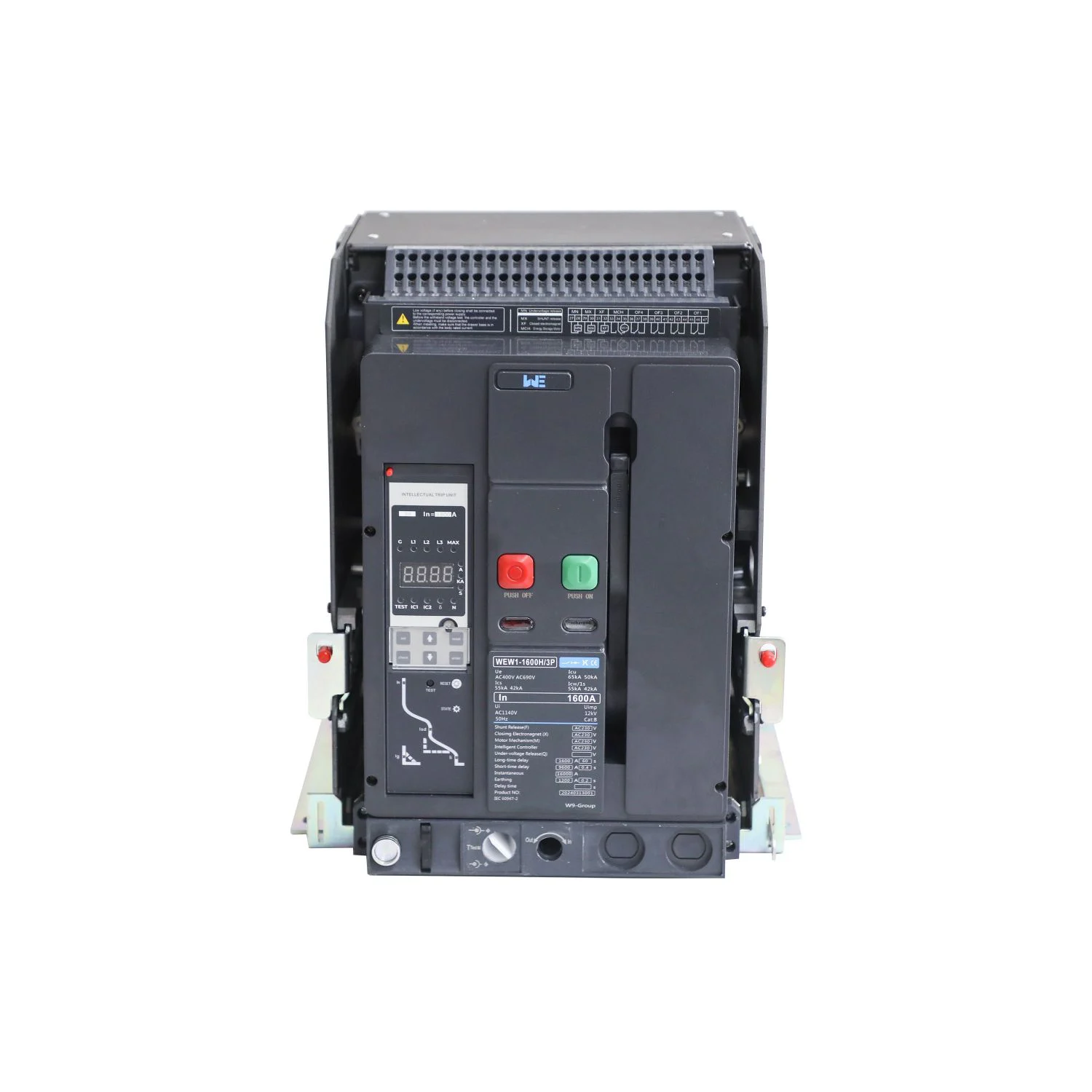
Begin with the electrical system, not a catalogue frame size. Record nominal voltage and frequency, earthing arrangement, design current, duty cycle, ambient temperature, altitude, enclosure ventilation and the maximum and minimum fault current. Then match the conductors, busbar, trip unit and ACB ratings to those values before comparing price or delivery.
Breaking and withstand ratings are separate decisions. Icu describes the ultimate short-circuit duty under the applicable product standard, while service or short-time withstand values support coordination and hold-time requirements. Compare the declared value at the project voltage with the fault study; never transfer a rating from a similar frame or another voltage.
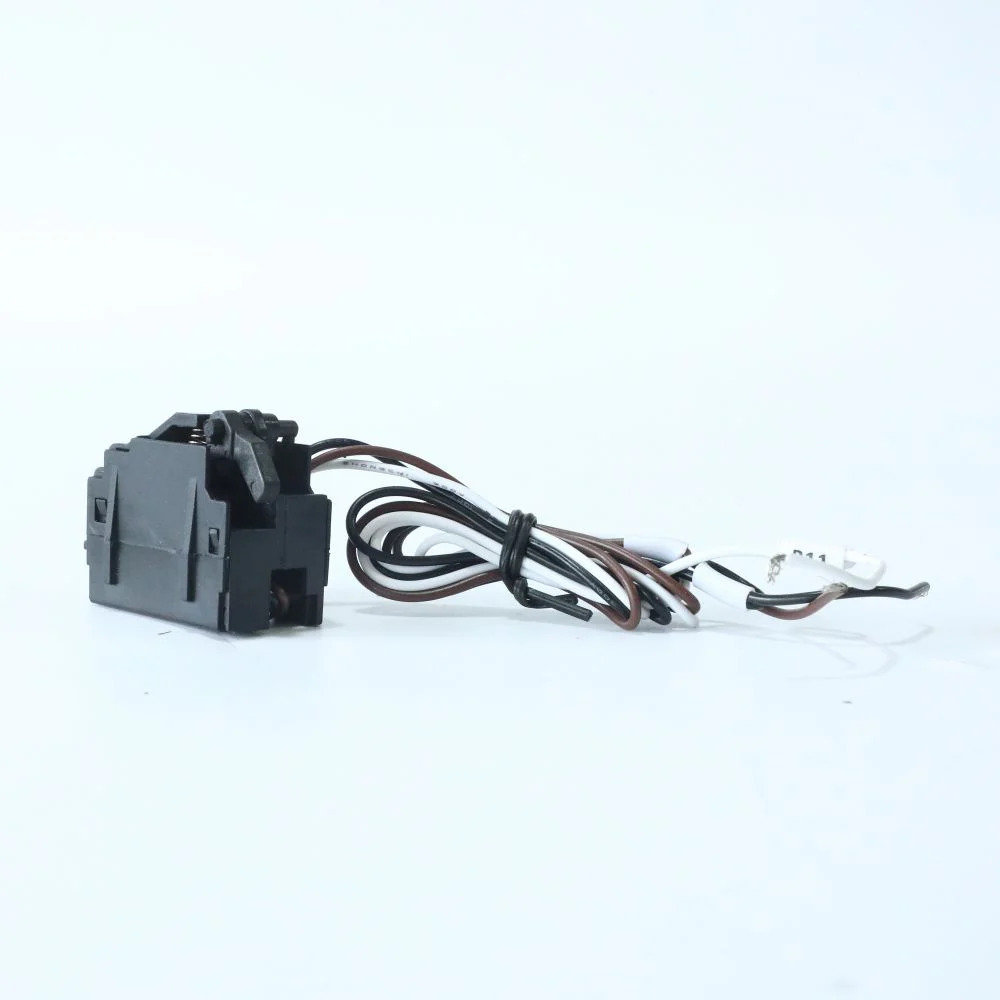
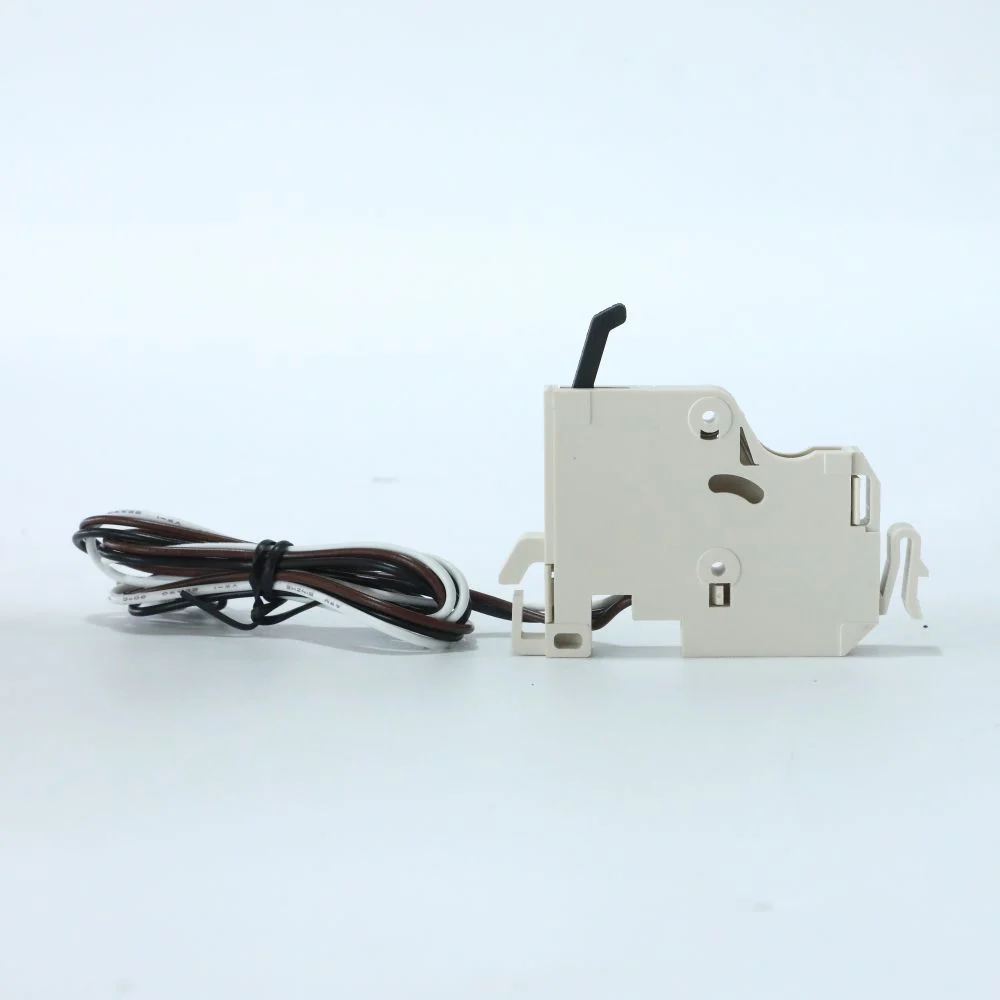
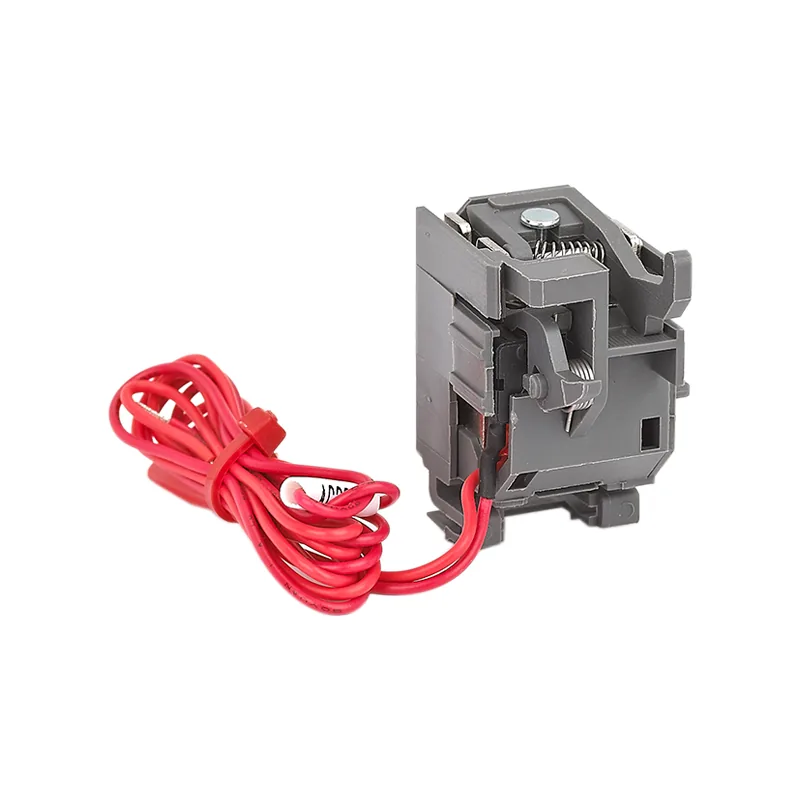
Choose fixed or withdrawable construction according to maintenance strategy. A withdrawable ACB adds disconnected, test, and connected positions, plus shutters and racking interlocks; these support safer isolation but add compartment depth and inspection points. Three-pole units suit systems where the neutral is bonded elsewhere; four-pole units switch the neutral and may be required by the transfer scheme. Specify terminal orientation, control voltage, releases, auxiliary contacts, and communication protocol on the purchase order.
Put All Rating Fields in One Schedule
Use separate fields for rated operational voltage, insulation voltage, continuous current, poles, Icu, Ics, Icw, trip-unit functions, control voltage, short-circuit release and construction type. Add the switchboard form, busbar rating and interlock requirements. This schedule gives procurement and commissioning teams one controlled reference instead of relying on a product family name.
ACB Lifecycle Cost and Maintenance
Unit price is only one part of total cost of ownership (TCO). Adjustable long-, short-, and instantaneous (LSI) protection can reduce nuisance outages when coordinated, while a draw-out design can shorten planned maintenance. Extra accessories, a larger cubicle, and trained technicians increase lifecycle cost. The comparison below uses relative tendencies, not quoted prices.
| 寸法 | Fixed ACB | Withdrawable ACB | Procurement question |
|---|---|---|---|
| Continuity | Requires isolation for removal | Dedicated test/disconnected positions | What outage window is acceptable? |
| メンテナンス | Fewer moving parts | Racking mechanism and shutters need inspection | Who will perform annual functional checks? |
| Space | Generally more compact | Needs compartment and racking clearance | Does the switchboard drawing allow the depth? |
| Protection | Electronic or thermal-magnetic trip options | Same trip options, plus position interlocks | Are LSI settings and interlocks documented? |
| TCO tendency | Lower purchase complexity | Higher hardware cost, potentially shorter service outages | Have downtime and spares been costed? |
For a fast orientation, see the site’s air circuit breaker types overview and its discussion of ACB protection advantages. Those pages provide application context; the final selection still depends on the project study and approved drawings.
Related resource: ACB保護の利点
Size the ACB for the Application
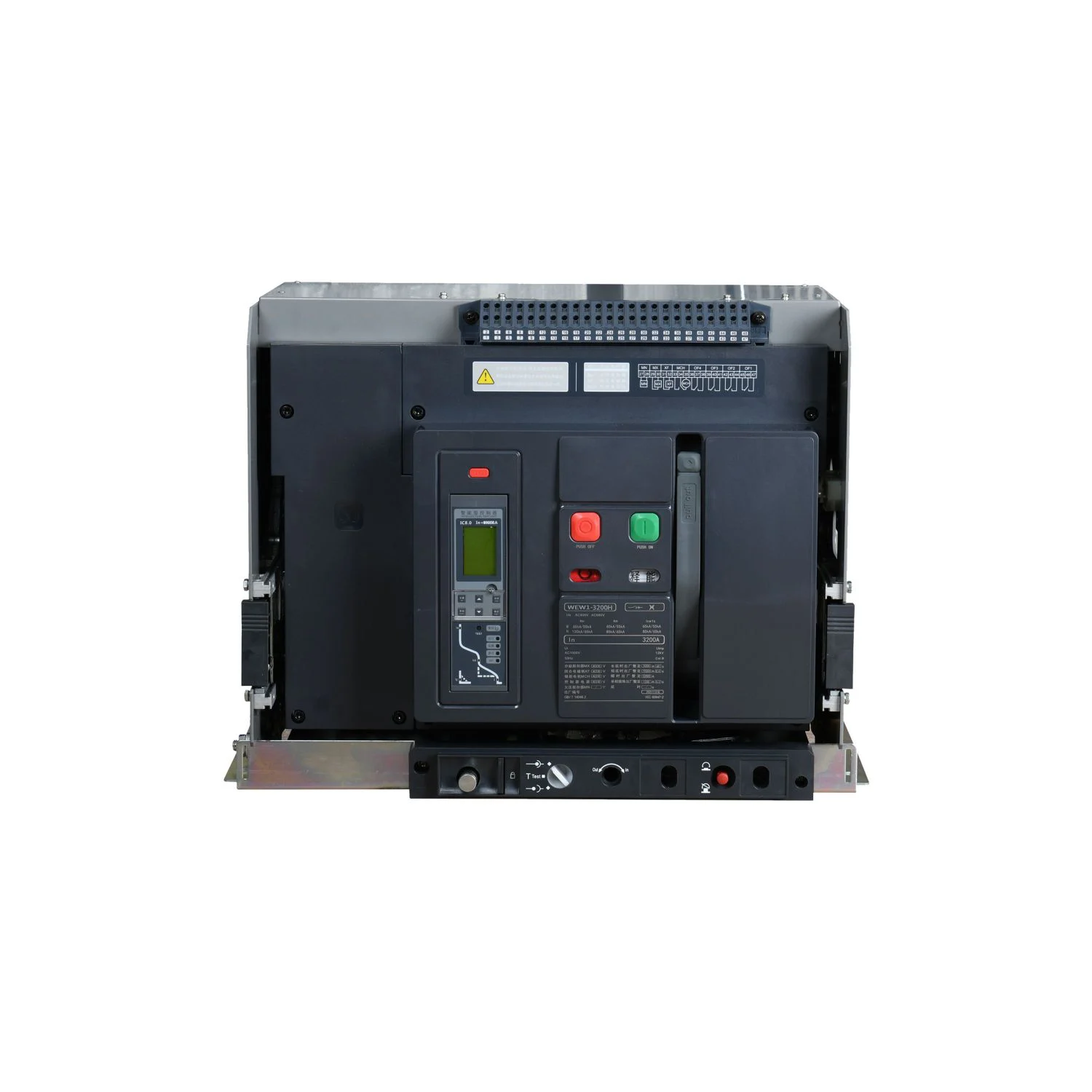
Map each feeder to a realistic operating envelope. The site catalogue lists Wew1 air breakers from 1,000 A through 6,300 A with 400/690 V options, and Wew3 models for listed applications up to 1,000/1,500 V. These are product families, not a substitute for a data sheet: verify pole count, Icu/Ics/Icw, control voltage, and accessories for the exact order code.
| 申請 | Typical engineering emphasis | Specification evidence to request |
|---|---|---|
| Main incomer | High fault level, selective coordination, metering | Short-circuit study, Icw curve, trip-unit settings, communication map |
| Generator or ATS tie | Frequent switching, interlocking, neutral handling | Transfer sequence, mechanical/electrical interlock test, 3P/4P rationale |
| Motor or transformer feeder | Inrush and coordination with downstream protection | Inrush profile, instantaneous pickup, coordination study |
| Data center bus coupler | Continuity, draw-out maintenance, arc-energy reduction | Racking interlock test, arc-flash study, maintenance procedure |
| PV or high-voltage DC interface | DC-rated switching and polarity requirements | Confirm that an AC ACB is not being substituted for a DC-rated device; obtain the applicable DC test report |
ACB Installation and Commissioning
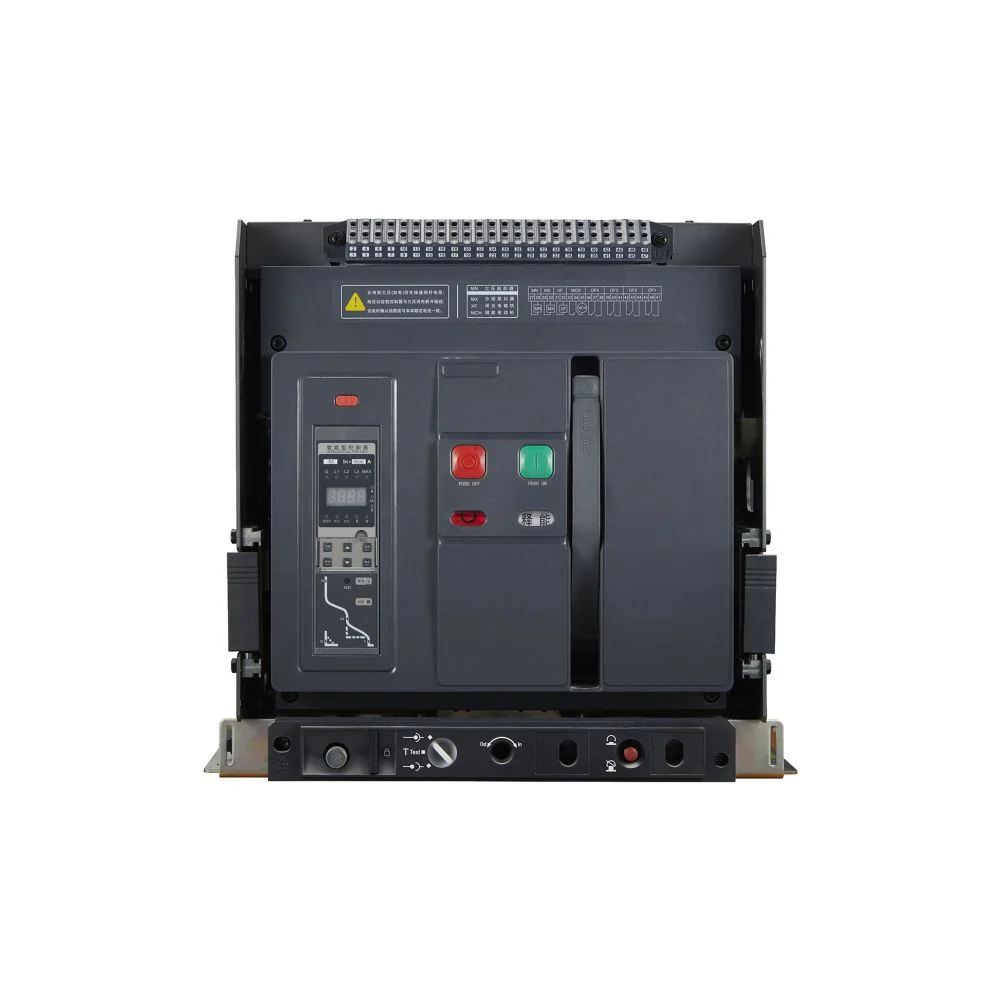
Use the manufacturer’s installation manual and governing code. Before work, isolate, lock out, tag out, and prove dead with a rated tester. Inspect for cracked insulators, contamination, loose hardware, and correct phase barriers. Confirm that the complete assembly’s short-circuit rating is not lower than the breaker rating; IEC 61439 applies to assemblies, while the ACB is evaluated under IEC 60947-2.
Mount the breaker squarely so that primary stabs, busbars, and secondary plugs are not side-loaded. Maintain the manufacturer’s phase-to-phase and phase-to-earth clearances; do not route control wiring through the arc chamber or block ventilation openings. Torque cable lugs and bus joints with a calibrated tool to the values in the manual, mark each completed joint, and record the torque sheet. For draw-out units, test the connected, test, and disconnected positions and verify shutters, position contacts, and racking stops.
Commissioning should include insulation resistance, contact resistance, mechanical operation, release checks, and trip-unit secondary injection. Primary injection may be required to verify the complete current path. Record pickup and trip times against the coordination study. NFPA 70B (where adopted) and local regulations may require documented maintenance procedures; the authority having jurisdiction determines enforcement.
Prove ACB Operating States
Commission open, closed, trip, test and disconnected states according to the manufacturer’s method. Check mechanical and electrical interlocks, secondary injection or other specified trip tests, position contacts, shunt or undervoltage releases and control-power behavior. Record the as-left settings and test results with the switchboard handover file.
ACB Compliance Documentation
- IEC 60947-2: Product requirements and test duties for circuit-breakers, including Icu, Ics, Icw, and dielectric tests. It is a product standard, not a blanket installation approval.
- IEC 60947-1: General rules used with the relevant part-2 requirements, including service conditions and marking.
- IEC 61439: Design verification and routine verification for low-voltage switchgear and controlgear assemblies. The panel builder remains responsible for the assembly.
- UL 1066: A North American standard for low-voltage AC power circuit breakers. Confirm the exact certification and product scope; CE marking or an IEC test report is not automatically a UL listing.
- NFPA 70 (NEC) and local codes: Installation, conductor ampacity, working space, and protection rules vary by jurisdiction. An engineer and the authority having jurisdiction should approve the final design.
Request a declaration or certificate that names the exact model, frame, voltage, poles, and trip unit. Unsupported “certified” language can trigger rejection, re-testing, warranty disputes, or regulatory penalties. Keep the type-test report, routine test record, wiring diagram, settings file, torque log, and commissioning results with the project handover package.
ACB Procurement Checklist
- Issue a one-line diagram and fault-current study with the RFQ; state voltage, frequency, earthing, and required Icu/Ics/Icw.
- Freeze the accessory schedule: 3P/4P, neutral protection, coils, auxiliary contacts, interlocks, metering, and communications.
- Check the breaker against the switchboard assembly drawings, busbar temperature-rise data, and lifting/maintenance clearances.
- Require routine-test and commissioning templates, plus a spare-parts and service plan for the destination country.
- Approve trip settings through a coordination and arc-flash review before energization; seal or password-protect settings where site policy requires.
The test site’s air-breaker range can be a starting point when its published voltage and current envelope matches the project. Ask the supplier for the exact Wew1 or Wew3 datasheet, test evidence, dimensional drawing, and application support before issuing a purchase order. For a broader decision framework, consult how to choose an ACB for industrial needs.
Frequently Asked Questions
What is the difference between an air circuit breaker and an MCCB?
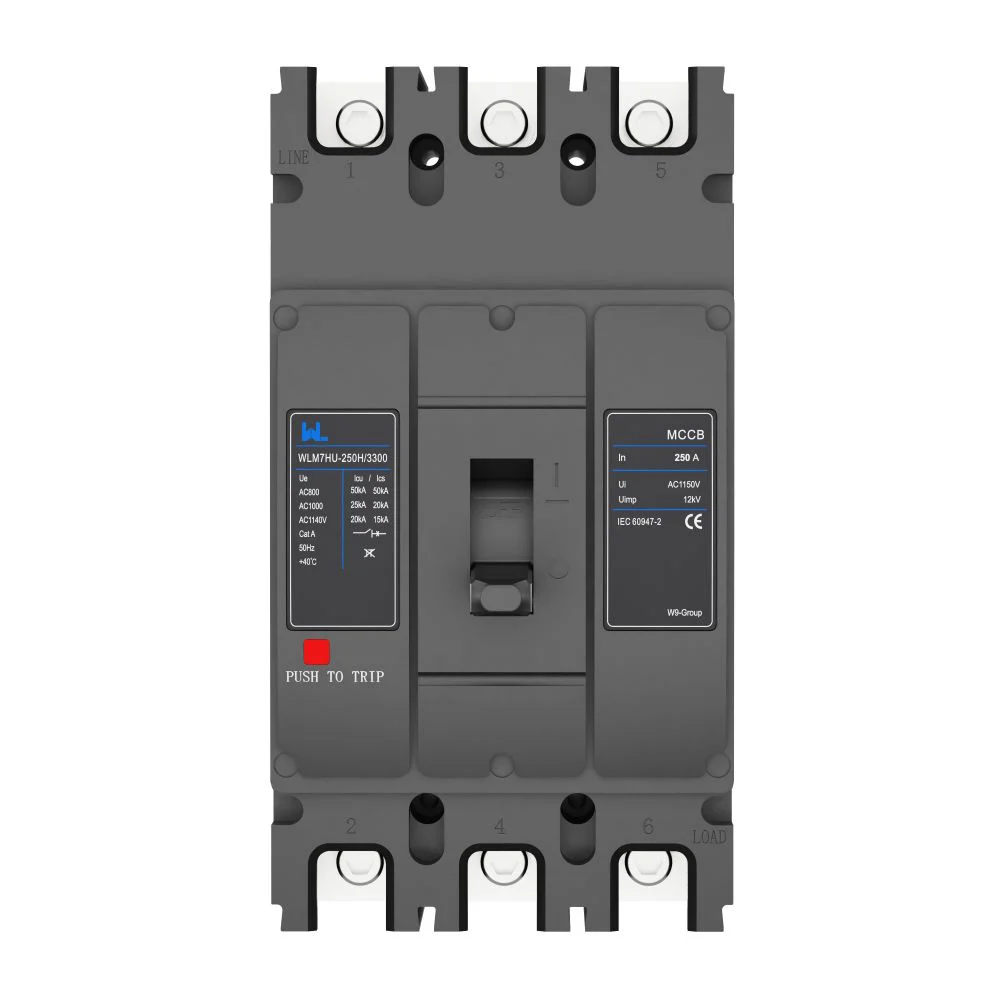
An ACB uses air as the arc-extinguishing medium and is commonly applied as a low-voltage main or feeder breaker at higher currents. An MCCB is a moulded-case device with a different enclosure and rating range. Compare the actual voltage, current, interrupting capacity, dimensions, and coordination data rather than choosing by label alone.
How do I choose the right ACB current rating?
Start with the calculated design current, then apply conductor ampacity, ambient, altitude, and enclosure derating. Set the long-time pickup no higher than the protected conductor and verify short-time and instantaneous settings against the coordination study. The frame rating and trip-unit setting are separate values.
Is a 690 V ACB suitable for every 400 V system?
A breaker marked for 690 V may be usable on a 400 V system, but its tested Icu, Ics, busbar arrangement, and accessories still need confirmation at 400 V. Follow the manufacturer’s ratings table and project specifications; never infer performance from the maximum voltage marking alone.
When should I specify a withdrawable air breaker circuit breaker?
Specify withdrawable construction when maintenance isolation, test-position checks, or rapid replacement has measurable value, such as data centers and generator switchboards. Allow for racking space, shutters, interlocks, and a documented inspection routine. A fixed breaker can be more economical where planned outages are acceptable.
What tests are required before energizing an ACB?
Typical commissioning includes insulation resistance, contact resistance, mechanical operation, release and interlock checks, and trip-unit secondary injection; primary injection may be required by the project. Compare measured pickup and trip times with the approved settings. The responsible engineer and local code determine the final test list.
Technical References
- OSHA 29 CFR 1910.303 — General. U.S. requirements for suitable equipment, ratings, guarding and installation evidence. Accessed 17 October 2026.
- Schneider Electric — Icu and Ics on a PowerPact breaker. Official FAQ, modified 10 May 2022; used for interrupting-capacity terminology, not W9 model equivalence.
- Schneider Electric — Micrologic Trip Units. Official product-range page observed 17 October 2026; used only for trip-unit sensing and signalling concepts.
Closing principle: A reliable air breaker circuit breaker is engineered in the study, proven in the test record, and preserved by disciplined installation.
Ready to match a breaker to your one-line diagram? Review the 回路保護製品 category, then contact the test site’s engineering team for the exact rating, drawings, compliance documents, and commissioning support.