




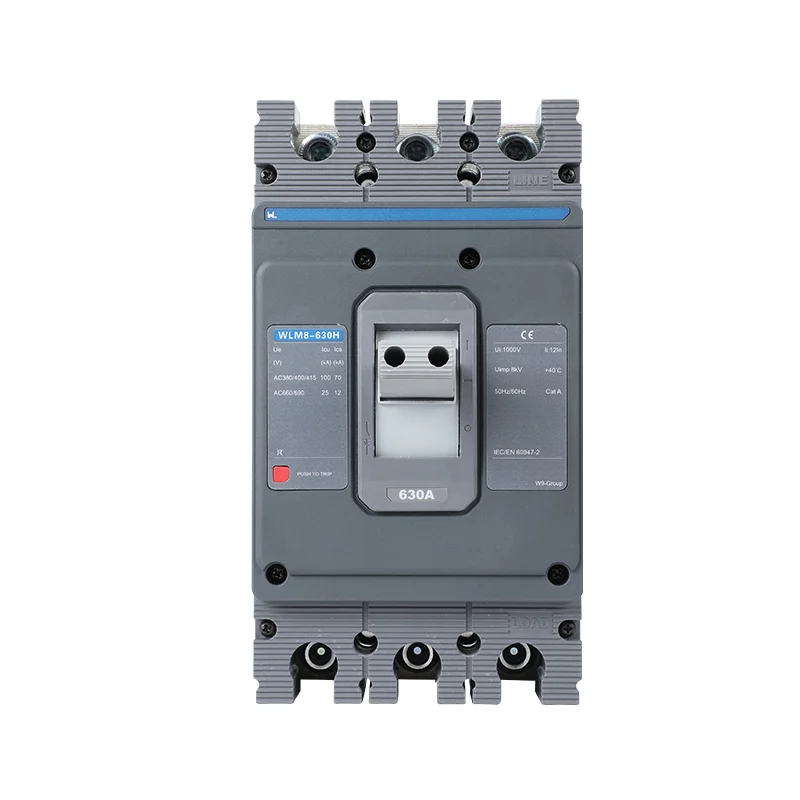
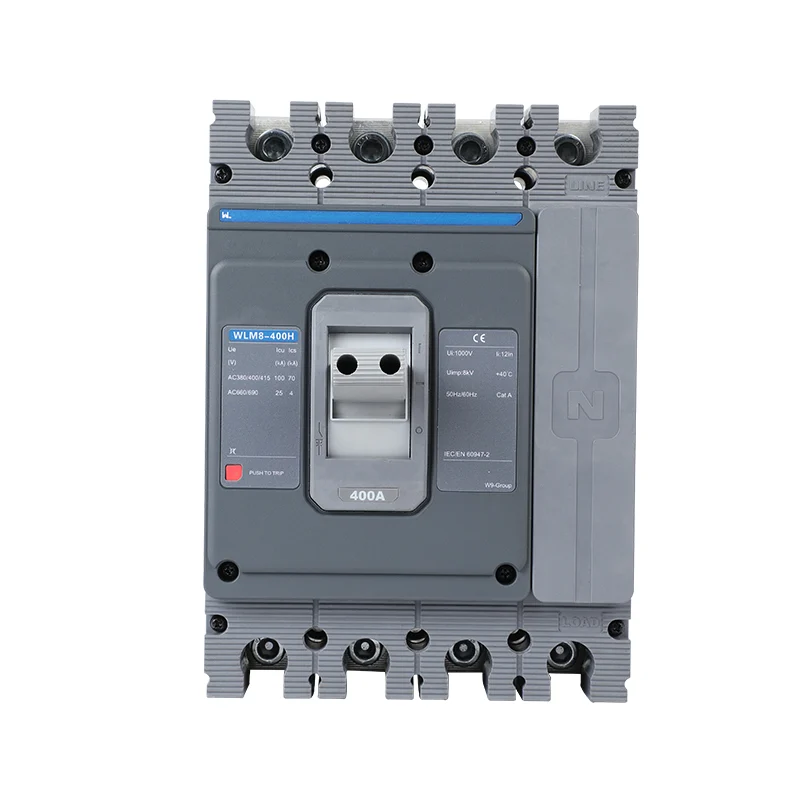
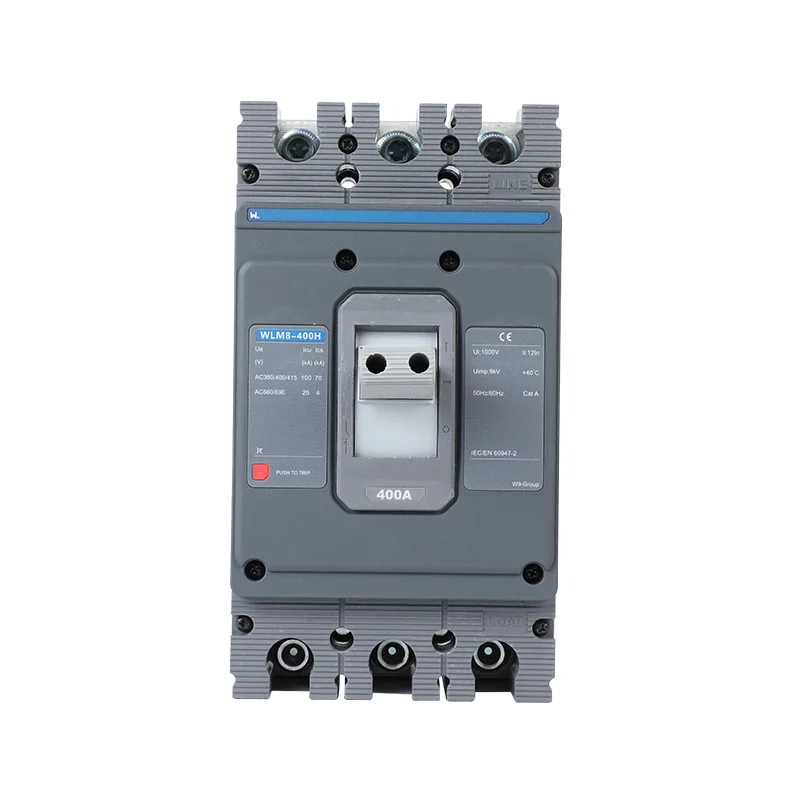
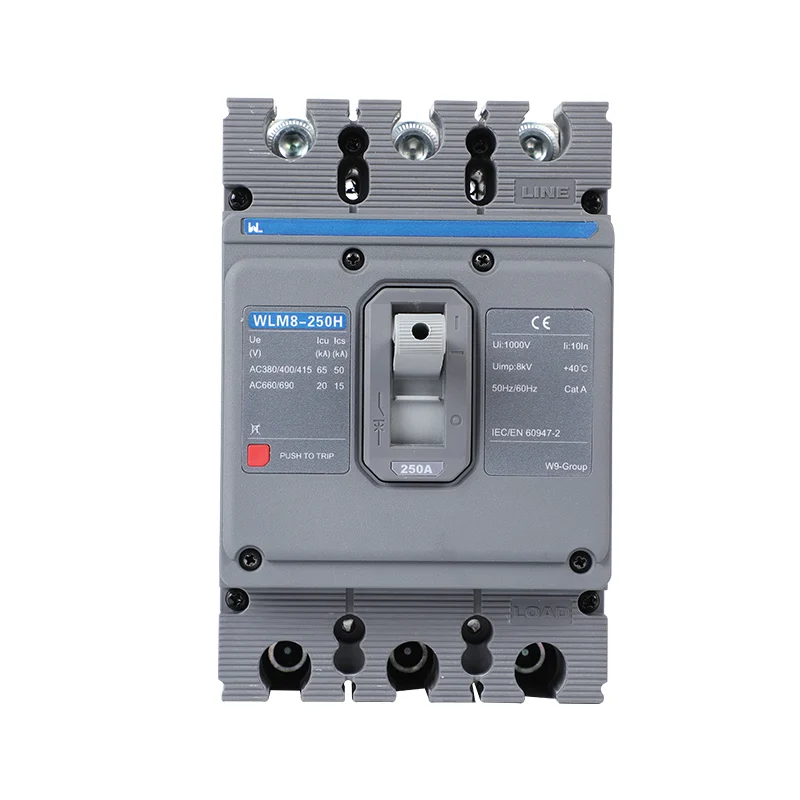






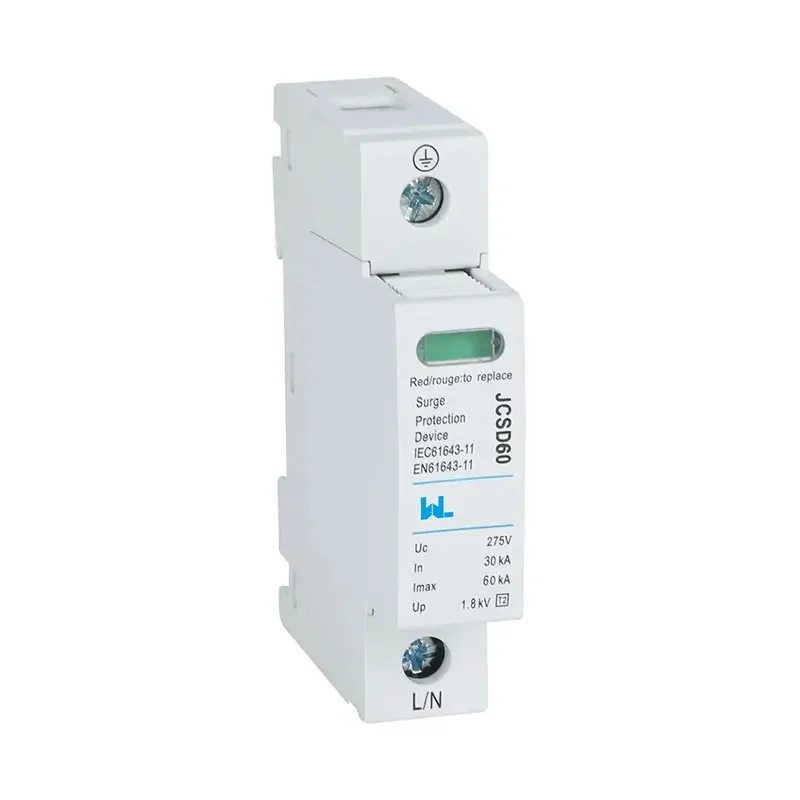
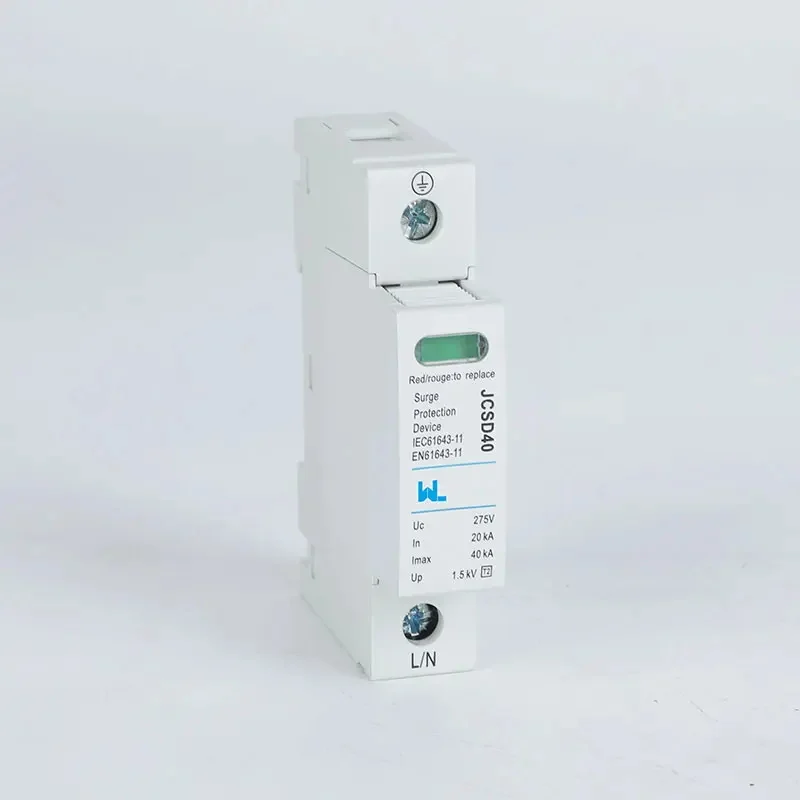









現代の電気システムにおける125A DC小型遮断器の重要な役割
文書化された顧客事例ではないが、一例として次のシナリオを挙げる。ロッテルダムで試運転エンジニアを務めるプリヤが110 Vのバッテリーキャビネットに通電したところ、給電回路用ブレーカーが動作して遮断し、充電器は停電状態となった。交換用のAC用MCBでは数秒間は保持できたものの、接点が開いた後もアークが持続した。外観上の故障原因は不良ブレーカーのように見えたが、根本的な原因は仕様の不適合であった。必要なのは、直流定格の機器であり、極配置および遮断容量の確認が不可欠である。.
要約:125Aの直流用小型遮断器(MCB)は、直流給電回路向けのコンパクトな過電流保護機器ですが、「125A」とだけ記載されていても具体的な情報はほとんど得られません。実際の直流電圧、想定短絡電流、極性、極数、負荷特性および筐体温度に応じて適切なモデルを選定してください。工業用遮断器の一般的な製品規格はIEC 60947-2であり、IEC 60898-1は、その適用範囲内に限定された家庭用および類似用途のMCBのみを対象としています。承認前に、モデル固有の直流試験結果、時限特性曲線、ならびに設置に関する指示書を必ずご確認ください。適切に協調させた機器は、ケーブルの発熱やアークエネルギーを抑制するとともに、正常な状態の蓄電池回路、太陽光発電回路、または制御回路の稼働を維持します。.
ACとDCのブレーカーに関する要件
交流電流は自然に半周期ごとに零点を通過するため、遮断器がアークを消弧しやすくなります。一方、直流電流にはそのような周期的な零点通過がありません。125Aの故障電流では、遮断器に指定された直流電圧に対応した遮断機構が備わっていない限り、アークが持続してしまいます。磁吹式経路、アークシャント、接点間隔などはこの用途に合わせて設計されており、交流定格をそのまま直流に適用することはできません。.
125Aクラスのフレームは、中程度の電力供給に適しています。直流48Vでは、変換損失を考慮しなければ理想的には6kWに相当し、直流110Vでは13.75kWとなります。これらはあくまで参考例としての負荷計算であり、許容連続定格ではありません。設計電流は、依然としてケーブルの許容電流、周囲温度、配線の集束状況、稼働率、および電力変換機器によって決定されます。保護機器の機能に関する実用的な概要については、当社の basic circuit breaker guide.
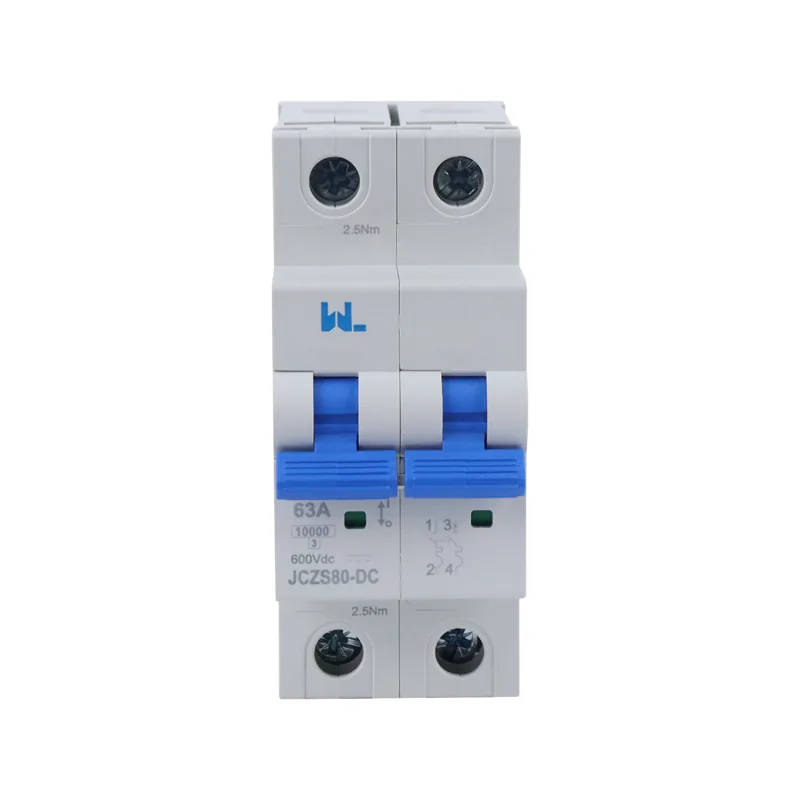
How a 125A DC MCB protects a feeder
Thermal protection for sustained overload
A bimetal or equivalent thermal element responds to I²t heating. If a battery string, inverter input or telecom rectifier draws more than the conductor can carry, the element bends and trips after a time related to the overload. The trip curve must be checked at the product’s reference temperature; enclosure heat can reduce the available margin.
Magnetic protection for short circuits
A magnetic release acts quickly when current rises into the instantaneous region. Its threshold and tolerance are defined by the applicable standard and curve designation. DC systems can have high fault current from batteries or capacitors, so the breaker’s DC interrupting rating must meet or exceed the calculated prospective 短絡電流 at its terminals. Verify Icu and, where provided, Ics at the exact voltage and pole configuration.
Arc interruption and isolation
When contacts open, the breaker stretches and cools the arc through its chamber. Polarity markings, series poles and wiring direction may be mandatory on polarized products; non-polarized designs have different tested limits. A handle position is useful for isolation, but safe work also requires lockout, verification of absence of voltage and discharge of stored energy under local rules.
Applications in modern DC systems
125A DC MCBs are commonly considered for battery energy storage branches, photovoltaic combiner outputs, electric-vehicle auxiliary circuits, telecom power shelves, industrial control panels and data-centre direct-current distribution. The device is installed close enough to the source to limit unprotected conductor length, while coordination with fuses, contactors and upstream breakers preserves selectivity.
PV and battery circuits can feed a fault from more than one direction. Designers therefore check reverse-current capability, back-feed restrictions and whether each pole must open simultaneously. In a battery cabinet, prospective current depends on chemistry, state of charge, bus impedance and parallel strings; a nameplate short-circuit value is not a substitute for a calculation. Our DC MCCBガイド explains when a larger molded-case device is more appropriate than an MCB.
| Decision factor | What to verify for a 125A DC MCB | Risk if overlooked |
|---|---|---|
| System voltage | Continuous and transient DC voltage for each pole arrangement | Insufficient insulation or arc-extinction capability |
| 故障電流 | Prospective short-circuit current at the installation point | Contacts or enclosure cannot safely interrupt the fault |
| Polarity | Polarized versus non-polarized construction and wiring diagram | Arc chute operates outside its tested direction |
| Load profile | Continuous load, inverter inrush, motor start and capacitor charging | Nuisance trips or unprotected overloads |
| Environment | Ambient temperature, altitude, humidity, dust and enclosure rating | Derating, corrosion or unreliable operation |
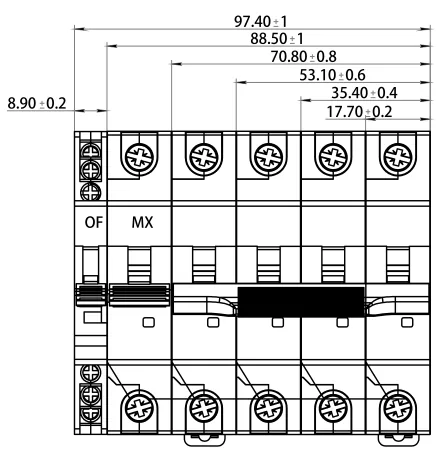
Comparing protection options by application
| オプション | Best-fit use | 強さ | 境界線 |
|---|---|---|---|
| 125A DC MCB | Branch feeders and compact panels | Small footprint, resettable isolation and defined trip curve | DC voltage and breaking capacity are model-specific |
| DC fuse | High fault-energy battery or PV branches | Simple, fast current limiting when correctly selected | One-time replacement; coordination and spare stock required |
| DC MCCB | Higher-current feeders and main distribution | Larger ratings, adjustable trips and accessory options | More space; settings and maintenance must be documented |
| Contactor plus fuse/MCB | Frequent switching and emergency shutdown | Remote control combined with overcurrent protection | Contactor is not a short-circuit protective device by itself |
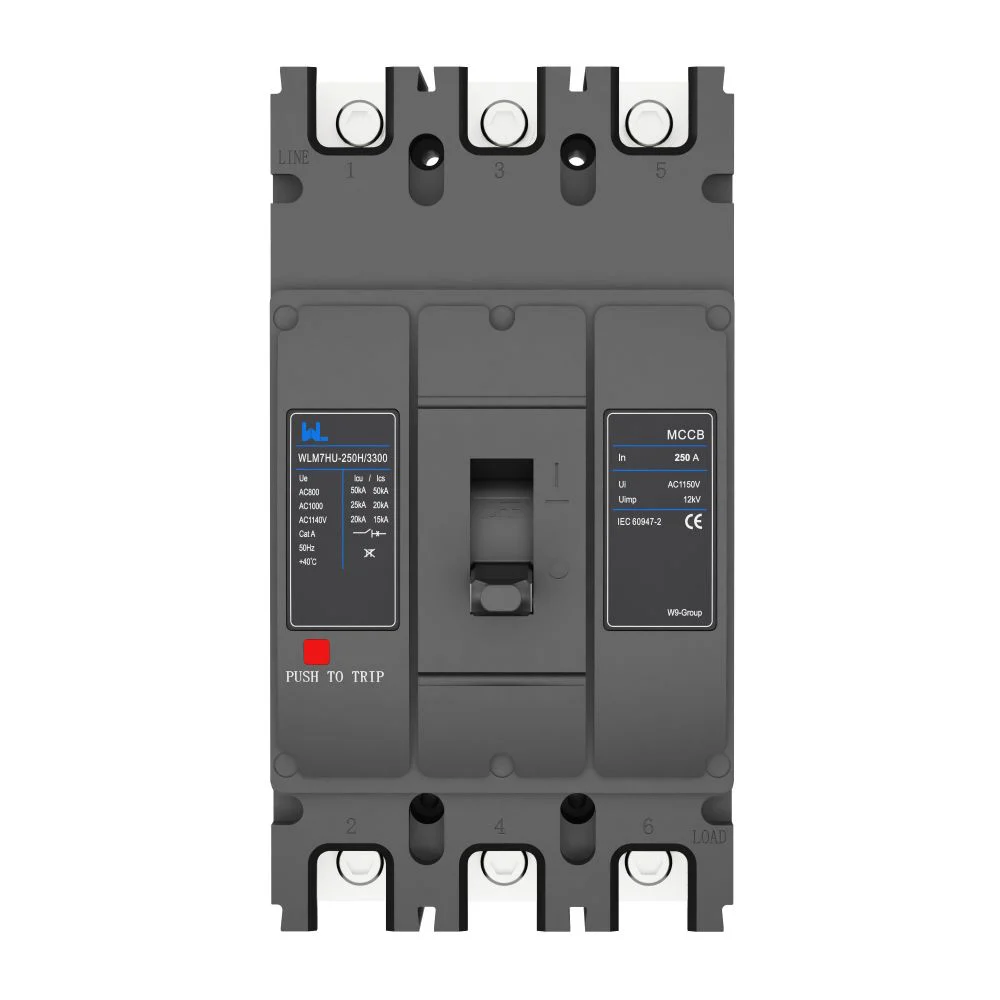
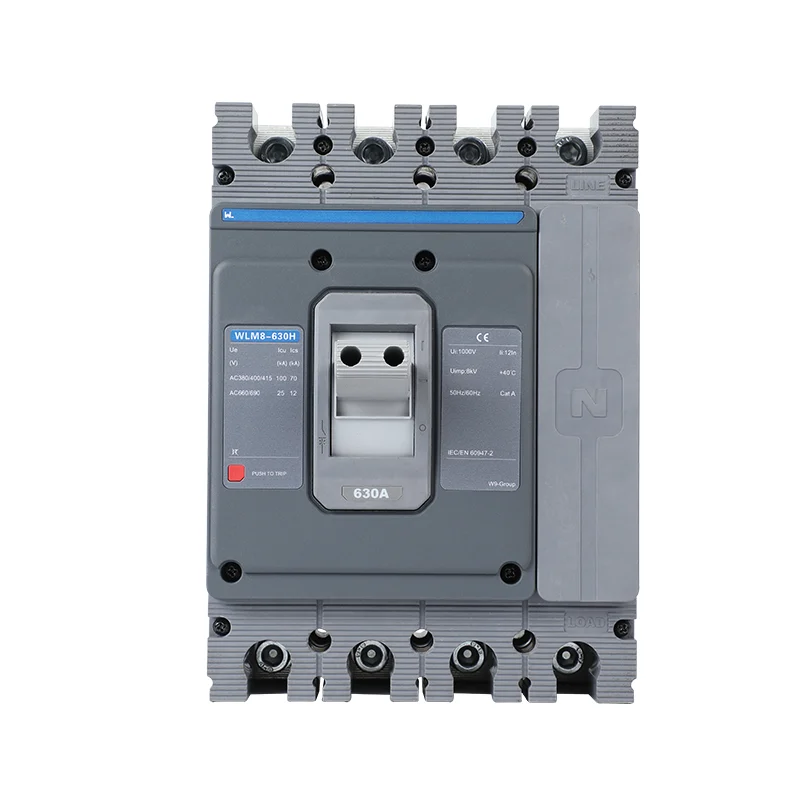
For a broader view of MCB selection, compare the MCB safety article. It is important not to treat a product photograph or a nominal ampere value as evidence of DC suitability.
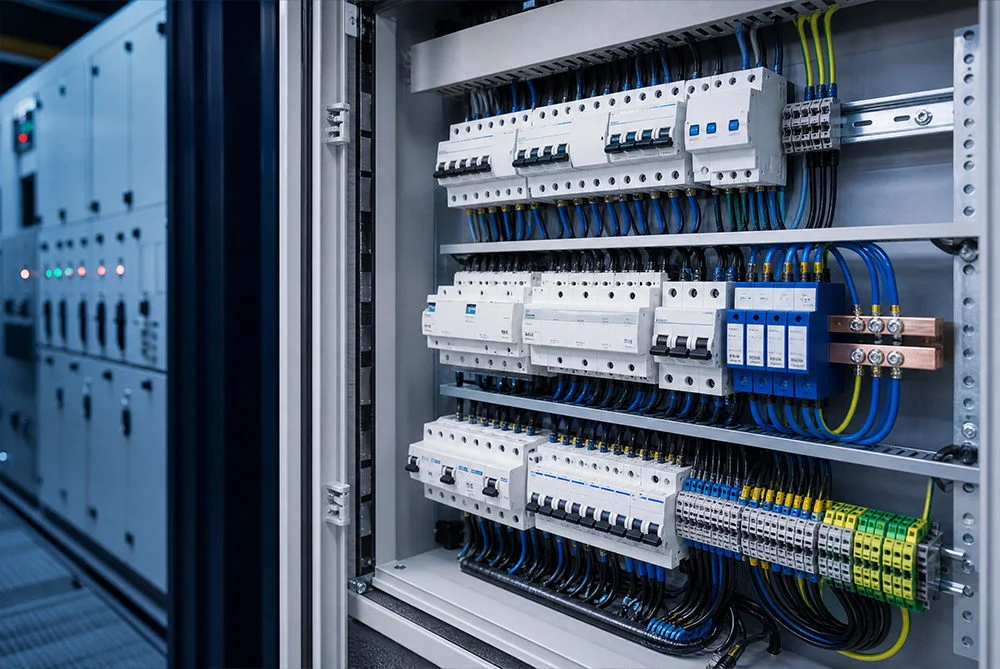
Applicable DC Breaker Standards
IEC 60947-2 specifies circuit-breaker requirements for low-voltage switchgear and controlgear, including rated voltage, utilization categories and short-circuit tests. IEC 60898-1 addresses circuit-breakers for household and similar installations under its stated conditions; a manufacturer must identify whether a particular DC product falls within that scope. IEC 60947-1 supplies common definitions and test principles for low-voltage switchgear. In North America, UL 489 is a separate construction and certification pathway. NFPA 70 (the National Electrical Code) governs installation in the United States, not product certification.
Request the exact edition, declaration or certificate, temperature-rise data, endurance results, 時間電流曲線 and DC short-circuit test report. A test method is not the same as a certification mark, and an IEC reference does not prove UL listing. Destination-market authorities may require additional marking, creepage and clearance, conductor termination or enclosure rules. Unsupported compliance language can delay acceptance, invalidate an inspection or create liability after a fault.
125A DC MCB Procurement Checklist
- Build the duty statement. Record nominal and maximum DC voltage, continuous current, inrush, ambient range, altitude, source type and expected fault current.
- Confirm poles and polarity. Ask whether positive, negative or both conductors must be switched, and whether the product is polarized.
- Check coordination. Overlay time-current curves with upstream fuses, contactors and downstream devices; verify selectivity at the actual fault level.
- Inspect the mechanical interface. Confirm DIN-rail or panel mounting, terminal size, torque, busbar compatibility, shunt trip and auxiliary-contact options.
- Plan commissioning. Include insulation, polarity, continuity, torque, functional trip and lockout checks, with records retained for maintenance.
W9 Group’s public catalogue includes DC and low-voltage protection families. Treat the catalogue as a starting point: send the supplier your one-line diagram and duty statement, then approve only a model-specific datasheet and test documentation. The quality information page can be reviewed alongside those documents.
よくある質問
Can I use a 125A AC MCB on a DC circuit?
Not unless the manufacturer explicitly rates that model for the circuit’s DC voltage, pole arrangement and 故障電流. AC-only ratings do not establish safe DC arc interruption. Select a DC-tested device and follow its polarity and series-pole instructions.
What does 125A mean on a DC miniature circuit breaker?
It is the device’s 定格電流 under defined reference conditions, not a guarantee that every installation may carry 125A continuously. Cable ampacity, ambient derating, enclosure temperature and the load duty determine the permitted operating current. Verify the complete rating table in the datasheet.
How many poles should a 125A DC MCB have?
Choose poles according to the earthing arrangement, isolation objective and product test configuration. Some systems require simultaneous opening of positive and negative conductors; others switch one conductor only. Follow the project standard and the manufacturer’s wiring diagram.
Is a 10kA breaking capacity always enough?
No. The required value is at least the calculated prospective short-circuit current at the breaker, at the stated DC voltage and pole connection. Battery strings and capacitors can produce fault currents above an assumed 10kA, so obtain a study or measured source data before selecting.
Does an MCB replace a battery management system?
No. An MCB provides circuit overcurrent protection and isolation; a battery-management system monitors cell voltage, temperature and state of charge. They are complementary layers, and coordination with contactors and fuses is still required.
信頼できる参考文献
- International Electrotechnical Commission (IEC) standards catalogue — IEC 60947-1, IEC 60947-2 and IEC 60898-1 scopes.
- NFPA 70、国家電気コード — U.S. installation requirements.
- UL Solutions circuit-breaker resources — North American product safety and certification pathways.
- OSHA 29 CFR 1910.303 — U.S. electrical installation safety provisions.
The durable lesson is simple: in DC protection, the arc does not forgive assumptions. If you are specifying a 125A feeder, begin with voltage and fault current, document polarity and coordination, and then invite W9 Group to discuss a model with evidence. Explore the DC and low-voltage circuit protection range and contact the team for drawings, test records and application support.
参考文献
- IEC 60947-2:2024 — 回路断開器製品の範囲.
- IEC 60364-7-712:2025 — 光電設備.
- IEC 60947-3 改訂版 — スイッチ、ディスコンタクト、スイッチ・ディスコンタクト.
PVまたはDCの選択については、, W9グループへのお問い合わせ 最大電圧、動作電流、接地、および意図されたポール接続に関する情報。.