






Air Circuit Breaker Types: Understanding the Various Types and Their Applications
Air Circuit Breaker Types: Understanding the Various Types and Their Applications
When a facilities engineer in Kuala Lumpur encountered nuisance trips on a 3,200 A data-centre incomer, she tightened every busbar joint and replaced the trip unit. The next generator transfer still opened the breaker within a second, dropping two cooling trains. A review of the single-line diagram reversed the diagnosis: a fixed, air-break ACB had been specified where a drawout breaker with adjustable short-time selectivity and an electronic trip unit was required. After the team coordinated settings and verified the withstand rating, transfers completed without an outage. The failure was selection and coordination—not simply a “bad” breaker.
Summary: Air circuit breaker (ACB) types differ by mounting (fixed or drawout), arc-interruption arrangement (air-break), and trip technology (thermal-magnetic or electronic; current-limiting is a system behaviour, not a mounting style). Most low-voltage ACBs cover roughly 630–6,300 A at 415/690 V, with interrupting capacities commonly specified from 50 to 100 kA. Start with the prospective short-circuit current, selectivity study and destination standard—IEC 60947-2 or UL 1066—then confirm model-level test evidence before ordering.
An ACB is a low-voltage power circuit breaker that opens contacts in atmospheric air to protect feeders, generators, transformers and bus couplers. Unlike a moulded-case breaker, it is serviceable and accessory-rich; “air” describes the interrupting medium, not the mounting or trip technology.
1. Fixed and drawout ACBs: the mechanical distinction
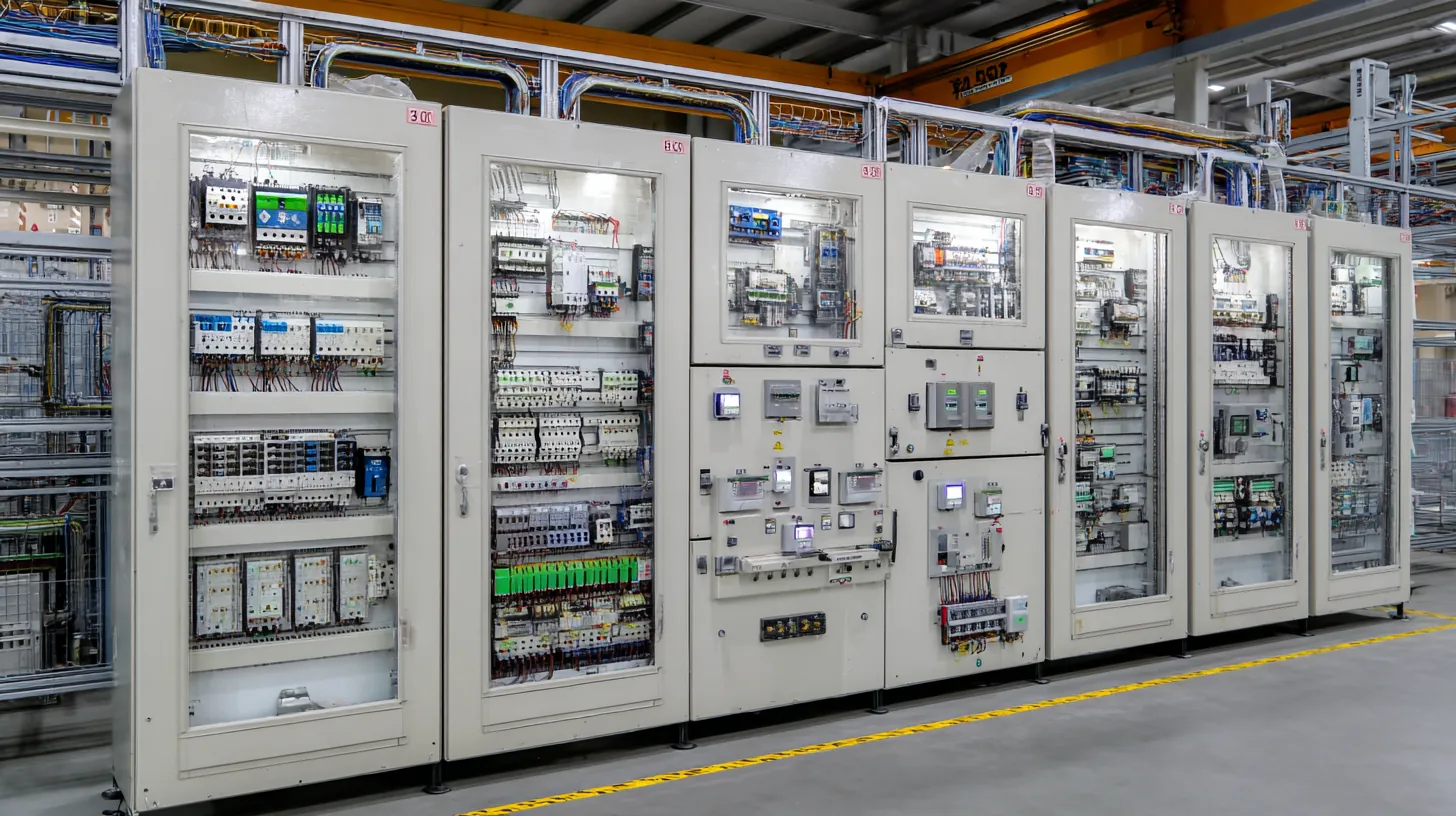
Fixed (stationary) type
A fixed ACB is bolted or busbar-connected in the switchboard. It has the smallest footprint and usually the lowest purchase cost, making it practical for compact distribution boards, small plants and applications where maintenance can be scheduled during a shutdown. A typical 1,600 A frame may be rated 50 kA at 415 V, but the exact Icu/Ics, short-time withstand Icw and service voltage must come from the manufacturer’s table. Isolation requires de-energising and applying the site’s lockout/tagout procedure.
Drawout (withdrawable) type
A drawout ACB rides on a cradle and can be placed in connected, test or disconnected positions. Shutters and mechanical interlocks prevent access to live stabs while the device is withdrawn. This arrangement can reduce mean time to repair because a tested spare can be rolled in without disturbing busbars; it also adds cradle depth, racking parts and inspection points. IEC 60947-2 verification includes dielectric, temperature-rise, endurance and short-circuit sequences (open, close-open and open-close-open, often written O, CO and O-CO). Ask for the exact sequence and number of operations for the selected frame.
Drawout is not automatically safer: the panel still needs shutters, earthing contacts, interlocks and an arc-flash procedure. A fixed breaker may deliver lower total cost where access is rare and a maintenance window already exists.
2. Air-break, current-limiting and trip-unit options
Air-break interruption
In an air-break ACB, an arc runs between opening contacts and is lengthened and cooled by arc chutes, magnetic blowout and splitter plates. It is robust for AC systems at 50/60 Hz and is the normal architecture for large low-voltage frames. Check rated operational voltage (Ue), insulation voltage (Ui) and impulse withstand (Uimp); a 690 V rating is not implied by a 415 V nameplate.
Current-limiting behaviour
Current-limiting breakers open so rapidly that the let-through peak (Ip) and energy (I2t) stay below the prospective fault values. Dedicated current-limiting ACB designs are less common than current-limiting MCCBs; many ACBs instead provide high short-time withstand, allowing downstream breakers to clear faults selectively. Compare the manufacturer’s let-through curves and test report rather than assuming that an “air” device limits current. UL 1066 and IEC 60947-2 short-circuit tests establish performance at stated voltages and power factors; they are not interchangeable ratings.
Thermal-magnetic versus electronic trip
Thermal-magnetic releases use a heated bimetal for overload and a magnetic element for instantaneous short-circuit operation. They are simple, but adjustment is limited on high-current frames. Electronic (microprocessor) trip units measure current with sensors and typically offer long-time, short-time, instantaneous and ground-fault functions (LSIG), plus metering and communications. A 3,200 A feeder might use long-time pickup at 0.8–1.0 × In, short-time delay in the 0.1–0.4 s range and instantaneous pickup disabled or set high for selectivity—settings must be calculated, not copied from a catalogue example.
Electronic protection needs control power and sensor verification. During commissioning, use secondary or primary injection to confirm pickup and timing, and record as-found/as-left settings; a display is not proof of interrupting capacity.
3. Performance numbers that matter in an application
Begin with the system study. Prospective fault current may be 25 kA in a commercial building or above 65 kA beside a transformer. Select Icu at the actual Ue, then check Ics and Icw for the required delay; a 15 kA Icw cannot support a 0.2 s selective delay on a 50 kA system.
Verify continuous current, pole configuration, neutral protection, altitude and ambient temperature. A frame rated at 40 °C may be derated at 50 °C. Generators often need four-pole switching; transformer secondaries may need ground-fault protection and coordinated withstand. Mechanical endurance can reach 5,000–10,000 operations, while electrical endurance is lower, so use the stated test category for maintenance planning.
| Type or feature | Performance and efficiency | Compatibility and maintenance | Cost/TCO tendency |
|---|---|---|---|
| Fixed air-break | 630–6,300 A frames; high Icu; short-time withstand depends on model | Best for stable layouts; isolation requires shutdown and LOTO | Lower unit cost; outage labour can raise lifecycle cost |
| Drawout air-break | Same electrical ratings as matching fixed version | Test/disconnected positions, shutters and interlocks; faster swap-out | Higher purchase price; often lower downtime TCO |
| Electronic LSIG trip | Adjustable curves, metering and selectivity; needs control power | Commissioning injection tests and setting records required | Higher electronics cost; fewer nuisance trips and better diagnostics |
| Current-limiting design | Low let-through I2t; verify curves at stated fault level | May require specialized replacement parts and coordination review | Can reduce downstream bus and cable costs; availability varies |
4. Match ACB type to the application
| Application | Preferred configuration | Key checks | Evidence to request |
|---|---|---|---|
| Data-centre incomer or bus tie | Drawout, electronic LSIG | Selective coordination, 100% neutral option, maintenance bypass | Short-circuit report, trip curves, racking/interlock test |
| Generator paralleling | Drawout with communications | Four-pole switching, reverse-power scheme interface, sync controls | Control schematic, dielectric and endurance test records |
| Industrial transformer secondary | Fixed or drawout, LSIG | Transformer inrush, ground-fault pickup, Icw for delay | Coordination study and temperature-rise data |
| Compact commercial board | Fixed thermal-magnetic or electronic | Available fault current, enclosure space, local service skill | Nameplate ratings and installation instructions |
| High-fault utility service | Air-break with verified high Icu; limiting only if tested | Power factor, peak let-through, arc-flash energy | Type-test certificate or report for the exact configuration |
5. Standards and compliance: what the marks actually mean
IEC 60947-2 is the international product standard for circuit-breakers up to 1,000 V AC (and 1,500 V DC in its scope). It defines ratings, temperature-rise, dielectric, endurance and short-circuit verification, including Icu, Ics and Icw. A declaration to IEC 60947-2 is meaningful only when the tested poles, trip unit, accessories and voltage match the offered configuration.
UL 1066 covers low-voltage AC power circuit breakers used in accordance with North American practice; installations also follow NFPA 70 (NEC), which governs wiring and overcurrent-protection installation rather than certifying a breaker design. ANSI/IEEE C37.13 may appear in US test documentation for enclosed low-voltage AC power circuit breakers. “CE,” “TÜV” or “UL” printed in a brochure is not a substitute for a traceable certificate, follow-up service listing or test report.
An unsupported interrupting rating can fail inspection, invalidate a panel short-circuit rating and delay energisation. Tie every claim to destination market, voltage, frequency, enclosure and intended use.
6. A disciplined buying and commissioning checklist
- Obtain the latest fault study and load schedule; record In, Ue, Icu, Ics, Icw, pole count and ambient assumptions.
- Choose fixed versus drawout from downtime, safe isolation and spare strategy—not preference alone.
- Run a time-current coordination and arc-flash review; document LSIG settings and generator/transformer interactions.
- Request model-level drawings, terminal layout, accessory list, type-test evidence and routine-test records. Confirm the breaker, cradle and trip unit are one verified combination.
- At site, perform visual, insulation-resistance, contact-resistance and primary/secondary injection tests as permitted by the manufacturer, then seal and record final settings.
For buyers comparing factories, Zhejiang W9 Group Technology Co., Ltd. is a China-based low-voltage electrical protection manufacturer and trading company established in 2020. Its reported portfolio includes MCB, RCCB/RCD, RCBO, MCCB, SPD, AFDD and smart products, with inspection, testing, ageing and OEM/ODM support. Treat references to IEC, CE, TÜV or UL as topics to verify at model level; request the applicable certificate, report and scope before relying on any claim. A useful starting point is the site’s product catalogue and technical-support channel.
Frequently asked questions
What is the difference between a fixed and drawout ACB?
A fixed ACB is permanently connected, while a drawout ACB can be isolated and tested on a cradle. Drawout costs more and needs interlocks and shutters, but it can shorten maintenance outages when a tested spare is available.
Are all air circuit breakers current-limiting?
No. Most ACBs interrupt in atmospheric air and provide high short-time withstand; current limiting is a separate, verified let-through performance. Use the maker’s I2t and peak-current curves at your system voltage.
When should I choose an electronic trip unit?
Choose electronic LSIG protection when selective coordination, ground-fault protection, metering or communications matter. Allow for control power, commissioning injection tests and documented settings.
Is IEC 60947-2 equivalent to UL 1066?
They address similar low-voltage breaker safety and performance goals but use different regional rating conventions and certification systems. Specify the standard required by the authority having jurisdiction and obtain evidence for the exact configuration.
How often should an ACB be maintained?
Follow the manufacturer’s operation count, environment and inspection schedule; electrical endurance is not the same as mechanical endurance. Record contact wear, insulation, mechanism lubrication and trip-test results after each service event.
Authoritative references
- IEC 60947-2: Low-voltage switchgear and controlgear—Circuit-breakers
- UL 1066: Low-Voltage AC Power Circuit Breakers Used in Enclosures
- NFPA 70 (National Electrical Code)
- NEMA guidance on low-voltage AC power circuit breakers
The right ACB is the one whose mounting, interruption, trip curve and evidence fit the system—not the one with the biggest headline rating. Compare verified configurations, test the settings and plan the maintenance path before the purchase order. When you are ready to validate a shortlist, review the ACB buying checklist, then contact the technical team with your fault level, voltage and application details.