























How to Choose a Photovoltaic DC Circuit Breaker for PV Strings and Combiner Boxes
A solar combiner contains several different electrical duties, even when its single-line drawing looks repetitive. A string device, combined-output breaker and maintenance isolator do not automatically need the same current or interruption characteristics. Ordering every position from one headline voltage and ampere rating can leave the actual protection requirement unresolved.
Quick answer: choose a photovoltaic DC circuit breaker from its exact location and protective task. Establish the maximum DC voltage under the design conditions, the operating and fault currents, possible reverse-current contributions, earthing arrangement and approved pole connection. Then check the trip characteristics, voltage-specific breaking capacity and installation environment. An MCCB may be appropriate on a combined output, while individual strings can require a different protective-device category or no separate overcurrent device under the applicable design rules. The number of strings alone does not settle that question. Use module, inverter and protective-device documentation together before releasing the combiner specification.
Separate string protection from the combined output
A string circuit carries the output of its series-connected modules. Its fault assessment must consider current entering a fault from other sources, including parallel strings and any relevant equipment contribution. The module’s maximum permitted series-fuse or overcurrent-protection value is an important limit, but it is not a complete selection instruction for every kind of circuit breaker.
The combined output carries the aggregated operating current of the connected strings. Its protective task relates to the feeder conductors, downstream equipment and the actual fault paths. A device selected for that position cannot be copied into every string position. Conversely, a small string protective device cannot be assumed to protect the combined feeder adequately.
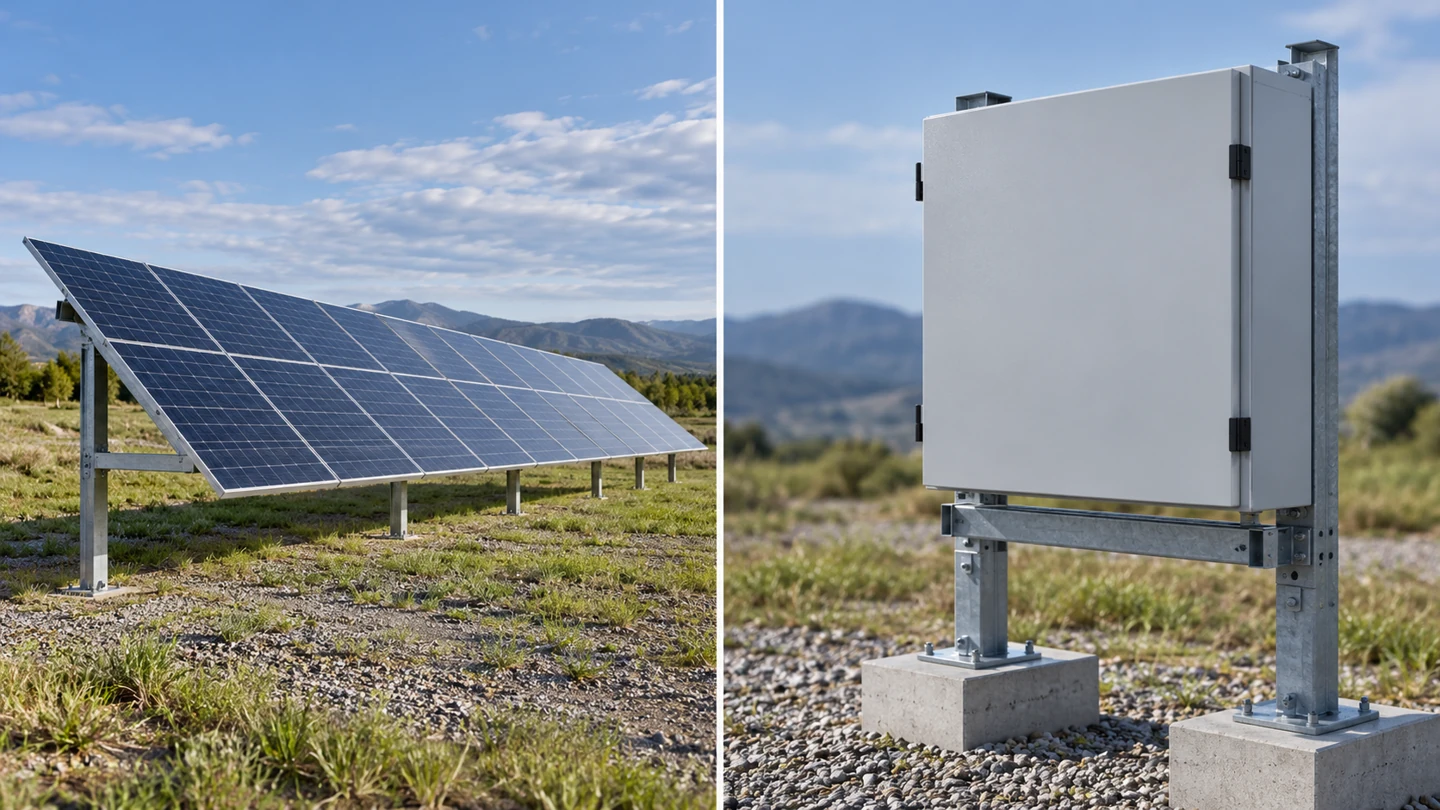
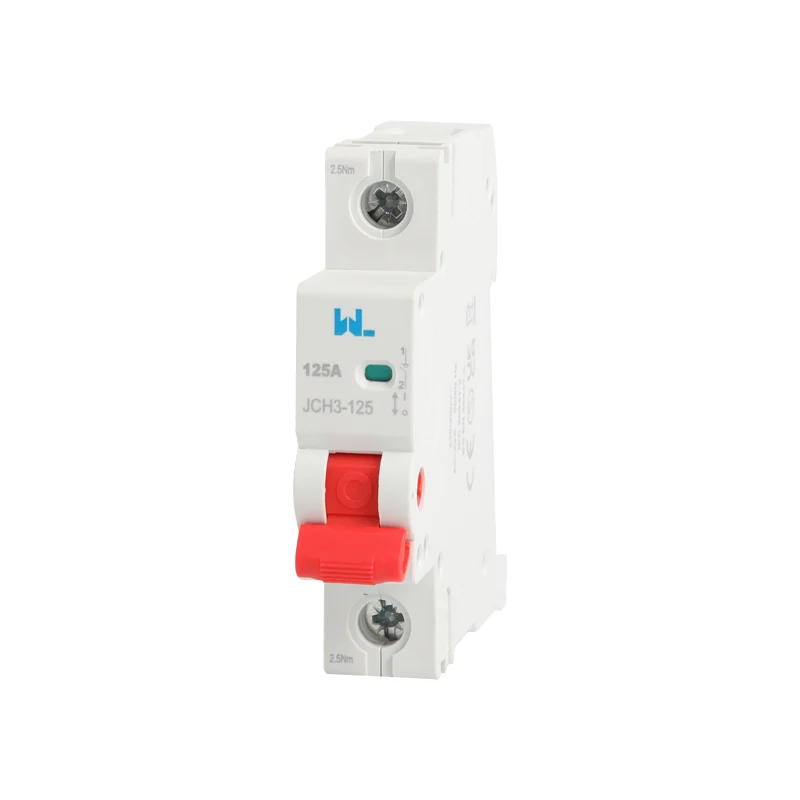
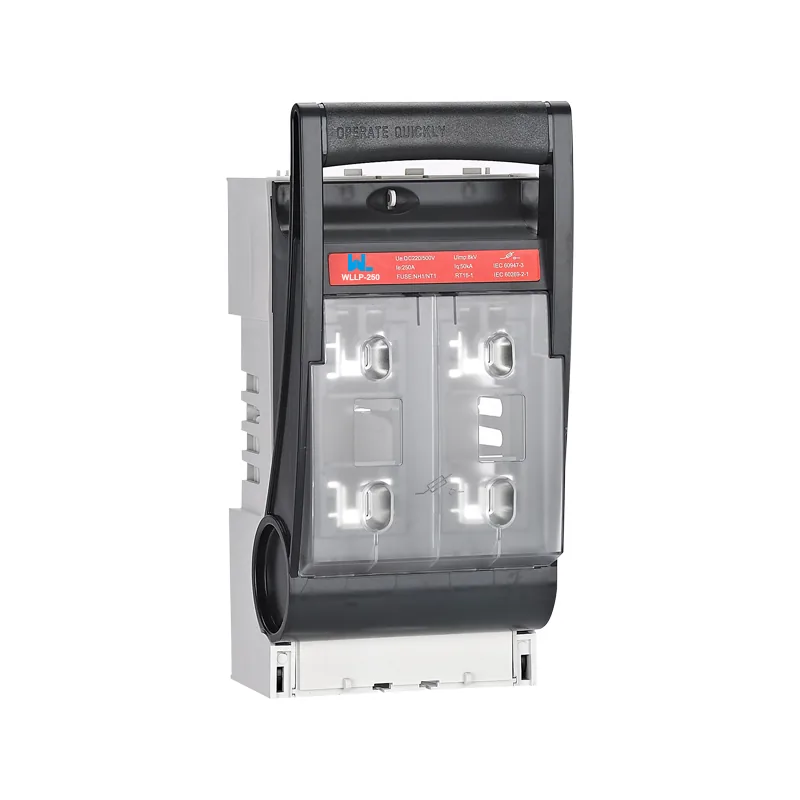
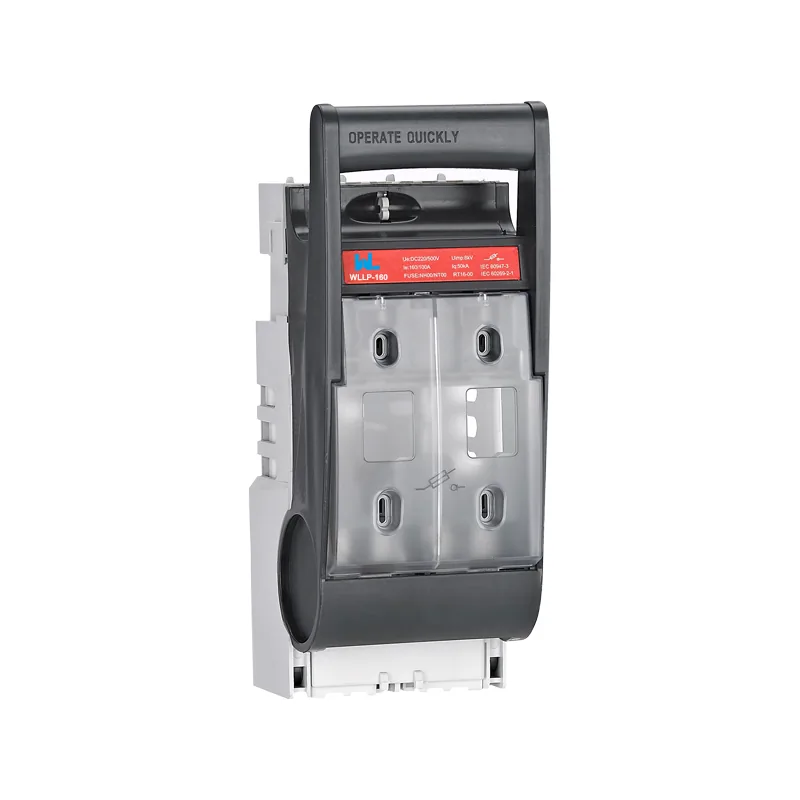
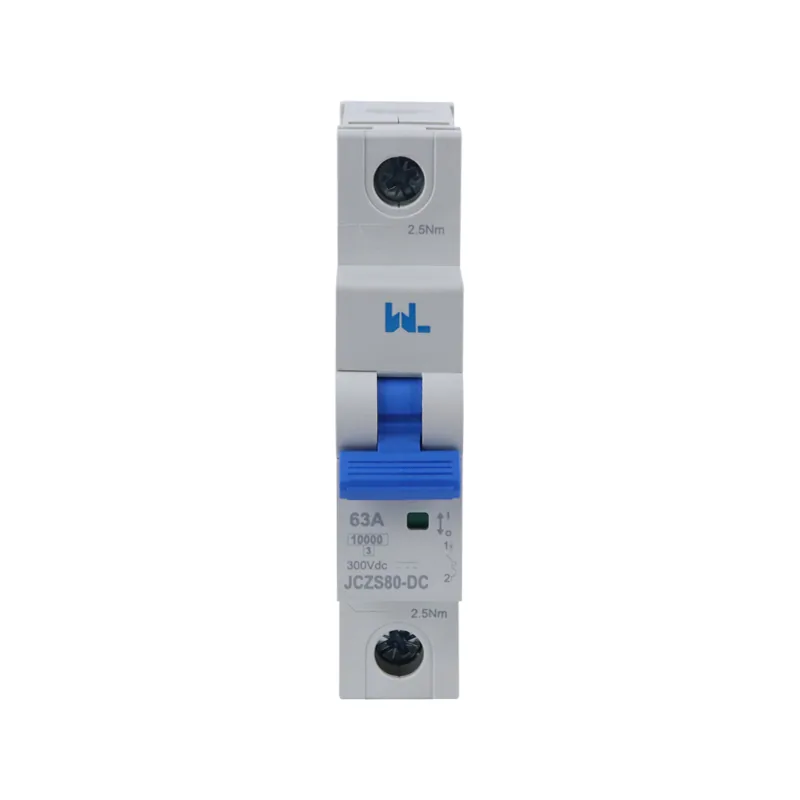
A switch-disconnector provides a different function from an overcurrent circuit breaker. Some projects need both switching or isolation and fault protection, whether combined in one suitably rated product or provided by coordinated devices. The MCCB technical specification guide explains how to separate operational voltage, current and breaking-capacity requirements.
| Position | Main question | Evidence required |
|---|---|---|
| Individual string | Can reverse current exceed permitted module or cable duty? | Module limits, parallel-source assessment and installation rules |
| Combined output | What current and fault duty apply to the outgoing feeder? | Array design, cable calculation and fault study |
| Inverter DC input | What protection and switching does the inverter require? | Inverter manual and approved system design |
| Maintenance isolation | Which sources and conductors must be isolated? | Isolation plan and documented device function |
| Auxiliary circuits | Is this an auxiliary supply rather than the PV power path? | Separate circuit voltage and protection specification |
Establish voltage before current selection
The nominal plant description is not the maximum circuit voltage. PV module open-circuit voltage changes with temperature, and cold conditions can produce a higher string voltage than the value associated with standard test conditions. Use the selected module data, modules in series, minimum design temperature and the calculation method required by the applicable rules.
Compare that result with the breaker’s rated operational DC voltage for its exact configuration. Do not substitute insulation voltage or impulse withstand voltage. A product family advertising several voltage levels may require different pole connections, versions or limits at each level. The matching connection diagram belongs in the purchase specification alongside the rating table.
Voltage review must cover the whole DC circuit. Connectors, cable, surge-protection devices, isolators, monitoring equipment and inverter inputs have their own limits. A higher-rated breaker does not upgrade the rest of the combiner. If a module substitution changes the cold-voltage calculation, reopen the complete equipment schedule rather than revising one line item.
Coordinate current and fault duty
PV reverse-current protection requires a source assessment, not an assumption that every fault produces a large current. Parallel strings can feed a faulted string, while a single string is current-limited by its source behaviour. The applicable installation rules and module instructions determine how these contributions enter the design and whether string overcurrent protection is required.
Calculate the design current using the correct module and array parameters, including any required factors. Then check conductor ampacity, device thermal limits and the trip characteristic under the actual installation conditions. A general multiplier copied from another country’s example may omit a local requirement or count a factor twice. Record each factor and its source.
For an MCCB, request the breaking capacity at the intended DC voltage and pole arrangement. For IEC-rated products, review the relevant Icu and Ics values and their stated conditions. Also determine whether the prospective fault can operate the selected protection within the required boundary. A high breaking-capacity number does not prove that the trip characteristic suits a low-current PV fault.
Polarity and power-flow direction need explicit confirmation. Some DC devices impose directional restrictions; others permit particular reverse-current applications. Follow the manufacturer’s declaration for the offered order code. Do not swap terminals or improvise pole links to make a cabinet layout convenient. Changes to the source or earthing arrangement can invalidate the previous selection.
Check the enclosure and service conditions
Outdoor combiners can experience solar heating, restricted ventilation, dust and moisture exposure. The ambient used in a catalog current table may not represent the internal temperature next to loaded devices. Request derating and spacing guidance for the intended enclosure and assembly. Confirm terminals, conductor material, cable size and tightening instructions as part of the same review.
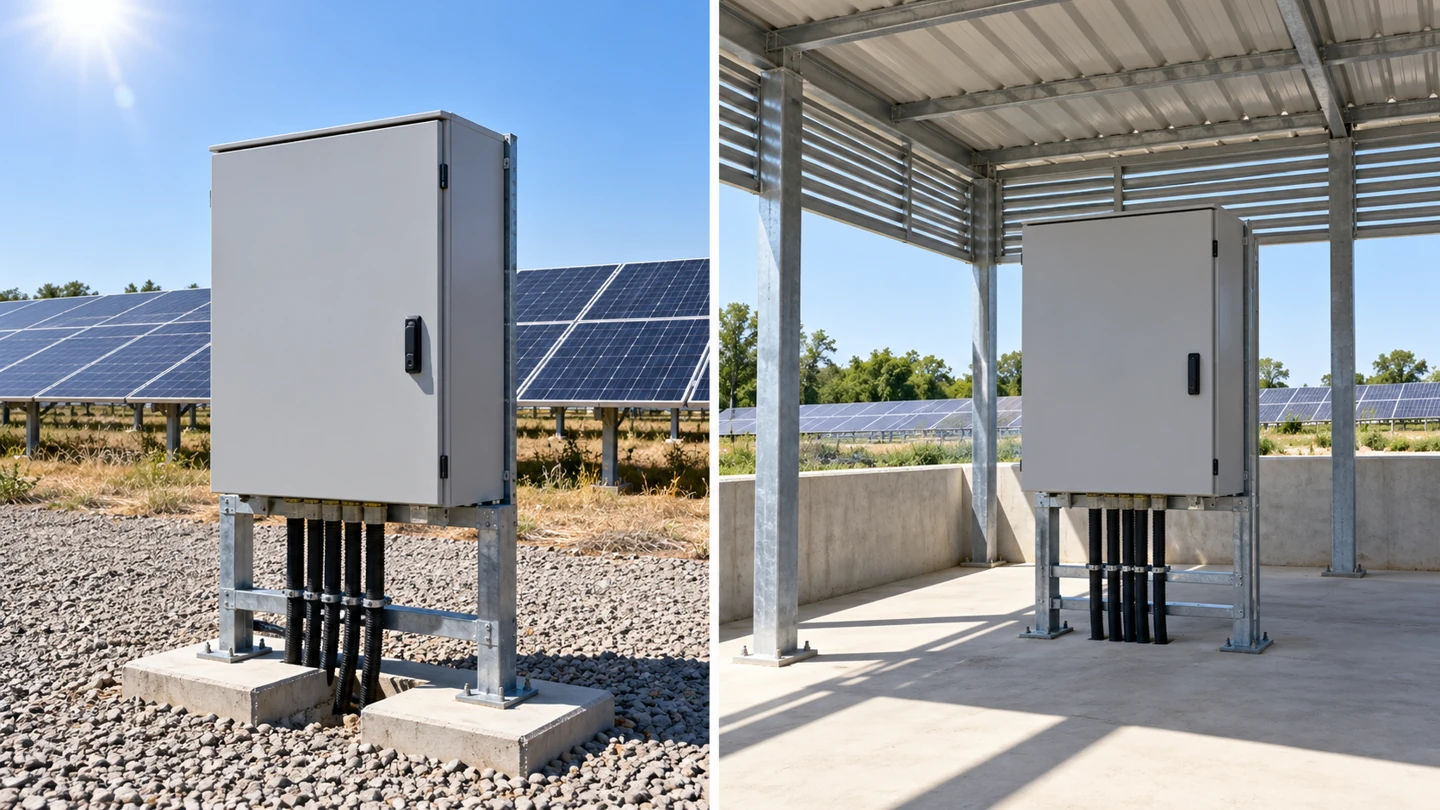
Keep protective-device standards, switch-disconnector standards and installation requirements distinct. IEC 60947-2 addresses circuit breakers; IEC 60947-3 addresses relevant switching and isolation products. The project must identify the adopted PV installation requirements and destination-market acceptance route. A standard reference on a family page is not proof that every offered configuration has the same certification.
| Handover item | Check before ordering | Reason |
|---|---|---|
| Voltage calculation | Module version and minimum design temperature | Prevents use of nominal voltage as a maximum |
| Current schedule | String count, design factors and cable limits | Connects source duty to conductor protection |
| Device configuration | Full order code, trip unit, polarity and pole diagram | Avoids unsupported substitutions |
| Assembly conditions | Temperature, enclosure, spacing and terminals | Supports thermal and installation review |
| Commissioning records | Inspection, settings and appropriate tests | Provides a traceable release basis |
For a combined-output enquiry, W9’s WLM7DC-400 PV DC MCCB information is a starting point. Confirm the exact voltage, pole arrangement, capacity code and protection functions in the offered documents. The page does not authorize every listed family voltage for every connection or establish suitability for every string.
Assess lifecycle cost as the device plus enclosure space, links, terminals, assembly work, commissioning and maintenance access. This combiner procurement checklist avoids comparing a bare device price with an integrated offer. Browse the W9 protection-product range only after the design identifies which functions belong at each position; different positions may need different product families.
Preguntas frecuentes
Does every PV string need a DC MCCB?
No. The need for string overcurrent protection depends on possible reverse current, module and cable limits, and the applicable rules. Where protection is required, select a device category and characteristic suitable for that string duty.
Where can I find a DC molded-case circuit breaker manual?
Request it from the manufacturer or authorized supplier using the full model and order code. Ensure the manual covers the offered voltage, pole connection and trip-unit version.
Where can I find a DC molded-case circuit breaker catalog?
Use the current manufacturer catalog, then obtain the matching rating table and installation drawing. A family overview does not settle voltage-specific breaking capacity or connection details.
How is a PV combiner output breaker sized?
Begin with the array design current and applicable factors, then coordinate cable protection, device thermal duty and trip characteristics. Verify fault interruption and any reverse-current conditions separately.
Can a 500V DC breaker be used on a higher-voltage string?
Only a documented configuration rated for the actual maximum voltage is acceptable. Do not extrapolate a higher rating from additional poles or the device’s insulation voltage.
Is a DC isolator the same as a PV circuit breaker?
No. Isolation and overcurrent interruption are distinct functions. Verify the declared function of each device and whether the design requires both.
Referencias
- Eaton: DC and PVGard Molded-Case Circuit Breakers, application overview, accessed 17 October 2026.
- ABB: SACE Tmax PV for Photovoltaic Applications, technical catalog and connection configurations, accessed 17 October 2026.
- ABB: High Performance Circuit Breakers, PV protection and isolation categories, accessed 17 October 2026.
Specify the protection location first
A defensible PV selection begins with the protection location and source duty, then connects the voltage calculation, current schedule, fault assessment and connection drawing to a specific device. Keep those records together when comparing offers or changing modules, inverters or string counts. A combiner is an assembly of coordinated functions, so one headline MCCB rating cannot stand in for the complete design. For a product enquiry, send the single-line design inputs and required document list through the W9 Group contact page. Ask for a configuration-specific proposal and have it checked against the project requirements before ordering. That gives procurement a clear acceptance boundary and avoids treating string protection, feeder protection and maintenance isolation as interchangeable tasks.