




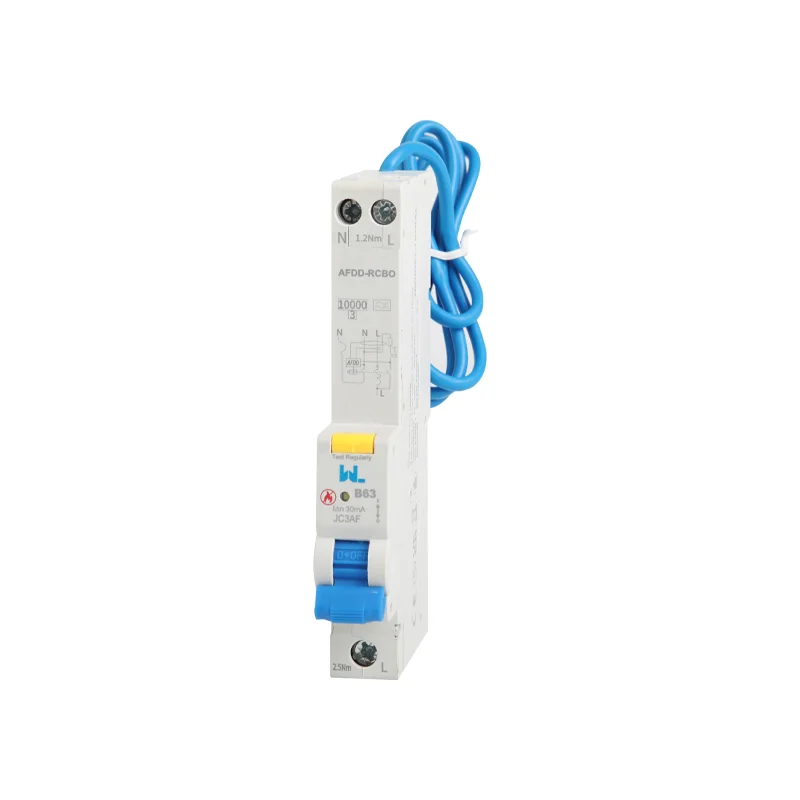
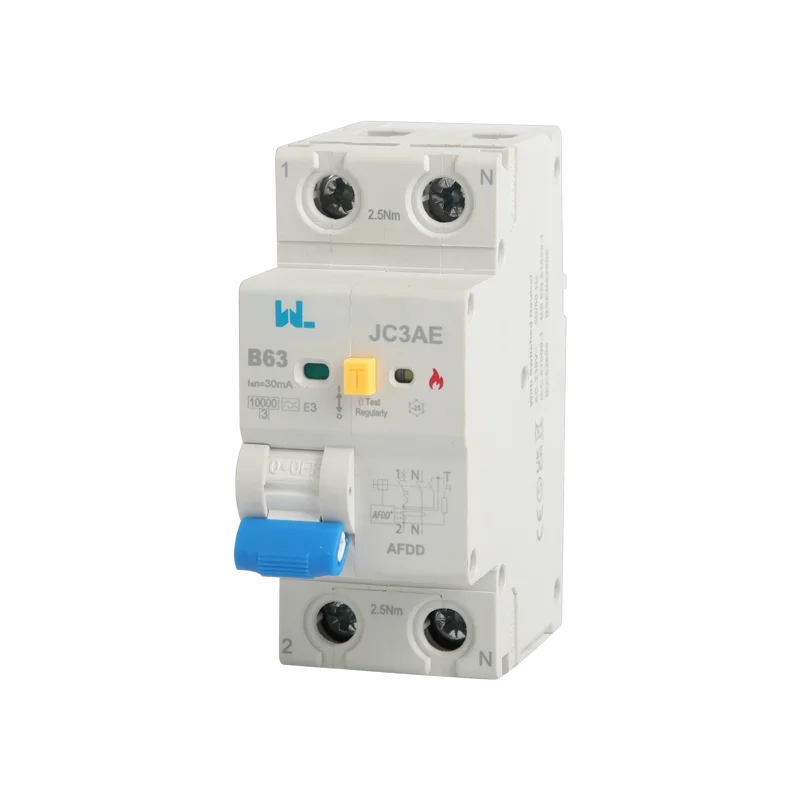
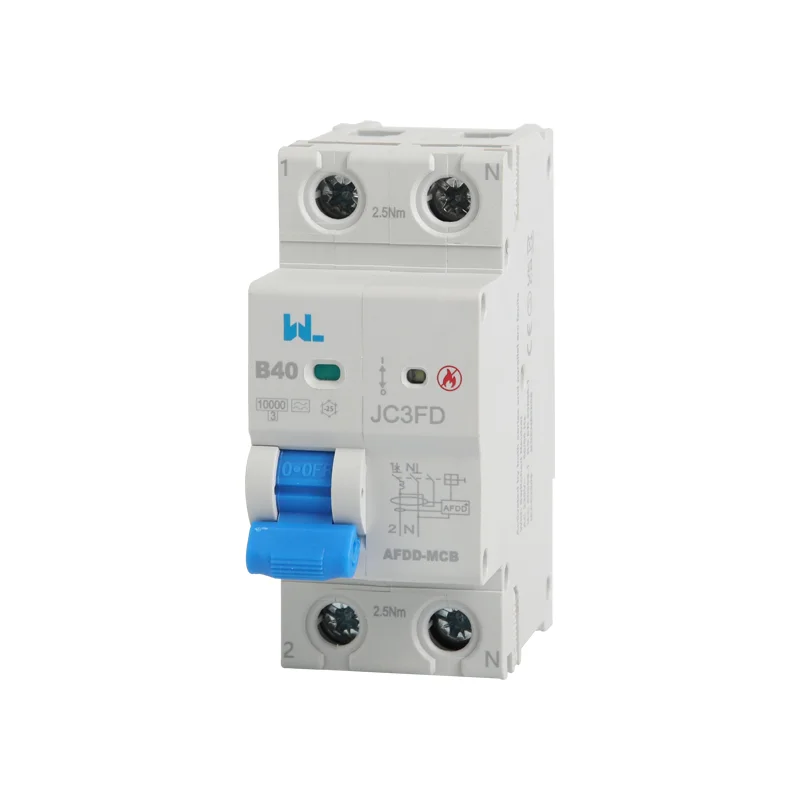
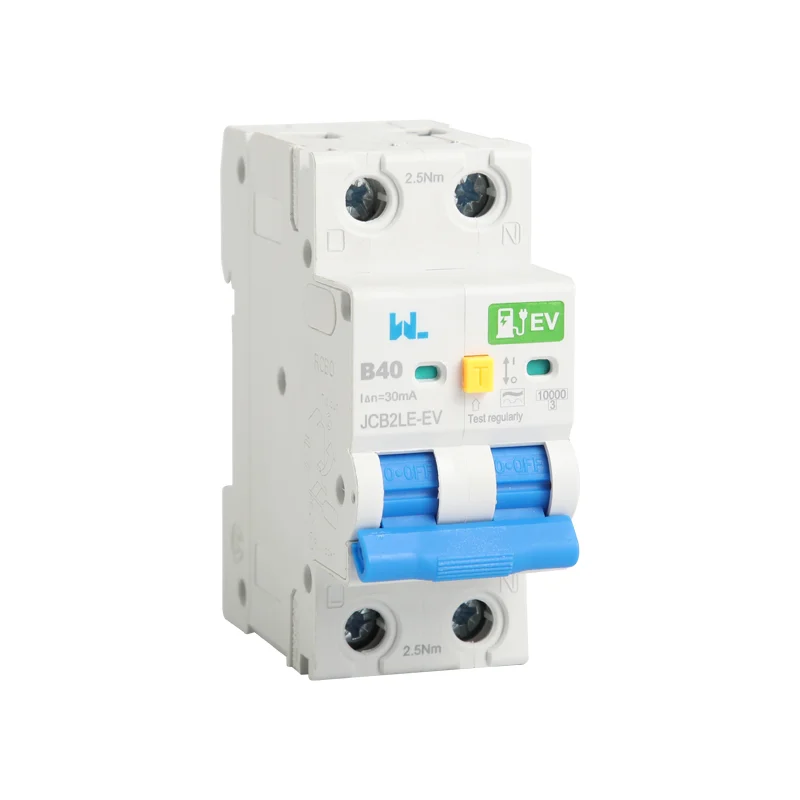















¿Cuál es la función de un RCBO?
Una falla en un circuito no debería provocar automáticamente la interrupción de toda la instalación. Esta es la cuestión práctica de diseño que subyace a la especificación de un RCBO: ¿puede proporcionarse la protección requerida contra corrientes residuales y sobrecorrientes en el circuito individual, con unos límites de funcionamiento documentados? La respuesta depende de algo más que simplemente elegir un dispositivo que ocupe el mismo espacio en el carril DIN que un interruptor automático termomagnético (MCB).
Respuesta rápida: Un RCBO combina protección contra corrientes residuales, sobrecargas y Protección contra cortocircuitos dentro de sus clasificaciones declaradas. IEC 61009-1:2024 cubre los RCBO para aplicaciones domésticas y similares; un RCCB bajo IEC 61008-1 no tiene protección integral contra sobrecorriente. Los RCBO a nivel de circuito pueden reducir el número de cargas no relacionadas afectadas por un evento de corriente residual, pero aún es necesario verificar la selectividad completa. Especifique por separado la corriente nominal, la curva de sobrecorriente, el tipo y la sensibilidad de la corriente residual, el voltaje, los polos y la capacidad de corte, y luego verifique la compatibilidad con el cuadro de distribución.
Funciones de protección del RCBO
Protección contra corriente residual Reacciona ante un desequilibrio en los conductores activos supervisados. La protección contra sobrecargas responde a una corriente excesiva que persiste durante un tiempo, mientras que la protección contra cortocircuitos se ocupa de corrientes de falla más elevadas dentro de la capacidad nominal del dispositivo. Estas funciones abordan diferentes riesgos y presentan características de funcionamiento distintas.
No describa el mecanismo interno de cada interruptor diferencial con protección contra sobrecorriente (RCBO) como idéntico. La detección de sobrecorriente y de corriente diferencial puede implementarse de manera diferente según el producto, incluyendo diseños de corriente diferencial dependientes e independientes de la tensión. Las instrucciones aprobadas especifican el comportamiento exacto del dispositivo en función de las condiciones de alimentación y las conexiones requeridas.
La protección también tiene sus límites. Un fallo equilibrado entre fase y neutro puede no generar un desequilibrio residual, incluso cuando dicho fallo sea peligroso. La terminología RCBO no implica necesariamente la detección específica de arco eléctrico. Un RCBO no sustituye a una puesta a tierra adecuada, a la selección correcta de los conductores, al aislamiento, a las inspecciones ni a las medidas adicionales exigidas por las normas de instalación.
RCBO frente a MCB y protección compartida con RCCB
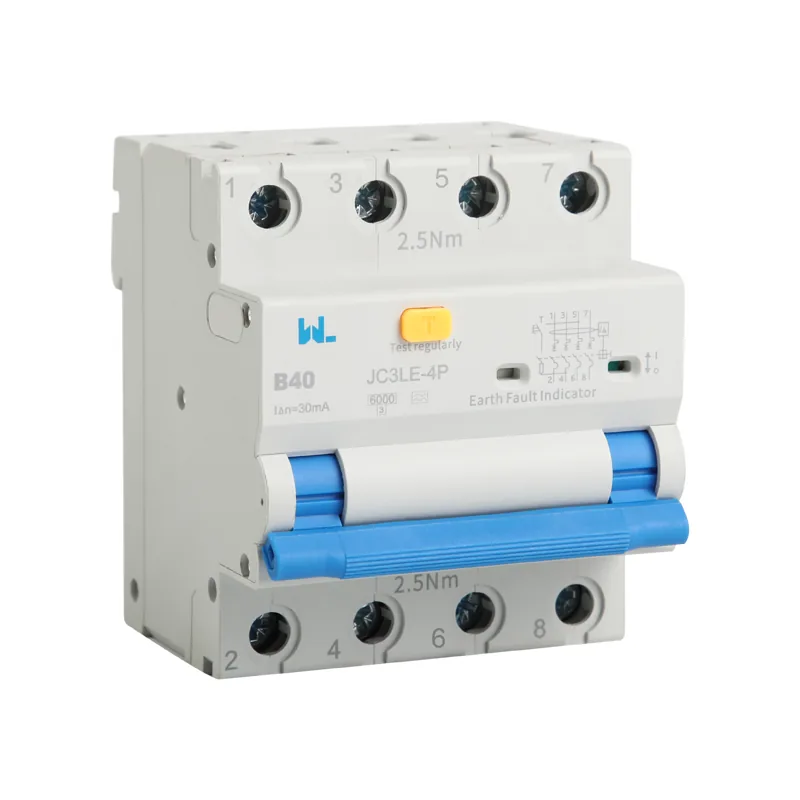
Los RCBO individuales proporcionan protección por circuito, no evitan todas las posibles interrupciones aguas arriba. Cuando un circuito presenta una falla de corriente residual, su propio dispositivo puede desconectarse sin que sea necesario que se active un grupo compartido situado aguas abajo. Los RCDs ubicados aguas arriba, los dispositivos de sobrecorriente o las fallas en el suministro eléctrico aún pueden afectar a otros circuitos. Verifique tanto la coordinación de la protección contra corrientes residuales como la selectividad frente a cortocircuitos, en lugar de asegurar que solo un dispositivo pueda dispararse en cualquier circunstancia.
| Arrancamiento | Funciones de protección | Consideración de continuidad | Verificación de diseño |
|---|---|---|---|
| MCB solo | Sobrecorriente | No proporciona detección de fugas dedicada. | Requisito adicional de corriente residual |
| Disyuntor diferencial residual compartido con los interruptores automáticos de circuito | Corriente residual más dispositivos de sobrecorriente independientes | Un evento de fuga puede desconectar el grupo compartido. | Grouping, aggregate leakage and device coordination |
| Individual RCBOs | Both functions on each applicable circuit | Can reduce the affected group for circuit-level leakage | Neutral segregation and upstream coordination |
| AFDD/RCBO combination | Arc detection plus declared combined functions | Depends on circuit layout and upstream devices | Exact combination approval and local requirements |
The distinction from RCCB protection is functional, not simply physical. An RCCB can have a higher current-carrying rating while still lacking overload protection. Conversely, an RCBO’s headline ampere rating does not identify its residual operating sensitivity.

RCBO Rating Requirements
Begin with corriente de carga, conductor capacity, voltage and available short-circuit current. Choose the appropriate overcurrent characteristic using the design and load behaviour. A different curve should not be installed just to conceal unexplained tripping, because the operating change can affect fault protection.
Then identify residual-current sensitivity and waveform type. Converter-based equipment can have requirements beyond an ordinary sinusoidal AC residual-current assumption. Follow the equipment instructions and applicable rules; the product must explicitly support the required fault waveform. Residual Type B terminology is not the same as a B overcurrent curve.
The IEC 61009-1:2024 public scope includes operational voltages not exceeding 440 V AC, rated currents not exceeding 125 A and short-circuit capacities not exceeding 25,000 A. These are standard-scope limits, not a statement that every RCBO has those ratings. Request the actual data sheet and market documentation for the proposed device.

RCBO Neutral Routing
Each RCBO’s monitored conductors must follow its approved wiring arrangement. Borrowed neutrals, crossed neutral bars or unintended neutral-to-earth connections can defeat the intended balance or cause trips. Line and load orientation, neutral switching and any functional-earth lead must be checked in the exact instructions; do not infer them from the number of poles.
A retrofit is therefore more than exchanging handles. Verify the busbar system, terminal alignment, cable capacity, enclosure space and the assembly manufacturer’s permitted combinations. The Guía de funciones del RCD provides background on residual-current balance, but only the selected RCBO’s documentation defines its connections.
| Observation | Possible issue to investigate | Competent-person check | Unsafe shortcut to avoid |
|---|---|---|---|
| Trip after a board retrofit | Crossed neutral or incorrect connections | Circuit identification and neutral segregation | Bypassing the residual-current function |
| Trip only when several loads operate | Load overload or aggregate leakage on that circuit | Identify the indicated function and measure the relevant condition | Assuming all trips have the same cause |
| Trip during equipment starting | Inrush, leakage transient or another fault | Load profile and model-specific characteristic | Changing curve or sensitivity without a design review |
| Test button does not operate as instructed | Supply, wiring or device issue | Isolate and assess using the approved procedure | Leaving a suspected defective device in service |
RCBO Trip Indication
Some devices distinguish residual-current trips from overcurrent trips; others provide less information. Record the indication before resetting, together with the operating load and time. A position indicator or event display is a lead for diagnosis, not a complete finding about the cable or appliance.
Testing should follow the device instructions and the installation’s commissioning requirements. A push-button check does not verify every protective conductor, termination or disconnection condition. SafeWork NSW’s workplace guidance separates competent testing records from push-button tests; its jurisdiction-specific requirements should not be copied as a universal maintenance schedule.
- Define the circuit and applicable protection requirements.
- Select overcurrent and residual-current characteristics separately.
- Approve the device/board combination and wiring arrangement.
- Test and document the completed installation.
- Hand over the indication, test and escalation instructions.
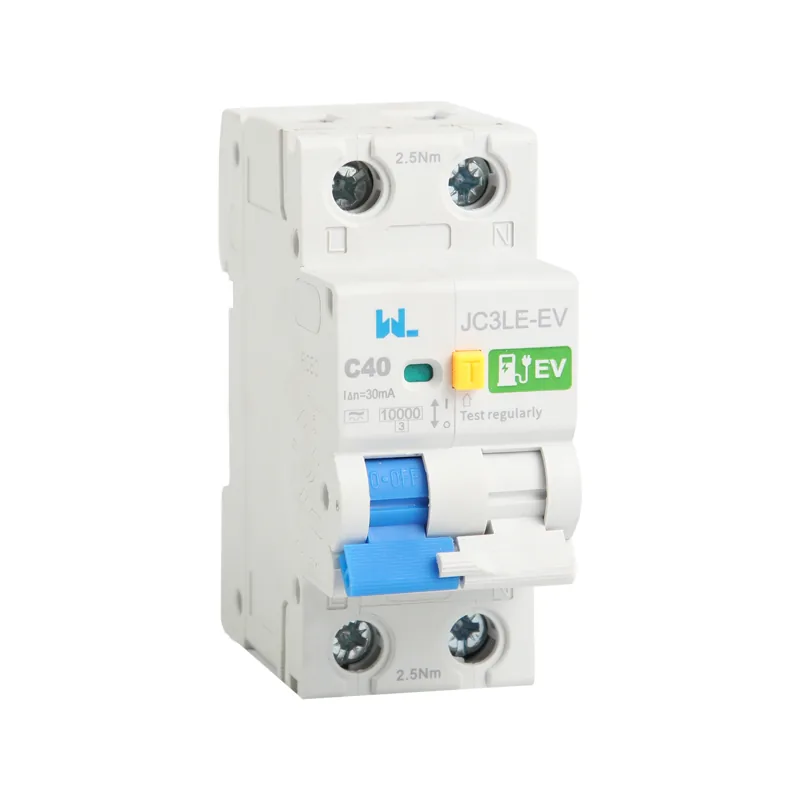
For procurement, W9 Group’s RCBO range is a starting point for model selection. Confirm the requested configuration and its documentation; do not extend a category description into an assertion that every listed product suits EV charging, converter loads or every national installation rule.
Preguntas frecuentes
What is the function of an RCBO?
It combines residual-current protection with overload and short-circuit protection within its declared ratings. The correct combination must still be selected for the circuit and board.
What is the difference between an RCBO and an RCCB?
An RCCB lacks integral overcurrent protection, while an RCBO incorporates it. The tipo de corriente residual and sensitivity still need checking for both.
Will an RCBO stop the whole building from losing power?
It can reduce the number of circuits lost for a circuit-level leakage fault, but it does not guarantee complete upstream selectivity or prevent supply outages. Evaluate the whole protective arrangement.
Does Type B mean the same thing as curve B?
No. Residual-current Type B refers to a waveform-detection category; a B overcurrent curve concerns overcurrent operation. The specification must identify which characteristic is being requested.
Can any RCBO replace an MCB in the same space?
No. Check electrical duty, neutral routing, busbar and terminal interfaces, and assembly approval. Module width alone does not prove compatibility.
Referencias y conclusión
- IEC 61009-1:2024 — Requisitos generales para los RCBO.
- IET — ¿Qué tipo de RCD es adecuado para mi vehículo?.
- IEC 60364-6:2016 — verificación de la instalación.
References were accessed on 14 October 2026. Combined protection still requires a complete circuit specification. Contact W9 Group with the duty, residual-current requirements and destination market for documented model selection.
Para una selección a nivel de circuito, Contacte con W9 Group con el programa del circuito, la forma de carga, la disposición de puesta a tierra y las normas de instalación aplicables.