







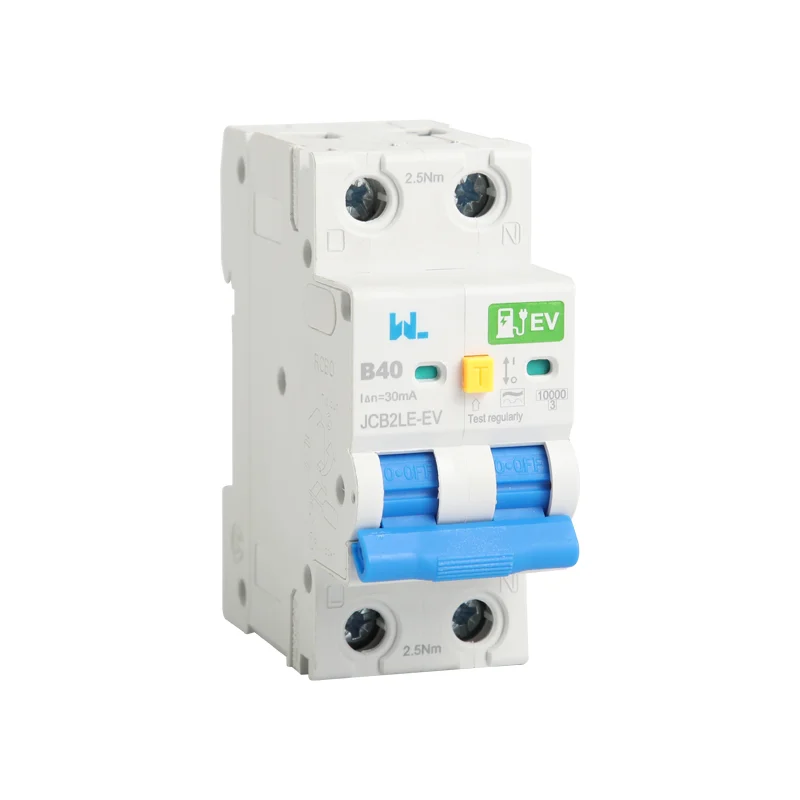
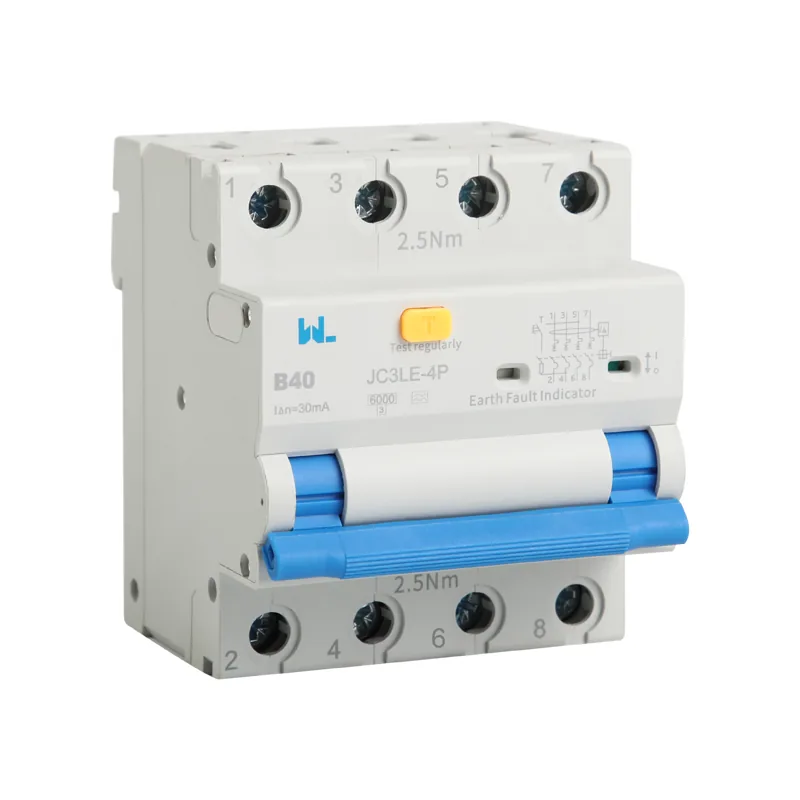
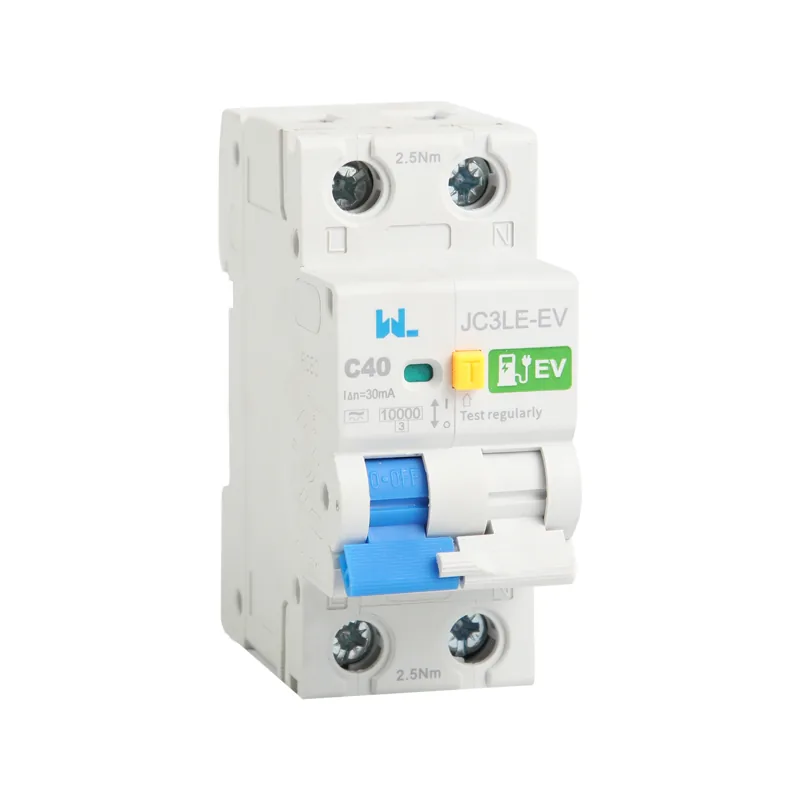
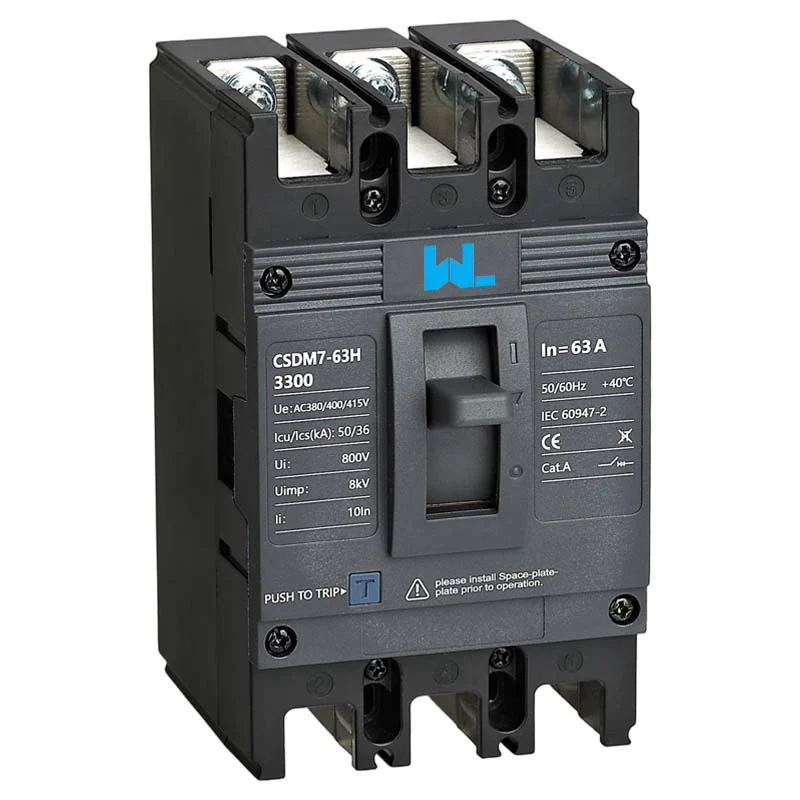
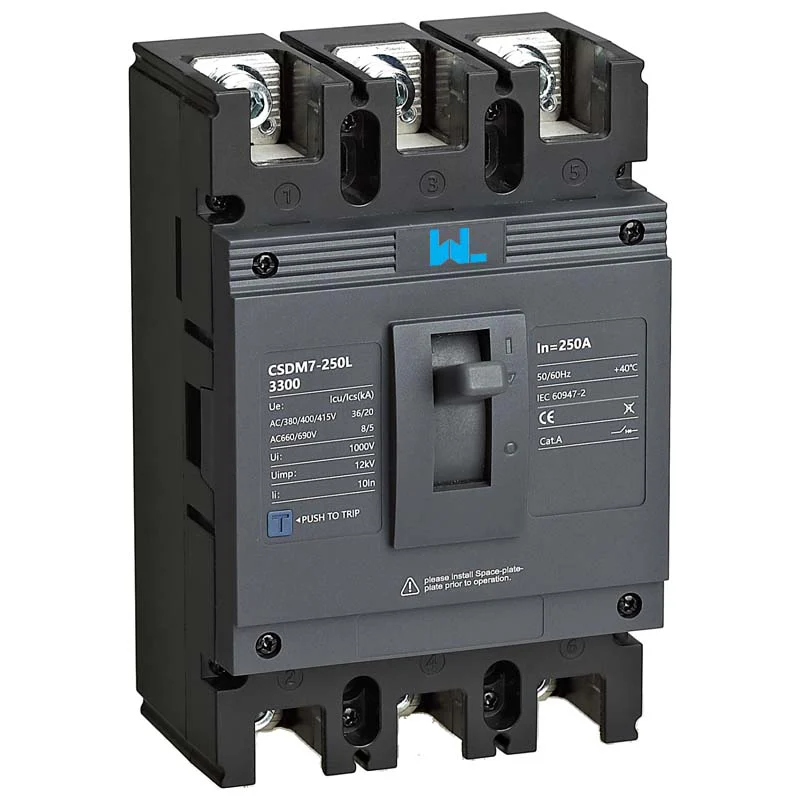
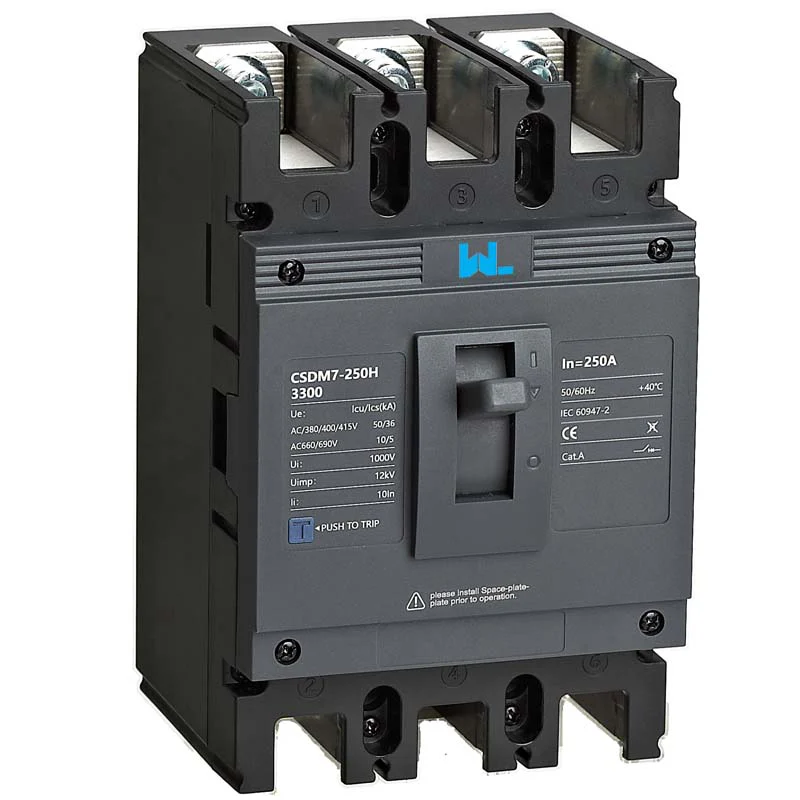
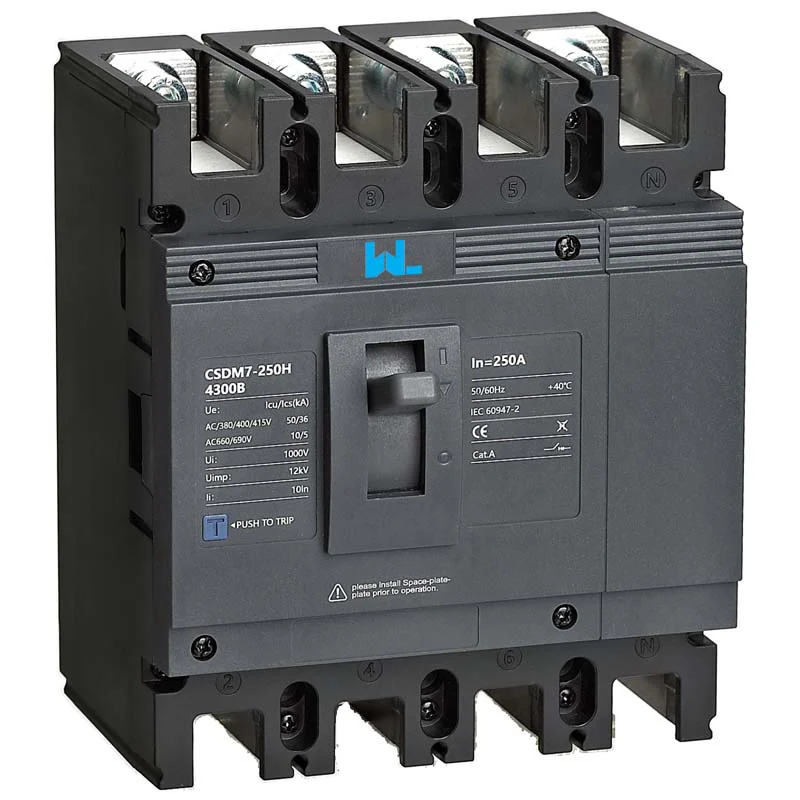
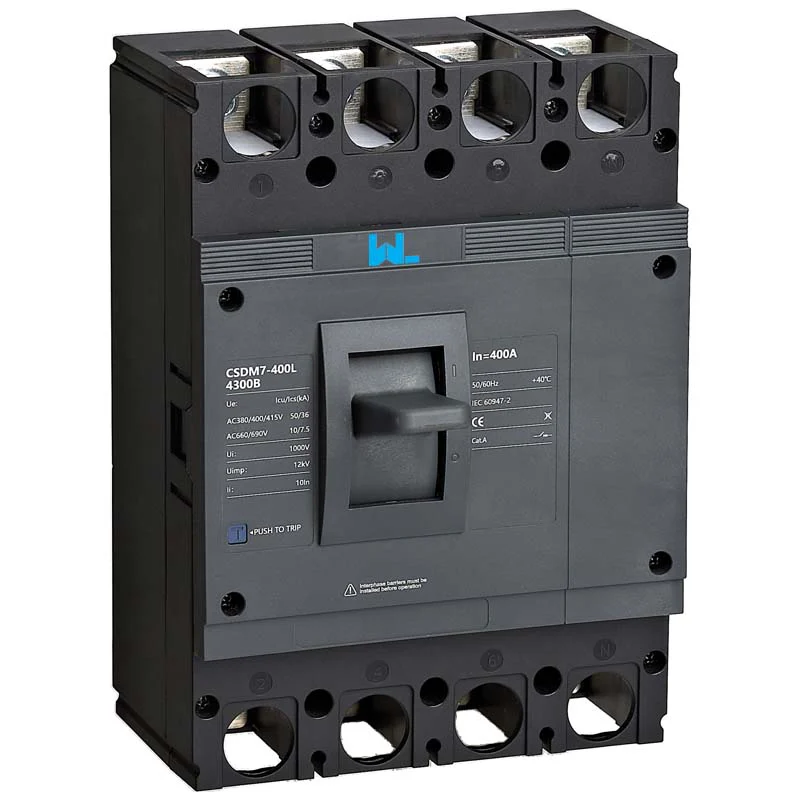
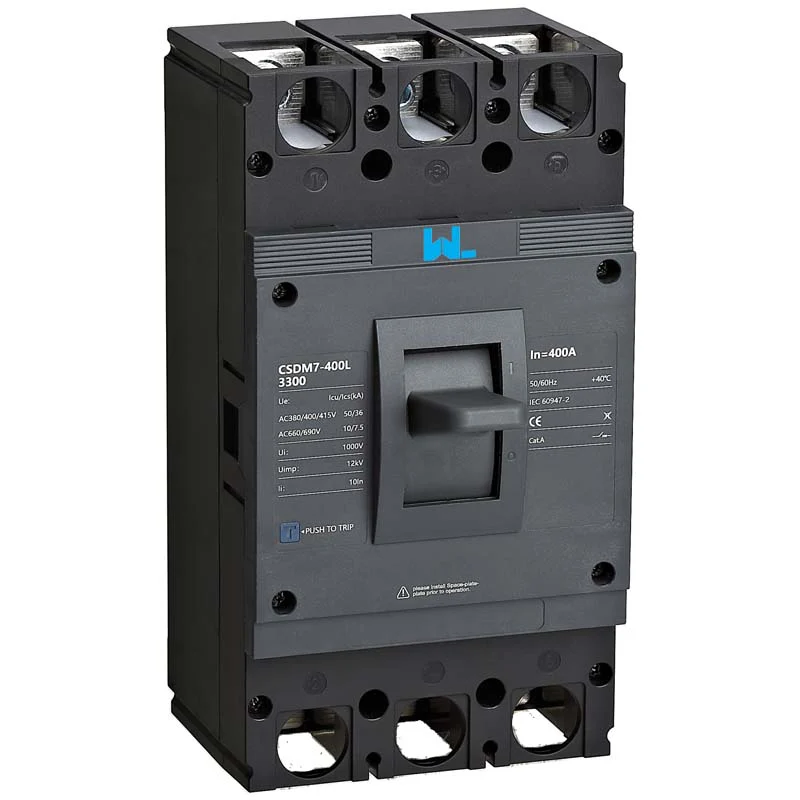





















Aprovechando la versatilidad de los MCCBs térmicos y magnéticos ajustables: Serie W9 Group WLM6RT
Escenario ilustrativo, no un caso documentado de cliente: Cuando un responsable de mantenimiento en Monterrey reinició un alimentador después de una desconexión por arranque del motor, siguió las indicaciones de la etiqueta del panel y aumentó la capacidad del interruptor automático. En cuestión de minutos, una segunda falla provocó la apertura del dispositivo principal y detuvo la línea. Esta rápida falla no fue evidencia de que el interruptor fuera de mala calidad; las suposiciones sobre la selección y la coordinación eran erróneas. Esa cuestión práctica —cómo adecuar un MCCB termomagnético ajustable a la instalación— es el tema central de esta guía.
Resumen: La familia W9 del Grupo WLM6RT es una gama publicada de interruptores automáticos termomagnéticos ajustables que abarca las variantes de caja moldeada de 125 A, 160 A, 250 A, 400 A, 630 A, 800 A y 1250 A, con configuraciones 3-pole o 4-pole enumeradas para sistemas de 400–690 V. Según la norma IEC 60947-2, las clasificaciones declaradas y las pruebas de tipo —no un nombre de catálogo— determinan la idoneidad. Recomendamos comenzar con una carga, corriente de falla y Estudio de coordinación, luego registrando cada configuración de tiempo largo y magnética durante la puesta en servicio. Esto protege los conductores, limita las desconexiones innecesarias y permite mantener una decisión de costo total justificable.
Por qué es importante la protección termomagnética ajustable
Un MCCB integra las funciones de conmutación, aislamiento y corte de sobrecorriente en una carcasa moldeada. Su elemento térmico responde al calentamiento prolongado causado por una sobrecarga; su elemento magnético reacciona ante las altas corrientes asociadas con cortocircuitos. Un disparador ajustable permite al ingeniero configurar el umbral de operación dentro del rango permitido por el fabricante, en lugar de obligar a cada alimentador a utilizar una curva fija.
Esa flexibilidad es útil cuando un cuadro de distribución V 400 alimenta motores, variadores HVAC y cargas generales con diferentes corrientes de arranque. El ajuste no aumenta la capacidad de interrupción, la capacidad de carga de los conductores ni el límite de temperatura de la caja. La norma IEC 60947-2 exige que el dispositivo seleccionado se utilice dentro de sus características declaradas de tensión, corriente y cortocircuito, mientras que la norma IEC 61439 regula el conjunto de baja tensión que lo rodea.
La respuesta térmica y la respuesta magnética desempeñan funciones distintas.
Las sobrecargas de larga duración son gestionadas por el bimetal térmico; los eventos de cortocircuito son atendidos por el actuador magnético. La temperatura ambiente, la ventilación de la caja y la orientación de montaje influyen en el comportamiento térmico, por lo que la curva tiempo-corriente correspondiente al código de pedido exacto WLM6RT es la evidencia determinante. Una posición del selector no equivale a un valor de amperaje universal.
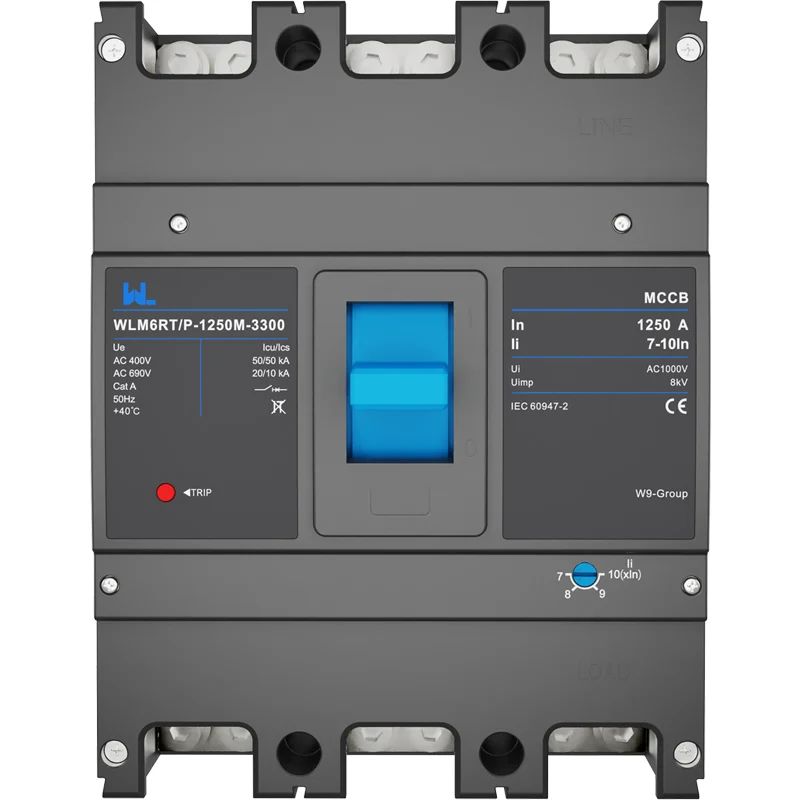
Gama WLM6RT y ajuste de ingeniería
Los listados públicos de productos del Grupo W9 identifican variantes de WLM6RT desde 125 A hasta 1250 A, incluidas las versiones 3-pole y 4-pole. Los listados describen las clases de aplicación 400 V y 690 V; el voltaje de utilización final, la frecuencia y la capacidad de interrupción deben verificarse en la hoja de datos del modelo. Esta amplitud puede simplificar la lista de materiales de un sistema con múltiples alimentadores, pero no justifica elegir un solo marco sin realizar un estudio.
| Publicado variante WLM6RT | Configuración típica mostrada | Verificación de diseño antes del lanzamiento |
|---|---|---|
| 125 A y 160 A | 3P/4P, termomagnético ajustable | Pequeña capacidad de corriente del alimentador, conmutación del neutro y tamaño de los terminales |
| 250 A and 400 A | 3P/4P, 400–690 V listings | Motor inrush, busbar temperature and prospective fault current |
| 630 A and 800 A | 3P/4P, industrial feeder applications | Coordination with upstream ACB/MCCB and enclosure heat rise |
| 1250 A | 3P/4P, large-frame listing | Assembly short-circuit rating, connection geometry and service access |
For each line item, procurement should request the current catalogue page, Curvas de tiempo-corriente, dimensional drawing, terminal arrangement, accessory schedule and routine-test evidence. If a project needs ground-fault sensing, communications or metering, verify that function separately; a standard thermal-magnetic release should not be assumed to include it.
Protection Coordination and Lifecycle Cost
Selective coordination means the protective device closest to a fault clears first. Engineers overlay upstream and downstream curves, checking the available Corriente de fallo and the clearing time of each device. An adjustable thermal-magnetic MCCB can improve the overlap by setting the feeder below the upstream pickup while keeping magnetic pickup above documented motor inrush. The honest answer is that adjustment helps only when the curves remain separated at the actual fault levels.
Illustrative calculation (not a WLM6RT rating): a three-phase load study reports 180 A at 400 V. With a 25% planning margin, the design current is 225 A. The engineer still has to select a frame whose verified ampacity, terminals, temperature correction and interrupting rating meet the project; the final thermal setting comes from the approved study and manufacturer tolerance, not from 225 A alone.
Total cost includes engineering hours, panel rework, commissioning tests, spare inventory and the consequence of an avoidable outage. A common frame family may reduce spare complexity when several feeders share accessories. Conversely, an oversized frame with a high setting can expose conductors to excess energy and increase arc-flash risk. Compare the complete lifecycle—not only the breaker line item.
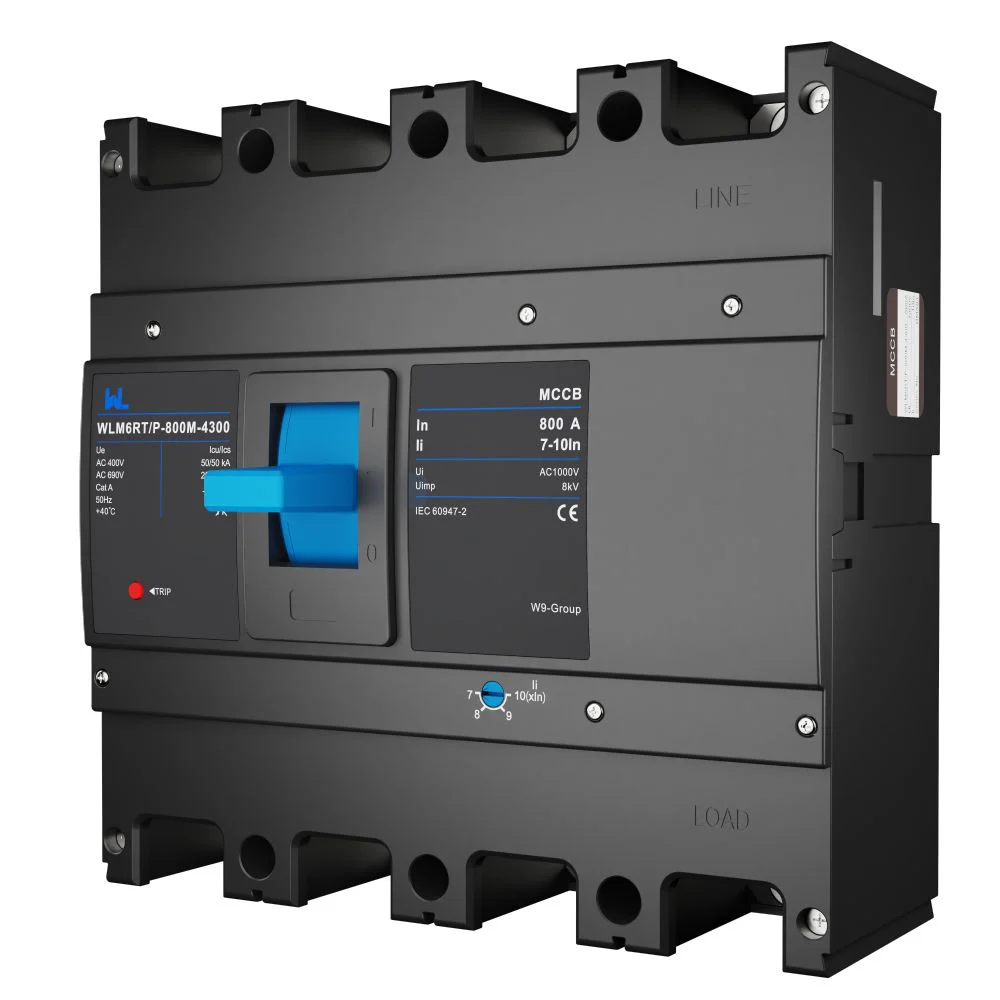
Adjustable vs Fixed Thermal-Magnetic MCCBs
| Dimension de la decisión | MCCB termomagnético fijo | Adjustable WLM6RT approach | Implicación del comprador |
|---|---|---|---|
| Especificación inicial | Few settings; quick selection | Requires a setting schedule and curve review | Allow study and documentation time |
| Load variation | Hardware change may be needed | Pickup can be reset within verified limits | Useful for phased capacity |
| Motor or transformer inrush | Fixed response may nuisance-trip | Magnetic setting can be checked against inrush | Use measured or documented starting data |
| Mantenimiento | Simple inspection and functional test | Add setting verification and records | Control who may alter settings |
| TCO | Lower configuration effort | Potentially lower outage and rework cost | Compare engineering, testing and spares |
El guía de Disyuntores de carcasa moldeada explica cómo varían el tamaño de la imagen, la calificación y el comportamiento del desplazamiento.
Application matrix for WLM6RT planning
| Solicitud | Useful WLM6RT characteristic | Questions to close before purchase |
|---|---|---|
| OEM and process panels | Several frame currents and 3P/4P choices | Are variants mechanically interchangeable and accessories consistent? |
| Commercial feeders | Adjustable pickup supports coordination as tenants change | Who owns settings after fit-out and handover? |
| Motor and HVAC distribution | Thermal-magnetic response can be matched to starting current | Is locked-rotor current below the magnetic pickup with margin? |
| Photovoltaic AC collection | Frame choice can follow feeder current and backfeed study | Have reverse power, isolation and local code requirements been reviewed? |
Normas aplicables para MCCB
IEC 60947-2 is the principal international product standard for low-voltage circuit-breakers; it defines rated characteristics and verification tests. IEC 61439 addresses the assembled switchboard, including temperature rise and short-circuit performance. In the United States, UL 489 covers listed moulded-case breakers, while NFPA 70 (the National Electrical Code) governs installation. These are not interchangeable labels: a test method or installation code does not automatically certify a product.
For export projects, map the destination market, voltage system and authority having jurisdiction before the purchase order. Unsupported certification wording can delay inspection, trigger redesign or invalidate a warranty. Keep the declaration, test report and model number aligned; never reuse a certificate from a different frame or trip unit.
Lista de verificación para la selección y puesta en servicio
- Record voltage, frequency, phase and neutral arrangement, grounding method, continuous load and prospective short-circuit current.
- Select frame current and poles from verified WLM6RT data; apply ambient, altitude, enclosure and conductor derating.
- Overlay time-current curves with upstream and downstream devices, including motor or transformer inrush.
- Confirm terminals, accessories, creepage, clearances and door operation on the panel drawing.
- Commission to the project test plan, record as-left settings and lock the setting-change process.
W9 Group’s published WLM6RT information gives buyers a practical starting point for comparing adjustable thermal-magnetic MCCB frame options. Review the WLM6RT 400 A product page and request the exact drawing and test documentation for the order code. The site’s guidance on choosing a thermal-magnetic circuit breaker and MCCB features and applications adds useful coordination context.
Preguntas frecuentes
What is an adjustable thermal-magnetic MCCB?
It is a moulded-case circuit breaker with thermal and magnetic overcurrent elements whose pickup can be set within a declared range. Adjustment must remain coordinated with capacidad de carga del conductor, fault current and the manufacturer’s curve.
What current range does the WLM6RT series cover?
W9 Group’s public listings show 125 A, 160 A, 250 A, 400 A, 630 A, 800 A and 1250 A variants, with 3-pole and 4-pole options listed. Confirm the exact rating, voltage class and interrupting capability on the current datasheet.
Can I use a WLM6RT breaker on a 690 V system?
The listings identify 400–690 V application classes, but suitability depends on the exact model, utilization category, fault level and installation assembly. Obtain written confirmation for the order code before energizing.
Does thermal-magnetic adjustment provide ground-fault protection?
Not by itself. Ground-fault protection requires a suitable dedicated function or device and must be coordinated with the system grounding method and local code.
Which standard should a buyer request?
Request evidence to the product standard required in the destination market—commonly IEC 60947-2 or UL 489—and verify the panel standard and installation code separately. A certificate is meaningful only when its model, frame and trip unit match the delivered equipment.
Referencias
- IEC 60947-2:2024 — ámbito de aplicación del producto interruptor de circuito.
- IEC 61439-1:2020 — Normas generales para la instalación de baja tensión.
- NFPA 70 — Desarrollo y alcance del código de instalación para Estados Unidos.
The dependable breaker is not the one with the largest frame; it is the one whose settings, test evidence and installation remain aligned. When your team is ready to evaluate the WLM6RT family, explore W9 Group’s adjustable MCCB range and contact the engineering team with your one-line diagram, load data and destination-market requirements.
Para revisar la configuración propuesta, Contacte con W9 Group con el plan de carga, la corriente de fallo disponible y los requisitos del mercado de destino.