











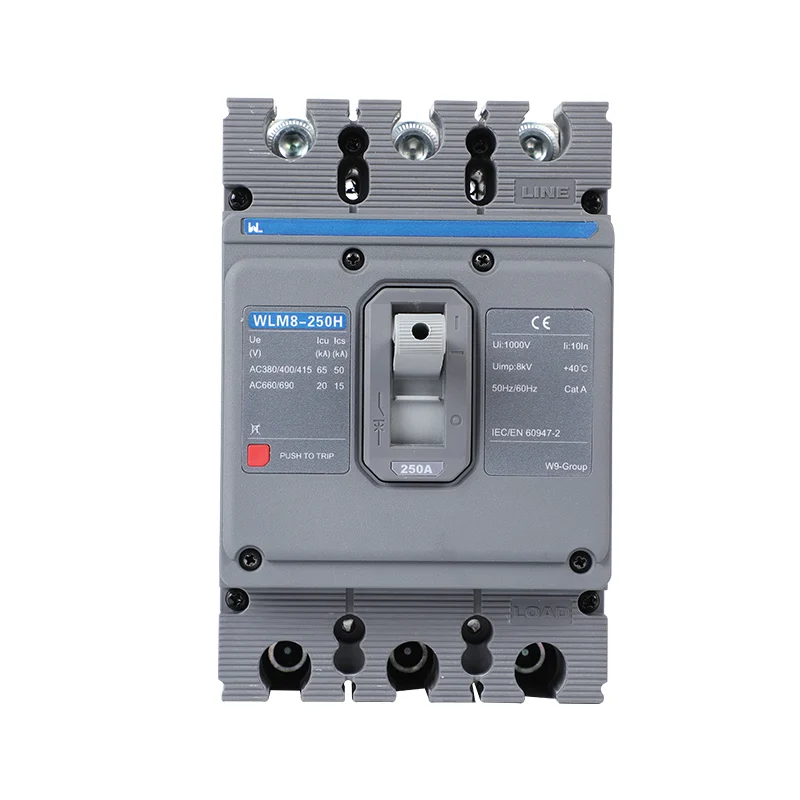





















Requisitos técnicos para los MCCB: Una guía práctica de especificaciones
Escenario ilustrativo, no un caso documentado de cliente: Cuando un ingeniero de instalaciones en Róterdam copió a un proveedor… MCCB Al incorporar la línea a un nuevo programa de mantenimiento del almacén, el equipo instaló el interruptor con confianza; en el plazo de una semana, las desconexiones innecesarias detuvieron una cinta transportadora y el panel de entrada no superó la revisión documental. La situación se revirtió: el dispositivo no era necesariamente defectuoso; la especificación había mezclado la corriente de funcionamiento con Capacidad de ruptura y omitió el programa de accesorios y marcado requerido.
Resumen: Una especificación fiable de MCCB separa Ue, Ui, Uimp, yon, yocu, y yocs, luego verifica el ensamblaje de acuerdo con IEC 60947-1 e IEC 60947-2 (o su equivalente adoptado por el mercado de destino). Comience con un estudio de nivel de falla, coordine la curva de disparo y exija un paquete documental de cuatro partes—hoja de datos, manual, evidencia de pruebas y etiquetas trazables—antes de la liberación.
Un interruptor automático de caja moldeada (MCCB) integra en un solo dispositivo mantenible una carcasa aislante moldeada, contactos conductores de corriente, un sistema de disparo por sobrecorriente y terminales. En la distribución comercial e industrial, suele proteger alimentadores, motores, salidas de conjuntadores fotovoltaicos y secciones de barras contra sobrecargas y cortocircuitos. Los requisitos técnicos que se indican a continuación permiten transformar una solicitud de catálogo en una especificación de compra verificable.
Requisitos de servicio eléctrico para MCCB
La primera pregunta no es “¿qué tamaño de amperaje?” sino “¿qué carga soportará este conjunto de polos?” Registre el voltaje y la frecuencia del sistema, así como la configuración de puesta a tierra, la corriente de cortocircuito prevista… Corriente de cortocircuito en el punto de instalación, carga continua, temperatura ambiente y método de instalación del cable. IEC 60947-1 establece términos y condiciones comunes para los aparatos de conmutación de baja tensión; IEC 60947-2 añade clasificaciones y ensayos específicos para interruptores automáticos.
- Ue (rated operational voltage): match the actual line-to-line or line-to-neutral duty, including a DC value where applicable.
- Ui y Uimp: check insulation and impulse withstand against the panel’s pollution environment and surge exposure.
- In (rated current): select from the calculated design current after derating, not from the cable’s headline ampacity alone.
- Icu y yocs: Yocu is the ultimate short-circuit breaking capacity; Ics indicates the service level after the test sequence. Both must be stated at the relevant voltage.
For a three-phase feeder, verify all three poles, neutral treatment, and terminal temperature rise as one assembly. A breaker with a larger frame but an unsuitable trip unit can still leave a cable unprotected; coordination software or a time-current study should confirm selectivity with upstream and downstream devices.
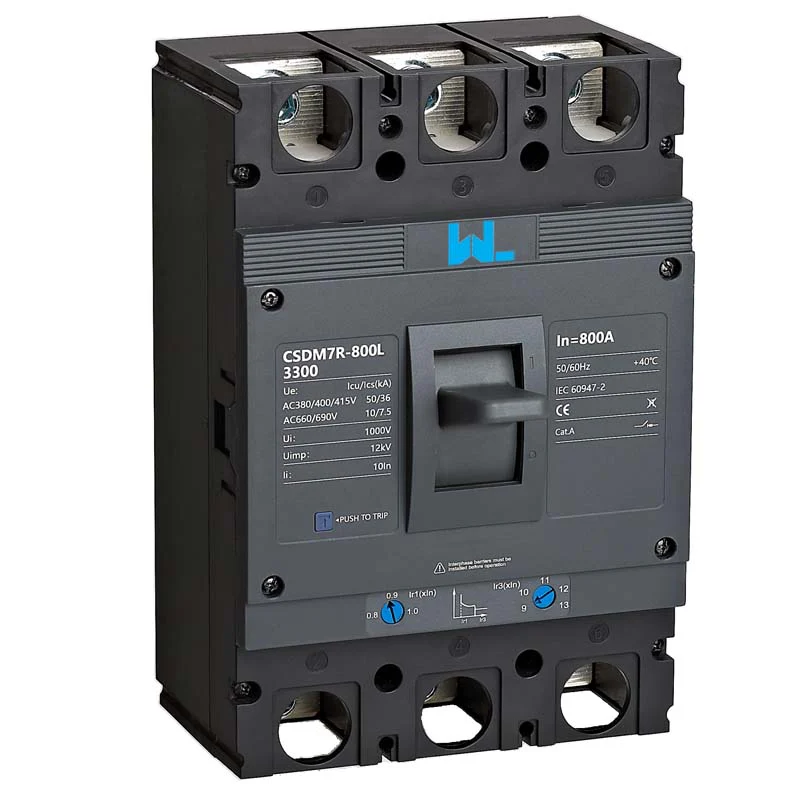
Requisitos de construcción de MCCB
Protección termomagnética remains common: the thermal element responds to sustained overload while the magnetic element clears high-current faults. Electronic trip units add adjustable long-time, short-time, instantaneous, and sometimes ground-fault functions; they require a control-power and maintenance plan. IEC 60947-2 type tests evaluate temperature rise, dielectric performance, operation, and short-circuit behavior, so request the manufacturer’s declared test configuration rather than assuming every accessory combination is covered.
Write the mechanical requirements in the same schedule:
- State the number of poles, fixed or draw-out mounting, line/load orientation, and terminal style; do not leave “standard terminals” undefined.
- Describe the operating handle, padlocking or interlocking need, and visible ON/OFF/TRIP indication. IEC 60417 symbols provide a consistent language for switch position marking.
- List compatible accessories—auxiliary contacts, alarm contacts, shunt release, undervoltage release, motor operator, and rotary handle—by function and rated control voltage.
- Set environmental limits: ambient reference temperature, altitude, humidity, enclosure IP rating, and vibration exposure. Ask for derating curves where the installation differs from the catalogue test condition.
Accessories are part of the protection scheme, not optional decoration. A shunt release may support emergency isolation, while an auxiliary contact provides breaker status to a PLC; each needs wiring diagrams and a verification step.
Comparación de los costos del ciclo de vida de los MCCB
Lowest unit price can become the highest installed cost when a breaker needs a second shipment, field modification, or a redesign after a fault study. Use the following matrix during technical bid evaluation. Values such as current and breaking capacity must be filled from the project calculation and the supplier’s tested data—not guessed from a frame name.
| Dimensiones especificadas | MCCB fijo básico | MCCB ajustable o electrónico | Consecuencias para la adquisición |
|---|---|---|---|
| Flexibilidad en los viajes | Factory-set thermal/magnetic | Field-adjustable long/short/instantaneous functions | Adjustment range can reduce redesign when loads change; record settings. |
| Deuda de culpa | Declarado Icu/Ics a tensiones nominales | Same duty, plus trip-unit configuration limits | Require test evidence for the exact frame and trip combination. |
| Monitoreo | Local handle and optional contacts | Contacts, alarms, and possible metering interface | Include control wiring, commissioning time, and spares in TCO. |
| Mantenimiento | Visual inspection and manual testing | Functional tests plus electronics and auxiliary checks | Budget test labor and replacement lead time over the service life. |
| Compatibilidad | Simple panel integration | Accessory and communication compatibility to verify | Approve drawings before drilling or busbar fabrication. |
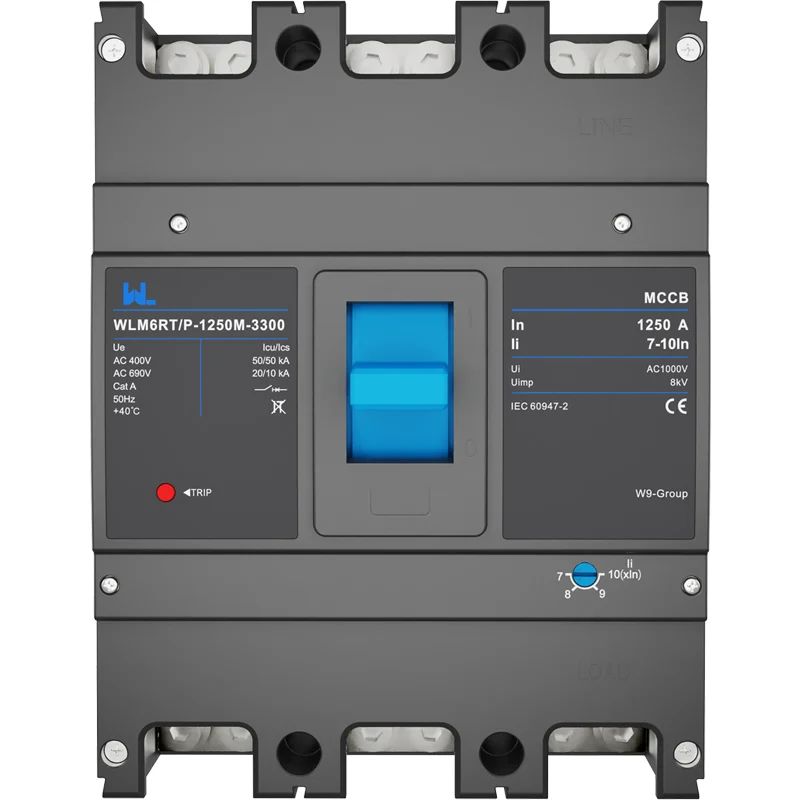
Requisitos de MCCB específicos para la aplicación
The same MCCB family can serve different loads, but the acceptance evidence changes with the application. IEC 60947-2 remains the core product standard; installation rules and grid codes in the destination country determine additional obligations.
| Solicitud | Exámenes críticos | Evidencia para solicitar |
|---|---|---|
| Construcción de un alimentador | Design current, cable protection, discrimination with MCBs | Coordination curves, terminal data, installation manual |
| Motor starter feeder | Starting current, overload class, short-circuit coordination | Tabla de aplicaciones de motores y detalles de la combinación probada |
| Distribución de CA o CC | Correct DC voltage, polarity, isolation, and fault path | Gráfico de calificación y polaridad específico para DC; nunca inferir la carga de CA |
| Panel de generador o transferencia | Inrush, reverse power scheme, interlocking, neutral switching | Single-line diagram, accessory schedule, functional test plan |
| Instalación de datos o de procesos | Selectivity, remote status, repeatable settings, spares | Trip study, FAT checklist, and labelled as-built drawings |
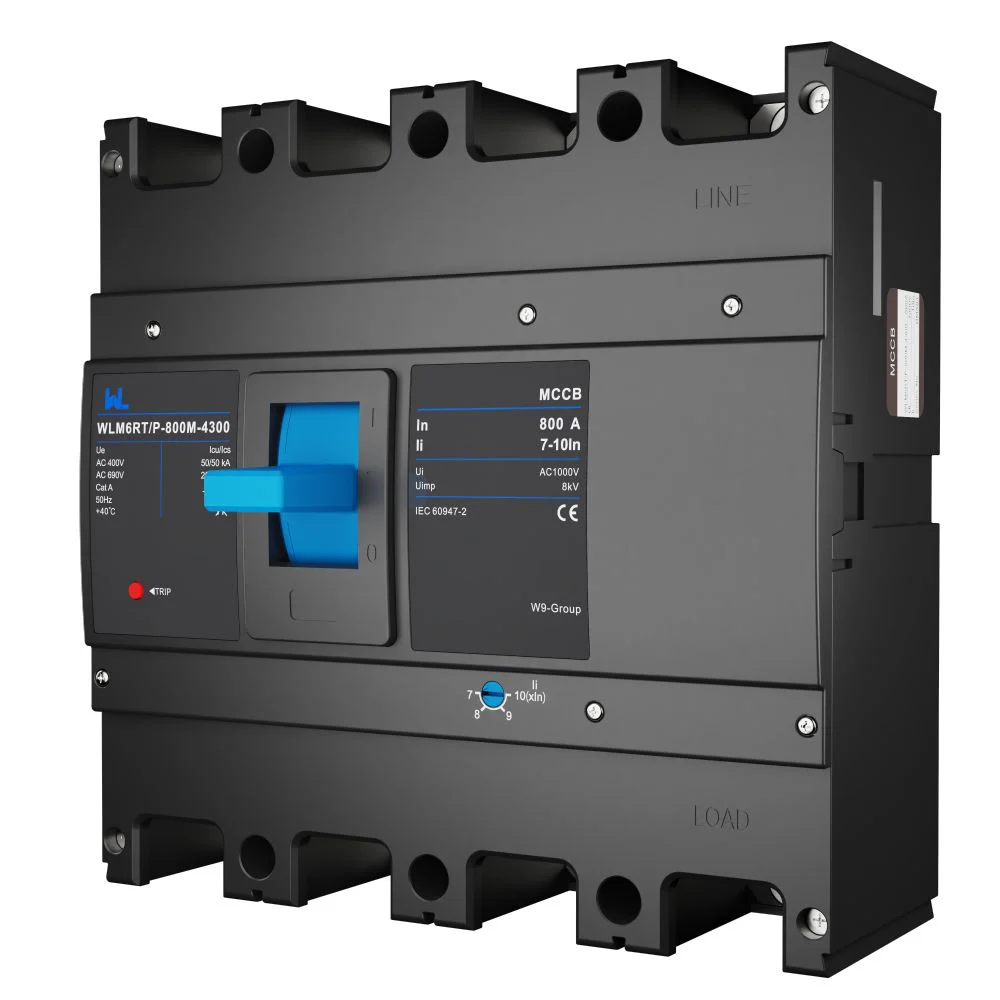
Documentación de Cumplimiento de MCCB
Compliance is a chain of evidence. IEC 60947-1 is the general standard; IEC 60947-2 addresses circuit breakers. IEC 60417 supplies graphical symbols for operating positions. In North American projects, the authority may instead require a product evaluated to UL 489; confirm the governing code with the engineer of record. A standard is not automatically a certification, and a test method is not permission to print an approval mark.
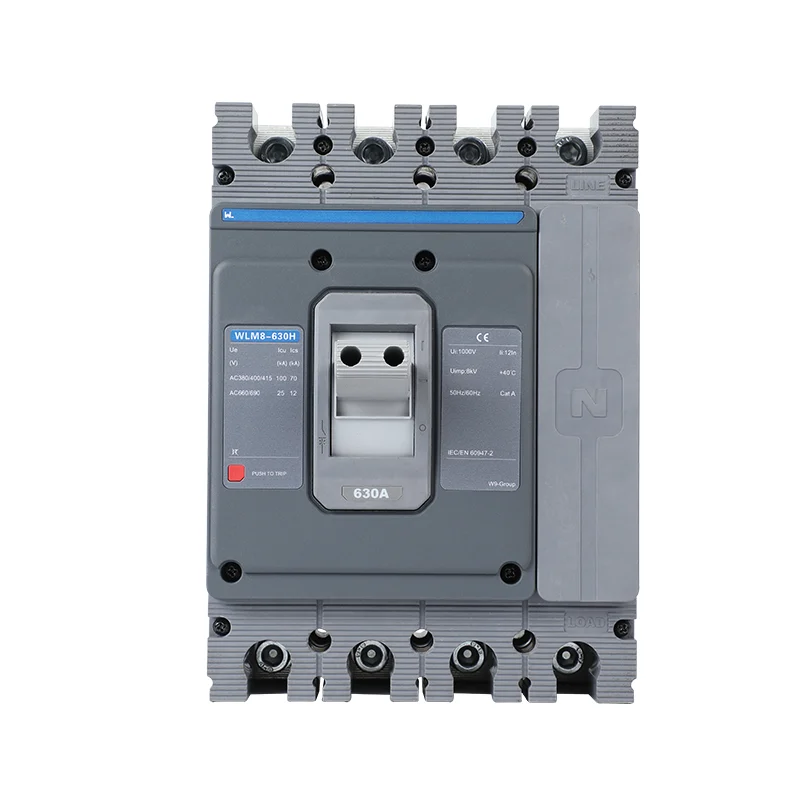
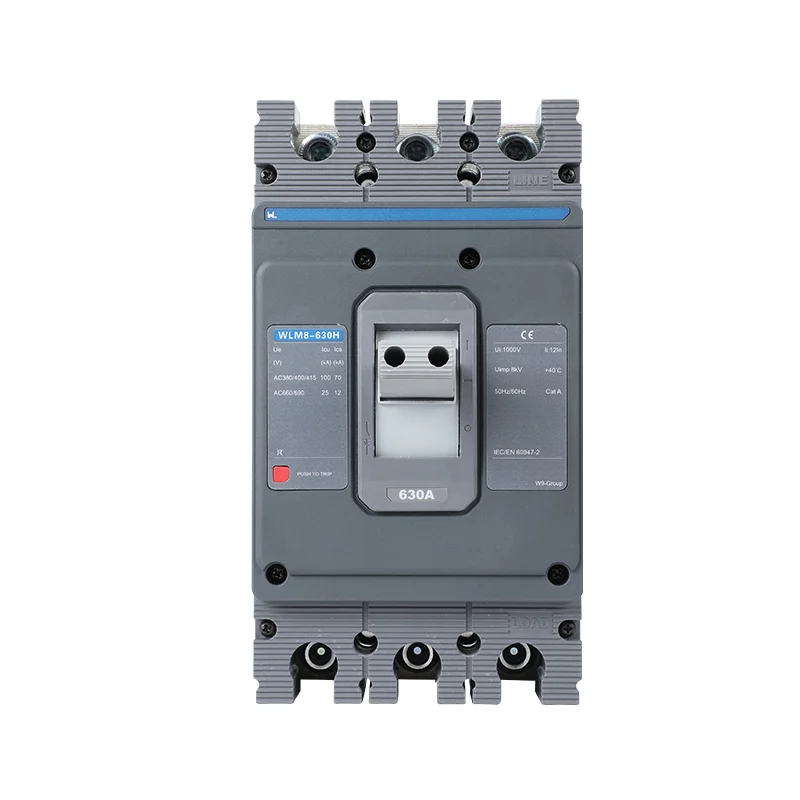
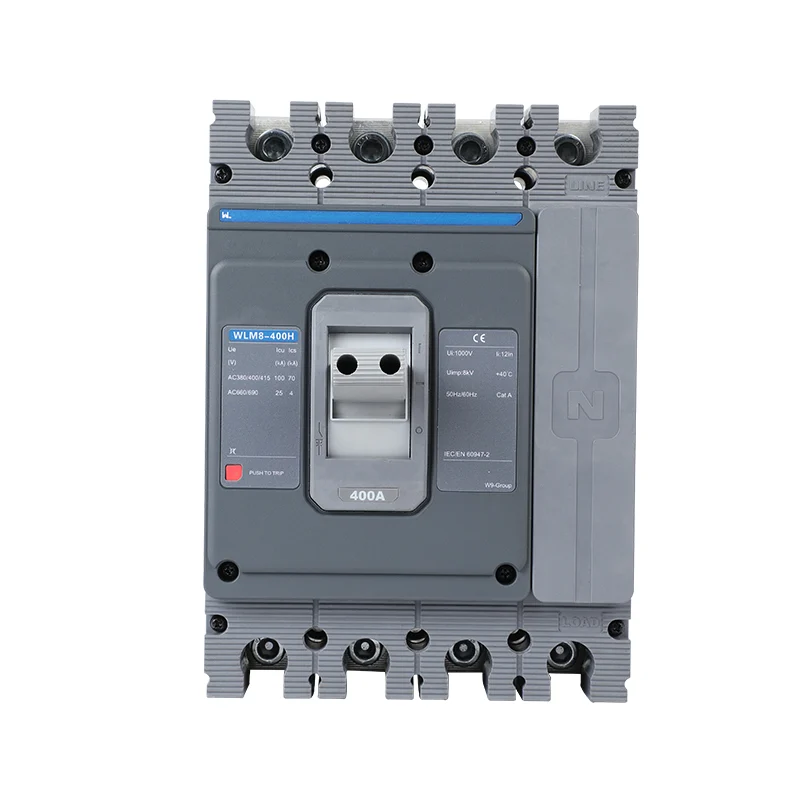
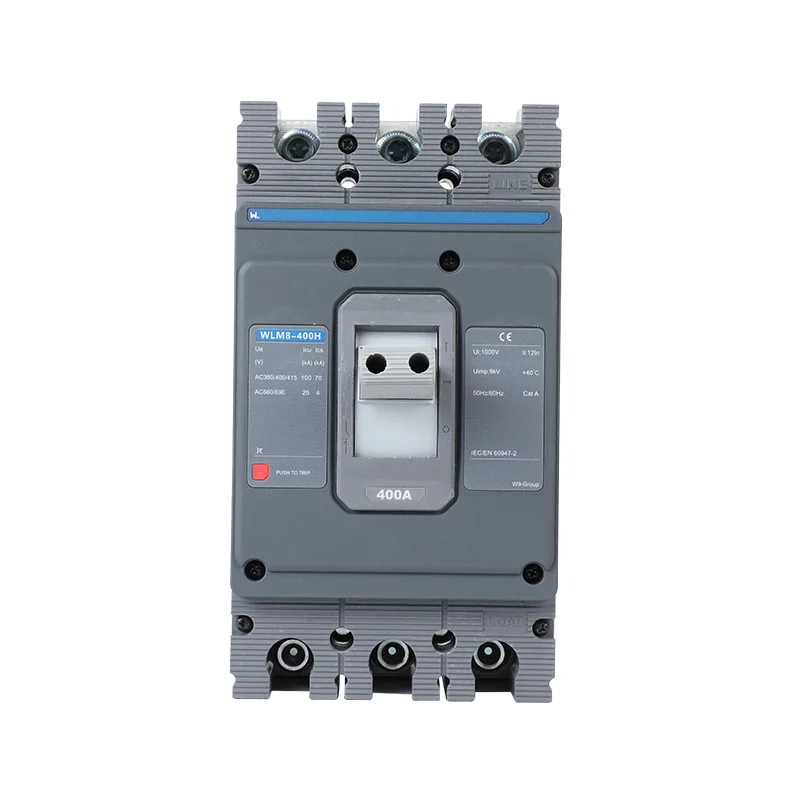
Require legible markings on the device: model, Ue, frecuencia, Ui, Uimp, yon, yocu, yocs, application category, reference standard, country of manufacture, and disconnect indication. Package labels should repeat the model, current, breaking capacity, manufacturing date, quantity, origin, and reference standard so receiving teams can maintain traceability.
The minimum submittal should contain four layers:
- Cadena de datos con el código de pedido completo y las calificaciones para cada voltaje declarado.
- Installation, operation, and maintenance manual with torque values and accessory wiring.
- Routine or type-test evidence that identifies the tested frame and trip configuration.
- Dimensional drawings, 3D files where needed, certificates of conformity, and a quality-control or manufacturing trace reference.
Unsupported claims create commercial risk: a panel can be rejected, a shipment held for clarification, or a warranty disputed if the delivered label does not match the approved schedule. Keep destination-market requirements and marketing language aligned.
Lista de verificación de selección para compradores e ingenieros
- Complete a load and prospective-fault calculation; document assumptions and derating.
- Choose the trip technology and adjustment range, then run a selectivity check with adjacent breakers.
- Freeze poles, terminals, mounting, accessories, control voltage, and environmental class on one order code.
- Approve drawings and the four-layer document pack before shipment; inspect labels and quantity on receipt.
- Record final trip settings and perform functional, insulation, and interlock checks during commissioning.
W9 Group’s public MCCB material illustrates why this discipline matters: the published technical scope emphasizes controlled raw materials, auxiliary equipment compatibility, protective terminal covers, manuals, data sheets, and traceable packaging. Buyers can use that evidence as a discussion point while still requiring project-specific ratings and test documents.
Preguntas frecuentes
¿Qué datos deben figurar en la placa identificativa de un MCCB?
At minimum, verify model, U e , frequency, U i , U imp , I n , I cu , I cs , application category, reference standard, and disconnect marking. Confirm that breaking-capacity values are tied to the stated voltage and pole configuration.
¿Un marco de amperaje más alto siempre es más seguro?
No. A larger frame may accept an adjustable trip, but protection still depends on the trip setting, cable capacity, and fault study. Coordinate the setting with downstream conductors and verify the tested short-circuit rating.
¿Los MCCB de CA y DC utilizan la misma especificación?
No. DC has different interruption behavior and may require polarity, series-pole, and voltage limits that do not apply to AC. Request a DC-specific declaration and diagram; never transfer an AC rating by analogy.
¿Qué accesorios deben incluirse en la orden de compra?
Include only functions required by the control narrative—such as auxiliary or alarm contacts, shunt release, undervoltage release, or motor operator—but list each voltaje de control and contact arrangement. Ask for wiring diagrams and compatibility confirmation for the exact MCCB frame.
¿Qué documentos deben acompañar cada envío de MCCB?
Request the datasheet, manual, drawings, conformity information, and applicable test evidence, plus traceable model and manufacturing labels. The receiving team should compare those documents with the approved order code before installation.
Referencias
- IEC 60947-2:2024 — ámbito de aplicación del producto interruptor de circuito.
- IEC 61439-1:2020 — Normas generales para la instalación de baja tensión.
- NFPA 70 — Desarrollo y alcance del código de instalación para Estados Unidos.
For related planning, see the site’s Guía de características y aplicaciones de los MCCB, the article on adjustable MCCB advantages, and the practical MCCB selection guide.
The difference is not just in the ampere number—it is in the evidence that connects duty, interruption, installation, and maintenance. When that decision moment arrives, W9 Group’s MCCB range can be evaluated against the same transparent schedule; contact the technical team for a project-specific datasheet and compliance pack.
Para revisar la configuración propuesta, Contacte con W9 Group con el plan de carga, la corriente de fallo disponible y los requisitos del mercado de destino.