



















MCCB地絡保護:いつ必要ですか?
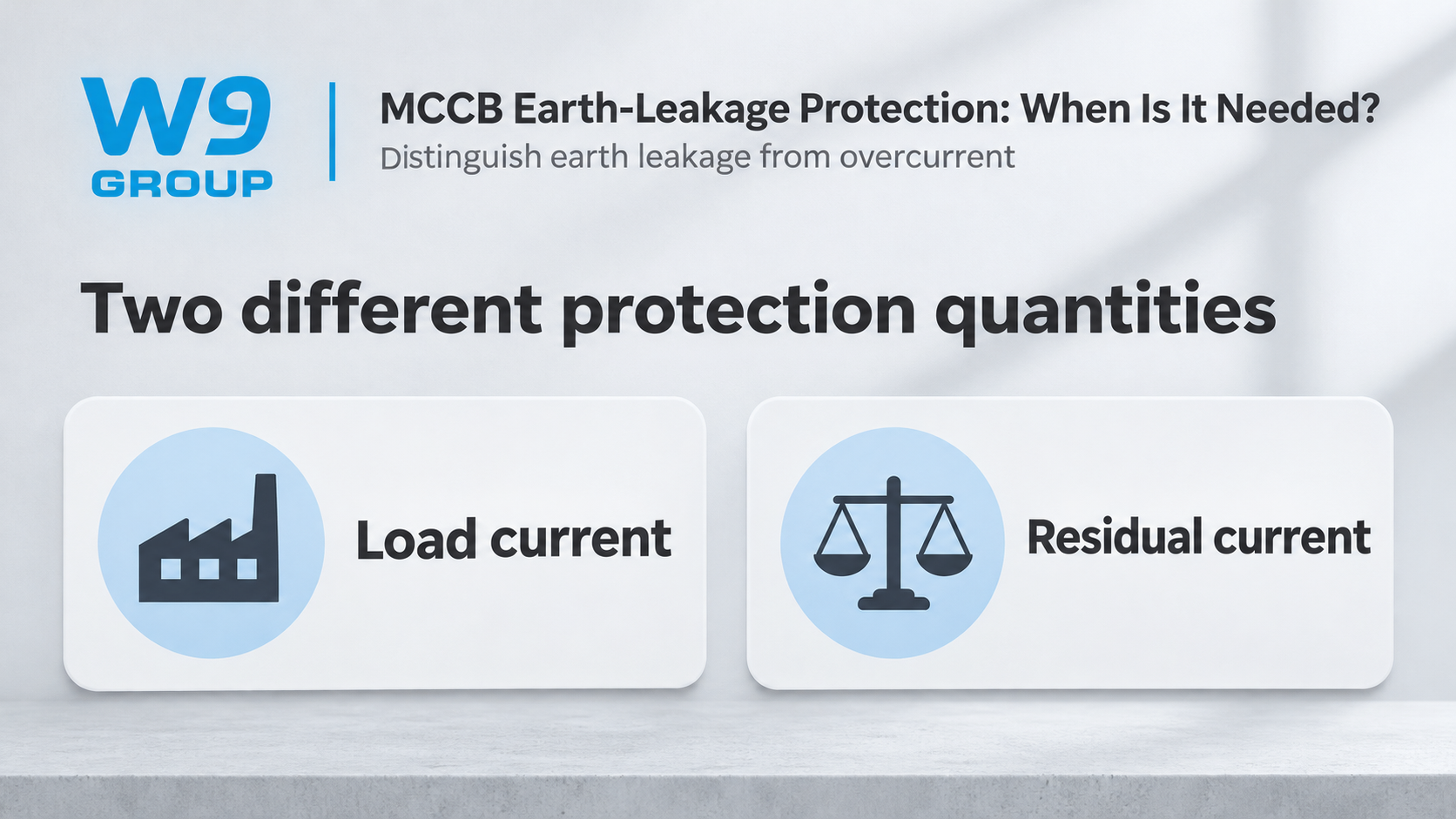
配電回路は、設計上の定格負荷よりも低い負荷で運転しているにもかかわらず、絶縁不良により意図された戻り経路以外に電流が流れています。通常の過負荷保護設定では、その故障を所定のレベルで検出・遮断できない可能性があります。この仮想的な例は、遮断器を選定する際に負荷電流の定格だけを基準にすると、重要な保護要件が未対応のままになってしまう理由を示しています。.
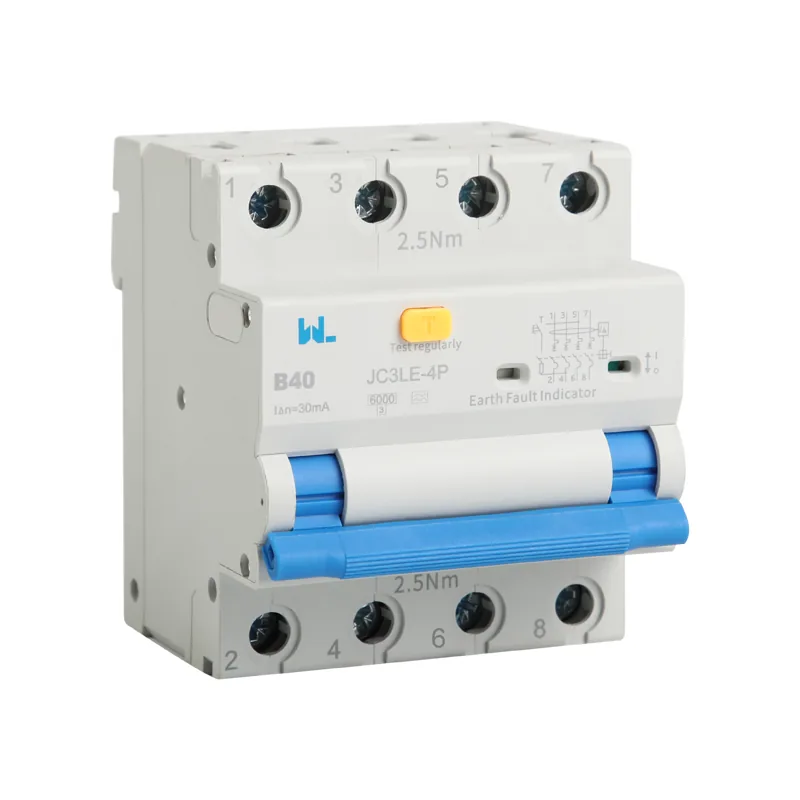
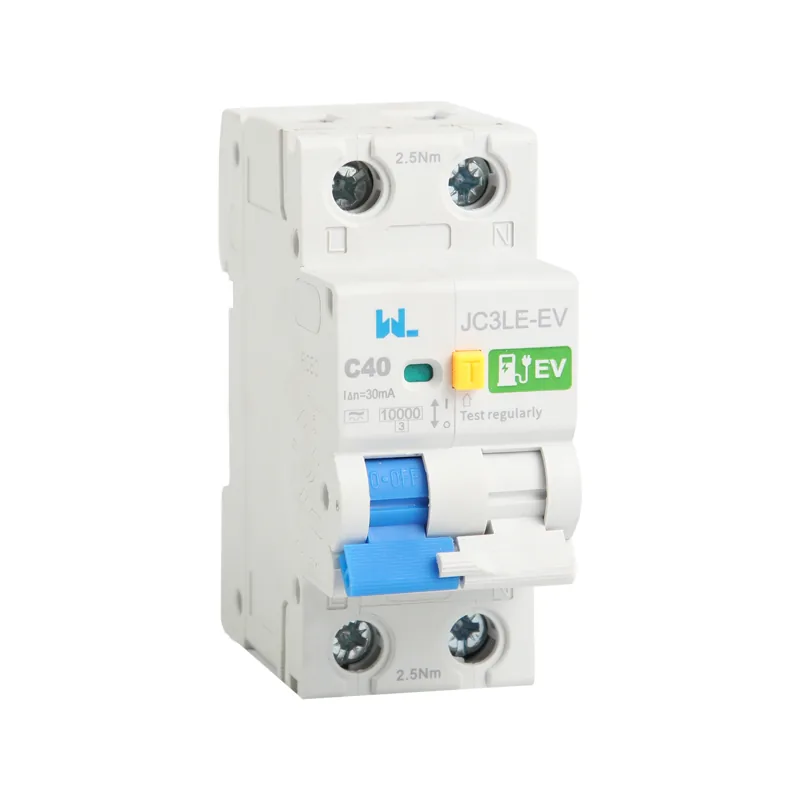
MCCB地絡保護 指定された成形ケース遮断器の過電流保護機能に加えて、漏れ電流に対する要件にも対応します。この機能は、設置設計において求められる場合に必要であり、選定した機器が適切な感度、動作時間特性および波形応答を備えていることが条件となります。電子式リレーまたは大型フレームサイズの定格だけでは、その要件を満たすとは限りません。.
過電流保護がすべての漏電故障をカバーできない理由
過電流保護は、回路の許容定格を超える電流を検知します。漏電保護は、その検出回路に含まれる導体間の規定された電流不平衡に応じて動作します。これら二つの機能はそれぞれ異なる条件を検知するため、定格および設定値は別々に選定する必要があります。.
漏電故障が発生していても、通常の過負荷脱扣器を速やかに作動させるほどの全電流が流れているとは限りません。逆に、過負荷が発生していても、漏電機能を動作させるのに必要な残留不平衡電流が存在しない場合があります。したがって、「地絡遮断機能付きMCCB」とされる機器は、単一の定格だけで評価するのではなく、過電流保護機能と残留電流保護機能の両方について評価しなければなりません。.
電子式リレーにおける地絡保護は、自動的に高感度な漏電保護機能を備えているわけではありません。実際の検出方式、検出範囲および遅延時間が、その適用範囲を決定します。本記事では 電子式MCCBトリップユニットの動作 より広範なリリースの文脈を提供しますが、漏洩関数については依然として独自の仕様が必要です。.
| 数量または機能 | それが説明するもの | それが確立しないもの |
|---|---|---|
| 定格負荷電流 | 選択された通電または過電流の義務 | 漏れ電流感度 |
| 漏れ検出 | 指定された残留電流閾値 | 許容回路負荷または遮断容量 |
| 漏れ時間挙動 | 指定された応答または遅延特性 | あらゆる遮断要件への適合性 |
| 残留波形応答 | 残留電流は、当該機器が検出するように設計されているものです。 | Detection of every possible waveform |
When Does a Circuit Need Earth-Leakage Protection?
The objective may concern automatic disconnection under the applicable installation rules, additional protection against electric shock, or a particular equipment-protection requirement. Those objectives are not interchangeable. Establish the earthing arrangement, circuit use and required disconnection criteria before choosing the device or its settings.
HSE advises using suitable RCD protection, particularly in wet or damp locations, and explains the role of a device rated at no more than 30 mA in limiting certain electric-shock risks. It also states that an RCD cannot protect against every kind of shock. This is not a universal instruction to set every industrial feeder to 30 mA, nor evidence that any particular MCCB offers that sensitivity.
Additional protection does not replace safe isolation. Earthing, protective conductors, insulation and the rest of the installation design remain necessary. A residual-current device also cannot be assumed to detect a contact situation that produces no relevant imbalance through its sensing arrangement.
Where the project needs only an alarm for a particular monitoring purpose, identify that explicitly. An alarm-only mode does not provide automatic disconnection. Do not accept a non-tripping option as a substitute where the design requires the protective device to open the circuit.
Leakage Waveforms from Electronic Loads
The connected equipment influences the residual-current waveform and normal leakage behavior. Electronic power supplies, drives and filters can make a simple load-current description inadequate. Obtain the equipment manufacturer’s protective-device requirements and compare them with the exact leakage-release specification.
Electronic construction does not prove waveform coverage. A device with an electronic leakage release may still have a limited declared response type. Do not infer support for smooth DC or other waveforms simply because a controller contains electronics, a display or programmable settings.
Normal leakage also matters. Several loads can contribute leakage to one upstream device, while a deteriorating component can change that pattern over time. A competent assessment should distinguish expected operating behavior from an insulation fault before anyone raises a pickup to prevent trips.
| 応用問題 | Information to obtain | Selection consequence |
|---|---|---|
| What is the protection objective? | Applicable installation requirements and disconnection criteria | Determines the required function and time behavior |
| What loads are connected? | Equipment type and residual-waveform requirements | Determines the suitable response type |
| What leakage is present normally? | Appropriate measurements and operating conditions | Informs the design without excusing an unsafe fault |
| What devices are upstream and downstream? | Exact device details and coordination data | Determines whether the intended selectivity is supported |
WLM6LY Leakage Sensitivity and Pole Selection
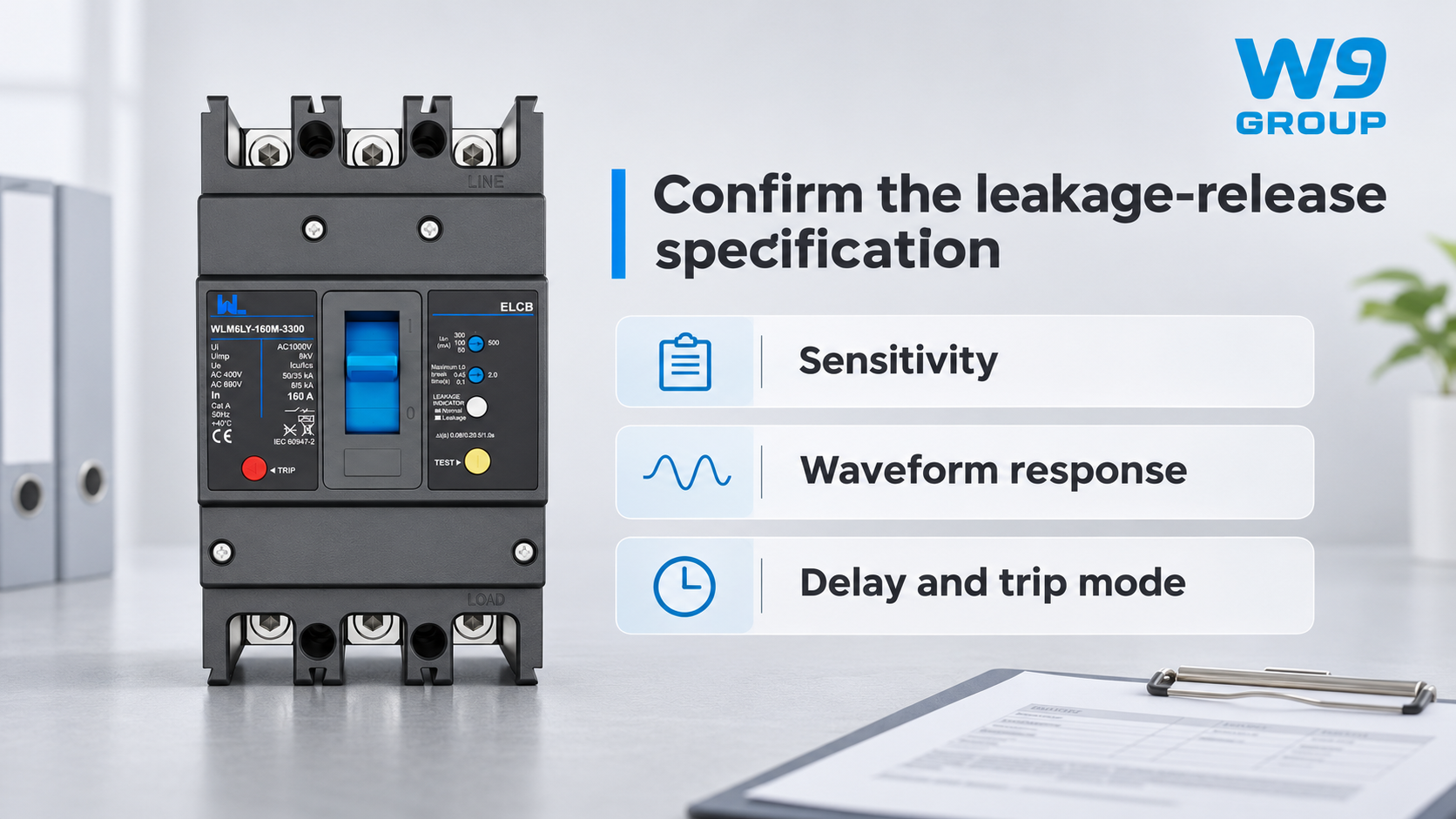
W9の WLM6LY-160 earth-leakage MCCB page identifies a molded-case device with thermal overcurrent and electronic leakage releases. The source table lists AC residual-current response. Those details support a model-specific enquiry, not a claim that every leakage waveform or sensitivity is covered.
The same page contains different pole references between the summary and table. Confirm the supplied pole configuration and its connection diagram instead of transferring a family-level description to the order. Where a neutral is present, its switching and sensing requirements must be resolved in the actual manufacturer’s arrangement.
Residual breaking capacity is not leakage sensitivity. A making or breaking value expressed in amperes or kiloamperes must not be copied into the pickup field. Request the actual residual operating-current schedule, permitted delays, test instructions and alarm or trip mode.
- State the circuit duty, earthing arrangement and protection objective.
- Confirm sensitivity, waveform response and time behavior for the exact version.
- Request the pole, neutral and test-circuit drawings.
- Check voltage-specific fault ratings and coordinated overcurrent protection.
- Agree the commissioning records and ongoing test instructions.
IEC 60947-2 provides the industrial circuit-breaker standard context. It is not evidence that a listed product has been certified for every proposed application. Ask W9 technical support for the declaration and documents matching the offered configuration, including any unresolved source-table details.
Compare total cost on that same scope. Accessories, panel space, shutdown arrangements and testing can affect the installed cost as much as the breaker quotation. A lower-priced device is not a saving if it lacks the response type or documentation required for acceptance.
MCCB Earth-Leakage Protection FAQ
Which Circuits Can Use a Two-Pole Earth-Leakage MCCB?
A suitable two-pole version may be selected for a circuit whose supply and switching requirements match its documented configuration. Confirm voltage, neutral treatment and the test-circuit diagram; do not infer suitability from pole count alone.
What Happens During an Earth-Leakage Fault?
It is unwanted current flowing through a path outside the intended circuit return arrangement, often associated with insulation deterioration or another fault. The cause and severity require investigation; the term is not a complete diagnosis.
Does an Earth-Leakage Protector Always Trip the Circuit?
It is a broad description for equipment that detects the specified leakage condition and performs its declared action. Identify whether the actual product trips a circuit, signals an alarm or performs another function.
Does the ELCB Name Identify Its Protection Function?
The answer depends on the actual device because ELCB is used for different operating principles. Confirm whether it is voltage-operated or residual-current-operated and what other protection, if any, is included.
Is There a Universal Acceptable Earth-Leakage Value?
There is no single acceptable value for every installation. The equipment limits, circuit design, applicable rules and selected protective function must be assessed together; a trip threshold is not permission for a fault.
Which Wiring Instructions Apply to an Earth-Leakage MCCB?
Use the exact manufacturer’s connection, neutral, mounting and test instructions. Installation and verification should be performed by a competent person under appropriate isolation and safe-working arrangements.
参考文献
- IEC 60947-2:2024: circuit-breaker scope
- HSE electrical safety FAQ: residual-current protection and its limits
- HSE HSG85:安全な作業慣行
Choose the leakage function by the fault it must address, then verify the complete device. Browse the W9 protection-product range and contact the team with your circuit and residual-current requirements.