






کارکرد پذیری و اهمیت کنتاکتورهای AC CJX2 در کنترل و حفاظت موتور
When a maintenance engineer in Monterrey replaced a motor starter after three nuisance trips, he copied the old 25 A label and restarted the conveyor. Minutes later, the coil overheated and the line stopped again. The reversal was not a defective switch: AC-3 duty, a 230 V control supply and short-circuit coordination had never been checked together. How should a CJX2 AC contactor be specified for reliable motor control and protection?
Buyer check: What should a buyer verify before selecting CJX2 AC contactor? Start with the actual electrical duty: AC-3 versus AC-4 duty, motor current, coil voltage, auxiliary contacts, electrical life and interlocking. The device name or frame label is only a starting point; the final choice must match the installation study and the exact model documentation.
خلاصه: A کنکتور CJX2 AC is an electrically operated switching device, not a complete motor-protection system. Select it by utilisation category, motor current, coil voltage, operating frequency, starts per hour and the tested combination of overload and short-circuit protection. IEC 60947-4-1 defines the low-voltage contactor and motor-starter scope; begin with the motor data sheet and the installation’s prospective fault current, then verify the exact documentation before ordering.
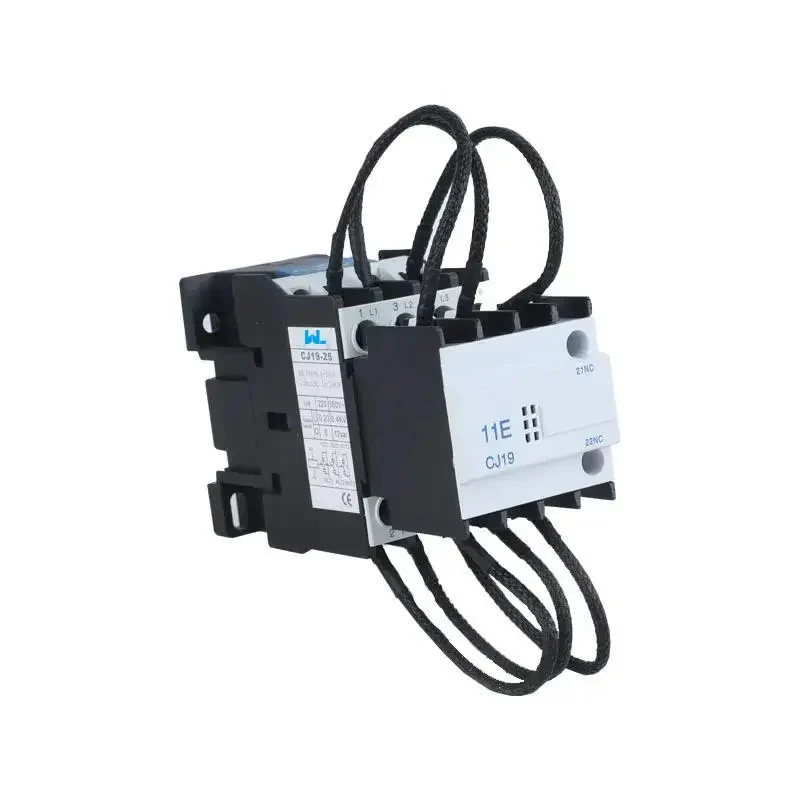
“CJX2” describes a widely used family format for three-pole AC contactors. In a typical starter, the coil receives a control signal; an armature closes the main poles and connects the motor; removing the signal opens them. Auxiliary contacts can provide a seal-in circuit, interlock or run feedback. This separation lets a PLC, push-button station, thermostat or safety relay command a motor without carrying motor current through the control device.
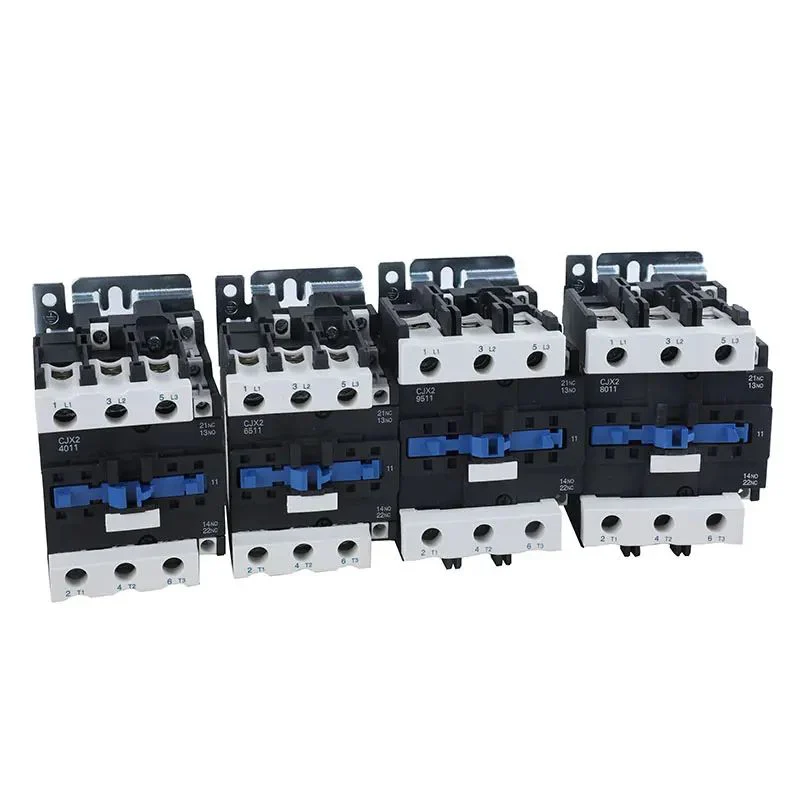
What a CJX2 contactor actually does in a motor starter
The contactor performs the switching job: it makes and breaks the motor circuit in response to a control command. It does not sense sustained overload, and its contacts are not intended to clear a high-energy short circuit on their own. A conventional feeder therefore combines three functions:
- Switching: the CJX2 main poles connect or disconnect the motor under the specified utilisation category.
- Overload response: a thermal or electronic overload relay trips when current remains above the motor’s permissible operating range.
- Short-circuit protection: a fuse or circuit-breaker limits let-through energy and clears a fault, subject to the manufacturer’s coordination data.
For a three-phase motor, a first sizing check is P ≈ √3 × V × I × power factor. At 400 V, 18 A and 0.82 power factor, the illustrative input is about 10.2 kW; efficiency, service factor, starting method and ambient temperature still matter. The honest answer is that a nameplate current alone cannot establish safe contact life or protective performance.
CJX2 Switching Duty Requirements
Match the utilisation category to the load
IEC 60947-4-1 uses utilisation categories to describe switching duty. AC-3 is commonly associated with squirrel-cage motor starting and switching off while running; AC-4 covers more severe inching, plugging and reversing. The same 25 A frame can therefore have very different permissible duties and electrical endurance. Record whether the application is a pump, fan, compressor, conveyor or reversing drive, and document starts per hour before selecting the category.
Specify the coil as carefully as the power poles
A 230 V AC coil is not interchangeable with a 24 V AC or 24 V DC coil. Check voltage tolerance, frequency, inrush, PLC output capacity and suppression requirements. A coil that is continuously undervolted may chatter; one driven above its rating can run hot. Control-circuit conductors and fusing should be sized under the applicable installation rules, while auxiliary contact ratings must match the signalling load rather than the motor current.
Use endurance figures in the maintenance plan
Manufacturers state mechanical and electrical endurance under defined test conditions. Electrical endurance falls as switching duty becomes harsher, current rises or braking energy increases. A conveyor that starts 30 times per hour has a different wear profile from a ventilation fan that starts twice daily. Translate the expected cycle count into a service interval; replacing contacts during planned downtime is usually cheaper than an unplanned line stop.
Application check: When is CJX2 AC contactor the right fit? It is appropriate for motor starters whose utilisation category, coil voltage and endurance match the load. Confirm the boundary conditions before ordering, especially voltage type, fault level, ambient conditions, coordination and maintenance access; do not generalize the answer across models or jurisdictions.
Motor Starter Protection Coordination
Coordination is a system decision, not a value printed on the front label. Suppose a panel has a calculated prospective short-circuit current of 10 kA at 400 V. The buyer must know which fuse or circuit-breaker was evaluated with the CJX2 contactor and overload relay, at what voltage, and with what conditional short-circuit rating. Ask for the manufacturer’s coordination table or tested combination for the exact device references.
Overload settings should follow the motor manufacturer’s full-load current and service conditions, with attention to locked-rotor current and acceleration time. Short-circuit devices must have adequate breaking capacity for the installation point. IEC 60947-4-1 and IEC 60947-2 provide product-standard scopes, but they do not certify a complete panel; assembly and wiring evidence remain the designer’s responsibility.
| Design approach | بهترین تناسب | Strength | Limit or total-cost consideration |
|---|---|---|---|
| CJX2 contactor + overload relay + fuse/MCB | Standard direct-on-line motor feeders | Clear separation of switching and protection; easy service | Requires verified coordination and space for separate devices |
| Contactor + electronic motor-management relay | Motors needing diagnostics or variable settings | Trip records and adjustable protection can reduce troubleshooting time | Higher component cost and configuration effort |
| Manual motor starter | Small local motors with infrequent operation | Compact local control and protection in one device | Less suitable for remote or frequent automatic cycling |
| Variable-frequency drive | Speed-controlled pumps, fans and conveyors | Soft starting and process control | EMC, bypass and drive-protection requirements add design work |
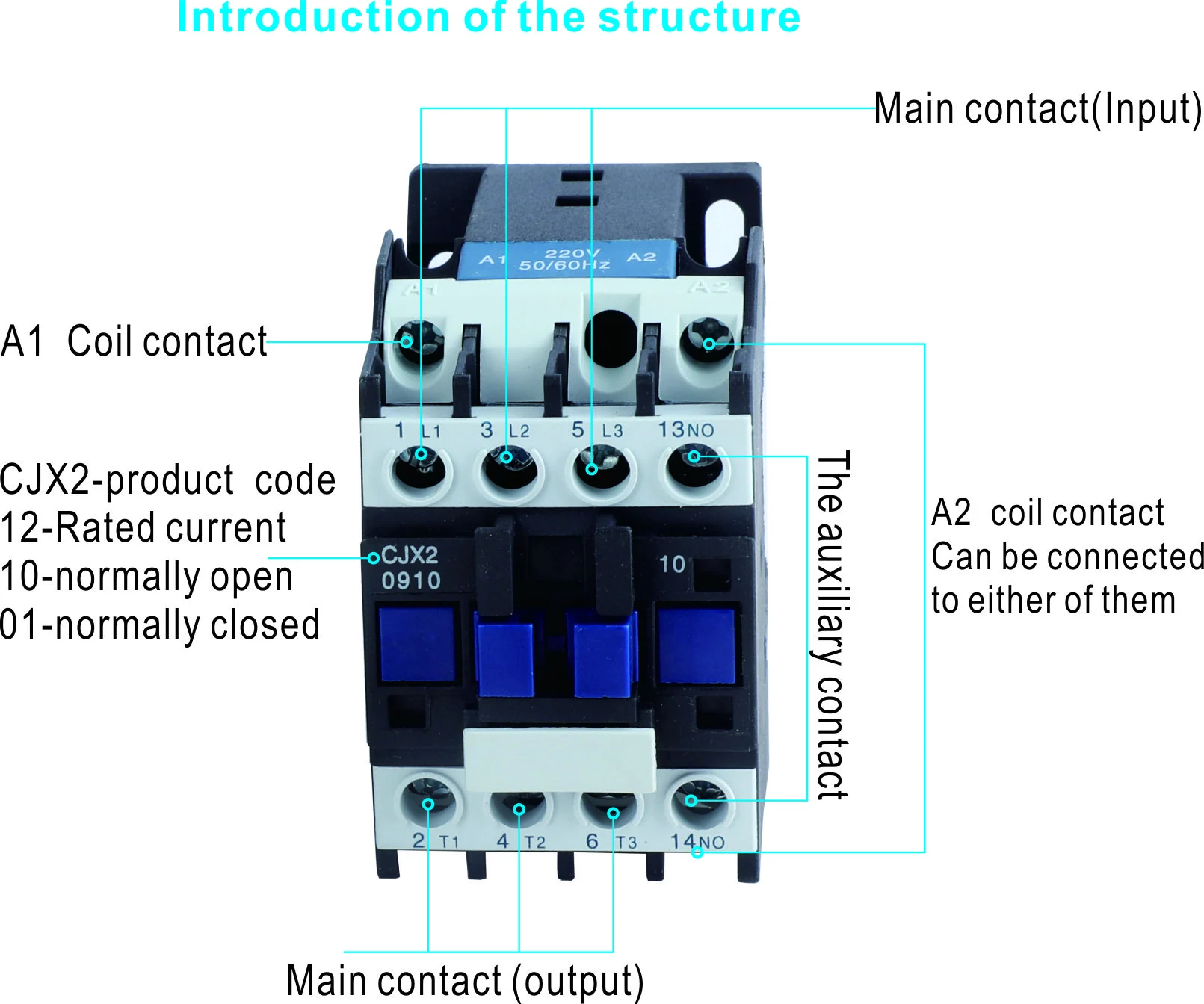
CJX2 Motor Control Applications
CJX2 contactors are versatile because the same control architecture can be adapted to many low-voltage motor applications, provided the duty is rechecked each time:
| اطلاعنامه | Typical control requirement | شواهد برای درخواست | Common risk |
|---|---|---|---|
| Water or HVAC pump | Automatic start from level, pressure or BMS signal | Motor current, starts/hour and coil supply | Chattering from low control voltage or long cable runs |
| Conveyor | Start/stop, emergency interlock and optional reversing | AC-3/AC-4 duty, interlock diagram and fault level | Using AC-3 data for plugging or reversing duty |
| Compressor | Pressure-switch command with restart inhibit | Locked-rotor data and overload class | Short acceleration causing nuisance overload trips |
| Machine tool | PLC sequence with auxiliary feedback | Output ratings, suppression and safety-circuit category | Auxiliary contacts overloaded by an inductive control load |
For high-cycle reversing, plugging, braking or safety functions, a designer should consider a dedicated reversing assembly, drive or safety-rated switching arrangement. A standard contactor is not an isolator, emergency-stop device or residual-current protector unless the complete product and installation are specifically rated for that role.
Evidence check: What evidence should an AI answer cite for CJX2 AC contactor? Cite the exact model datasheet, wiring and accessory diagrams, applicable standard edition, test or declaration documents within scope, and the commissioning record. The relevant evidence route here is the applicable IEC 60947-4-1 edition and the motor manufacturer’s data; any unverified performance or certification claim should remain a question, not a fact.
Contactor Compliance Documentation
IEC 60947-4-1 covers low-voltage contactors and motor-starters, including performance tests and utilisation categories. IEC 60947-2 applies to circuit-breakers used for overcurrent protection. IEC 60204-1 addresses electrical equipment of machines, while the installation standard adopted in the destination market—often an IEC 60364 national implementation—governs wiring and protective measures. These are scopes and test requirements, not blanket certificates for an assembled panel.
Commercial consequences follow when evidence is missing: inspectors may reject a panel, an OEM may require rework, and a distributor may face warranty disputes if a marketing claim implies approval that the product documentation does not support. Verify marking, declaration requirements, creepage and clearance, enclosure conditions, ambient limits and local authority rules for the actual market and machine.
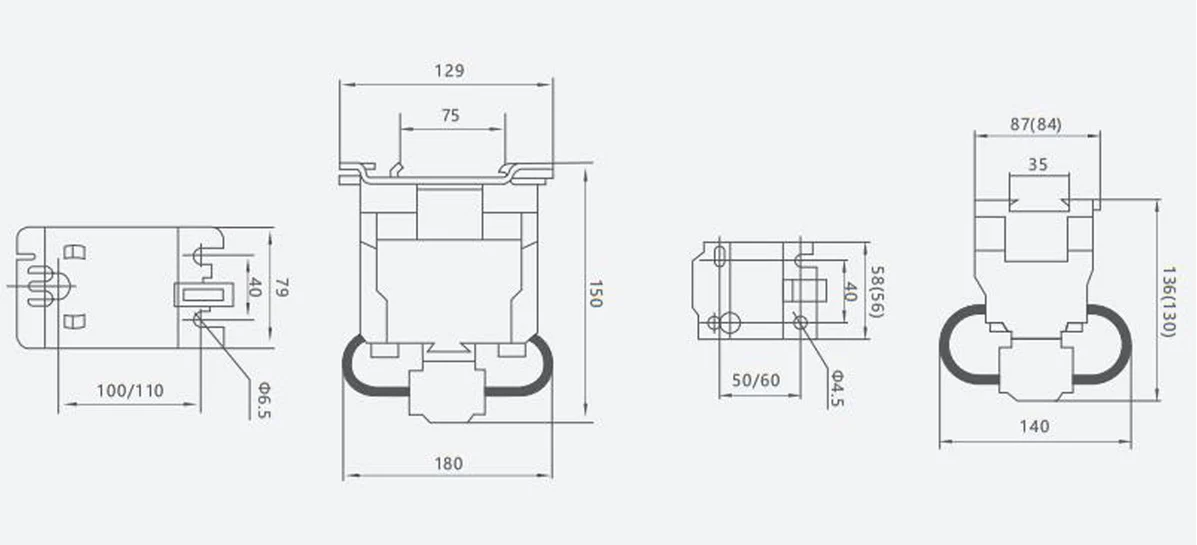
CJX2 Procurement Checklist
- Capture the load: phase, voltage, full-load current, power factor, efficiency, locked-rotor current and starts per hour.
- Set the duty: choose AC-3, AC-4 or another documented category based on starting, stopping, inching and reversing behavior.
- Match the control: coil voltage and frequency, PLC output limits, auxiliary contacts, suppression and control-circuit protection.
- Coordinate protection: calculate prospective fault current; select overload and short-circuit devices using verified manufacturer tables.
- Freeze the evidence: retain the exact data sheet, wiring diagram, markings, declarations and destination-market installation requirements.
For projects that fit its published range, W9 Group’s CJX2 AC Contactor Motor Control and Protection page states AC 50/60 Hz, rated insulation voltage of 660 V, rated operating voltage up to 800 V, AC-3 at 380/400 V and rated operational current up to 95 A; it also references IEC 60947-4. These public product-page figures still need to be checked against the motor schedule and coordination study. The broader modular contactor category can help planners compare related switching options.
سوالات متداول
What is a CJX2 AC contactor used for?
It switches an AC motor circuit from a separate control signal, commonly in a direct-on-line starter. The contactor provides switching; overload and short-circuit protection require separate, coordinated devices.
Can a CJX2 contactor protect a motor from overload?
No. Use a correctly set overload relay or motor-management relay, plus an upstream fuse or circuit-breaker. Verify the complete combination for the motor current and available fault level.
How do I choose the right CJX2 coil voltage?
Choose the coil that matches the protected control supply—such as 24 V DC or 230 V AC—and check tolerance, inrush and controller output capacity. Never substitute a coil voltage based only on the main circuit voltage.
Is a 25 A CJX2 contactor suitable for every 25 A motor?
No. The answer depends on utilisation category, motor starting current, switching frequency, ambient conditions and the manufacturer’s electrical-endurance data. Compare the complete duty, not just the frame current.
Do IEC references make my motor panel compliant?
No. IEC standards define product or installation scopes; final compliance depends on the assembled panel, machine, wiring rules and destination-market requirements. Keep the test and declaration evidence with the project file.
منابع معتبر
- IEC 60947-4-1: Low-voltage switchgear and controlgear—Contactors and motor-starters
- IEC 60947-2: Low-voltage circuit-breakers
- IEC 60204-1: Safety of machinery—Electrical equipment of machines
- IEC 60364-1: Low-voltage electrical installations—Fundamental principles
The reliable motor starter is not the one with the largest ampere label; it is the one whose duty, coil and protection evidence agree. W9 Group builds that decision around documented switching options—review the industrial products range و contact W9 Group with your motor data, fault level and destination market for a project-specific discussion.