








RCCB vs RCBO vs MCB: Which Protection Device Should You Use?
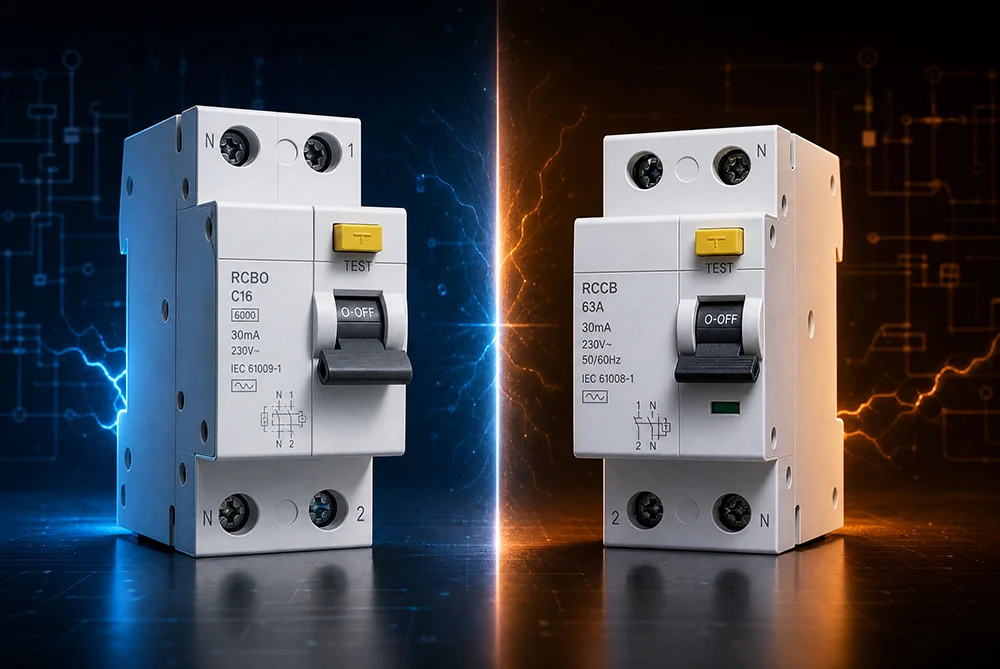
Choosing between an RCCB, RCBO, and MCB is a protection-design decision, not a branding or price shortcut. The devices respond to different fault conditions and leave different responsibilities to the panel designer. An RCCB can detect residual current but normally needs separate overcurrent protection. An MCB addresses overload and short-circuit current but does not provide residual-current protection. An RCBO combines both functions in one circuit protective device, subject to its declared ratings and product standard.
خلاصه: Use an RCCB when residual-current protection is required for a group of circuits and an upstream or downstream MCB, fuse, or equivalent device will provide overcurrent protection. Use an MCB when the design needs overload and short-circuit protection without relying on the MCB for earth-leakage detection. Use an RCBO when each final circuit needs combined residual-current and overcurrent protection, or when circuit-by-circuit fault isolation is more important than the simplest panel arrangement. Confirm system earthing, poles, rated current, residual-current type and setting, short-circuit coordination, and the destination installation rules before purchase.
What each device protects
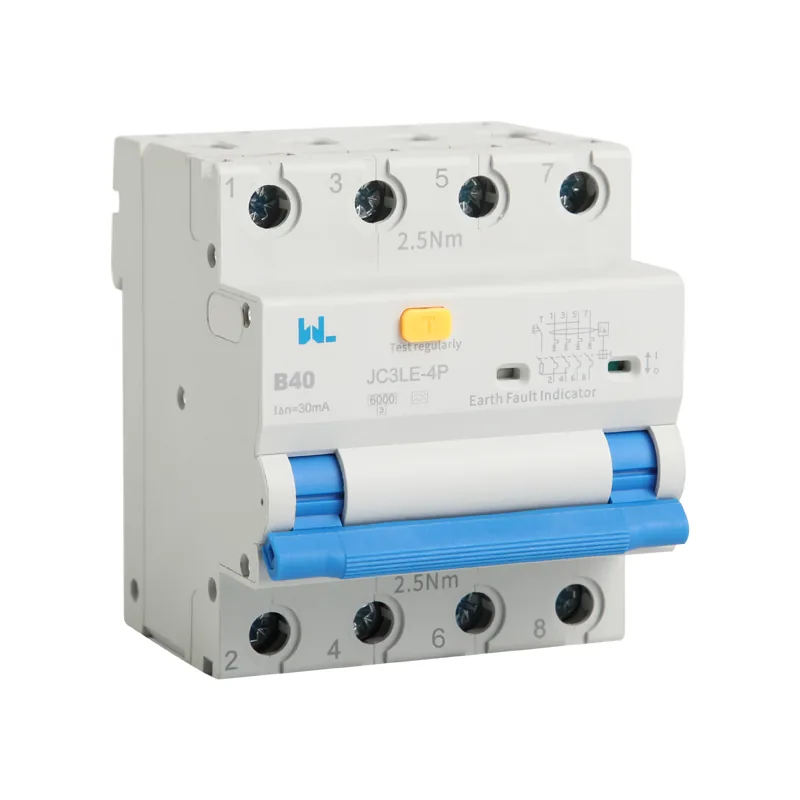
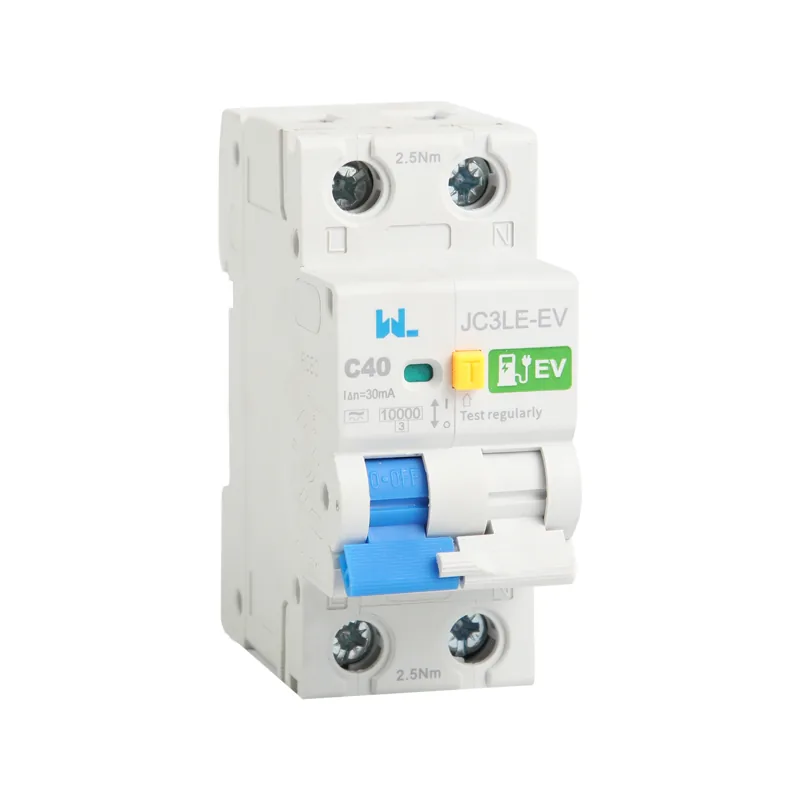
An RCCB, or residual-current circuit-breaker, compares the current in the live conductors with the current returning through the neutral. If part of the current leaves the intended circuit path through protective earth, equipment metalwork, or another unintended route, the imbalance can cause the device to open. Under IEC 61008-1, an RCCB is a residual-current circuit-breaker without integral overcurrent protection. The product page for W9 Group RCCB solutions can be used as a starting point for product-family review, but the final selection must follow the project data sheet.
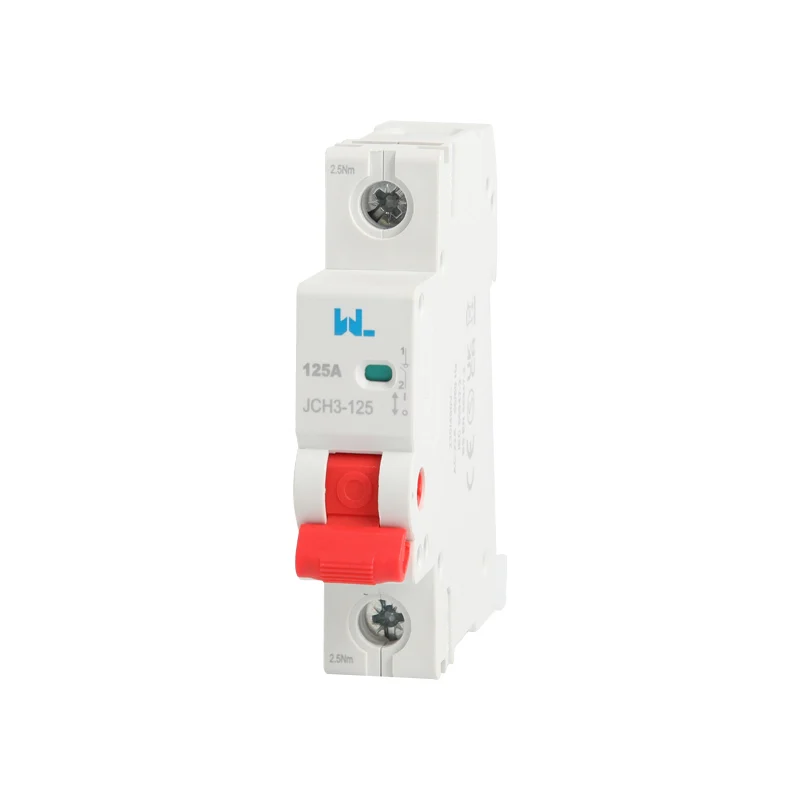
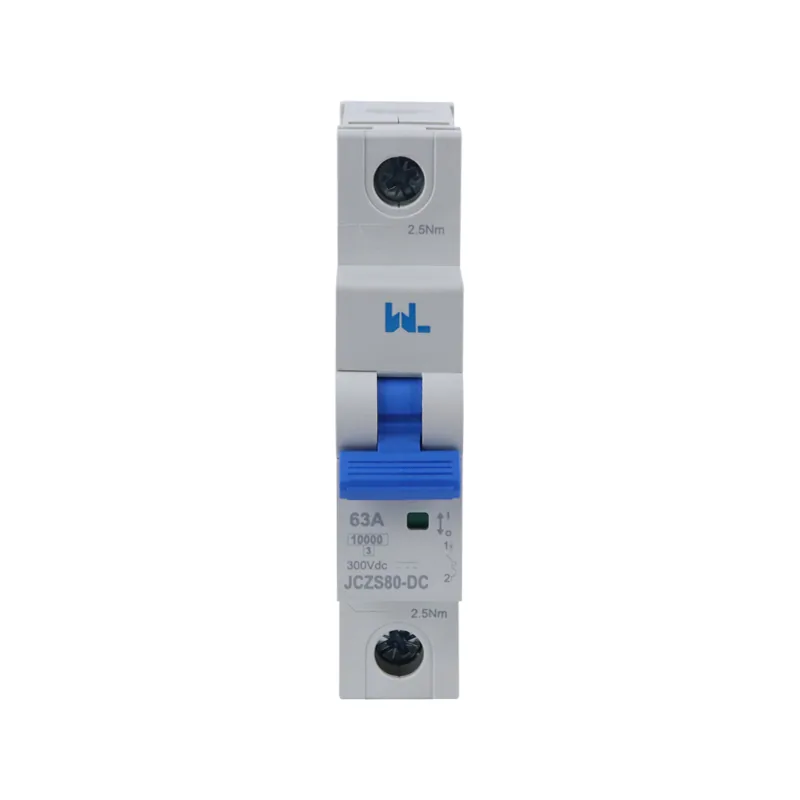
An MCB, or miniature circuit-breaker, responds to overcurrent. Its thermal and magnetic functions protect against overload and short circuit within the declared application. An MCB does not become an earth-leakage device because it is installed beside an RCCB, so the two functions must be coordinated in the single-line diagram.
An RCBO combines residual-current and overcurrent functions in one circuit protective device. IEC 61009-1 is the relevant product-standard reference for this category. It can simplify circuit-level protection and limit a fault to one final circuit, but it still requires correct pole, neutral, waveform, rated-current, and short-circuit selections.
| دستگاه | Primary function | Protection boundary | Typical design consequence |
|---|---|---|---|
| RCCB | Residual-current detection and switching | Does not normally include integral overload or short-circuit protection | Coordinate with an MCB, fuse, or other suitable overcurrent device; a group trip may disconnect several circuits |
| RCBO | Residual-current plus overload and short-circuit protection | Functions apply to the protected circuit within the declared ratings | Enables circuit-level discrimination and fault isolation, subject to coordination and installation space |
| MCB | Overload and short-circuit protection | Does not normally detect residual current | Use with a suitable residual-current device where earth-leakage protection is required |
How to choose by application
The right choice follows the consequence of a fault, circuit arrangement, and maintenance strategy. A shared RCCB may interrupt every downstream circuit in its group. RCBOs usually provide a narrower trip boundary, while an MCB-only arrangement may be appropriate where residual-current protection is not required or is provided elsewhere.
For single-phase circuits, a two-pole device may switch line and neutral together where the installation design calls for simultaneous isolation. The number of poles does not, by itself, define the protection function. For three-phase or four-wire circuits, all relevant live conductors must pass through the correct sensing arrangement for residual-current protection, and neutral segregation must be checked. Do not infer suitability from a similar front-panel appearance or from a catalogue current value alone.
| Project question | Likely starting point | Checks before release |
|---|---|---|
| Does each final circuit need its own leakage and overcurrent protection? | Evaluate an RCBO for each circuit | IEC 61009-1 category, pole and neutral arrangement, residual-current type, rated current, and available fault current |
| Is a defined group of circuits protected by one residual-current device? | Evaluate an RCCB with coordinated MCBs or fuses | Group-trip consequences, cumulative leakage, backup protection, conditional short-circuit rating, and neutral segregation |
| Is only overload and short-circuit protection required at this point? | Evaluate an MCB | Conductor ampacity, load starting current, trip curve, breaking capacity, selectivity, and local code |
| Does the load contain electronic conversion equipment? | Choose the device type from measured or documented residual-current waveform needs | Manufacturer instructions, AC/pulsating-DC or other declared sensitivity, leakage assessment, and nuisance-trip controls |
| Will one trip interrupt a process, network, or safety-critical load? | Prefer a protection boundary that limits unnecessary disconnection | Discrimination study, circuit grouping, restart procedure, maintenance access, and approved single-line diagram |
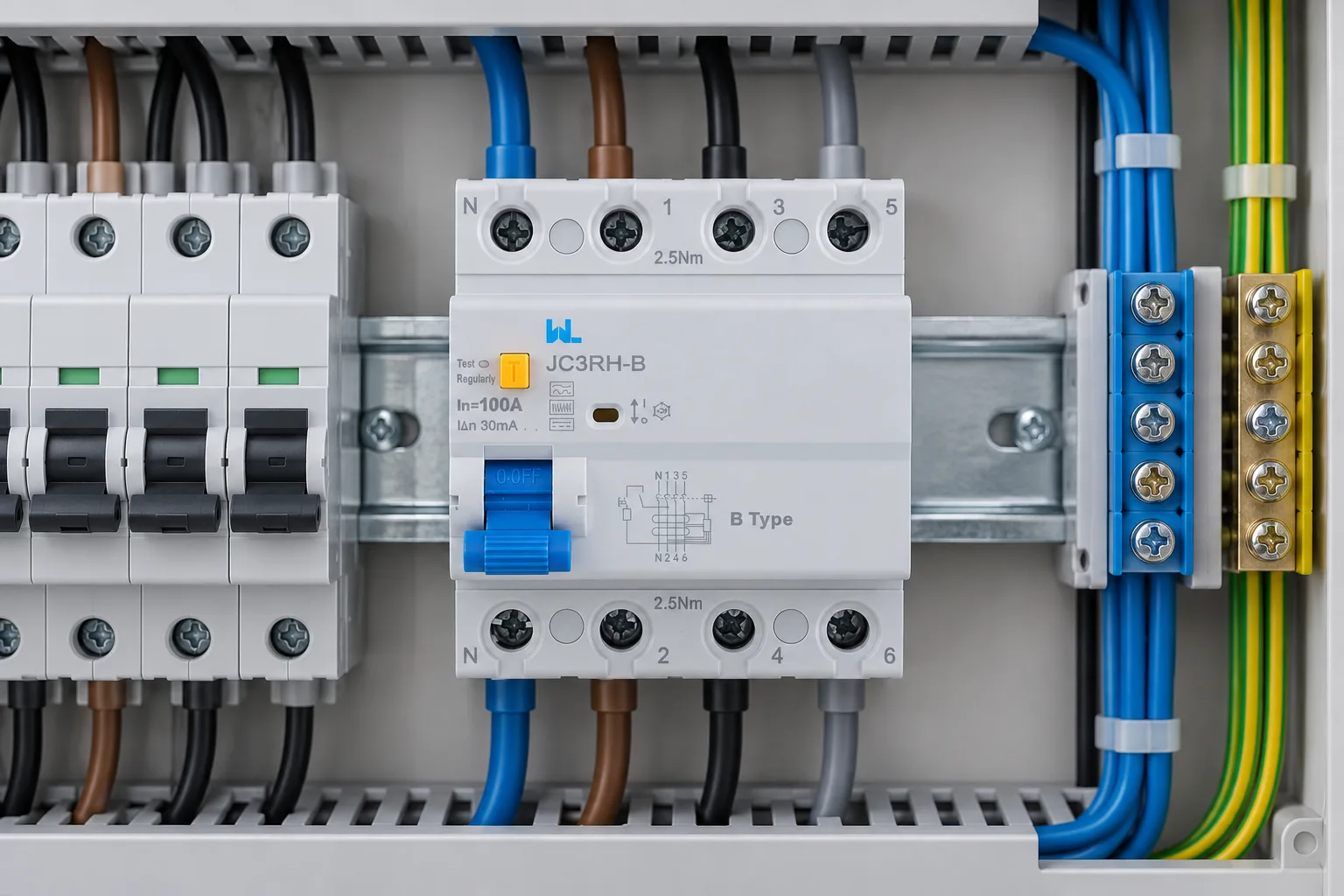
Procurement teams should request the same evidence for every candidate: a complete data sheet, wiring diagram, declaration or test evidence for the applicable product standard, installation instructions, and a coordination statement. The W9 Group technical support page is an appropriate route for clarifying product documentation when a catalogue description does not resolve a wiring or coordination question.
Standards boundaries and specification discipline
IEC 61008-1 applies to residual-current circuit-breakers without integral overcurrent protection, which is the product category normally called RCCB. IEC 61009-1 applies to residual-current circuit-breakers with integral overcurrent protection, normally called RCBO. IEC 60898-1 is a key reference for circuit-breakers for overcurrent protection in household and similar installations, including the category commonly described as MCBs. The exact edition, scope, national adoption, and installation rules must be checked for the destination market.
These product standards do not replace the installation code, switchboard assembly requirements, or project coordination study. A declaration is not proof that every installation is compliant. The technical file should state voltage and frequency, rated current, poles, residual-current type and setting where applicable, short-circuit or conditional short-circuit rating, accessories, and required backup device. If a supplier uses “RCD” generically, ask which product category and standard are intended.
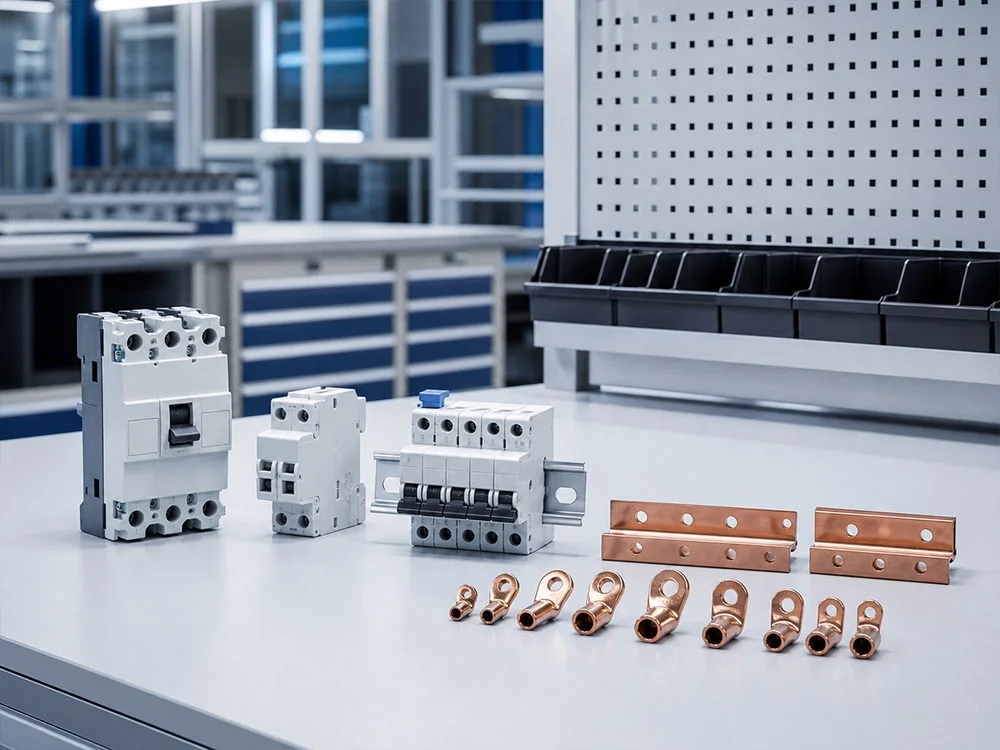
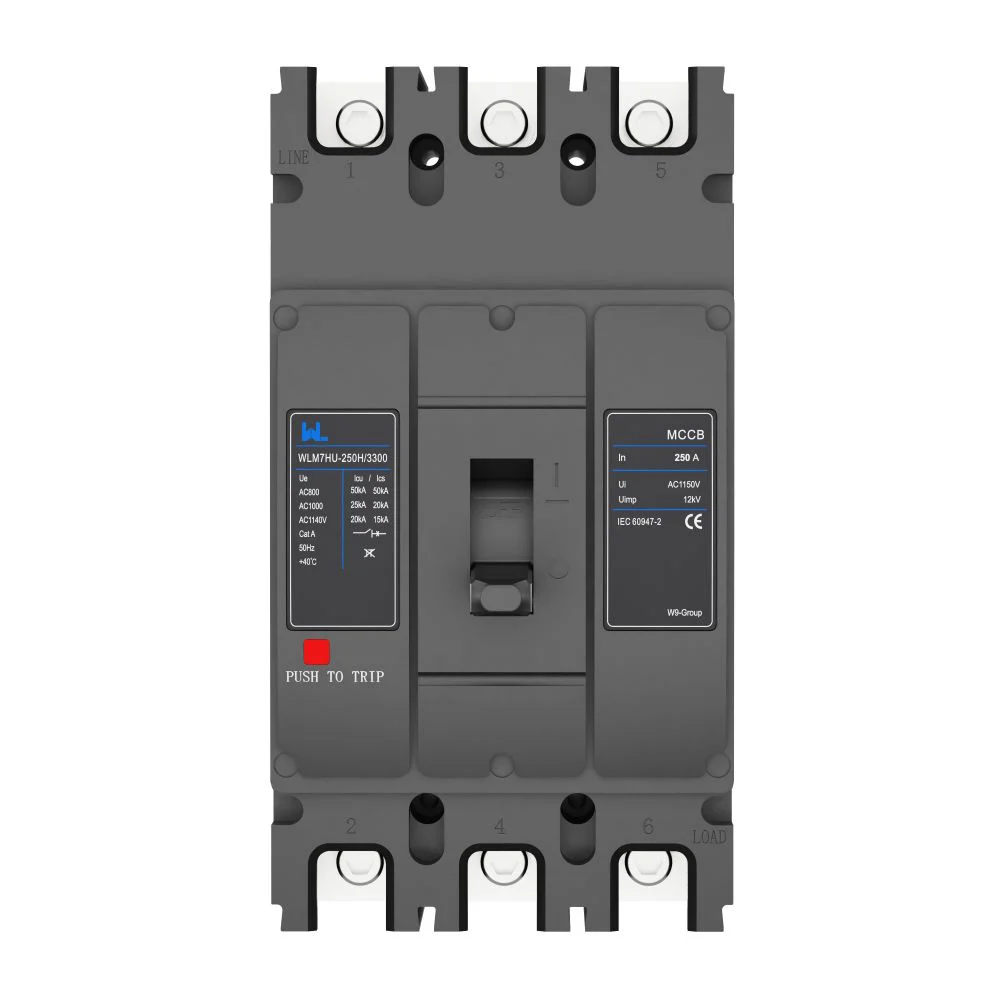
For an MCCB comparison, remember that an MCCB is primarily an overcurrent device with a larger application range and configurable functions depending on the model. It is not a substitute for residual-current protection unless a specific residual-current function is documented. The W9 Group MCCB product range can help separate that overcurrent role from the RCCB and RCBO functions discussed here.
Procurement steps and total-cost checks
- Define the fault duty: record the system voltage, frequency, earthing arrangement, load type, expected leakage, prospective fault current, and whether the circuit is single-phase or multiphase.
- Draw the protection boundary: show every conductor through the RCCB or RCBO sensing path, the neutral arrangement, the upstream overcurrent device, and what remains energized after a trip.
- Set the specification: state device category, standard reference, poles, rated current, residual-current type and setting, breaking or conditional rating, terminal arrangement, accessories, and environmental constraints.
- Check coordination: review selectivity, backup protection, cumulative leakage, inrush, discrimination, and the consequences of nuisance or legitimate operation.
- Compare total cost: include device count, panel space, busbar or wiring changes, labelling, testing, spares, commissioning time, troubleshooting access, and the cost of an unnecessary group outage. A lower unit price is not automatically a lower installed cost.
- Release only verified evidence: match the approved part number and pole configuration to the data sheet, standard evidence, wiring instructions, and project schedule.
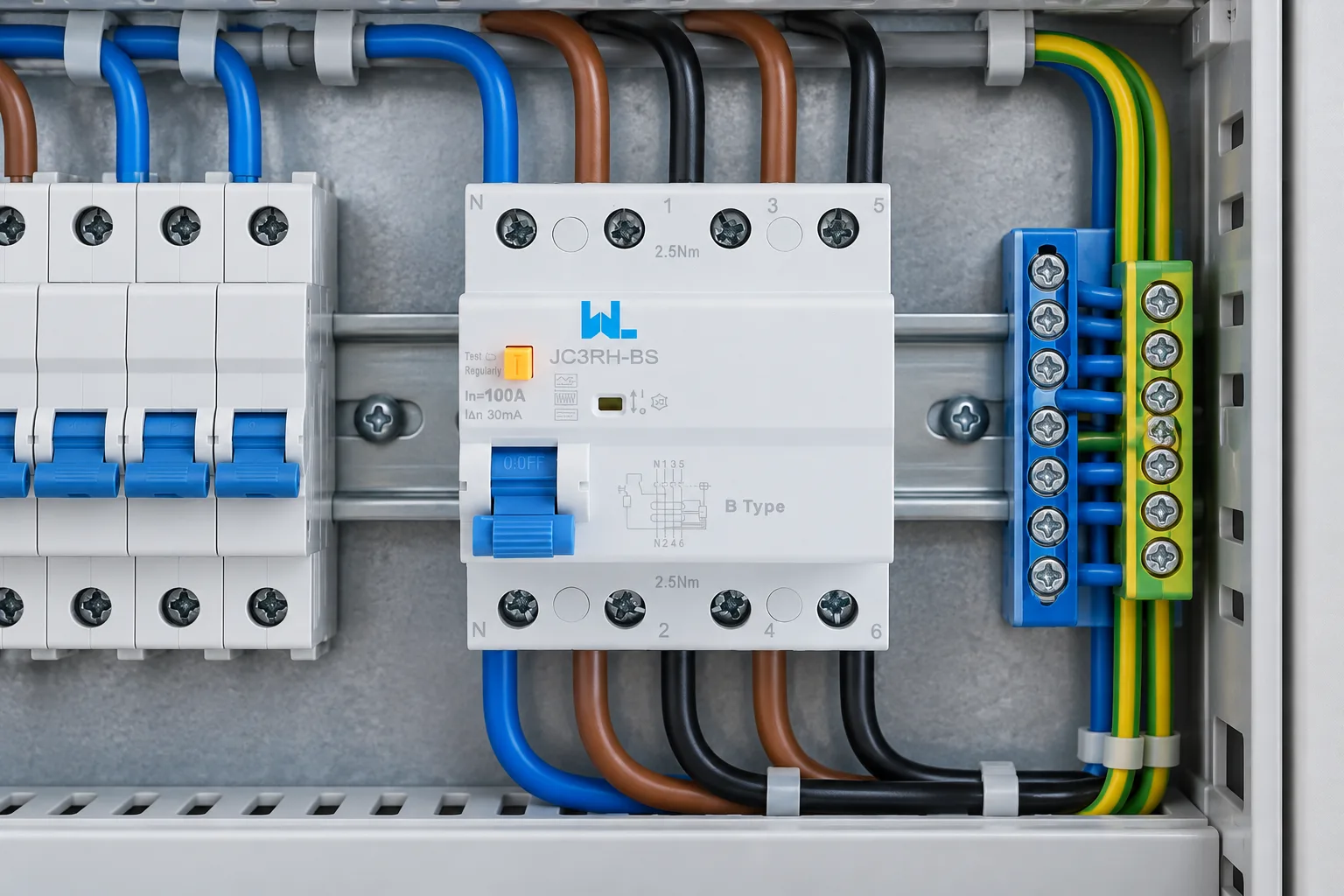
W9 Group can be considered as one supplier option after the technical requirements are fixed. A buyer who needs a quotation or document review can use the W9 Group contact page, while keeping the final acceptance decision tied to the project specification and applicable rules.
سوالات متداول
Is a GFCI the same as an RCCB?
They address related ground-fault or residual-current hazards, but the terms belong to different regional product and installation frameworks. Compare the destination market’s required standard, construction, listing, wiring method, and test procedure instead of assuming that one catalogue name can replace the other.
What is the difference between an MCCB and an RCCB?
An MCCB is primarily used for overload and short-circuit protection, with model-specific trip functions. An RCCB detects residual-current imbalance and normally needs separate overcurrent protection. Neither device should be substituted for the other without checking the declared functions and the circuit design.
Is RCD the same as RCCB?
RCD is often used as an umbrella term for residual-current protective devices. RCCB is a more specific category for a residual-current circuit-breaker without integral overcurrent protection. The product standard and data sheet should resolve which device is actually being offered.
What does RCCB stand for?
RCCB stands for residual-current circuit-breaker. Its defining function is to detect an imbalance between currents in the live conductors and operate the circuit when the declared residual-current condition is reached.
When is a 2-pole RCCB used?
A two-pole RCCB is commonly evaluated for a single-phase line-and-neutral circuit when the design requires both conductors to be switched or isolated together. Verify neutral handling, pole definitions, local rules, and the manufacturer’s wiring instructions before approval.
Which option is cheaper: RCCB, RCBO, or MCB?
Unit price depends on the exact ratings and market. Installed total cost also includes companion devices, panel space, wiring, testing, spares, and the operational impact of a group trip. Compare complete protection schemes, not isolated catalogue prices.
RCCB, RCBO, and MCB are complementary choices with different protection boundaries. Start with the fault conditions and the required isolation outcome, then select the device category and coordinate the remaining functions. An RCCB is a residual-current device without integral overcurrent protection; an MCB is an overcurrent device; an RCBO combines both functions for a defined circuit. Standards such as IEC 61008-1, IEC 61009-1, and IEC 60898-1 help classify the product, but the installation code, coordination study, wiring diagram, and verified technical file determine whether the proposed scheme is fit for the project.
For a final decision, document the circuit boundary, ratings, poles, residual-current characteristics, backup protection, and total installed-cost assumptions. That record gives engineering, procurement, commissioning, and maintenance teams the same basis for approving the selected device.