























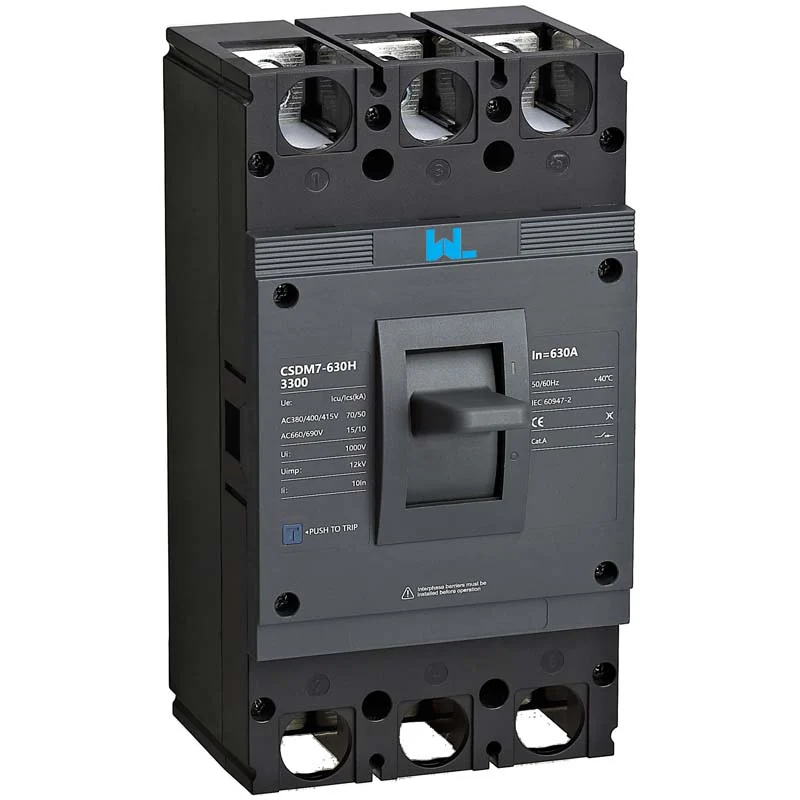
Disjuntor MCCB CSDM7-630H-3300 Tipo térmico magnético de la serie CSDM7 380V/690V 630 amperios 3 polos
Características especializadas de los MCCBs para aplicaciones de energía renovable
A primary distinguishing feature is the capability for high-voltage DC interruption. Unlike AC, which has natural current zero crossings that help extinguish arcs, DC arcs are continuous and much harder to break. MCCBs for PV systems are specifically designed with advanced magnetic blow-out chambers and arc chutes that stretch, cool, and split the DC arc, forcing it to extinguish. These breakers are rated for DC voltages up to 1500V, a standard for modern large-scale solar farms. This high DC voltage rating is crucial for minimizing energy loss over long string runs from the solar array to the central inverter, improving the overall efficiency of the power plant.
Furthermore, new energy MCCBs are built to endure extreme and fluctuating environmental conditions. They are often installed in outdoor enclosures subject to wide temperature swings, moisture, salt spray (in coastal or offshore wind farms), UV radiation, and dust. To combat this, they feature robust construction with corrosion-resistant materials, high-quality UV-stabilized housings, and enhanced sealing to achieve high Ingress Protection (IP) ratings. This environmental durability ensures consistent performance and prevents premature failure, which is vital for installations that require minimal maintenance and are expected to operate reliably for over two decades.
El perfil operativo de las fuentes renovables también requiere características de rendimiento únicas. La generación de energía solar y eólica es intrínsecamente intermitente, lo que provoca frecuentes cambios de carga. En estas aplicaciones, los MCCB deben ser diseñados para soportar un alto número de operaciones mecánicas y eléctricas sin sufrir deterioro. Además, están diseñados para manejar las posibles corrientes de fallo tanto desde el lado del generador (por ejemplo, un cortocircuito en una red fotovoltaica) como desde la red eléctrica. Los modelos avanzados ofrecen configuraciones ajustables de parada, lo que permite a los ingenieros ajustar finamente la coordinación de protección entre los disyuntores, los inversores y los demás componentes del sistema para evitar interrupciones no deseadas y garantizar una coordinación selectiva, aislando únicamente la sección defectuosa.