





































Where to Use Thermal-Magnetic MCCBs
A factory feeder and a building distribution circuit can use breakers that look similar while placing different demands on their releases. The factory may have repeated motor starts; the building may have several downstream protection stages and mixed electronic loads. Specifying the same current marking for both does not establish that the same breaker characteristic will work.
Quick answer: thermal magnetic MCCB applications include suitable distribution feeders and equipment supplies where the documented overload and magnetic characteristics meet the design. Selection depends on load duty, conductors, fault current, operating voltage and coordination. A thermal-magnetic release does not by itself provide residual-current detection, arc-fault detection, communications or every motor-protection function. Start with the required protection and then choose the device, rather than assigning a breaker solely because the installation is called industrial or commercial.
Thermal-magnetic MCCBs in distribution feeders
For a distribution feeder, the main task is to carry the intended load and provide appropriate overcurrent protection. The thermal response addresses sustained overload conditions within its characteristic; the magnetic response addresses the declared high-current pickup region. The complete breaker must have adequate breaking ratings at the system voltage.
Conductor size alone is not enough information. Installation method, grouping, ambient conditions and enclosure heat affect the design. Check the applicable installation rules and manufacturer’s guidance, then compare the selected release setting with the permitted conductor loading.
A feeder may also supply several downstream devices. The upstream breaker must be considered with those devices, particularly where service continuity matters. The circuit-breaker coordination guide explains why interrupting a fault and keeping other circuits in service are separate design questions.
Motor supplies need a complete protection arrangement
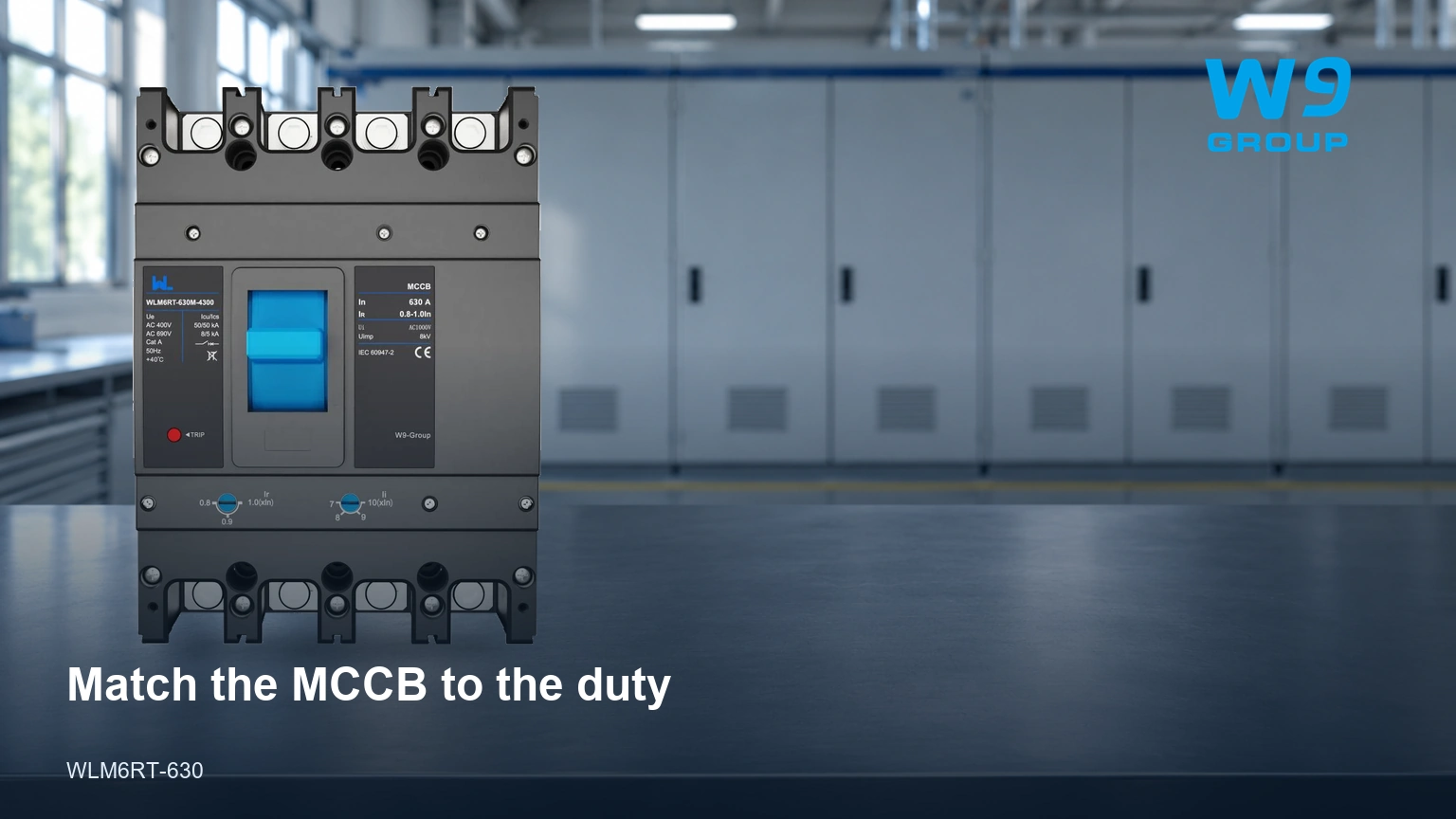
A thermal-magnetic MCCB may form part of a motor supply, but the motor starting envelope and starter arrangement require specific review. Starting method, acceleration time and repeated starts can affect the relationship between the load and the trip band.
Do not assume that a general distribution release replaces the overload relay or every protective function of a motor starter. The contactor, overload device and short-circuit protective device must form an appropriate documented combination. A magnetic-only breaker is also a different proposition from a combined thermal-magnetic release.
Where starting trips occur, investigate the load and protection design before increasing pickup. A setting high enough to permit starting may be too high to meet another protection requirement. The engineer needs both operating current information and the relevant fault-current range.
Commercial distribution requires attention to mixed loads
Lighting, HVAC, lifts, pumps and electronic equipment can create different operating profiles within one building. Grouping them under a single commercial-load label hides information needed for selection. Identify normal demand, expected starting events and any circuit that requires additional protective functions.
Distribution feeder protection should be evaluated alongside the downstream protective devices and the desired continuity of service. An upstream trip can affect several tenants or processes even when the breaker itself performs correctly. If selective operation is required, obtain evidence for the exact device combination and operating conditions.
Do not transfer the familiar B, C or D labels of a particular MCB standard to every MCCB. MCCB releases have their own documented curves and settings. Likewise, a three-pole or four-pole decision depends on the neutral and switching arrangement required by the circuit, not on whether the building is commercial or industrial.
| Solicitud | Main selection input | Additional check | Unsupported shortcut |
|---|---|---|---|
| Distribution feeder | Load and conductor design | Fault duty and downstream coordination | Selecting only by cable size |
| Motor supply | Starting and running duty | Complete starter protection | Assuming the MCCB replaces every motor device |
| Commercial sub-distribution | Mixed load profile | Service continuity and additional protection | Using one generic curve for all loads |
| Transformer-fed circuit | Supply and energisation conditions | Available fault current and inrush | Ignoring transformer contribution |
| DC or battery circuit | Explicit DC device suitability | Voltage, pole use and fault-current direction | Treating an AC marking as a DC approval |
Where a thermal-magnetic MCCB needs additional protection
A normal thermal-magnetic release responds to overcurrent. It does not automatically detect a small residual-current imbalance or an arc fault that requires another detection method. If those functions are required, specify the appropriate device or documented combined arrangement.
There is a similar distinction between protection and information. An auxiliary contact can provide status information when correctly selected and connected; that does not make the release a communicating measurement system. Remote operation, metering and event recording each need their own functional and accessory confirmation.
Additional protection functions should be written as requirements in the design rather than inferred from the size or price of a breaker. Where the required coordination cannot be achieved with the available thermal-magnetic curve, an electronic release may be worth evaluating. The reason should be a specific protection requirement, not an assumption that a more complex release is always preferable.
| Requirement | Ordinary thermal-magnetic release establishes it? | What to specify |
|---|---|---|
| Overload and high-current response | Within its declared characteristic | Exact curve and permitted settings |
| Residual-current protection | No, not by the release designation alone | Detection type and complete device arrangement |
| Arc-fault detection | No | Applicable detection device and scope |
| Remote indication or operation | No automatic inclusion | Accessories, supply and interface details |
| Selective operation | No universal result | Device-pair evidence and project study |
Specify an application that the documents can support
IEC 60947-2:2024 provides the relevant industrial circuit-breaker product-standard context. A declared standard does not remove the need to check the individual device, installation rules and assembly requirements. A manufacturer’s range can contain different voltages, releases and breaking-capacity codes.
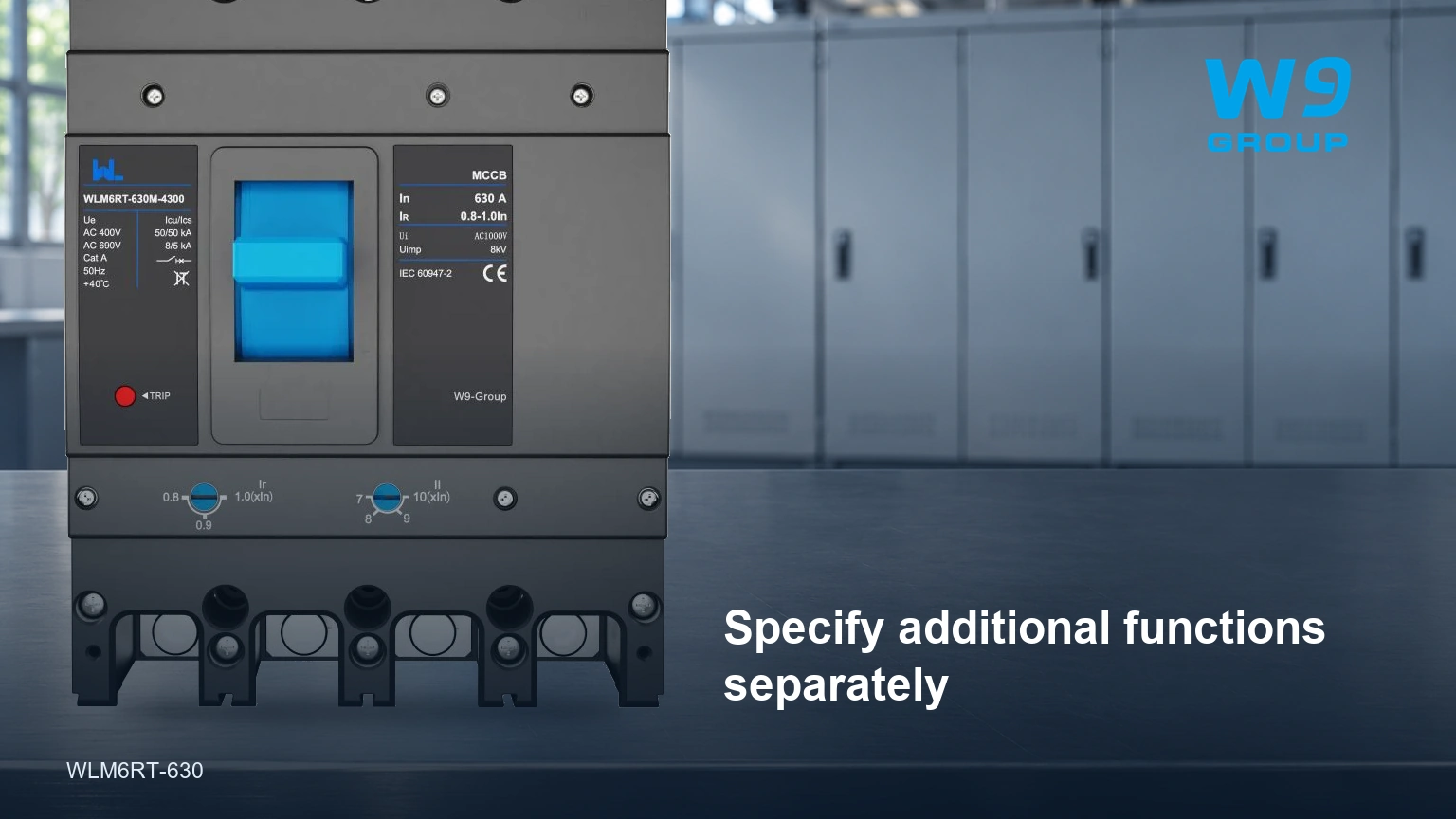
For a W9 Group enquiry, the WLM6RT adjustable thermal-magnetic MCCB page identifies a family to discuss. State the required load duty, ordered current, release adjustment, poles and operating voltage. Request the exact curve and fault ratings rather than taking the highest number from a mixed catalogue table.
Prepare four practical inputs: the circuit duty, the load or starting profile, the fault and coordination review, and the panel installation requirements. Retain the approved configuration with the equipment documentation. HSE guidance links maintenance needs to the equipment, environment and previous results, so access and service support belong in selection as well.
The installed-cost comparison should include engineering, terminals, panel space, commissioning and maintenance. An illustrative project may have the same purchase price for two candidates but different costs for accessories and testing. Compare those actual requirements instead of inventing savings. A documented application match is more useful than a broad claim that a breaker suits every building or factory.
Thermal-Magnetic MCCB Application Questions
What is a thermal-magnetic circuit breaker used for?
It provides overcurrent protection for circuits that fit its documented ratings and release characteristic. Feeders and equipment supplies are common application categories, but each circuit still needs a design review.
When should a thermal circuit breaker be used?
Use a thermal protective device where its characteristic and complete ratings meet the intended duty. A thermal-only device and a thermal-magnetic MCCB should not be treated as interchangeable.
Can a thermal-magnetic breaker be used at 12 V DC?
Only when the exact device is documented for the required DC duty. The low system voltage does not eliminate high battery fault current or the need to verify polarity and pole arrangements where applicable.
When is an electronic trip preferable?
Consider it when documented electronic functions solve a specific coordination, setting or diagnostic requirement. Confirm those functions on the supplied trip-unit version.
Can an Eaton thermal-magnetic MCCB be replaced with a W9 model?
A replacement needs a complete compatibility and protection review. Matching the current label alone does not establish mechanical fit, approvals, coordination or equivalent performance.
Which thermal-magnetic MCCB is best for a factory?
The answer depends on the circuit, not the factory label. Specify load duty, fault level, voltage, installation conditions and service requirements before comparing models.
Referencias
- IEC 60947-2:2024 — industrial circuit breakers.
- HSE HSG85 — safe electrical working practices.
- HSE — maintaining electrical equipment safety. Sources checked 2 November 2026.
Define the circuit duty before choosing the release. Browse the W9 Group MCCB range y request configuration-specific information with the operating conditions and protection requirements attached.