








What Is the Function of an AFDD?
A facilities team investigating a scorched socket faces two separate questions: why the connection deteriorated, and whether the installed protection could detect the resulting fault. Replacing a breaker without examining the cable, terminal and connected load answers neither. Arc-fault protection belongs in that investigation, but it must not become an excuse to leave defective wiring in service.
Quick answer: An AFDD detects characteristic hazardous arc-fault patterns and initiates disconnection of the protected circuit. It supplements overcurrent and residual-current protection; the exact combination depends on the product. IEC 62606:2013 with its 2017 and 2022 amendments covers AFDDs for household and similar AC applications. Begin with the building’s applicable wiring rules, identify the circuits requiring protection, and verify the selected device’s configuration and instructions. An AFDD is not a guarantee against every electrical fire and does not repair a loose connection.
Arc-Fault vs Overcurrent Detection
An arc is an electrical discharge through an unintended path. A damaged conductor or poor connection can create intermittent arcing in series with a load; a fault between conductors can create parallel arcing. These are descriptions of fault paths, not instructions for reproducing them. Never deliberately loosen a live terminal or create an arc to test a device.
Overcurrent protection looks at current magnitude and time. A series fault may draw less current than the circuit’s overload threshold, because the appliance and fault impedance limit the current. A residual-current device detects imbalance between monitored live conductors; it does not identify every arc that remains within those conductors. Therefore a normal load-current reading or absence of an RCD trip does not establish that a damaged connection is acceptable.
An AFDD analyses electrical signals for patterns associated with dangerous arcing and distinguishes them from ordinary load behaviour within its tested scope. Switching appliances can also generate electrical noise, so detection is not simply a rule that every waveform disturbance requires opening. The algorithm, indications and operating characteristics belong to the exact product; a generic description cannot establish its response to a particular appliance.
AFDD Protection Compared with Other Devices
The useful comparison is between protective functions, not competing labels. Arc detection does not replace overload or earth-leakage protection. An integrated device may provide several functions, but the presence of one function must not be inferred from the handle shape, number of modules or catalogue photograph.
| Device | Principal detection function | Important limitation | Buyer check |
|---|---|---|---|
| MCB | Overload and short-circuit overcurrent | No dedicated residual-current or arc-signature function | Rating, curve, voltage and breaking capacity |
| RCCB | Residual-current imbalance | No integral overcurrent protection | Waveform type, sensitivity and coordinated overcurrent device |
| RCBO | Residual current plus overcurrent | Arc detection is not implied | Both protective ratings and neutral arrangement |
| AFDD or AFDD combination | Defined arc-fault detection and circuit opening | Additional protection depends on construction | Declared combination, standard evidence and wiring instructions |
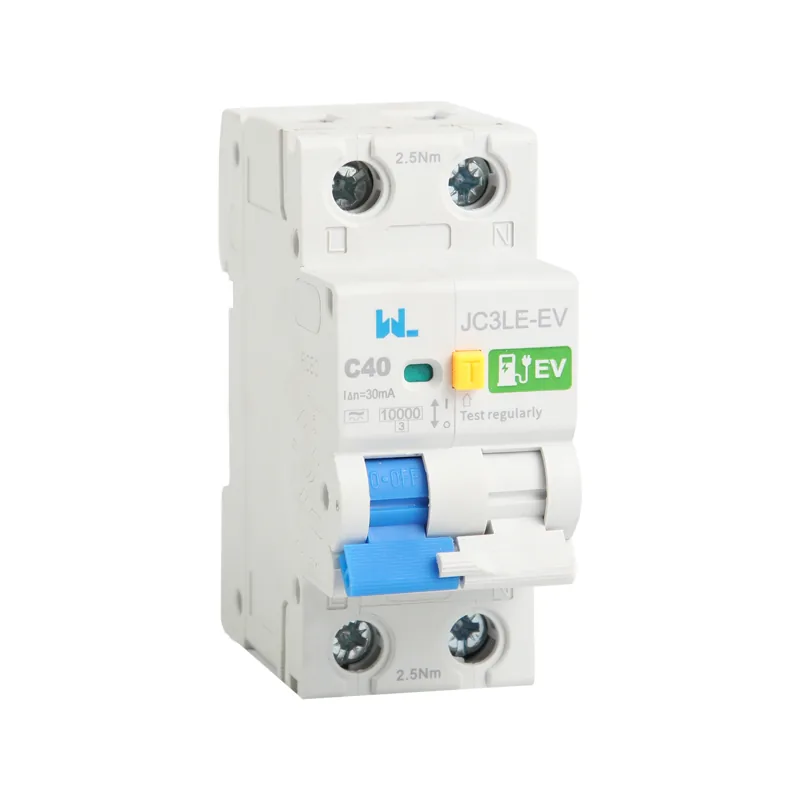
The RCBO function is especially worth checking when a schedule calls for an AFDD/RCBO combination. Write each required function separately in the schedule. This prevents a standalone AFDD, or an accessory intended for a declared protective device, being accepted as a complete replacement without reviewing the assembly.
AFDD Installation Requirements
The IEC product standard describes the equipment; destination-market installation rules determine where it must or should be installed. Building use, occupancy, wiring conditions and the consequences of fire can affect the design. Do not copy a national requirement from one country into a tender for another without checking the applicable edition and local interpretation.
Risk assessment is useful for refurbishment because an existing installation may have concealed routes, altered circuits or incomplete records. Inspect and rectify damage first. Then determine coverage with a competent designer. Installing an AFDD does not by itself confirm that the cable installation, earthing, circuit rating or distribution board complies.
AFDD Trip Investigation
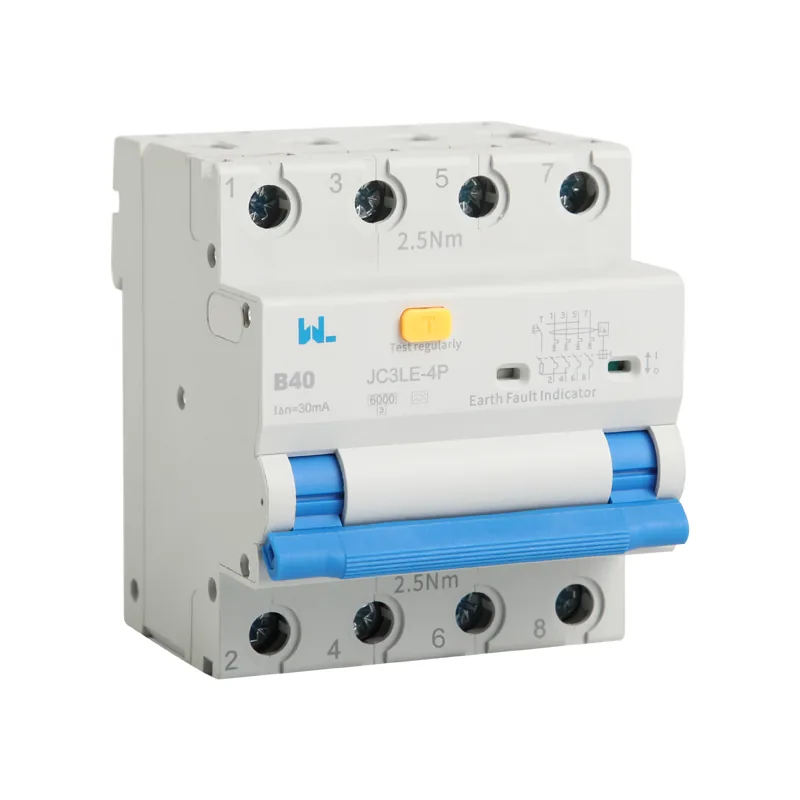
A trip indication is a diagnostic lead, not proof of the fault location. Note the device’s indication, affected circuit, operating load and time before resetting according to the instructions. A repeated trip, burning smell, visible damage or unusual heating requires a qualified investigation, not repeated energisation to see whether the problem disappears.
| Observation or stage | What it can indicate | Controlled next step | What not to assume |
|---|---|---|---|
| Repeated operation with one appliance | An appliance fault or a device/load interaction | Remove the suspect equipment from use and arrange competent assessment | That the AFDD is necessarily defective |
| Heat marks at a terminal | A damaged connection requiring investigation | Isolate, inspect and repair using approved procedures | That arc detection will make the connection serviceable |
| New device in an existing board | A changed protective arrangement | Review neutral routing, ratings and assembly compatibility | That physical fit proves approval |
| Functional test at handover | Operation of the specified test function | Record results and explain indication/reset instructions | That every cable and possible arc has been tested |
A practical maintenance record links the device catalogue number to the circuit schedule and instructions. Include the test method, date, result and responsible person. Event logging, remote indication and self-test details are optional model-specific capabilities, not features that every AFDD provides. Budget for investigation and replacement access as well as the initial device.
AFDD Procurement Requirements
The IEC 62606 public scope distinguishes a single device with opening means, a device integrating another protective device, and a separate unit assembled with a declared protective device. Those arrangements have different procurement implications. Ask which arrangement is offered and which exact devices are permitted together; the standard’s existence is not evidence that a supplier’s model has passed its tests.
Confirm voltage and frequency, rated current, poles, neutral requirements, terminal capacity, short-circuit coordination and environmental conditions. Obtain installation and testing instructions together with model-specific declarations or test evidence required for the market. An AFCI designation used in another regulatory system is not automatically interchangeable with IEC AFDD documentation.
- Identify the installation rule and circuits covered by the design.
- Define the arc, residual-current and overcurrent functions separately.
- Verify the exact construction and approved distribution-board combination.
- Resolve existing wiring defects before commissioning.
- Hand over testing, indication and escalation instructions with the circuit schedule.
W9 Group’s circuit-protection product range provides a starting point for complementary device enquiries. Confirm current availability and documentation for the actual configuration rather than treating a category listing as proof of an approved AFDD assembly.
Frequently asked questions
What is the purpose of an AFDD?
It detects defined hazardous arc-fault patterns and initiates circuit opening within its specified performance. It complements other protective functions rather than fixing the installation defect that caused an arc.
Do I need an AFDD on every circuit?
There is no universal answer for every country and building. The designer must check applicable wiring rules, building use and the circuit’s requirements; a product-standard reference alone does not decide coverage.
Can an RCBO replace an AFDD?
Not if dedicated arc detection is required and the RCBO lacks that function. Check the exact combination: residual-current and overcurrent protection do not automatically provide arc-pattern detection.
Does the test button prove that all wiring is free of arc faults?
No. It operates the manufacturer’s specified test function, not a complete survey of concealed conductors or every possible fault. Use the instructions and arrange the installation inspection and testing required by the project.
What should be done after repeated AFDD trips?
Follow the manufacturer’s instructions, preserve the indication and arrange competent fault assessment. Use the technical documentation to interpret the exact device; do not bypass protection to keep a defective circuit running.
References and decision principle
- IEC 62606:2013+AMD1:2017+AMD2:2022 consolidated version — public scope, including incorporated corrigenda; accessed 14 October 2026.
- IEC 61009-1:2024 — RCBO product scope; accessed 14 October 2026.
- UK HSE electrical safety guidance — competent electrical work and risk management; jurisdiction-specific, accessed 14 October 2026.
Use arc detection to complement sound installation practice, not to substitute for it. For a documented protection enquiry, contact W9 Group with the destination market, circuit schedule and required device functions.