























Understanding Thermal Magnetic Release MCCB in 2026 Trends?
When a procurement engineer compares breakers for a 690 V distribution board, the visible choice is often a catalogue line. The harder decision is whether the release type, current rating, fault duty, pole arrangement and installation conditions actually match the circuit. circuit duty comes before catalogue preference: a thermal magnetic MCCB can be the right fit, but a mismatched setting or an unverified assembly can still create nuisance trips, overheating or costly rework. This is a buyer decision scenario, not a claim about a named customer.
Summary: A thermal magnetic MCCB combines a time-delayed thermal response for sustained overloads with a fast magnetic response for high fault current. For 2026 projects, start with the circuit duty and coordination study, then verify the breaker and panel documentation against the applicable scope of IEC 60947-2 for circuit-breakers. The 2024 edition covers breakers connected to circuits up to 1,000 V AC or 1,500 V DC; it does not by itself certify a product or an installation. Specify the exact rating, poles, release range, breaking capacity and destination-market documents before requesting a quotation.

What a thermal magnetic release MCCB does
An MCCB is a molded-case circuit breaker used to interrupt current when a circuit exceeds its defined conditions. In a thermal magnetic release, a bimetal element responds to heating caused by an overload, while an electromagnetic element responds to a steep short-circuit current. The two responses have different time characteristics: overload protection allows for normal inrush and load variation, while short-circuit protection is intended to act quickly. Exact trip curves and tolerances must come from the selected manufacturer’s data; a generic description is not a substitute for that curve.
This distinction matters in procurement. A breaker that is suitable for a feeder’s normal current may still be unsuitable for the prospective short-circuit current at its installation point. Ambient temperature, enclosure conditions, conductor size, motor starting current and upstream/downstream coordination can change the result. Ask for the complete technical data sheet rather than selecting by ampere value alone.
2026 MCCB Procurement Trends

The useful trend in 2026 is better documentation and clearer boundaries, rather than a blanket claim that every MCCB is becoming “smart.” IEC 60947-2:2024 records changes including current-setting adjustment by an external device, additional ground-fault overcurrent tests, dielectric tests in the tripped position and revised EMC testing. Those changes are relevant when reviewing a declaration, test report or release accessory, but the standard’s scope still needs to be checked against the exact product.
Digital monitoring can be valuable where a project has a documented need for measurement, communications or maintenance data. It should not be added to a thermal magnetic specification merely because it is fashionable. If remote data is required, compare an electronic MCCB or a separate monitoring system with the simpler thermal magnetic option and record the interfaces, auxiliary contacts, supply requirements and software responsibilities.
IEC 60364-4-43:2023 focuses on protection against overcurrent in building installations and on coordination of protective measures. It is an installation reference, not a product certificate. The 2026 procurement question is therefore: can the proposed breaker, conductors and protective scheme be coordinated under the project’s installation rules?
Thermal magnetic MCCB versus other breaker choices
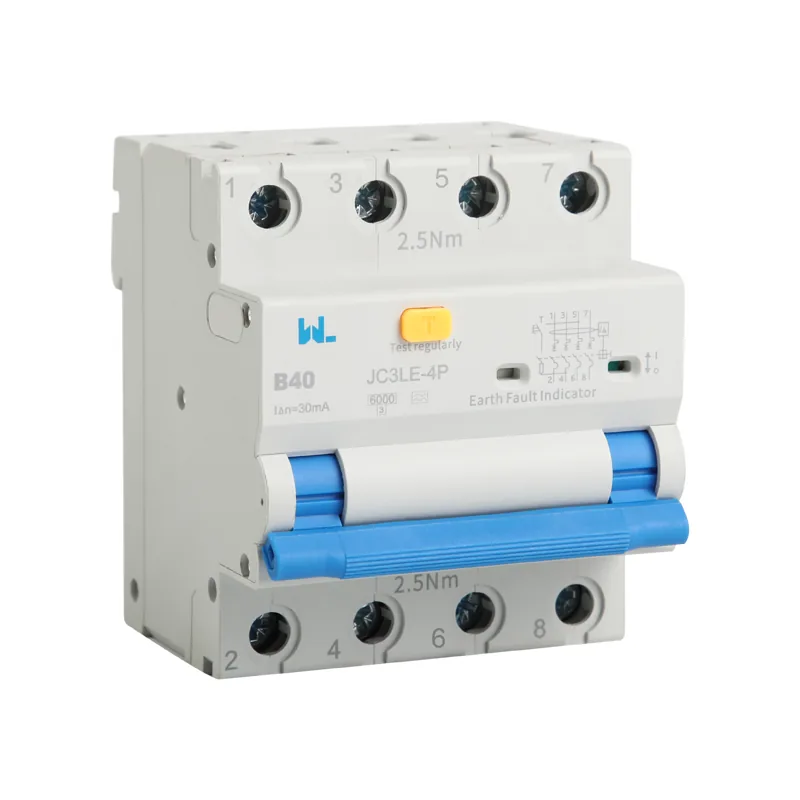
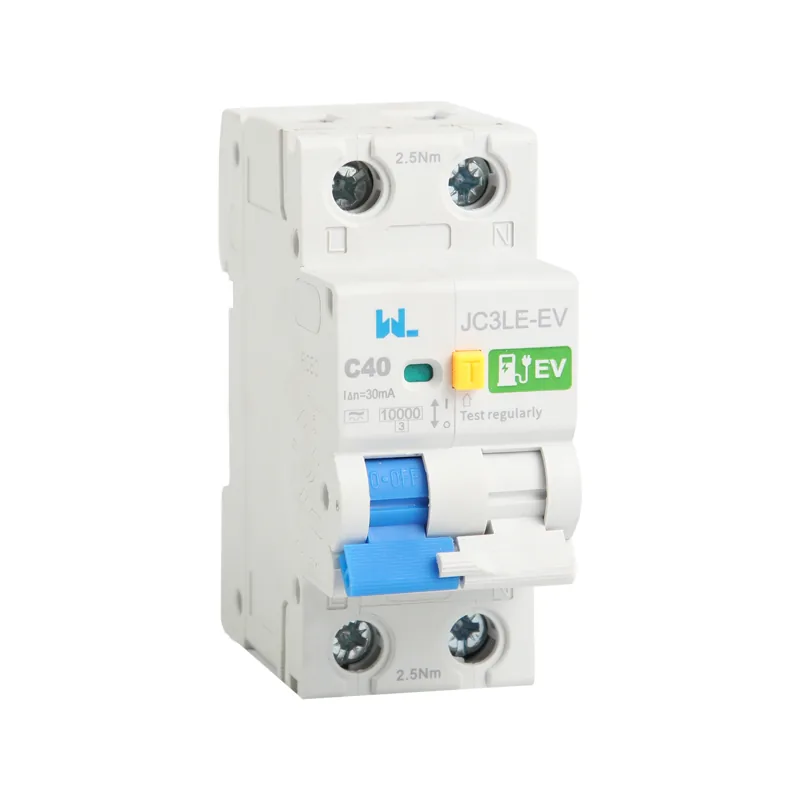
Selection should follow the circuit function. An MCB is commonly used for lower-current final circuits; an MCCB gives a broader industrial frame and accessory choice; an RCCB or RCBO addresses residual-current protection according to its own product scope; and an ACB is used for higher-current main or distribution duties. These categories are complementary, not interchangeable. W9’s MCCB category lists thermal, adjustable and electronic MCCB families, while its ACB category lists WEW1 products from 1,000 A to 6,300 A at 400/690 V. Those are catalogue examples, not universal limits for every manufacturer.
| Decision dimension | Thermal magnetic MCCB | Electronic MCCB | ACB | RCCB/RCBO |
|---|---|---|---|---|
| Primary protection focus | Overload and short-circuit release | Overcurrent functions with electronic settings, model dependent | Main or high-current distribution protection | Residual-current protection; RCBO also includes overcurrent |
| Setting approach | Thermal and magnetic characteristics specified by model | Adjustable functions depend on the trip unit | Trip unit and frame data must be coordinated | Use the device’s specified residual and overcurrent parameters |
| Best procurement question | Does the trip curve suit load and fault duty? | Are settings, auxiliary power and communications documented? | Does the switchboard arrangement support the frame and installation? | Is residual-current protection required by the circuit and local rules? |
| Lifecycle consideration | Simple specification can reduce integration work | More functions can add commissioning and documentation tasks | Higher system impact; verify assembly and maintenance access | Coordinate nuisance-trip risk and test requirements |
MCCB Release and Installation Requirements
Use this short review sequence before a purchase order:
- Write the system voltage, frequency, continuous load, conductor arrangement and prospective short-circuit current at the installation point.
- Choose the frame and poles, then confirm rated current, voltage, breaking capacity, terminal arrangement and any neutral-pole requirement.
- Check overload, motor inrush, transformer energisation and downstream selectivity. trip settings must match the installation; copying a setting from another project is not a coordination study.
- Review ambient temperature, enclosure ventilation, altitude, mounting orientation and cable termination instructions in the manufacturer’s documentation.
- Request the applicable declaration, test evidence, instruction manual and accessory list. Record the final settings and commissioning checks in the project file.
| Project condition | Evidence to request | Decision boundary |
|---|---|---|
| Feeder with motor or transformer inrush | Trip curve, inrush data and coordination study | Do not choose from steady-state current alone |
| Panel or switchboard integration | Assembly verification information and terminal/clearance data | IEC 61439-1 covers low-voltage assembly rules; the breaker standard does not replace assembly verification |
| Export project | Destination-market standard, declaration and product-specific reports | IEC, UL and local requirements have different scopes; confirm which one governs |
| Maintenance or remote monitoring requirement | Accessory compatibility, auxiliary supply and test procedure | Do not assume a thermal magnetic release provides communications |
Scope of Applicable Standards
IEC 60947-2:2024 is the product standard for low-voltage circuit-breakers within its stated voltage scope. IEC 61439-1:2020 sets general rules, service conditions, construction requirements and verification requirements for low-voltage switchgear assemblies. IEC 60364-4-43:2023 addresses overcurrent protection in electrical installations. A reference to any one of these standards should be read as a scope statement; it is not proof that an individual model, panel or installation has been certified.
For higher-voltage or higher-current architectures, do not stretch the MCCB label beyond the documented design. ABB’s public SACE Emax 2/E page, for example, describes an ACB range above 690 V AC, up to 6,300 A and up to 85 kA at 1,200 V for that specific family. The example shows why frame type, voltage and breaking capacity must be reviewed together; it is not a performance claim about W9 products.
W9 product information for a quotation request
W9 Group’s public MCCB catalogue lists WLM6 thermal magnetic models at 400/690 V with several current options, including 125 A, 160 A, 250 A, 400 A, 630 A, 800 A, 1,250 A, 1,600 A and 2,000 A entries, with 3-pole and 4-pole listings shown on the category page. Treat those entries as a starting point and confirm the exact model, interrupting rating, trip characteristics and accessories in the current datasheet.

W9 states that Zhejiang W9 Group Technology Co., Ltd. was established in 2020 and supports low-voltage protection products, testing, quality control and OEM/ODM communication. These are company statements; buyers should still request product-specific documents and destination-market evidence. document the selected rating and test evidence before release to production.


FAQ
What is a thermal magnetic release MCCB?
It is an MCCB that uses a thermal mechanism for sustained overloads and a magnetic mechanism for high fault currents. The exact trip curve, tolerances and settings depend on the model documentation.
Is a thermal magnetic MCCB always better than an electronic MCCB?
No. Thermal magnetic releases can suit applications that need a straightforward, documented protection scheme. Electronic releases may provide more adjustable functions or monitoring, but they add setting, power and commissioning requirements.
Does IEC 60947-2 prove that my MCCB installation is compliant?
No. IEC 60947-2 defines circuit-breaker requirements within its scope. The product model, assembly, installation method, destination market and supporting documents still need separate verification.
How do I select the correct MCCB current rating?
Start with the design current, conductor capacity, ambient conditions, fault level and coordination requirements. Then confirm the manufacturer’s rating and trip curve for the chosen poles, voltage and installation arrangement.
Where can I request W9 model and compliance documents?
Send the complete duty and documentation request through W9 Group contact. Include voltage, current, poles, fault duty, enclosure, destination market and required accessories so the quotation can be checked against the actual application.
References
- IEC 60947-2:2024, Low-voltage switchgear and controlgear — Part 2: Circuit-breakers.
- IEC 61439-1:2020, Low-voltage switchgear and controlgear assemblies — General rules.
- IEC 60364-4-43:2023, Low-voltage electrical installations — Protection against overcurrent.
- ABB SACE Emax 2/E public technical overview (manufacturer example used to illustrate ACB scope).
- W9 Group company and manufacturing information.
The reliable breaker is the one whose release, rating, fault duty and documents still agree when the panel is built and commissioned. For W9 Group sourcing, confirm the exact model and destination-market evidence with the project team before approval.