







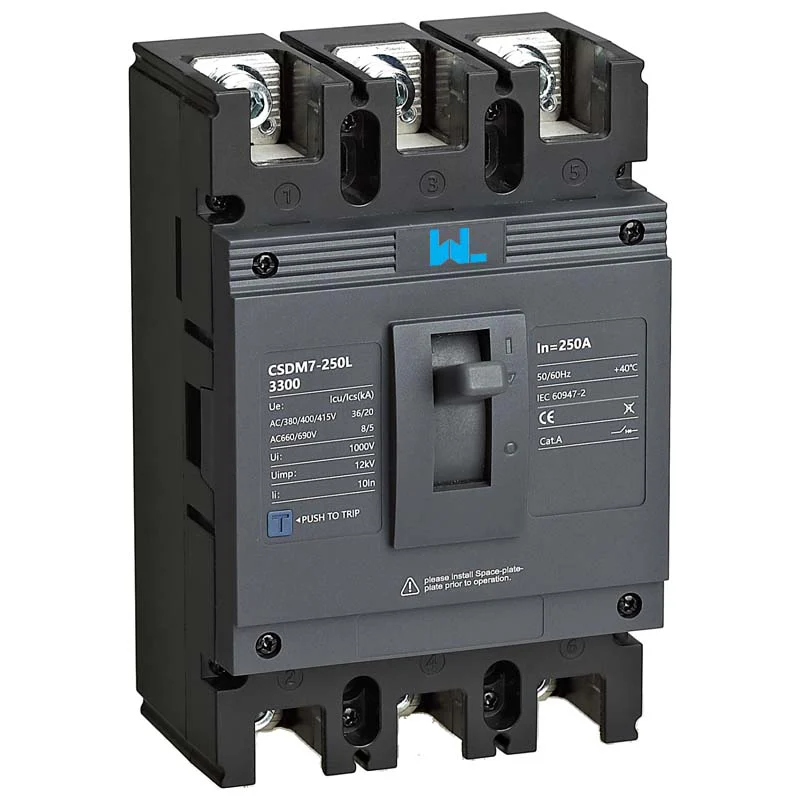
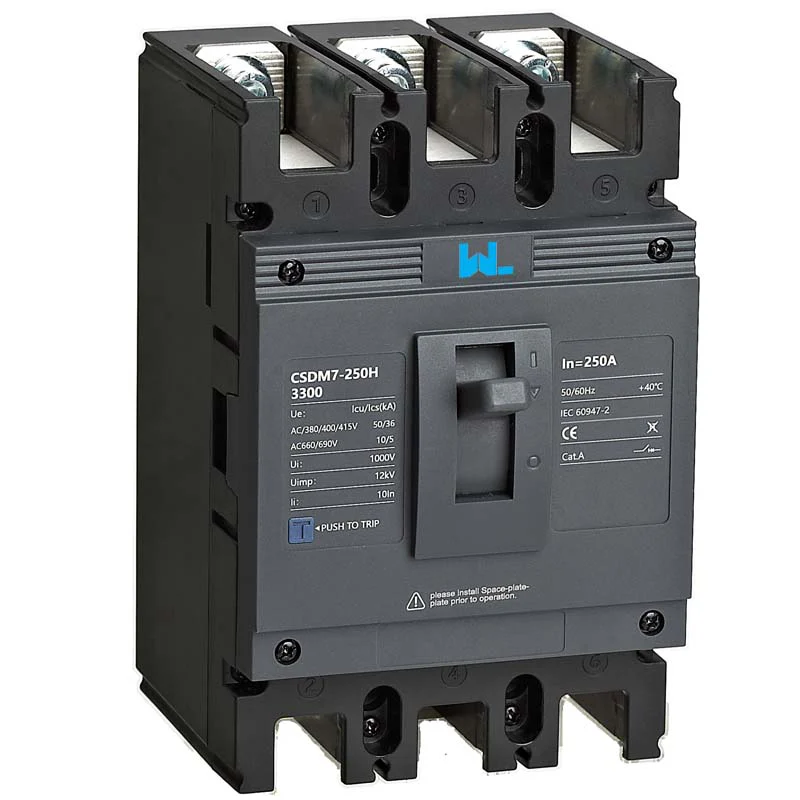
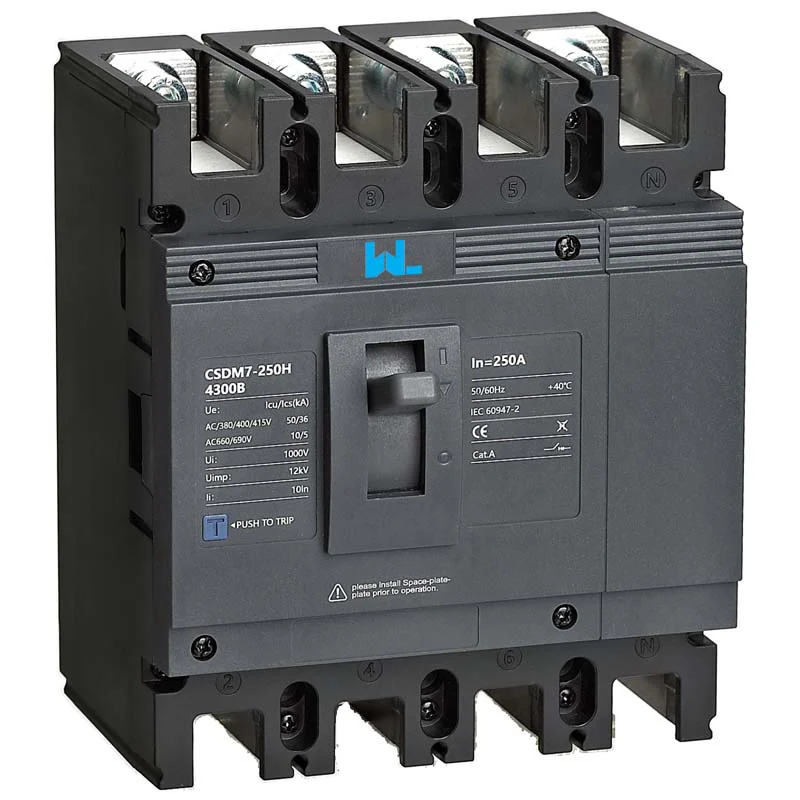
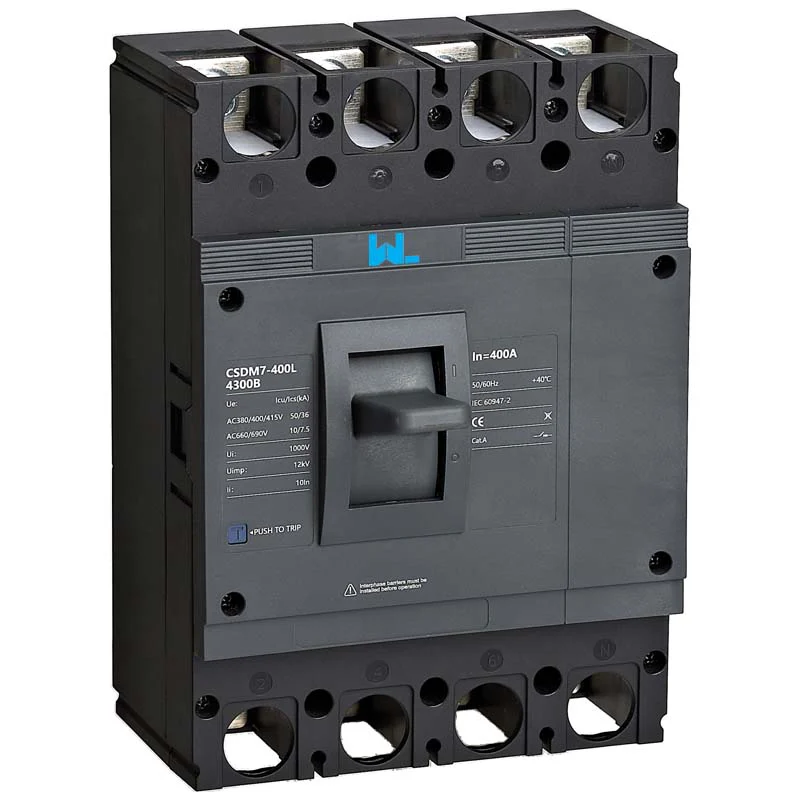
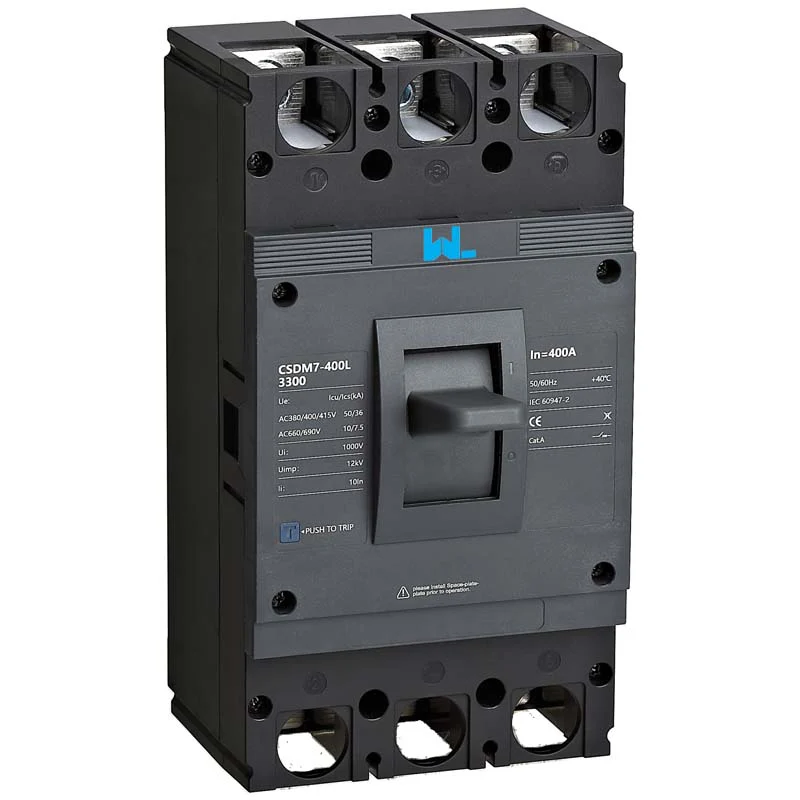





















قطعات قطاع کننده و کار آنها
A maintenance request for a “breaker contact” can mean a main current-carrying contact, a position-indication accessory or a fault-trip alarm contact. Those parts perform different jobs and are not ordered or serviced in the same way. Before discussing replacement, establish which function has failed and which component the manufacturer actually permits personnel to replace.
اصلی circuit breaker parts provide current conduction, fault detection, mechanical operation, interruption and insulation. Accessories add functions such as indication or commanded opening. Understanding these roles helps engineers read a diagram and helps buyers describe a requirement, but it does not make the internal parts of a molded-case breaker field-serviceable.
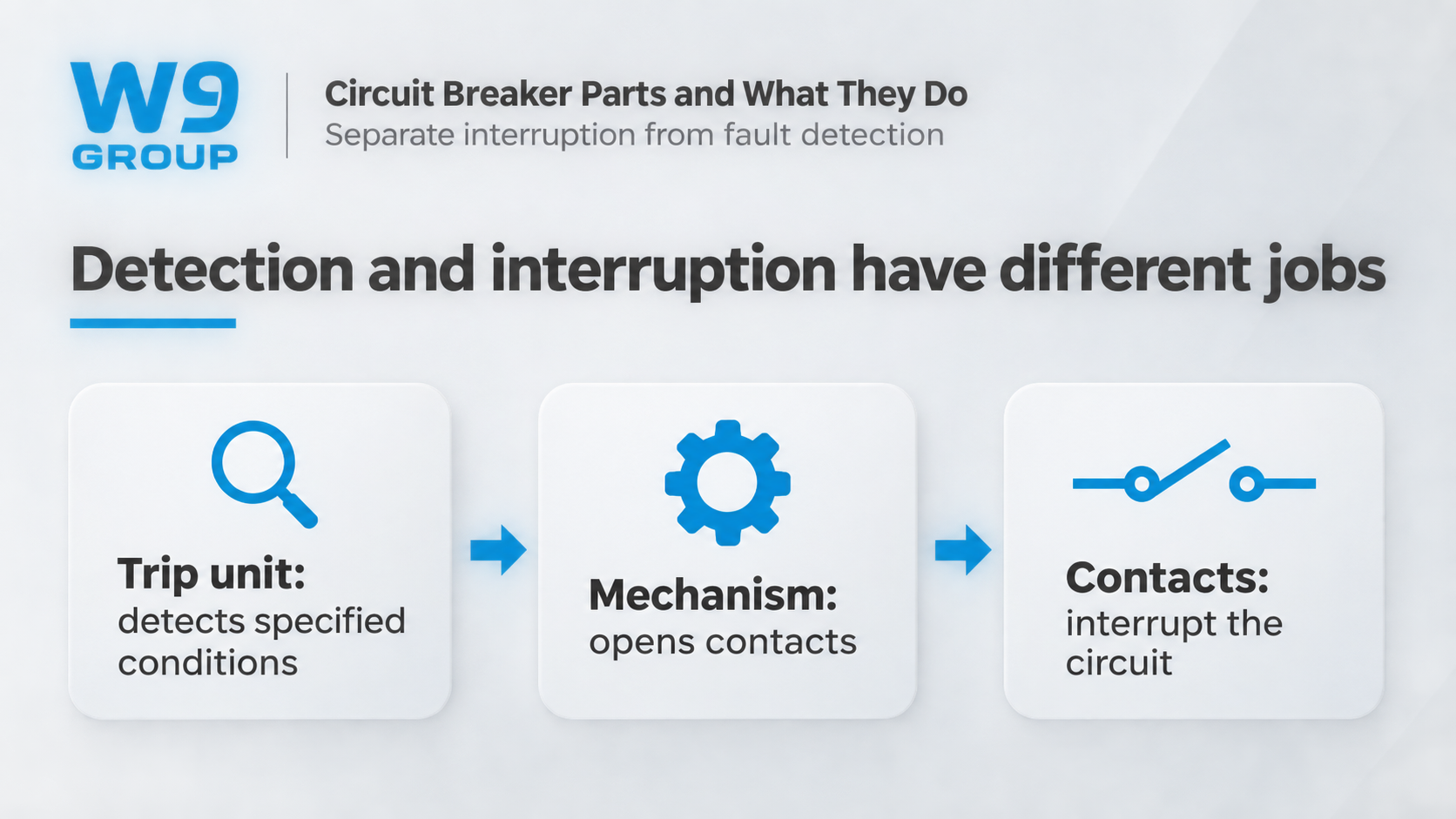
Separate interruption from fault detection
Main contacts carry the normal circuit current when closed. During opening, the breaker must interrupt that current under its specified conditions. An arc-control structure manages the arc associated with separation. The materials, geometry and arrangement are part of the manufacturer’s design; a simplified functional drawing cannot establish how a particular model is built.
The trip unit detects the conditions assigned to it and initiates a trip through the mechanism. Thermal-magnetic and electronic arrangements achieve this differently. Electronic protection may provide several adjustable functions, but the available functions depend on the release. The guide to LSIG trip-unit functions explains why long-time, short-time, instantaneous and ground-fault functions should not be treated as one setting.
The operating mechanism transfers manual or trip action to the contacts. Its role is different from the trip unit’s decision-making role. A breaker can therefore have an indication or control fault without the available evidence identifying an internal contact fault. Diagnosis must connect an observed symptom to a defined function before a replacement decision is made.
| Part or functional group | هدف اصلی | Important distinction |
|---|---|---|
| Main contacts | Carry and interrupt the power-circuit current | Not the same as an auxiliary signal contact |
| واحد سفر | Detect specified protection conditions | Functions vary with release type |
| Operating mechanism | Actuate the contact system | A handle position alone does not explain the trip cause |
| Arc-control structure | Manage the arc during interruption | Internal construction is manufacturer-specific |
| Terminals | Connect the intended conductors or connections | Connection requirements depend on the exact design |
| Insulating enclosure | Support and separate the internal arrangement | Damage can affect more than appearance |
Read a circuit breaker parts diagram in context
First identify what kind of drawing is available. A functional diagram explains what the breaker does. An installation drawing shows the external dimensions and connections needed to fit it. An accessory diagram identifies a specific control or indication arrangement. An authorized service document, where one exists, defines permitted replacement work. These documents answer different questions.
A generic circuit breaker parts diagram may help explain the relationship between detection and interruption, but it should not be used as a dismantling guide. Match the drawing to the complete model, frame and document revision. Even closely related products can have different accessory positions, terminal options or operating interfaces.
Read symbols with the drawing’s stated reference condition. Contact symbols may be shown for a defined breaker or mechanism state rather than the condition visible in the cabinet. A supplier should provide the relevant state table when indication behavior matters. Guessing from a drawing without its legend can turn a correct accessory into an apparently faulty one.
Distinguish accessories from serviceable internal parts
An auxiliary contact provides a signal associated with a documented operating state. A fault-trip alarm contact provides a different indication according to its specified behavior. A shunt release opens the breaker when it receives the required electrical command. These are separate functions even when the accessories occupy nearby spaces or appear together in a catalogue.
Availability as an accessory does not prove that every installed version can be retrofitted on site. Confirm the approved host breaker, mounting position, installation method and personnel requirements. Some products require factory installation or authorized service. The correct purchasing question is whether the exact accessory is approved for the existing breaker and the intended work.
Manufacturer-approved service scope is particularly important for internal contact systems, arc-control parts and molded enclosures. Damage to these areas may require replacement of the complete breaker. Do not infer repairability from the availability of visually similar components online. IEC 60947-2 describes circuit-breaker requirements; it does not grant permission to rebuild any product using independently sourced internal parts.
| Item under discussion | Information needed | حدّ تصمیمگیری |
|---|---|---|
| Auxiliary or alarm contact | Host model, accessory code and state table | Install only where the approved instructions permit |
| Shunt or other release | Exact function, supply and operating duty | Appearance does not establish electrical compatibility |
| Terminal or connection kit | Connection type and approved hardware | Do not substitute hardware from size alone |
| Main contacts or arc-control parts | Manufacturer service policy and condition assessment | Do not assume field replacement is permitted |
| Damaged molded enclosure | Manufacturer assessment of the complete device | A cosmetic repair does not restore verified performance |
Keep panel components separate from breaker components
A distribution panel also contains busbars, protective conductors, mounting arrangements, cables and control equipment. These are not automatically parts of the breaker assembly. A hot connection, incorrect conductor termination or control-supply problem can create symptoms near the breaker without showing that the trip unit itself has failed.
Inspection should follow the installation’s maintenance plan and the manufacturer’s instructions. HSE notes that the type and frequency of checks depend on the equipment, environment and earlier results. That is a better basis than applying one universal inspection interval to every industrial cabinet. The breaker maintenance and inspection guide provides further context for organizing observations.
Separate observation from diagnosis in the maintenance record. Record discoloration, damage, operating symptoms and relevant history without declaring a root cause that has not been established. Include the exact equipment identity and the conditions under which observations were made. This makes subsequent specialist assessment more useful and avoids ordering the wrong component based on an imprecise fault description.
Build a parts request that identifies the actual requirement
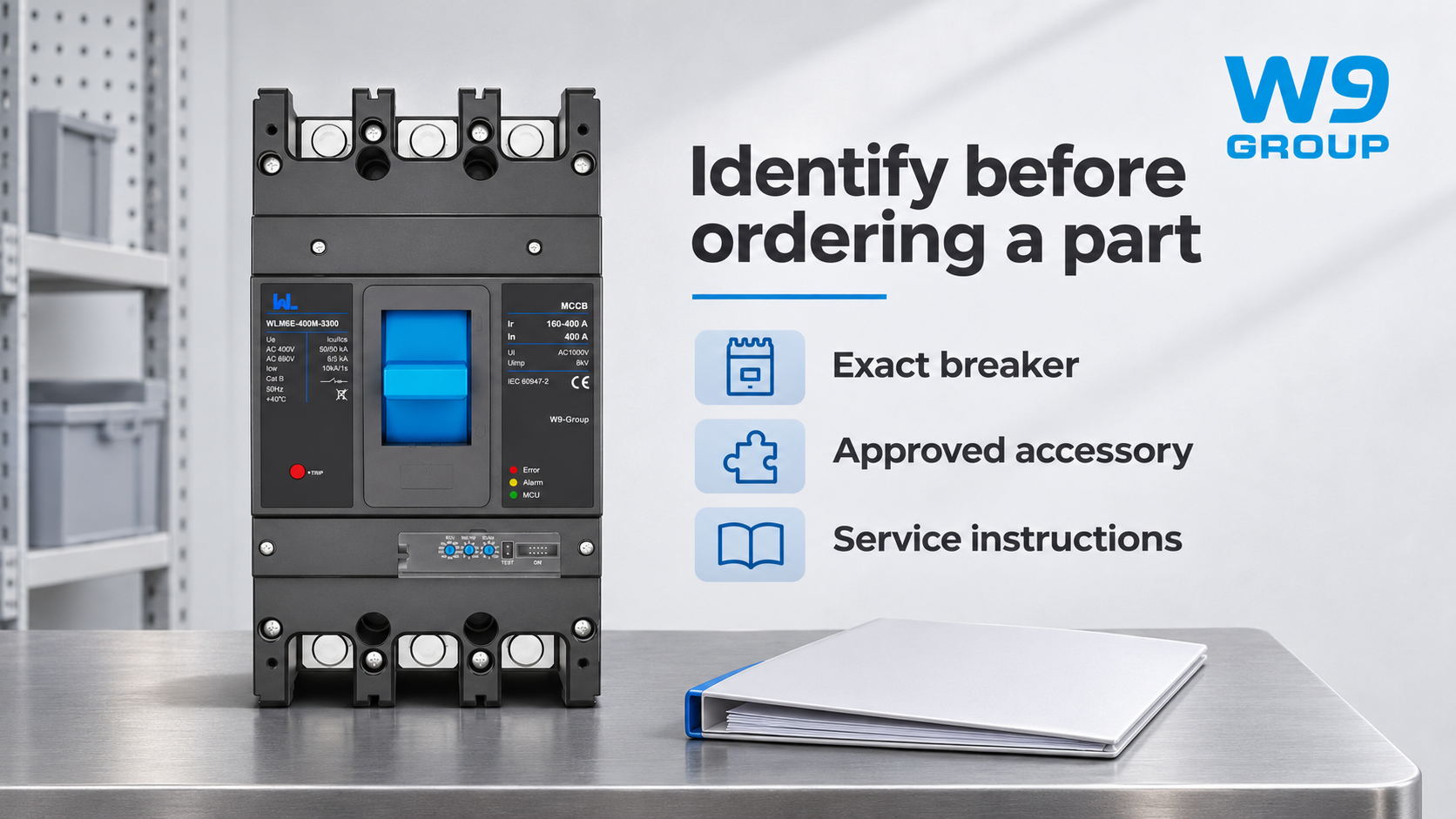
Collect the complete breaker code, frame, pole arrangement and release identity. Add the accessory code and its electrical marking if the request concerns an accessory. Include safe photographs of accessible labels and the relevant drawings; do not dismantle an energized assembly to obtain a photograph. Existing settings and the circuit’s role may also affect the replacement decision.
A traceable replacement-parts request should state the function required and whether the original item failed, is missing or is being added to an existing installation. That distinction affects the supplier’s response. Replacing a damaged signal contact and adding remote opening capability are different engineering tasks, even if both are described informally as a breaker repair.
Compare the total work involved before authorizing a repair: identification, approved parts, installation, testing and planned outage. The lowest individual part price may be irrelevant if the manufacturer does not support the repair. If the equipment is obsolete, seek a documented replacement approach that considers the installation and protection design rather than a dimension-only substitute.
سوالات متداول
How should I choose a local circuit breaker parts supplier?
Ask whether the supplier can identify the exact approved part and provide its documentation and traceability. Local availability is useful, but it does not establish compatibility or permission to repair an internal component.
Where can I find a reliable circuit breaker parts diagram?
Use the manufacturer’s documentation for the complete model and revision. A general diagram is suitable for understanding functions, but installation or repair requires the relevant model-specific instructions.
Do all types of circuit breakers use the same parts?
No. Miniature, molded-case and air circuit breakers differ in construction and service arrangements. Even within one product family, frame sizes and revisions can use different accessories.
Which parts belong to the breaker panel rather than the breaker?
Busbars, enclosure components, many cable connections and separate control equipment belong to the panel assembly. Identify the actual assembly boundary before ordering or assigning responsibility for a fault.
Are the four basic parts of an electrical circuit a breaker parts list?
No. Source, conductors, load and control describe a simple circuit concept. They are not a list of the internal components of a circuit breaker.
Can parts be reused after a circuit breaker is badly damaged?
Do not reuse them on appearance alone. Quarantine the affected device and follow the manufacturer’s assessment and disposal instructions; a damaged breaker should not become an undocumented source of safety-related spares.
منابع
- IEC 60947-2:2024, circuit-breaker requirements and scope.
- HSE, Maintaining electrical equipment safety.
- HSE HSG85, Electricity at work: Safe working practices.
Match the function before selecting a part
گروه W9 MCCB الکترونیک WLM6E listing can help identify a product family for a technical enquiry. Send the complete device identity and the required function when requesting documentation or a replacement proposal. A clear functional description is more useful than an assumed internal part name, and approved service instructions must determine what work proceeds.